La Gaetana Phuket

The first night in Phuket we drove 30 km to Phuket Town, located on the south end of the island, to enjoy a fantastic dinner with Stuart and Piyawat.  The venue was this hole-in-the-wall Italian restaurant called La Gaetana.  And let me tell you, it was without question the best dining experience I have had in Thailand.

That may sound like hyperbole, but Polermo native Gianni and his Thai wife Chonchita run the most charming of restaurants with the most attentive service I’ve ever received in the Land of Smiles.  The restaurant, located in a charmingly decorated 80-year old building, seats just 32 so reservations are a must.

The food is great, atmosphere is cute, etc. but what really makes the experience worthwhile is the passion with which Gianni and his staff, many of whom have worked there for years, attend to your needs.  His tableside bottle-opening and decanting is a show in and of itself, and illustrates just how much care is given to each detail of the dining experience.

Here’s a video that shows it all.

Lest you don’t want to watch the video, here it is in pictures:

2009-10-23 01

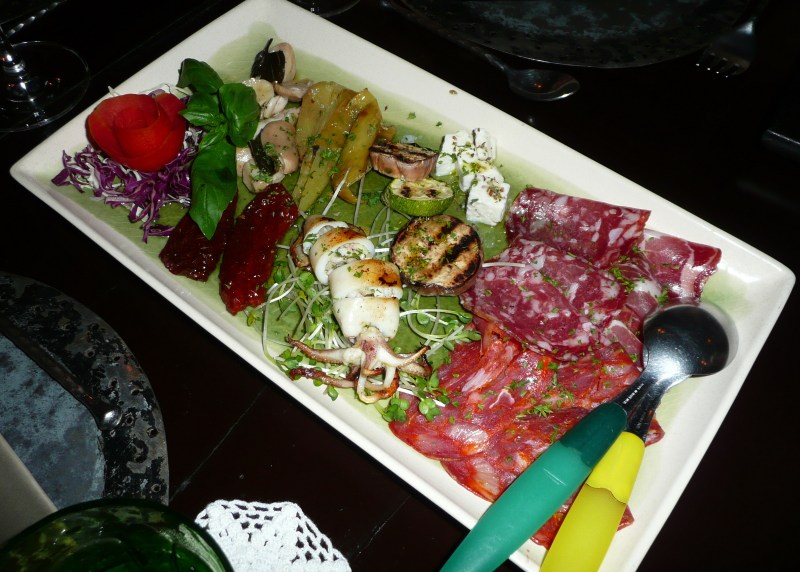
Italian antipasto platter.  Yummy!

2009-10-23 02

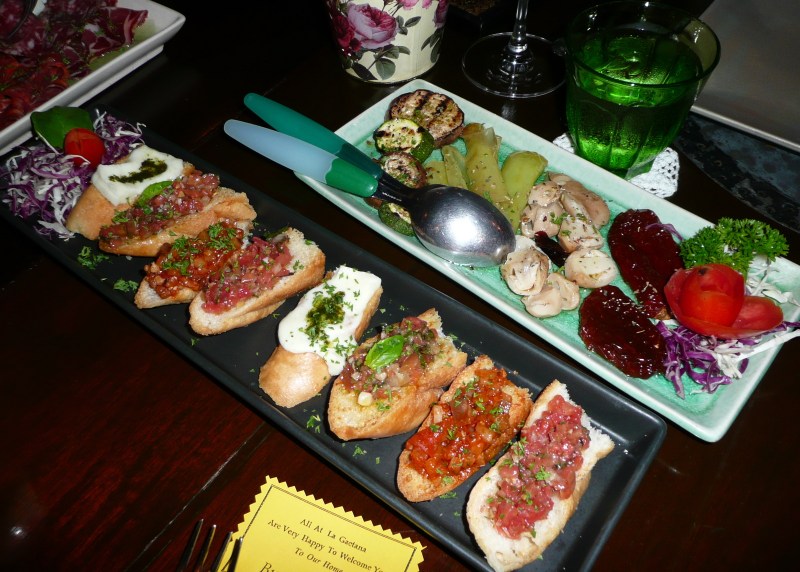
Grilled veggies in the back and a variety of bruschetta in the front.

2009-10-23 03

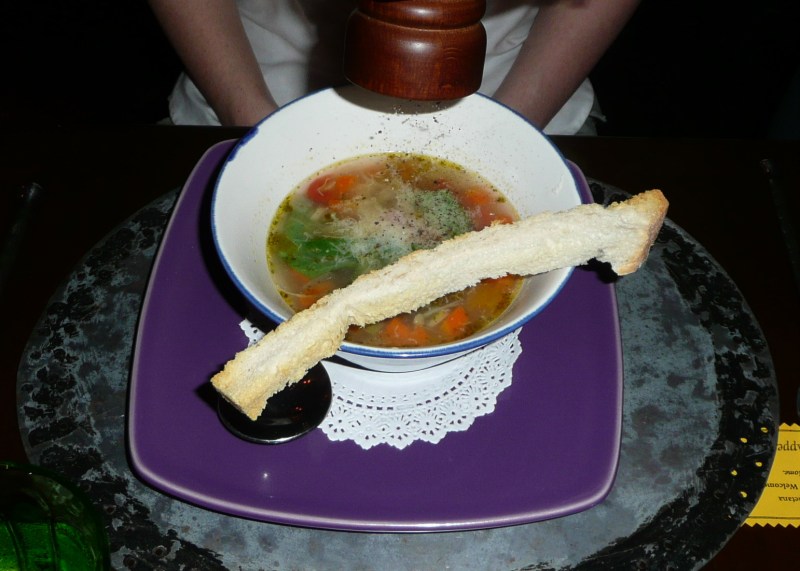
Minestrone soup with fresh ground pepper.

2009-10-23 04

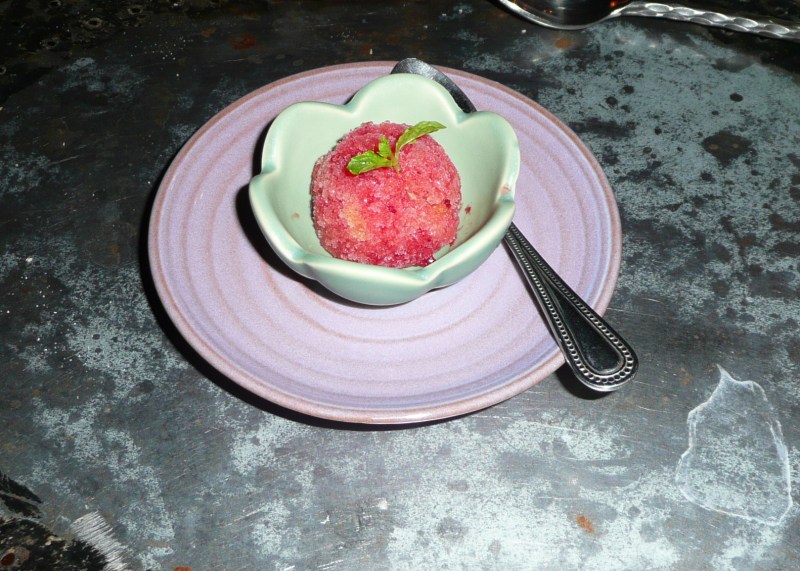
Palate cleanser of passionfruit sorbetto.

2009-10-23 05

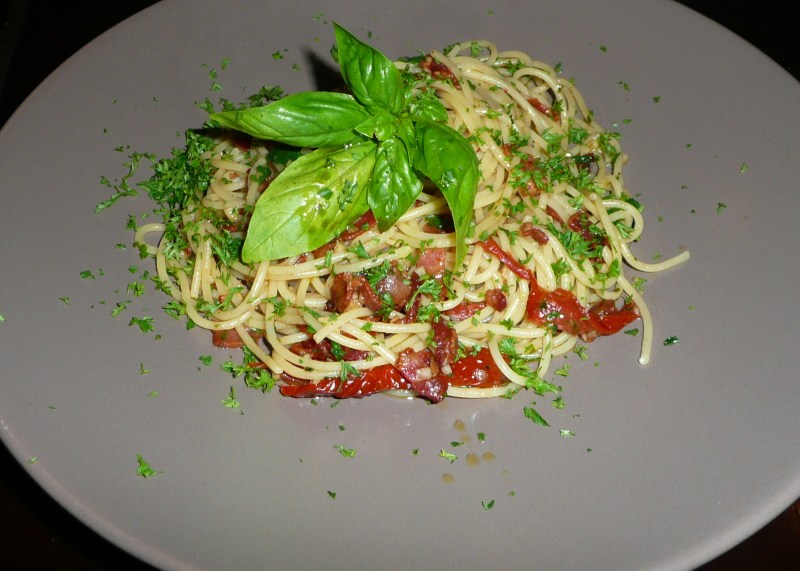
Homemade spaghetti with pancetta and sundried tomatoes.

2009-10-23 06

Grilled salmon with lemongrass sauce and spinach.

2009-10-23 07

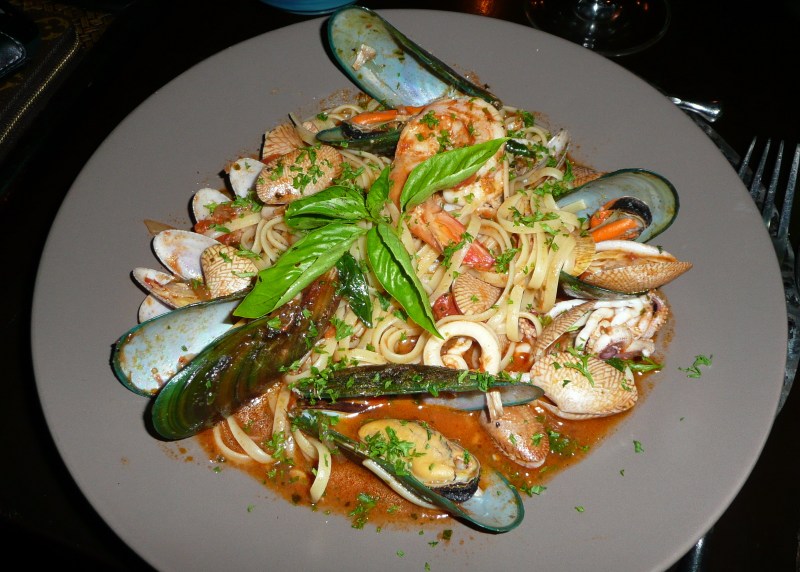
Homemade fettuccine with mixed seafood and tomato sauce.

2009-10-23 08

Grilled bistecca (angus) served with veggies.  Very lovely cut with lots of flavor.

2009-10-23 09

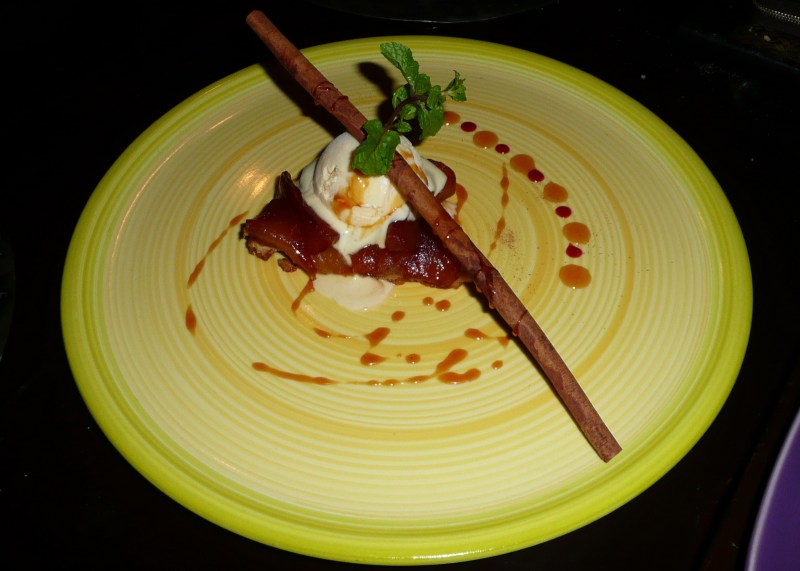
For dessert, Gianni displayed the same attention to detail as he did when opening the wine bottles, garnishing each dish before it was served.

2009-10-23 10

The desserts had a very French feel to them.  Here, a tarte tartin.

2009-10-23 11

Classic crème brûlée

2009-10-23 12

Baba au ruhm with more sorbetto.

2009-10-23 13

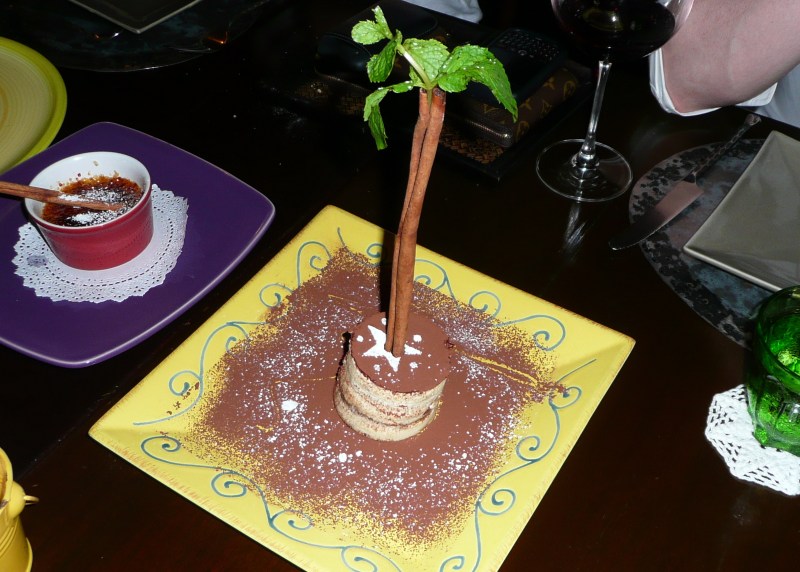
Finally, an Italian dessert!  A tiramisu “island” with cinnamon and basil “palm tree”.

This is exactly what I could imagine myself doing in the future.  Running my own small restaurant in some idyllic town, spending my days making my guests happy and ensuring they enjoy excellent food, wine and service.

Bagels – Attemps 1 and 2

bagel1.gif My desire to understand different foods and dishes by learning how to make them is an unquenchable thirst.  Not a week goes by without the thought of, “Oh, I wonder how you make that?”  In the back of my mind right now, I’m wondering how to make French fries, homemade corned beef (for Reuben sandwiches, of course) and fork-and-knife baby back ribs.  Last week the question was about bagels, so I set off to try and make them.

I’ve been to New York countless times and eaten a good number of tasty bagels.  Still, I wouldn’t claim to be an expert of what, exactly, makes for a good bagel.  I started out Googling “what makes a good bagel” and found this interesting NY Times article that explores good bagels in each of the boroughs.  I also searched a number of different “authentic” bagel recipes in order to see what the common ingredients and techniques are.

Once I felt like I had a good basic understanding of what a bagel should be and how to achieve that ideal, I promptly did exactly the wrong thing.  I started to improvise.  This is my failing both as a cook and as a good student.  Instead of learning (and mastering) the fundamentals, I rush into the improvisation.  The problem, of course, is that one cannot effectively improvise if you don’t know the fundamentals.  But that has never stopped me!


First Batch

“Ugh!” I thought, “I don’t want to spend a lot of time kneading the dough.  Why don’t I just ditch the bagel recipe I have and use a basic white bread recipe from the “Kneadlessly Simple” book of kneadless breads?”

Anyone else would have recognized that as the recipe for disaster that it turned out to be.  I, however, just had to try.  As such, my first batch of bagels fell flat… literally.

P1190933-1.JPG

Everything seemed to be okay at the start.  The dough did a cold rise overnight, sitting in a bowl beneath my bedroom air conditioner.  In the morning I measured out three-ounce balls (referencing the NY Times article that suggested that bagels were probably better back in the day that three ounces were the standard serving size instead of today’s four-ounce and larger sizes).

P1190940.JPG

The dough shaped into nice, bagel-looking rounds and puffed up beautifully in the second rise.  The problem is, the dough was too hydrated.  In other words, too wet.  So they stuck not only to each other but also to the oiled parchment paper.

P1190945.JPG

By the time I pulled them off and put them in the pot of gently boiling water, they were mangled and deflated.  Their surfaces, instead of forming a nice smooth skin, were cragly.  Undaunted, I finished boiling them and then threw them on a tray and into the oven.

P1190952.JPG

The end result was, as I mentioned before, sort of flat.  They tasted great and had a nice chewy texture.  More like a bialy, actually, but without the onion.  But they were ugly and didn’t have the qualities that one expects in a bagel.  Namely, looking like a bagel.


Second Batch

Never one to shy away from failure, I decided to try again the next day, this time – gasp! – following a recipe.  It was titled “Authentic Jewish Bagels” so I felt like it could be trusted.  Since I didn’t want to feed an army, I did cut the recipe in half.

This time, I did the kneading by hand instead of trying a kneadless method, although I think the kneadless method could still work.  The dough came out with a much lower hydration, which was good.

P1190970.JPG

In case you are curious how to make the holes, I use the “hole-centric” method.  You flatten the center of the ball slightly and then work your finger through the dough to make a hole.  You then spin the dough around your finger a few times and it forms a nice bagel shape.

P1190972.JPG

Despite the drier dough, I took no chances.  These babies were put on a well-floured board.  They still didn’t have quite as smooth an exterior as I wanted but over the next thirty minutes, they rose nicely.

P1190974.JPG

Back to the boiling pot.  This time I didn’t have any troubles handling the bagels so when they went into the pot, they remained inflated and even puffed up some more.  After about one minute on each side, I quickly drained them on a dish towel then put them into the oven.

P1190980.JPG

The end results of attempt one (on the left) and attempt two (on the right).  As you can see, the second attempt was much better.  With the humid weather here in Thailand, they crispness of the crust quickly gave way to a softer texture, but they were still very nice.

P1190988.JPG

The ultimate test was to toast them and use them in a curried chicken salad and spinach sandwich.  There’s still some work to be done to get the bagels a little chewier, but I’m very happy with the way they turned out nonetheless.


Crispy Parmesan Biscuits with Smoked Salmon

About a month ago, Gary wrote an entry which documented another of W’s culinary exploits.  The recipe in question was Crispy Parmesan Biscuits served with lemon butter, smoked salmon and rocket (arugula).  The photos turned out wonderfully (no surprise there) and since I’m a biscuit man, I decided to try the recipe.

When it comes to biscuits, there are many schools of thought.  I was raised on a rolled, buttermilk baking powder biscuit.  But I enjoy exploring other types.  This Food Network recipe is also has buttermilk and baking soda, but uses butter and olive oil instead of shortening, also has some corn meal in it, and is formed as a drop biscuit.  Different textures, to be sure.  It also has a hefty 5.5 ounces of grated Parmesan cheese!

P1190804.JPG

The precooked biscuits, with flecks of green onion, looked appetizing.  I wasn’t sure how large to make them.  I also didn’t know how much they would spread out so I baked them in two batches instead of one.  As it turns out, they don’t spread so much as they puff up, so fitting them more tightly on the tray would have been fine.

P1190805.JPG

Fresh out of the oven, they had a lovely, cheesy smell.  I let them cool on a rack, as instructed, before slicing and making the little sandwiches.  While they cooled, I prepared the lemon butter, combining a healthy dose of lemon jest with softened butter.

P1190813.JPG

The finished product, probably a little skimpy on the rocket and the salmon.  They look great, but I have to tell you, they were a mess.  The biscuits are very crumbly because of the use of liquid fat and butter instead of a solid shortening.  Shortening = flakiness, butter = flavor + light crumble, oil = fine crumb.  Also, the biscuits themselves were oily to the point of being greasy.  I followed the recipe precisely, but wanted to stop and wash my hands after every few bites, they were so oily.

The flavor combination was excellent, though.  Parmesan and buttermilk, the zest of the lemon, fatty smokiness the salmon, bitter crunch of the rocket.  Wanting to perfect this, or at least get a heck of a lot better, I’m going to revisit this recipe in the next few weeks.  I’ll start instead with my biscuit recipe, and substitute in some of the ideas from the Food Network’s recipe and see if we can get something that has the same flavor profile but with more structure.

Stay tuned for the results of that…

Week of Menus

Joanne Choi has a blog called Week of Menus that I really like.  I’ve written about it before.  Her tagline – “Good cooking for moms with too much on their plate” sums up her approach.  Food is healthy, tasty, and easy to prepare.  About two weeks ago I made a meal that was composed of four of her recipes.

Two salads provides lots of fresh veggies.  The first was a Curried Slaw made with green cabbage, red onions and carrots.  I forgot to buy a carrot so my version was missing that extra dimension.  Still, very taste as lots of curry powder gives it an exciting warmth while not being spicy.

P1190763.JPG

The second salad was a Corn Salad with Tomatoes, Avocado and Cilantro.   What a yummy way to use up fresh corn and cherry tomatoes.  We’re fortunate to get corn year-round and while our varieties of larger tomatoes are pale and disappointing, our locally grown cherry tomatoes are also year-round winners.  I didn’t measure my proportions very well and could have used a bit more avocado.

P1190771.JPG  

The main dish, one I’ve tried before, is Ground Pork and Green Beans over Rice.  This can also be done as a lettuce wrap, which is how I did it last time.  Joanne’s original recipe calls for ground turkey, but that’s not readily available here in Thailand.  Made with hoisin sauce (and I added some water chestnuts), this dish has plenty of umami.

P1190773.JPG

To complement the rich taste of the main course, I made the Cucumber Cilantro Salad, a pickle-like dish that was mildly spicy and a nice accompaniment.  The dressing is made of soy sauce, red wine vinegar and sesame oil.  A liberal sprinkling of sesame seeds and dried chili flakes added texture and flavor excitement.

P1190767.JPG

Something I really like about our eating habits is that when I head to the checkout counter at the grocery store, nearly everything is a fresh vegetable, fruit or herb.  There is some meat, dairy product and whole grains, but few prepared foods.  I don’t say this to boast; I say this to make the point that it is possible to create really tasty, really healthy food even while living a busy life.  If you would like some ideas to spark your creativity, check out Joanne’s website.


Yura An Cafe – Central World Plaza

One of our largest malls is Central World Plaza.  Formerly known as the World Trade Center (and renamed a few years after the September 11th attacks for obvious reasons), this mall underwent a doubling in size and renovation about three years ago.  Something that Central World Plaza has an amazing number of is restaurants.

The entire top floor of the mall is nothing but restaurants, easily thirty sit-down restaurants situated shoulder to shoulder.  A few weeks ago, Tawn and I decided to visit one we hadn’t tried before, Yura An Cafe, a nominally “modern” Japanese sushi restaurant.

P1190662.JPG

The restaurant is bright and has a clean design.  There is also an outdoor seating area that offers a broad view of the Rajaprarop – Rama I intersection.

P1190649.JPG

There is a chalk board inside the restaurant playfully explaining the restaurant’s philosophy.  “What is special about Japanese food?”  “It’s very healthy & delicate and takes lots of skill.”

P1190647.JPG

The Yura An roll, avocado and faux crab meat with fried tempura crumbs.  Enjoyable crunch.

P1190651.JPG

Japanese “bruschetta” with smoked salmon and cream cheese.

P1190654.JPG

Fried soft shell crab spring rolls served over salad.  Tasty, but a little too much mayonnaise dressing.

P1190659.JPG

Stir fried pork with kim chi served over rice.  Very tasty dish.

All in all, a very nice restaurant.  Good service, nice ambience and tasty food.  Not terribly authentic when it comes to Japanese food, but an interesting mixture of flavors from across Asia.


Bo.Lan Review

BoLan1 Does the concept of a Michelin-starred Thai restaurant seem contradictory?  Australian David Thompson is the head chef at Nahm, a London eatery that was the first Thai restaurant to receive such an award.  A few months ago, two of his disciples, Duangporn “Bo” Songvisava and Dylan “Lan” Jones (pictured right), launched what they hope will be “a world class Thai restaurant” here in the Big Mango.

Tucked away in a small trok off Sukhumvit Soi 26, the somewhat eponymous Bo.Lan strives to stake out a place in the local culinary scene that I’m not sure really exists: a serious Thai restaurant where the emphasis is on the food in a deeply intellectual way.

Why am I uncertain that this desired place even exists?  Krungthep does not lack for “fine dining” Thai restaurants.  The nicer hotels all have them (Erawan Tea Room at the Grand Hyatt is quite decent) and there are stand-alones such as Baan Khanitha that are popular destinations when guests are in town. 

But despite the attentive service and pretty decor, my perception is that, at its most basic, the food in these places is really no better than what I could get from the nighttime food vendors on Sukhumvit Soi 38.  Some of these restaurants do focus on “palace cuisine” – fussier dishes that aren’t the mainstay of either typical Thai home cooking or street vendor’s woks – but the chefs at these fine dining restaurants still seem to be going through the paces, not really thinking about the food they are creating.

BoLan3 If this desire to create an intellectual Thai dining experience sounds like a tall order, that’s because it is.  Thais love eating but, if this makes any sense, Thais don’t spend a lot of time thinking about the food they eat.  They don’t appreciate the origins or the presentation of their food as much as they are concerned that it is tasty.

In the few months that it has been open, Bo.Lan has garnered lots of attention and is the place for well-heeled Thais to show their faces.  One criticism I heard floating around was that the food was “too basic”.  For this kind of money, it seemed that diners were expecting either the fussy palace cuisine or fusion food, in which western ingredients are placed into a shotgun marriage with Thai flavors, a recipe for disaster if ever there was one.

BoLan2 Tawn and I decided we should reject all the things we’ve heard and go try BoLan.  We enjoy thoughtful dining and wanted to think for ourselves about what Khun Duangporn and Khun Dylan were doing in their kitchen.  The perfect occasion presented itself on Tawn’s birthday a few weeks ago.

The restaurant itself is located in what looks like a modified former house.  The ceilings are low and covered with traditional rice sorting baskets to help muffle the noise.  The ambiance is dark but the volume from the background music (and incongruous mix of bland “world” music that include covers of 1980’s pop hits done in a bossa nova style) was a bit overwhelming.  I arrived several minutes ahead of Tawn and it took some effort to get someone to take my drink order.  When the bottle of wine I ordered arrived, it was incorrect and there was some confusion until another server explained that they were out of the the wine I had ordered.

In order to get the best sense for the chefs’ skills, we went with the “Bo.Lan Balance” tasting menu which has, depending on how you count, about six courses but maybe as many as ten, depending.  Because of the darkness, picture quality is low and I didn’t shoot pictures of all of the dishes as once they started arriving, our table was quickly overflowing with plates and bowls.

P1190623

After ordering and before receiving the amuse bouche, a pre-dinner drink and snack was brought as part of the tasting menu.  “Ya Dong Phaya Sue” is a tequila-like liquor, essentially a type of upcountry moonshine.  It was paired with an unsweetened pandan leaf juice shooter.  When Thais drink, they like to snack on something salty, sour and spicy.  A clever play on this were the slivers of green mango, another very bitter fruit called “ma dan” and a nut called “luuk yii”.  These were dipped in the sea salt and chili flakes garnishing the plate.

The process was like this: sip of liquor, sip of juice, bite of sour-salty-spicy snack, repeat.

This was an interesting way to begin because it really was a deconstruction of the core flavors of Thai cuisine.  It wasn’t a modernization or substitution, really.  No messy fusion here.  It was just taking each of the parts and laying them out individually.  It was fun and adventurous.

P1190625

The amuse bouche arrived, five little bites to be eaten from left to right.  The first was a slice of starfruit with tamarind and chili paste.  Then a southern style rice salad called khao yam with rice, pomelo, kaffir lime skin, and toasted coconut with a fermented shrimp dressing called nam buu duu.  Then a rice cracker with another type of salad on top.  Then a slice of grilled pork neck with coriander leaf and toasted, ground rice.  Then a small seared rice flour pancake – pang ji plaeng – topped with shrimp and fried garlic.

Again, the core flavors of Thai cuisine were each represented but as you progressed through the plate, the emphasis changed.  The first bite was very sour with a bit of spice.  The second was very salty/fermented.  The third was spicy.  The fourth was salty.  The final one was a little sweet.  Especially interesting was the second dish, the southern style salad.  The sauce is very complex and it is a rarity in Thai restaurants.  Tawn recalls his grandmother especially enjoying it.

P1190628

The next five dishes arrived all at once, served in typical Thai family style.  This was a lot of food and while they covered all their bases – one salad, one soup, one curry, one stir-fry, etc – it gave us too much food for two people. 

The first dish, pictured above, was preserved duck egg simmered in fresh coconut cream with lemongrass, white turmeric and chili, served with pickled turnip omelets and fresh vegetables.  It was very tasty and had clean, pronounced flavors.

P1190629

There was also a salad of grilled river prawn with lemongrass, mint, coriander and chili jam dressing.  The dressing was a bit heavy.  The river prawn was very fresh, though, and the spice of the dressing did cut through the richness of the prawn meat very effectively.

Other dishes we received included a deep fried “blue fish” marinated in turmeric, garlic and shallots served with a southern style lime and chili dipping sauce.  The fish was a small portion and was very bony.  While the taste was good, the skin was rubbery instead of crispy, an unpleasing texture.  Between the fish and the prawn, I think we would have been fine with just the prawn.

We also received a gaeng khiaw wan nuea kem – green curry of salted beef ribs.  Tawn isn’t a beef eater but did try this curry.  At first, it tasted a bit… not rich, because unlike most versions of this curry, it wasn’t finished with a lot of coconut cream.  But the more I tasted it, the more it grew on me.  It was like having a consomme, the beef broth’s flavors remaining very distinct, but with the added layers of flavor and complexity of the homemade curry paste.  The salted beef ribs added a nice note to the dish and for the first time in my life, I fully appreciated why the little baby eggplant are in this dish.  Their crunchy sourness paired very nicely with the saltiness of the beef and the fragrant aroma of the curry.

Each of us ordered a small soup.  Tawn had gaeng juut, a so-called “bland” soup with baby squid stuffed with pork in a clear broth.  In this case, the broth was very herbal and a little sweet and it wasn’t anywhere near bland.  I ordered a spicy pork soup that had large, leafy vegetables that were tangy.  It was flavorful but at this point I was getting so full that it stopped being enjoyable.

The meal was served with jasmine rice or “gaba” rice, a darker whole grain rice.  In a rather stingy measure, despite having spent 1500 baht (US$ 44) per person on the set meal, they ding you an extra 30 baht if you order the gaba rice. 

The main dishes were well prepared but some of the “intellectualism” of the amuse bouche and pre-dinner drink were missing.  Certainly, the quality of ingredients and attention to detail during preparation were very high.  The preserved duck egg and the green curry were the best of the dishes.  The work that went into making the curries from scratch really paid off as the flavor profiles were very distinct.  In fact, two weeks after eating them, I can still recall their taste memories.

The prawn and fish dishes were both a little flat.  They weren’t bad, but they also weren’t spectacular.  The soups were lost in the shuffle.  Too many flavors competing for attention on the table and, because of that, I think the menu could use some paring down.

Service throughout the meal was inconsistent.  They tried to educate us about what we were eating, explaining the dishes before us.  Tawn’s observation, which I agree with, is that they didn’t seem to really comprehend what they were telling us, instead repeating the instructions they had been told to give.  It was difficult to believe that these servers are really passionate about the food they are serving.  As Tawn put it (as I write this) they probably eat the local vendor’s som tam – green papaya salad – with one single note (spicy!) when they’re on their meal break.

Oddly, in a country where desserts aren’t a major part of the dining experience, there were three separate dessert courses as part of the set. 

P1190630

The first was another deconstruction of a popular dish: tabtim grob – dyed “ruby” water chestnuts that are coated with flour then fried, coconut agar agar and jackfruit served over crushed ice with syrup.  This was refreshing and the presentation was fun.  Had it been left at this, dessert would have been a satisfying end to the meal.

P1190631

The “dessert du jour” (different for both of us) started to venture into the overwhelming.  There was a plantain that had been grilled in its peel and then drizzled with a perfumed sauce, a play on the grilled plantains that are a popular street vendor snack.  This one was starchy in an unappetizing way and a single bite was more than enough.  The jar contained saku – tapioca pearls with coconut cream.  This is a favorite of mine, but there was nothing about the preparation that was outstanding.  The saku I buy at Villa market is every bit as tasty, and I became preoccupied by the fact that the mouth of the jar was barely wide enough for my spoon.  Finally, not fully visible in the glass, is a popsicle frozen on a chopstick.  I think this was meant to be tamarind flavor, but after one bite I found myself not very interested in it, either.

P1190632

Tawn’s dessert was gluay kai chuam grayasat – this is an intellectual play on a Thai snack, small sweet bananas that are eaten very ripe with rice crackers.  Here, they took the bananas and boiled them in a sugar syrup.  The rice crackers were a homemade meusli-like mix of fried rice, nuts and toasted coconut drizzled with palm sugar.  This was tasty and kind of fun.  In the bowl was graton loy gaew – a tropical fruit that is sour and tough on the outside but cottony and sweet on the inside.  The fruit was also soaked in syrup and then served over ice.  The elements of the dessert really played off the “balance” theme of the set menu: crunchy and soft, sour and sweet, tough and cottony.

P1190633

While they may believe that nothing succeeds like excess, the petit fours accompanying our post-dinner tea were too much.  They were a scattering of Thai dry desserts, some fruit, and khanom goh – a type of meringue.  By this point we were so satiated that we hardly touched the petit fours, calling instead for the check.

Conclusions.  For 1500 baht per person, we received a very generous amount (too much, really) of well-prepared, very high-quality food.  I would like to go back and order a la carte, trying some other dishes and maybe choosing a bit less food for my meal.  There is no doubt that the chefs are giving their creations a lot more thought than most Bangkok chefs, Thai or otherwise, are.  That’s refreshing and, most of all, interesting.

The challenges Bo and Lan face are twofold: the first has to do with their staff.  If you want to cultivate customers who are passionate about food, you have to have a staff that shares and can spread that passion.  I did not feel it.  The second is that they have a long uphill slog to find diners who are true foodies.  I’m not convinced that breed of diner is very plentiful here.  As a chef of the short-lived but very enjoyable Paradox restaurant on Ekkamai explained, Thais who have the means to travel overseas mostly like to stick with group tours and Thai or Chinese food.  Expats who have the means to eat well in Bangkok are on expense accounts and go for imported steak, Japanese food, or Italian.

As a foodie, I hope they are successful.  Something I noticed on their website is a page that is supposed to link to the Bangkok chapter of Slow Food International.  Tellingly, the link doesn’t work.  That may say more than anything else about what Bo.Lan’s chances are.

Loaves and Fishes

While I haven’t posted any pictures in a while, rest assured that I have still been cooking.  In fact, Tawn even got in on the act.  Below, top row: Kalmata olive and rosemary bread; Bottom row: Golden raisin bread.

P1190606 P1190614
P1190705 P1190700

After returning from my Sunday morning bike ride (more about that soon), Tawn prepared a nice brunch from one of Ina Garten’s cookbooks.  Tomato and feta cheese salad with cilantro and onion; and smoked salmon toasts with egg salad.

P1190694
P1190693

Yummy, huh?  It Thai, we say it is น่ากิน (nâa gin) literally, eat-able or “looks delicious”.  Along the same lines, some other handy Thai adjectives include น่ารัก (nâa rak) literally, love-able or “cute”, and น่าเกลียด (nâa glìat) literally, hate-able or “ugly”.


Pity the Poor Wine Drinkers in Thailand

Tawn and I are wine drinkers.  I wouldn’t call ourselves “aficionados” and there’s a lot we don’t know about wine, but we enjoy a nice bottle and have a small wine cellar at home and like to explore different varietals and vintners.  Sadly, though, the tropical paradise of Thailand is no paradise for wine drinkers’ wallets. 

3811228476_d196029921_o

Wine, extremely little of which is produced locally, faces a hefty import duty on top of which the government places an even heftier excise tax, since wine is, in their judgement, a luxury good.  Beer and cheap Mekong whisky, however, apparently are not.

Recently I was commenting longingly on a post by Gary in which he dined at a “wine-centric” place in Glendale called Palate Food + Wine.  They had these wonderful wines at very reasonable prices – $9 here, $17 there – and that was after restaurant markup.  In my comment, I complained about our 300% duties here in Thailand.  That got me curious: what, exactly, are the duties, taxes and tariffs on wines here in Thailand? 

A little research and I found a USDA Foreign Agricultural Service Global Agricultural Information Network Report about wine in Thailand.  This is the US Department of Agriculture’s effort to educate US based producers on export opportunities.  Here is what I learned about the duty, tariff and tax burden on imported wines:

Wine Tariffs

That’s a 390% effective duty, tariff and tax burden!  Outrageous!  If there is any good news out of all of this, Free Trade Agreements signed with Australia and New Zealand are moving their tariffs (currently 24% and 18%, respectively) to zero over the next half-dozen years.  But that is only the tariffs, not the excise tax, etc.

Is it any wonder that when I’m back in the US (not to mention visiting Australia), I try to have wine with every meal?


Video – Inside Zakiah’s Kitchen

Matt wrote once that he likes weekend blog entries so he has something to read, so I saved this for Sunday morning my time / Saturday evening in North America.

In late July I made an overnight trip to Quincy, Illinois to visit fellow Xangan Zakiah and her husband Mohamed.  It was a wonderful trip and is fully recounted in this entry here.  In the entry I promised video, of which I shot quite a bit.  Delivering on that promise, here is an exclusive peek inside Dr. Zakiah’s kitchen!

Thanks again to Zakiah and Mohamed for their gracious hospitality and friendship.

Ravioli Redemption

As I wrote earlier in the week, the potato, bacon and leek ravioli I made for Sunday’s brunch turned into a big mess as the dough started to disintegrate, causing the ravioli to stick to everything, tear apart, and be entirely unsuitable for boiling.

After the guests went home, fed with the other dishes I had prepared and some phone-ordered pizza, I went ahead and boiled the ravioli in a small amount of water, letting them break apart and forming a stew.  The potato and disintegrating pasta contributed a lot of starch to the mixture, which began to thicken, eventually reaching a macaroni-and-cheese-like consistency.

After letting the mixture cool, I put it in a casserole dish, sprinkled it with cheese, and baked it.  The result was actually very pleasant!

P1190437

It was a little heavy, but combined with some salad (and the leftover bruschetta topping) it turned out to be a really nice dinner.  How does the saying go?  Failure is the mother of invention?  Something like that…