Here is an advertisement from Banco Provincia in Argentina that features a prejudiced old man and a transgendered woman. The bank’s tag line: “Your life changes when there is a bank disposed to change.” Initially, I was doubtful, but concluded that there may not even be an ounce of cynical manipulation. Watch the ad and see what you think.
One interesting note: the man uses the female formal form addressing her.
Somewhere along the way of moving to Thailand, my trusty cast iron skillet turned rusty. That is a shame, because I really like cooking with it. However, I adapted to not having it in my repertoire of pots and pans. Recently, though, I’ve been thinking that there’s no point in letting it return to the elements. With my induction stove, I really should be using quality pans like this one.
This weekend, after reading up about cast iron restoration methods on the internet, I set aside some time Saturday morning to rescue my pan from oxidation oblivion.
The process proved surprisingly simple. Had I known how simple it was, I wouldn’t have waited so long.
I started with the metal scouring pad and scoured the surface of the pan to remove most of the rust particles. This only took a few minutes and would have been even easier if I had also used some sandpaper.
After wiping the particles into the trash, I heated the pan for a few minutes with two tablespoons of vegetable oil. I then added enough coarse salt to make a paste, scouring with the metal pad to remove more of the rust and to scour down to a smooth surface.
Next step was to wipe the pan with paper towels until the towels no longer stained brown. This took a lot of paper towels, but eventually they came out clean. I did one last wipe with a damp paper towel to make sure no salt residue was in the pan, then popped it into the oven for just a few minutes.
Below: Tawn captures the look of extreme concentration on my face while I scour.
After a few minutes drying in the oven, I added another tablespoon of oil and, using paper towels, spread it in a thin, even film all over the surface and sides of the pan.
I then returned the pan to the oven (at about 300 F) upside down and let it bake for an hour, until the oil “set” on the pan. From here on out, it is no soapy water to clean this pan. Wipe it out with paper towels, use a little salt if scouring is needed, and then apply another thin film of oil. Over time, it will become a strongly seasoned pan that should be nearly as nonstick as anything at the store.
Most Sunday mornings I go out for a ride. There are exceptions – especially during rainy season – but I really enjoy the opportunity to explore other areas of the city and, when possible, leave the concrete jungle altogether in search of the real one.
Sometimes I’m joined by someone else. Markus and I used to ride regularly. Then his travel schedule for work got busy. Then he and Tam packed up and moved to Germany. Since then, Stuart and I have ridden several times. Sadly he and Piyawat are packing up for Phuket. My biking partners keep leaving! Maybe I’m pushing them too hard?
In any case, one thing that strikes me when I get outside the main part of the city is how much wildlife there is. Not just the mangy soi dogs that nip at my heels (I’m thinking I should buy some pepper spray) and not just the cows, water buffalo, horses and pigs I see in some of the small family farms. I’m talking real wildlife, especially birds. This could be an Audobon Member’s paradise.
Above, some males have a little squabble.
It is pretty difficult, even with a 10x optical zoom, to get very close. The birds notice when I stop at the road sdie and shyly move away.
As I think I’ve mentioned before, there is a 4-km stretch of road out near the airport that is popular with cyclists. It was built as part of a very ambitious plan to connect the eastern suburbs with the city. It is three lanes in each direction with wide shoulders. The problem is, it just peters out and never actually goes anywhere.
So the road is closed to all except local traffic and since it is an agricultural area still, there isn’t much of that. This makes it the perfect place to ride.
Well, last Sunday I did some exploring to the north and west of the road, riding through some neighborhoods, running into several dead ends, until I managed to come across another section of the road that I didn’t know existed.
In the distance, this stretch of the road connects to a frontage road along the Outer Ring Expressway. The cars you see are doing driver training, using the closed road to practice driving.
The funny thing about this stretch is, unlike the stretch to the east that successfully bridges two khlongs (canals), we can see where the funds ran out on this one:
The road rises up an embankment and then stops short, with not much in the way of barriers! If you continued directly ahead about 1 km, you would connect with the stretch of road that I regularly ride.
Here’s a map showing the two segments. It was taken before construction on the westernmost segment was complete. Oops – I guess it still isn’t complete, huh?
On the way back today, I explored a new route and discovered that Thanon On Nut (On Nut Road), which connects to Sukhumvit at the end of the Skytrain line, actually goes all the way out to the new airport. Some 16 kms!
Riding back along this road, I spotted another bird:
What an interesting contrast of modernity and tradition, huh?
We returned to the Big Mango to discover not only the aftermath of political mayhem, but also (maybe related?) the height of hot season. To the point of the “riots” and “chaos” that was widely reported, I want to assure you that things were not nearly as anarchic as they were represented in the media. Give a cameraman a burning bus and they’ll tell you the whole world is coming to an end.
That said, there continues to be political instability, but nothing that should prevent you from coming for a visit!
Hot season is the real issue here. The Royal Thai Meteorological Department announced that April 27th should be the hottest day of our year, since that is when the sun is directly overhead Thailand. However, because of a high pressure system moving in and some expected rain, they thought that the 24th would actually be the hottest day.
Sure enough, it topped out at 37 C / 99 F with about 45% humidity. Relatively dry, actually. What kills us is that it doesn’t cool down at all during the night (28 C / 82 F) and that it lasts so long. This past year, Bangkok had 115 days with temperatures over 35 C.
Let me be clear: I’m not complaining. I’m just using this to set up an entry about summer foods!
When the weather is warm the best thing is to do as little cooking as possible, at least cooking that heats the kitchen. Salads and fruit dishes are great choices. A few days after our return we had a nice lunch on our porch, ceiling fan whirring away and the warm breeze pushing the palm fronds back and forth.
On the menu, a large chef’s salad with cumin chicken breasts, ham, cheese, eggs and all sorts of veggies, served with a wonderful buttermilk dressing. A side dish of old-fashioned potato salad and a plate of fresh buttermilk biscuits rounded things out, washing it down with a few glasses of a dry rose from France.
The Thais say that nature gives us the right fruits at the right times. During hot season, we’re dying for very sweet, very watery fruits, so that is when we get the plumpest lychees, the juiciest watermelons, and the tastiest mangoes. I know that Zakiah misses the mangoes of her childhood India and I’m trying to eat as many as I can on her behalf.
The favorite way to eat mangoes is the dish, Sticky Rice and Mango. This very glutinous rice is soaked overnight then steamed in a bamboo basket that looks like a large ice cream cone. It is then seasoned with some coconut milk and served with a drizzle of salty coconut cream, a sprinkling of toasted mung bean seeds, and a freshly cut mango.
Wanting to shake things up a little, a did a play on this traditional dish by making a cardamom and coconut milk rice pudding based on a recipe from the NY Times. You make a creme by scalding regular milk and coconut milk and letting cardamom pods and lime jest rest in it for several hours. Then it is reheated with sugar and cooked rice (I used sushi rice for the texture) until it forms a pudding. Add a little freshly-grated nutmeg and some vanilla and then cool.
Served with fresh mango and a squeeze of lime, it is the perfect sweet treat to end a summer’s evening!
I told you we were done with Tokyo and, yet, we’re not. After checking in at the airport, Tawn and I took the train back one stop to the town of Narita. Longer-term readers may recall that we did this during an 8-hour layover in Tokyo in March 2007. For those of you who haven’t been reading that long, here’s a brief account:
Narita is the town where Tokyo’s main international airport is located. It is an hour by train northeast of the city, has a very old and beautiful temple, and is known for its unagi – grilled eel.
Taking the local train from the airport back to Narita, I remembered to take a picture of the daily news headlines posted in the train car. You don’t need to be able to read Japanese to tell that sex sells!
Narita isn’t a very large town, maybe 100,000 people, and its agricultural roots are still visible, although much of the town now supports the nearby airport industries, including the many hotels where overseas aircrew spend their one- or two-night layovers.
The walk from either of the train stations to the temple is only about ten minutes, following a cute street lined with little shops selling all sorts of trinkets and souvenirs. Just in the last two years, we’ve noticed a lot of change on this street, though, with several older buildings and mom-and-pop shops demolished in favor of newer, more generic stores, restaurants and bars.
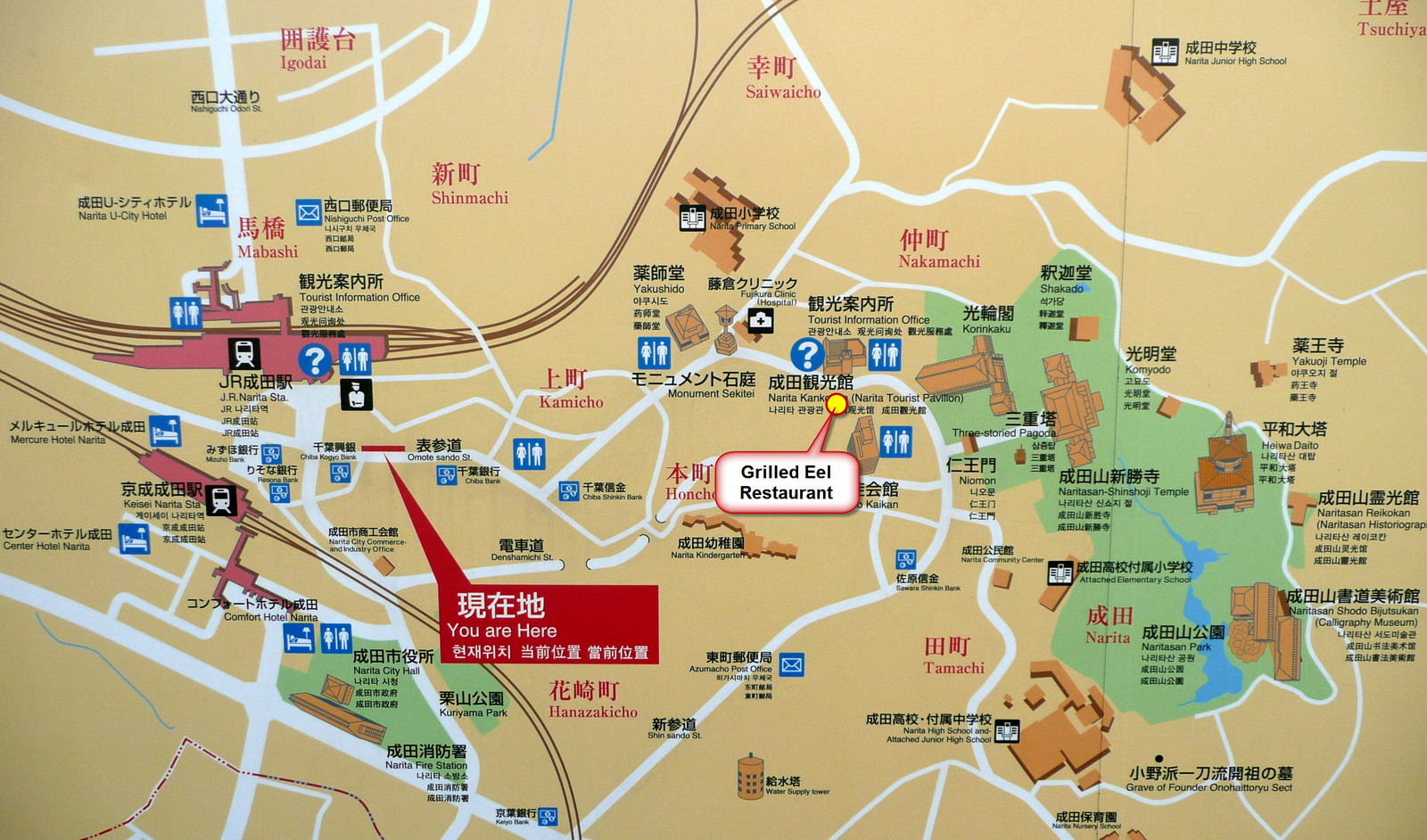
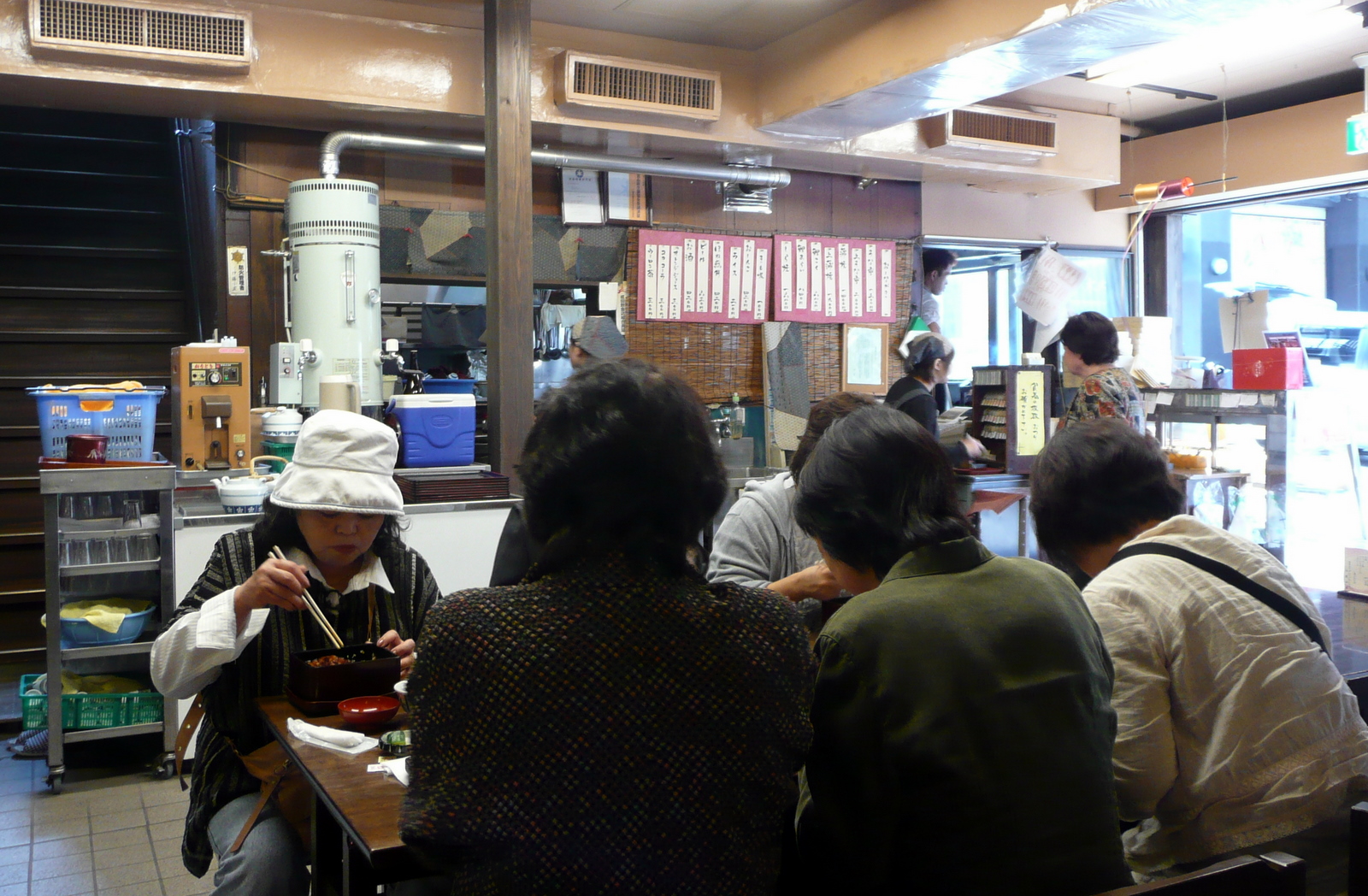
Right across from the tourist information office is a small grilled eel restaurant. The kitchen faces the street and you can look in and watch the chefs grill the skewers of fresh eel.
You order and pay at the front counter, receiving little paper tickets. Then take a seat at a table (or in the traditional seating area on tatami mats, at the back of the restaurant). A few minutes later, tender, sweet and crispy unagi comes your way!
I’ve said it before and will say it again: if you have about six hours between flights at Tokyo Narita Airport, it is worth your effort to go through immigration and take the train into Narita Town.
After our return to the airport, Tawn did a little browsing in the shops and I went up to the observation deck. Japanese airports still have observation decks that are open to the public, which I think is a great thing. (Being an aviation enthusiast and all…)
A Japan Airlines 747 touches down on the main runway, the same one that the FedEx MD-11 crashed on a few weeks ago. I wasn’t able to spot any signs of that accident. In the foreground is a Korean Airlines 777.
With Delta Airlines’ recent acquisition of Northwest Airlines, they have been quick to repaint the Northwest fleet, at least the planes flying internationally. Now you are able to see something that didn’t exist just a few months ago: a Delta 747 and A330.
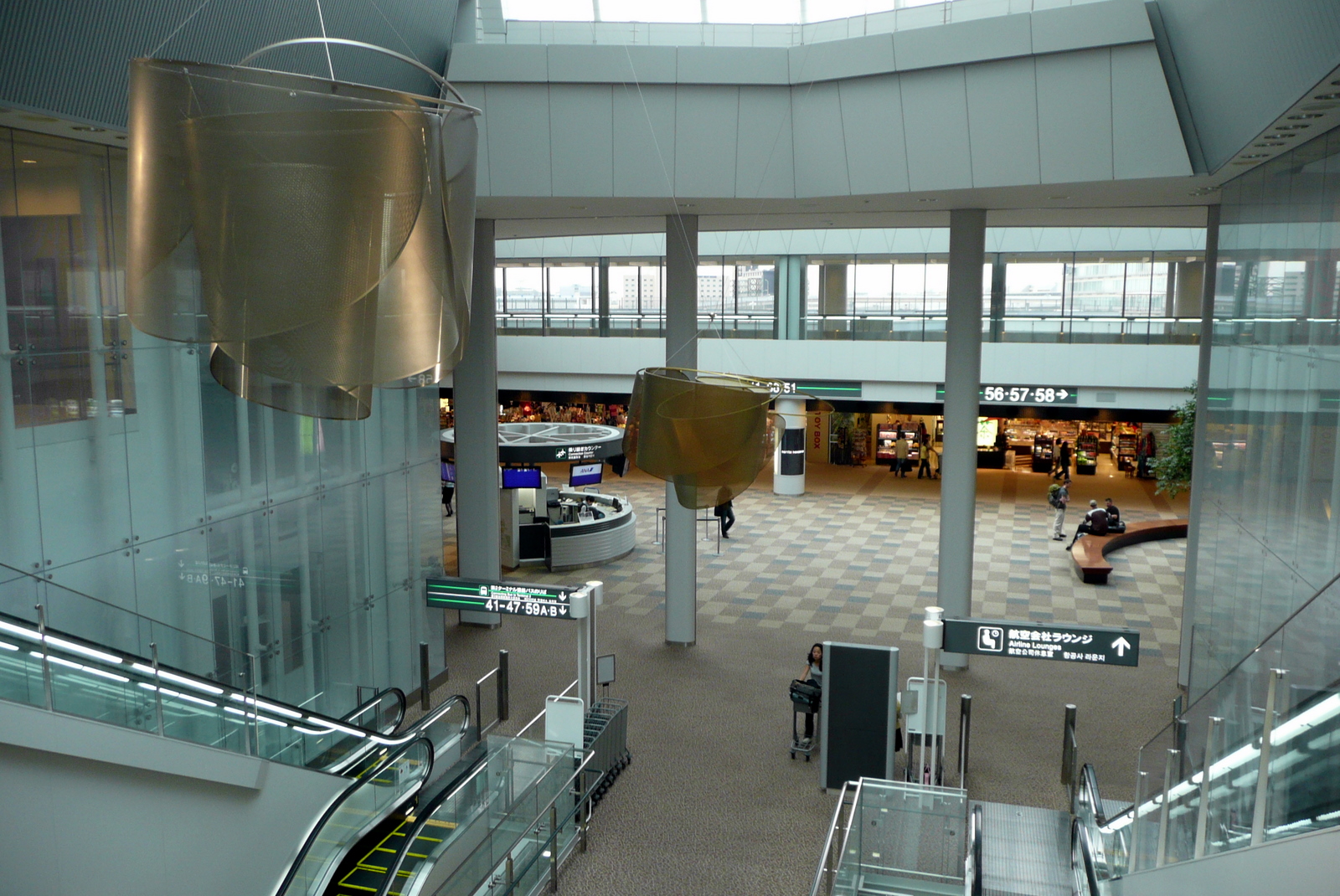
Beautiful new area in Terminal 1. While Narita doesn’t have all the amenities of Singapore Changi Airport, it is a more beautiful airport.
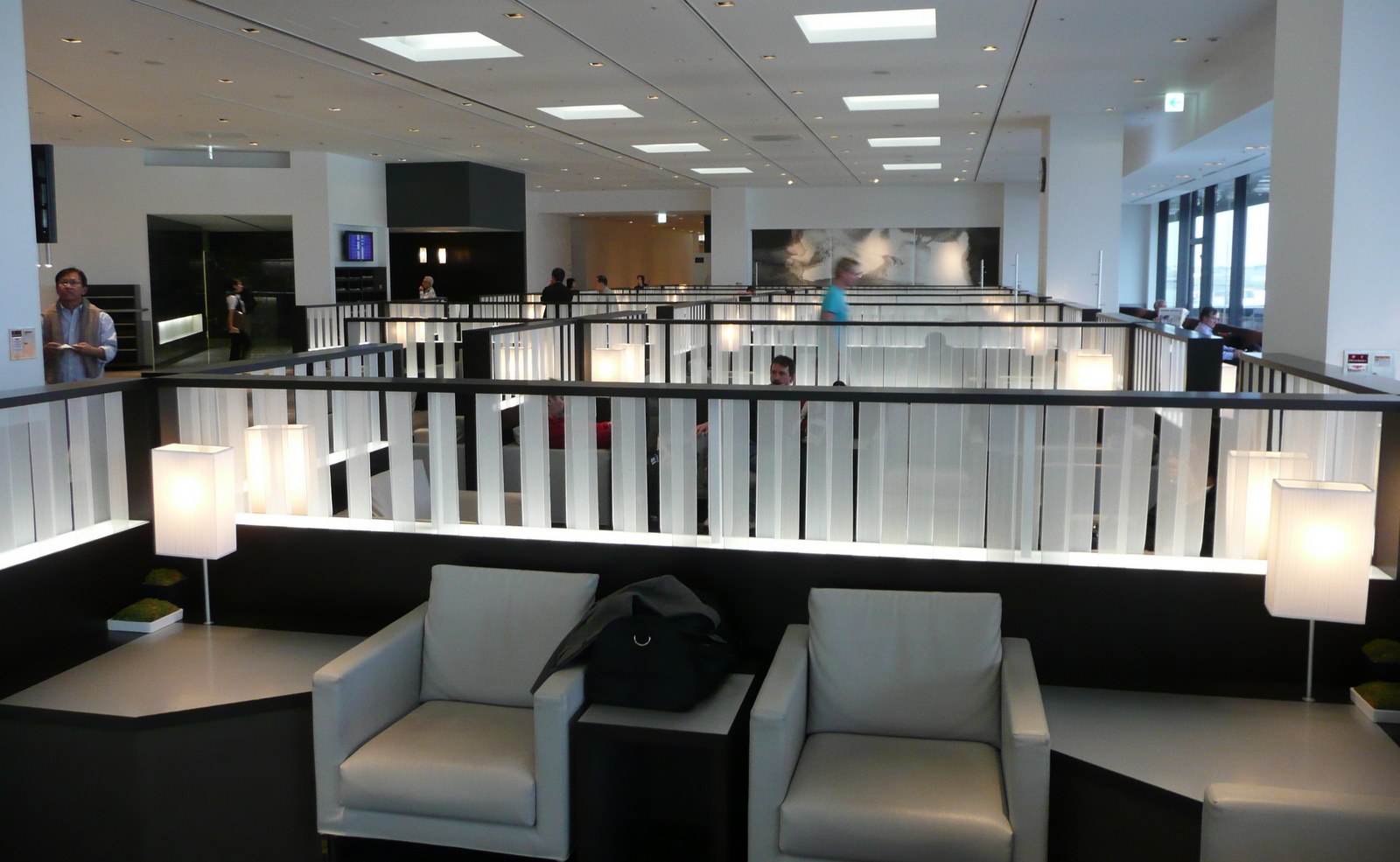
Since we had cashed in a few remaining miles to fly business class, we stopped by the All Nippon Airways lounge. If you are flying Star Alliance through Tokyo, don’t bother with the United Airlines lounge – go straight to ANA’s as it is much nicer.
With shower facilities and a good selection of food and beverage – not to mention an excellent view of the airfield – the ANA lounge was a nice place to relax before boarding the flight home.
Our friend Masakazu, whom we had joined for shabu-shabu and sukiyaki a few nights earlier, had emailed several of his friends who were working the flight back to Bangkok. The upside of this was that we received very friendly and attentive service on the way back home, including a complimentary bottle of wine to slip into our bag just before arrival!
After a full week in Tokyo, we work up at 3:00 am Thursday to check one last thing off our list: a visit to the Tsukiji Market, also known as the Tokyo Central Wholesale Market. Pronounced “tskii-jii”, this is the largest fish market in the world, doing some US$28 million of business each day.
The guidebooks all say that that the Tokyo Metropolitan Government has placed restrictions on what tourists can access at the market, after crowds caused concerns about sanitation and got in the way of the market workers. That, combined with my perception that a wholesale fish market isn’t a place I want to be wandering around on my own, aimlessly, prompted me to search out guided tour options.
Several reviews on the web sang the praises of Naoto Nakamura, a former market middleman who now gives tours three mornings a week. While pricey at 7500 yen per person (about US$75), he limits his groups to no more than six and adjusts his tours each time based on the conditions of each day.
This, I was certain, would be a good way to learn about the market from someone with first-hand experience.
My certainty was well-founded as the tour turned out to be every bit as insightful and informative as I could have hoped for. Nakamura-san’s English was excellent and his sense of humor very dry. We met our other two tour members, a pair of women (one who was half-Thai) visiting from the US.
The underlying subtext for the morning was a cat-and-mouse game. Outsiders (non-employees) are not allowed in many areas of the market, especially on the auction floors around the seafood. White-booted Tokyo Municipal Government inspectors were about and the captain of the market, Nakamura-san’s nemesis, kept appearing around corners and down hallways, so we would climb stairs, duck out side doors and do everything we could to avoid a confrontation.
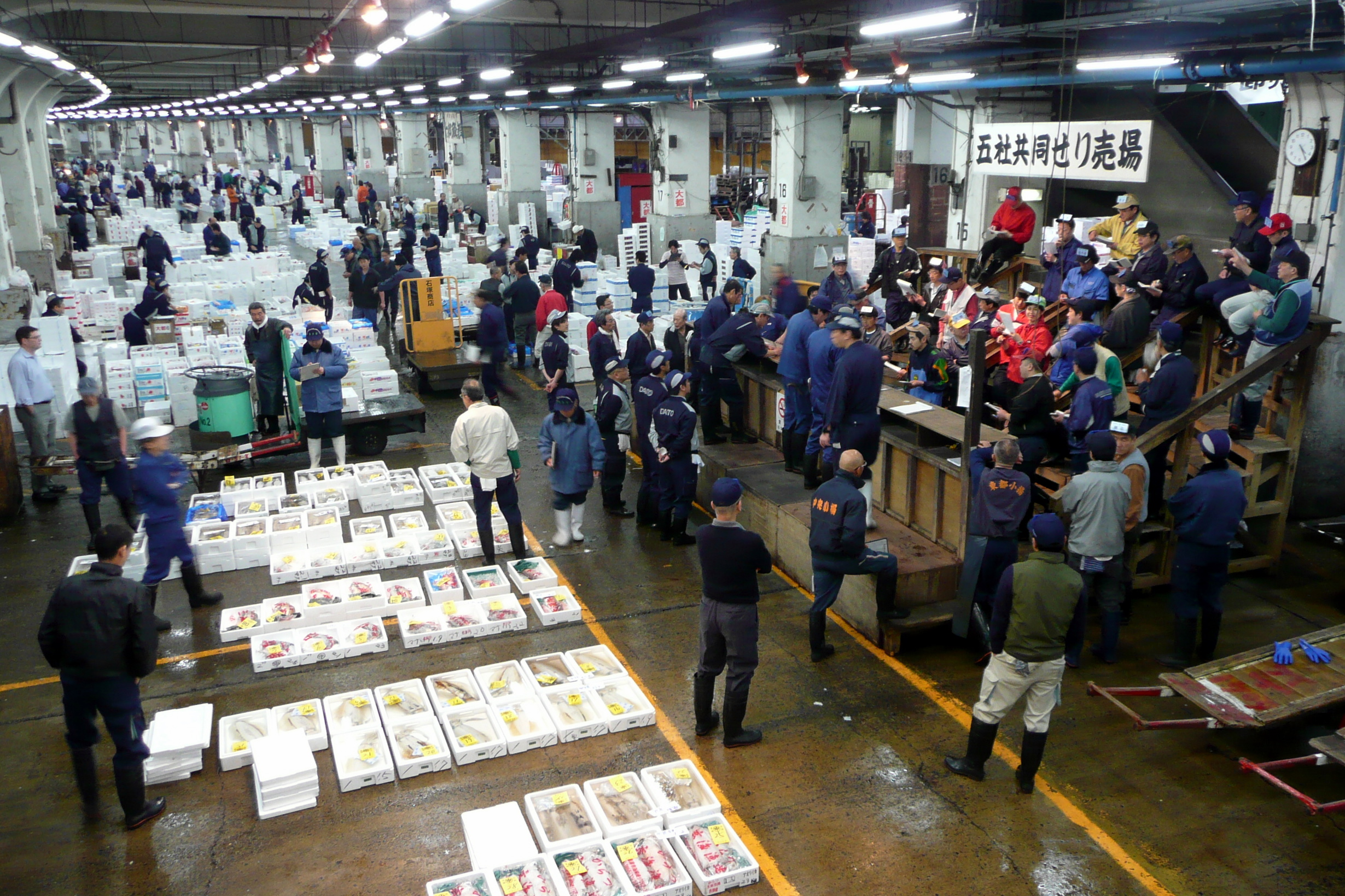
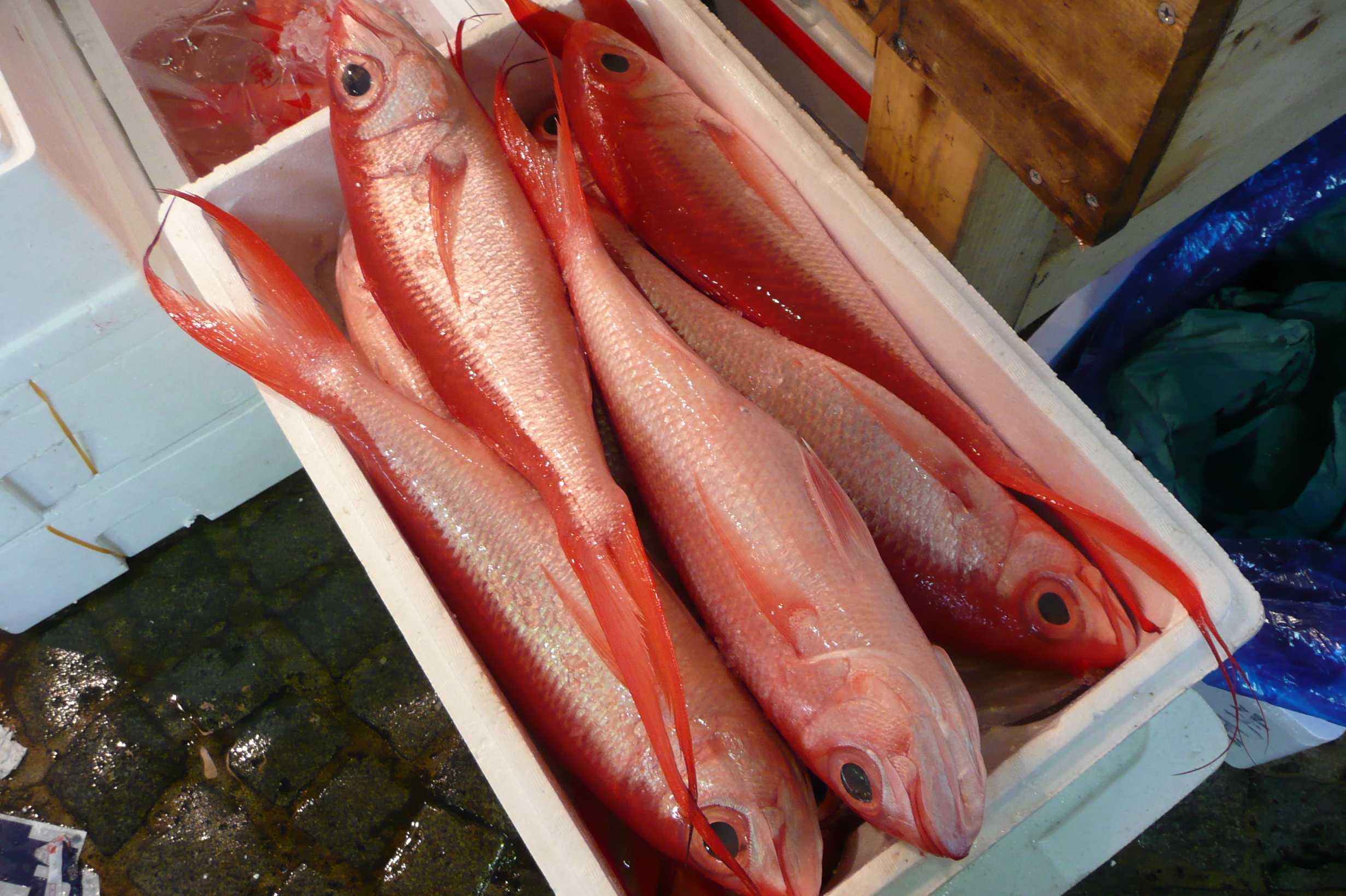
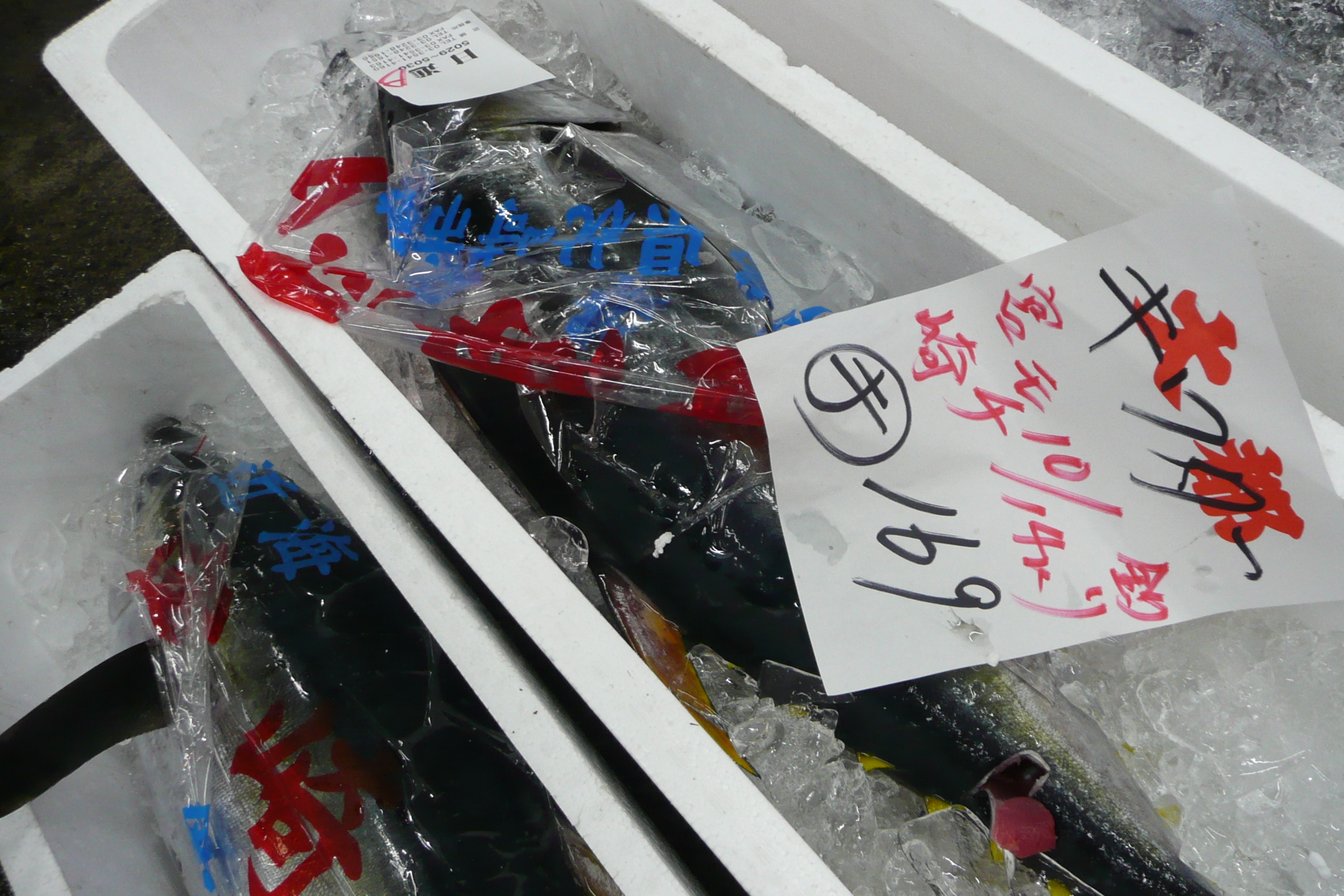
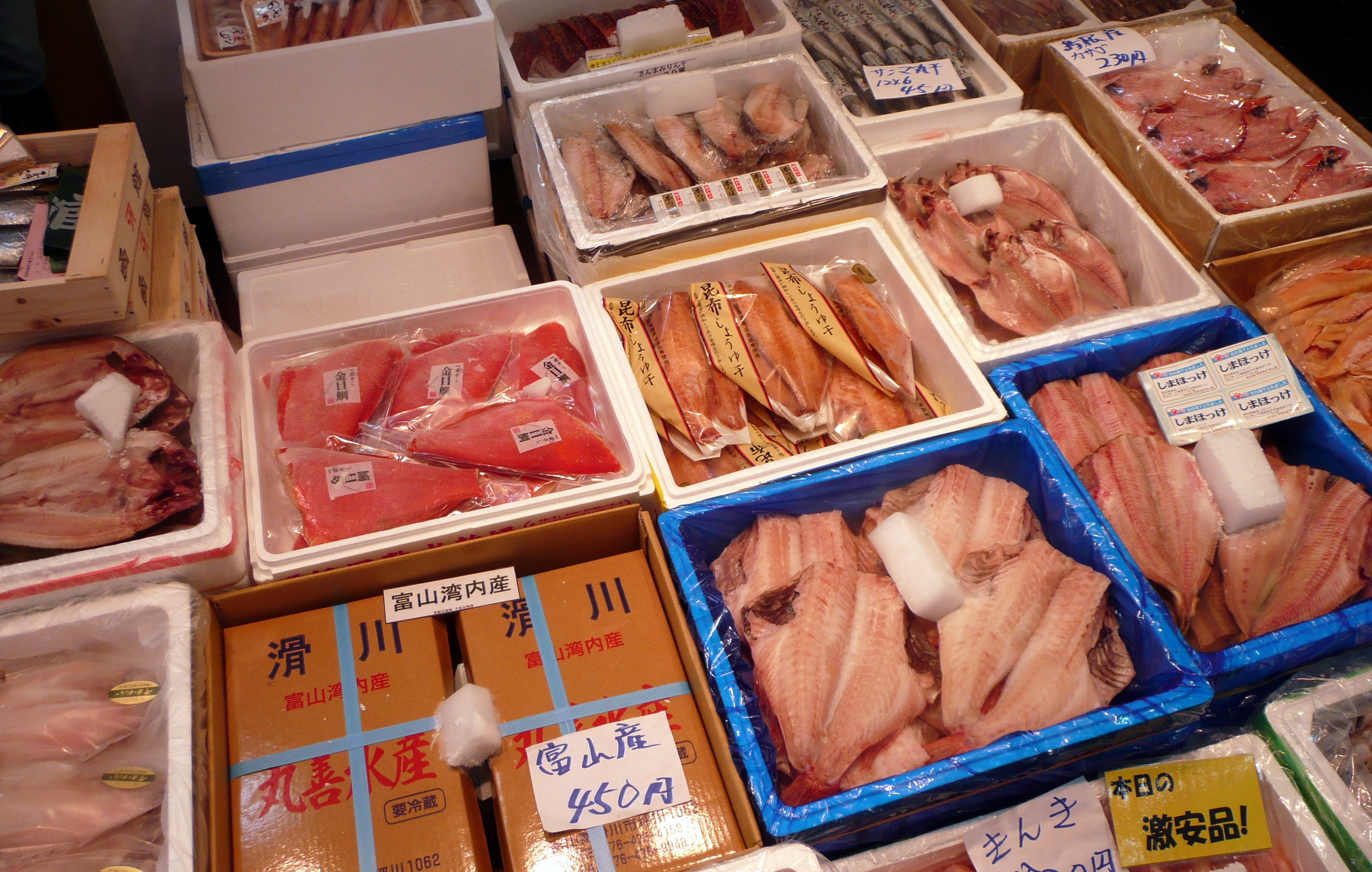
We started our tour in the fresh fish area, observing an auction and taking a look at the huge variety (more than 400 types!) of seafood for sale at Tsukiji. The fish arrives between about 6pm and midnight and is arranged by the vendors for inspection. By 3 am the middlemen start poking around, looking at the seafood and evaluating it. These days a lot of the sales are pre-negotiated, so auctions play a smaller role.
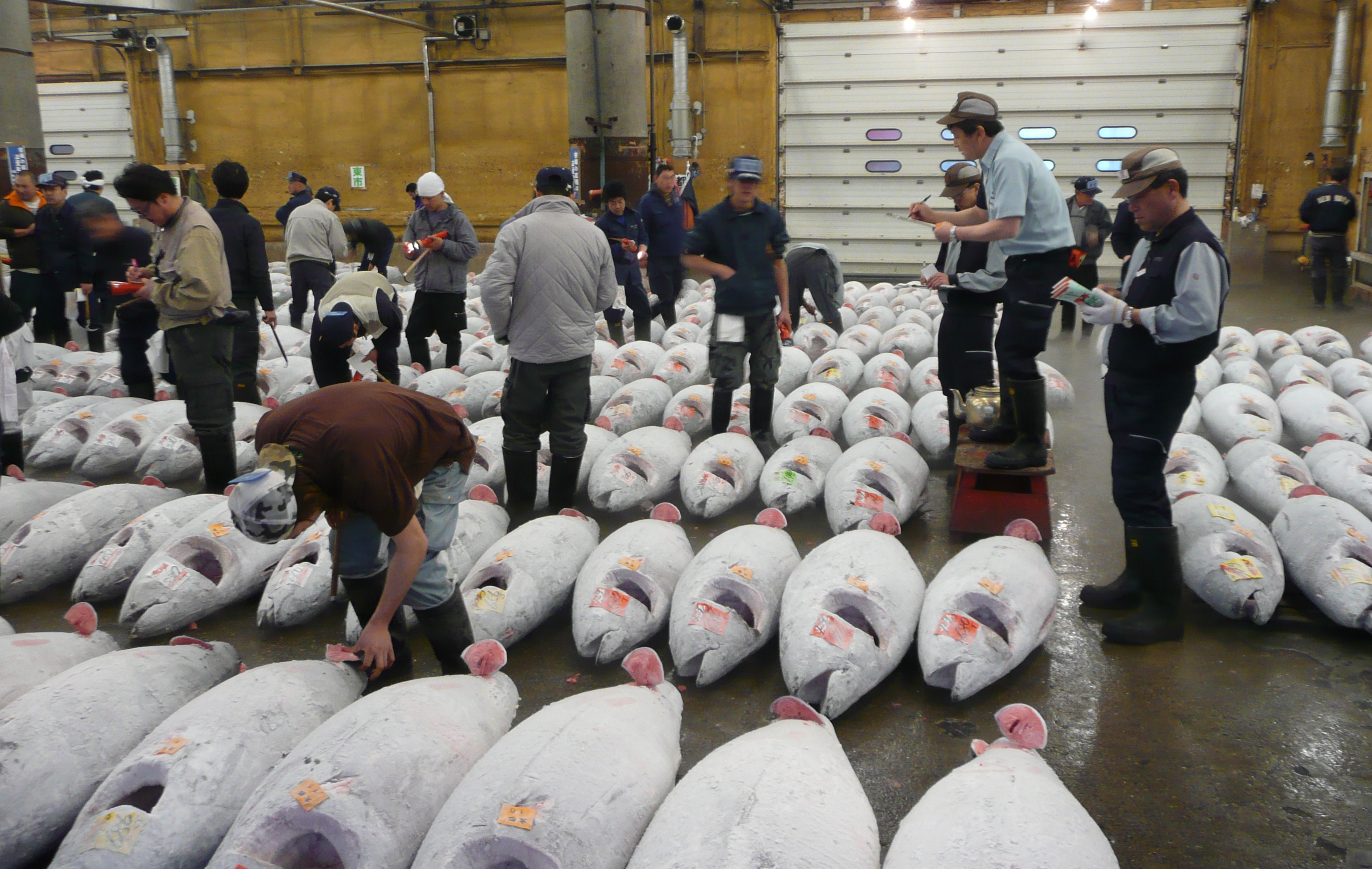
We then went to the fresh tuna warehouse, where these 70 kg (150 lbs) fish lay in neat rows, being inspected by middlemen, notches in the side allowing a clear view of the quality – and fattiness – of their flesh.
This is the key area that visitors are no longer allowed. So this picture was actually taken crouching down looking under a rolling door that was open about two feet high. The things I’ll do to get my shot.
We attended the auctions for fresh fish, live fish and sea urchins, marching away through the busy market, dodging electric carts that would silently creep up on you.
It was obvious that the market workers don’t really enjoy having tourists in their way, so it took a lot of concentration to keep out of trouble. I was amazed when, later in the morning, I saw tourists on their own, dragging children as young as about five around. Dangerous and inconsiderate of the people working here.
The frozen tuna auction is by far the most interesting, at least visually. These frosted fish look surreal, lined up with frozen mist rising around them like smoke. We had just a few minutes at the rolling door before it was closed on us, so we headed to the live fish auction.
Nakamura-san was able to get us up close for the live fish auction, above. This moves very fast as there are two auctions going on at the same time. Nearby, we saw workers pulling live fish from tanks based on the auction results, bashing them on the head with a knife, slitting their tail so the blood would drain out, then ramming a steel rod through their mouth and down their spinal nerve, killing them. Not quite so gruesome as it sounds, but definitely gives you an appreciation for the food you eat.
At the live tuna auction, the market’s captain caught up with us and gave Nakamura-san a lecture. Afterwards, he said, “At least he’s calling me ‘Nakamura-san’ now instead of the nasty names he used to use.”
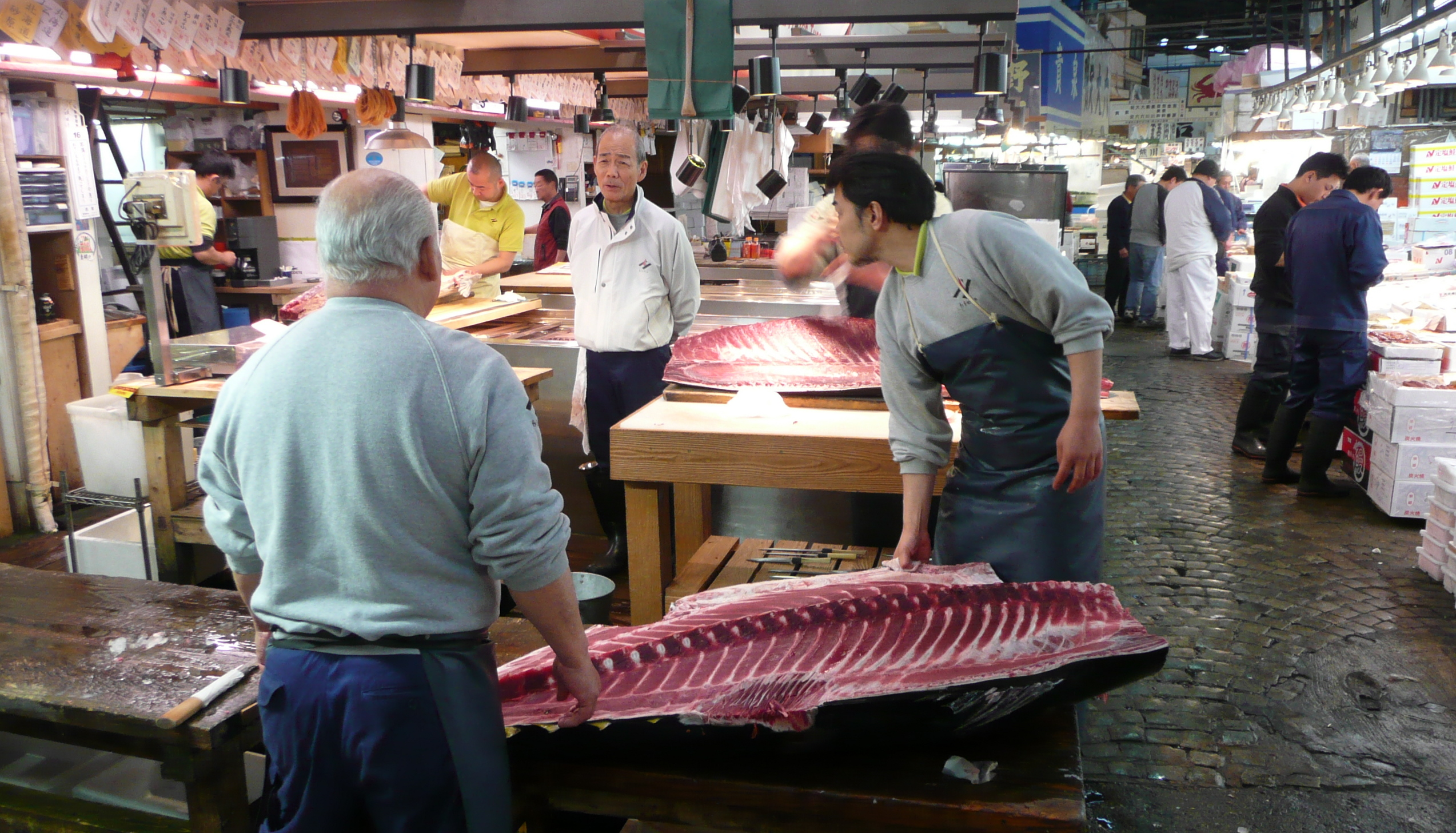
The auctions run from about 4:30-5:30, one after another. Even before the last fish is sold, middlemen start carrying their purchases off to their stalls, where they prepare the fish for sale. This is the last step in the transformation from whole fish to retail-ready cuts.
Recognize this fish? It is whale meat. The two rows on the right are from smaller whales but the back row is from whatever large-size whales Greenpeace tries to intervene in the hunt of.
Nakamura-san provided some perspective on why the Japanese are resistant to international pressure to end whaling. After World War II, the whaling industry we re-established in Japan to help with severe food shortages. For many baby boomers, whale meat was one of their main sources of protein during their childhood years. To this day, it has strong resonance with the population even if its consumption has sharply declined.
According to statistics, almost 50% of the total animal protein consumption in 1947 in Japan was whale meat. (Source: http://luna.pos.to/whale/jwa_trad.html)
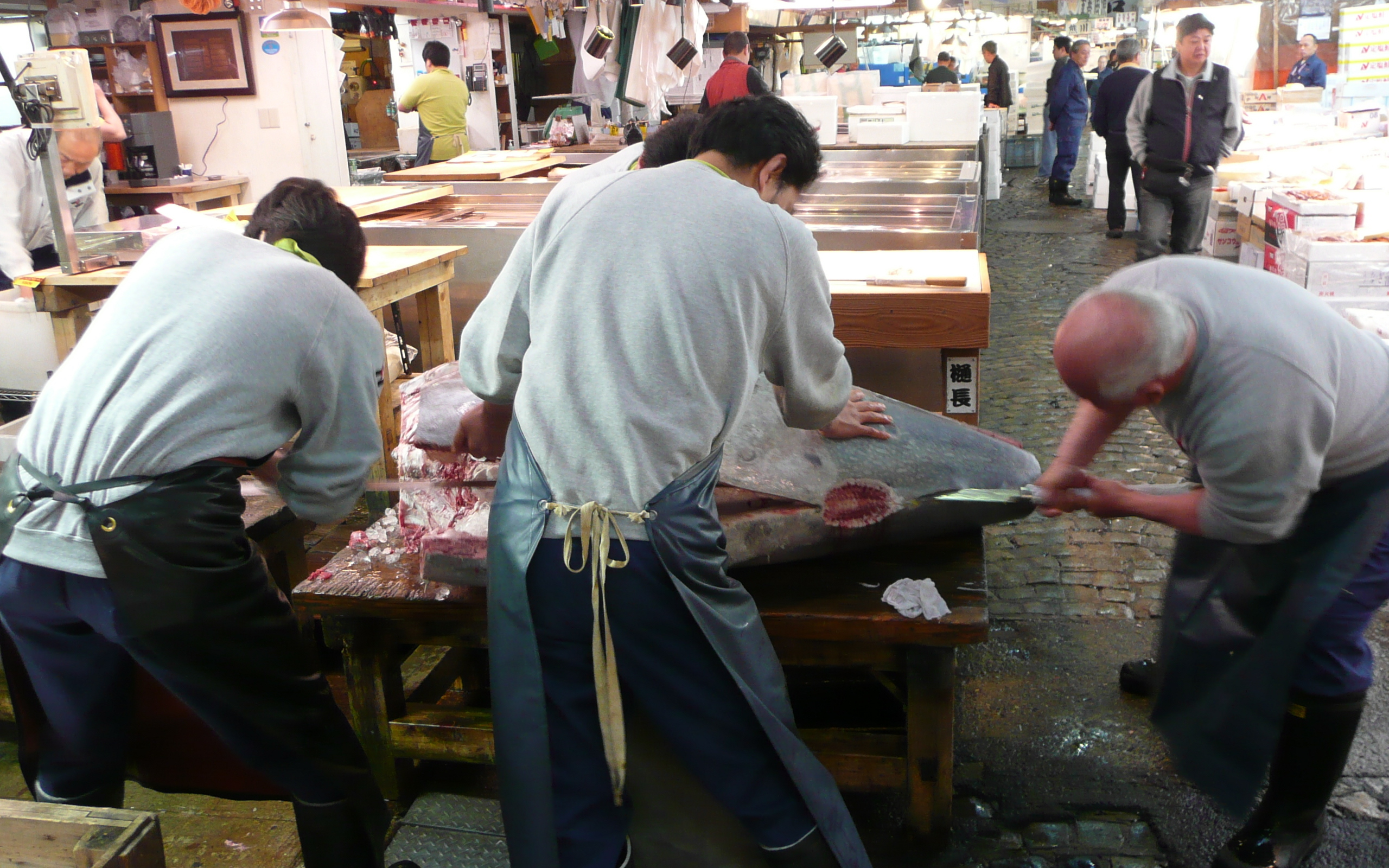
Watching the middlemen do their work was fascinating. Knife skills are a beautiful art and this balding man in the picture below really was an artist. Using a knife longer than a samurai’s sword, it took four men to carefully quarter a large fresh tuna.
The middlemen who bought frozen tuna had an easier time of it, using band saws to cut through the flesh.
By 5:45 or so, many tourists had shown up, most guiding themselves and trying to edge in on our tour for free. While they did get a peek at the tuna auction, I can’t imagine that they walked away with much of an understanding of the whole market. For that reason, I’m glad we did the tour.
By shortly after 6:00, Nakamura-san had shown us all we needed to see. He pointed out a few good sushi restaurants, took our money and thanked us. Since we were already there and we knew the sushi would be fresh, Tawn and I queued up to eat the best sushi we’ve ever had.
There are two restaurants in alley 6 of the “auxiliary market” (where the vendors that serve the needs of the market workers are located), both of which get quite a queue out their front doors. These are are the two most highly recommended sushi bars.
Here’s what we ate. Sorry that I can’t identify what everything was.
Something very fatty (toro?) and squid
Ebi (Shrimp) and Maguro (Blue Fin tuna)
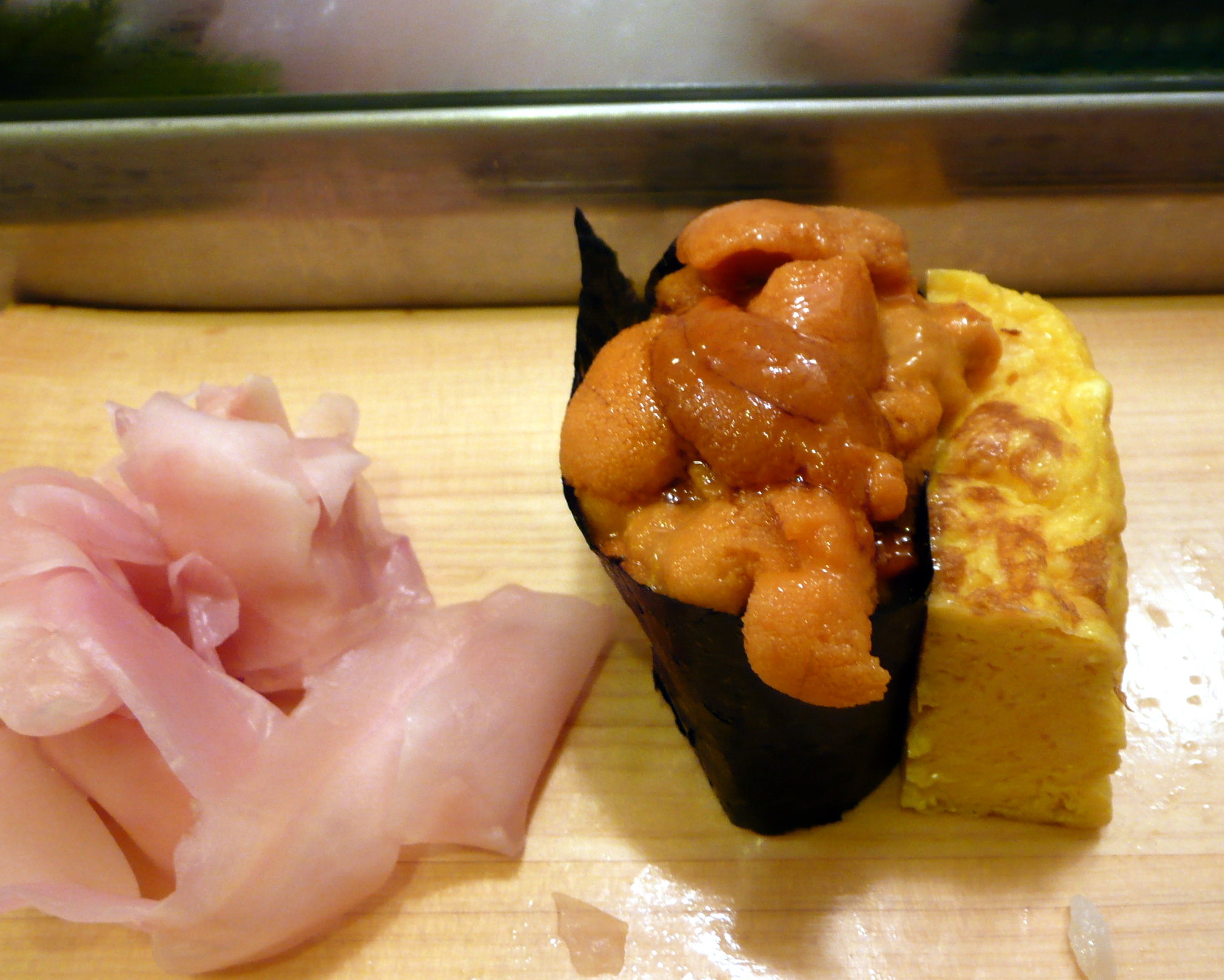
Uni – sea urchin with scrambled egg
Tuna and Ikura (Salmon Roe) Nigiri (seaweed-wrapped sushi); and I think Grilled Saba (Mackerel) and Hamachi (Yellow Tail tuna). But I’m not certain.
Total cost for the set including rice, soup and tea: 3500 yen, about US$35. Pricey, but really good. This is one of the few times I was willing to really splurge.
Again, I can’t say enough good things about the tour. If you’re going to Tokyo and are interested in the tour of the market, you can find Nakamura-san’s website here.
Here’s a video of our trip to the market:
After “breakfast” we returned to the hotel for a few more hours of sleep, then packed our bags and headed to Narita Airport for the flight home. And with that, eight days in Japan came to an end.
You probably are wondering if these entries about Tokyo will ever end, right? Well, just a few more, then we’ll be back to Thailand. Actually, we’ve been back in Thailand since Thursday evening, but it takes a while to sort through pictures and tell all the stories.
During our trip, we were fortunate to have many friends to visit, most of whom are Japanese or Japanese-Americans who have lived in Tokyo for some time. This gave us an edge in knowing where to go and what to see and eat, because they made the decisions for us.
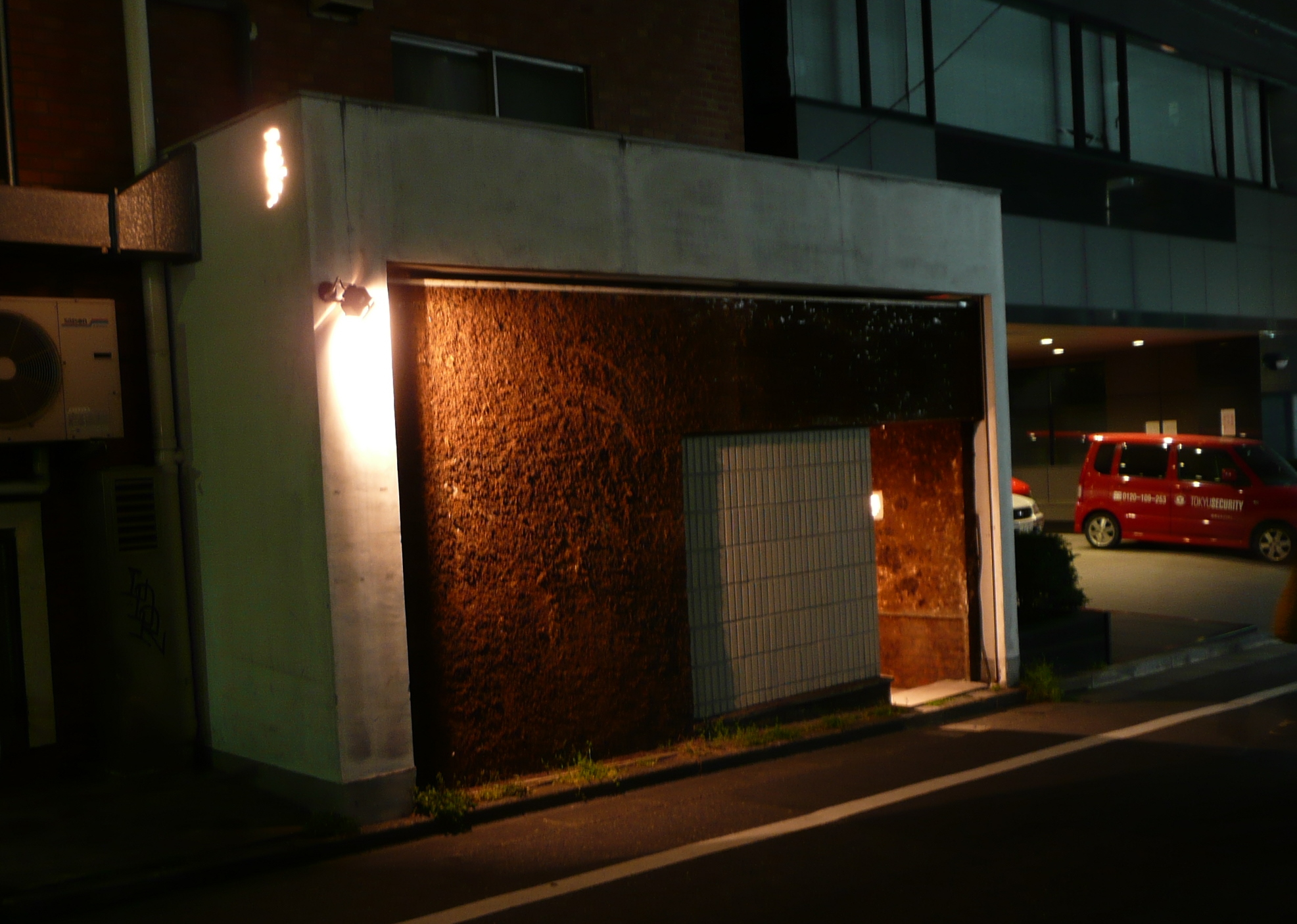
Taro took us to Teyandai, an izakaya (basically a tapas bar) that specialized in Okinawan cuisine. Hidden down a small street just a few blocks from the hustle and bustle of Shibuya, Teyandai is a real gem.
You would never notice it. The sign (in Japanese only) is the small patch of light on the upper left side of the lava stone facade. Other than that, there’s no indication what the building is.
But you head inside and find this wonderful space.
There are several small sections to the restaurant, all crowded and cozy. Notice the small seating area halfway up the steps!
There was quite a large group of us: HP, Mark and Kathy from San Francisco, a couple HP and Mark knows from Spain and their son, and then Tawn and I and Taro. We settled into a tight corner at the back of the room and started drinking and eating.
Compliments to Taro’s Panasonic Lumix LX3, which I borrowed to shoot these shots. Its low-light performance is incredible, as its macro function. HP helped by using a white screen function on his iPhone to provide some close-up ambient light. (Thanks to Taro for letting me snag these pictures from his Facebook site.)
Here’s a look at some of the dishes we enjoyed:
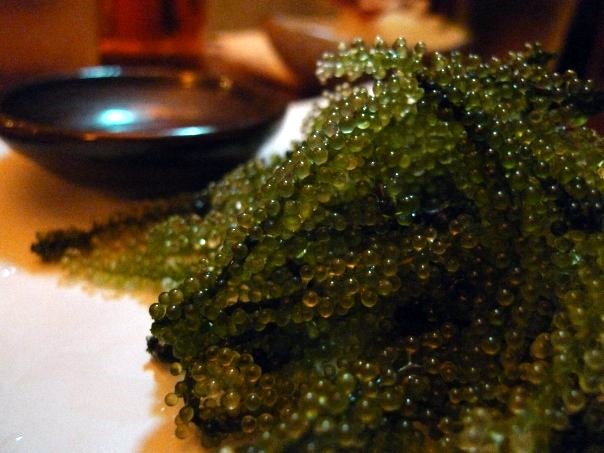
Recognize it? Everyone’s favorite: umi-budo (sea grapes), a type of seaweed that is also known as green caviar. Served with a plum-yuzu dipping sauce.
Yamaimo no tatsuta-age (fried mountain yam) with tartar sauce. Lovely.
Atsuyaki tamago (fried egg) stuffed with unagi (grilled eel).
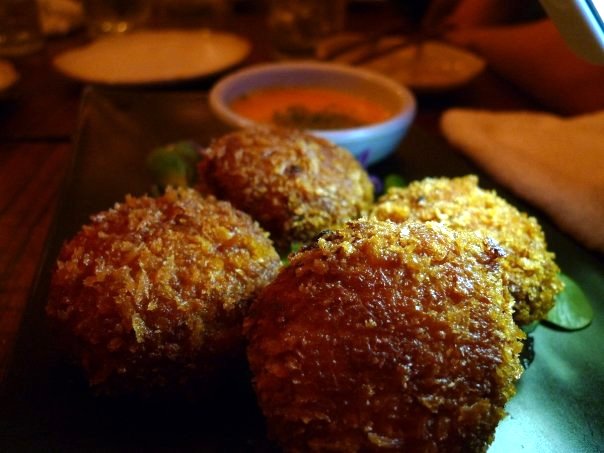
Buta-suki corokke (pork sukiyaki croquette) which you dip in raw beaten egg before eating.
Ebi-mayo (deep-fried prawns with mayonnaise sauce), similar to the walnut prawns dishes you find in many Chinese restaurants, but without the walnuts.
Don’t have the Japanese name but it is a fried rice dish with pickled takana vegetables.
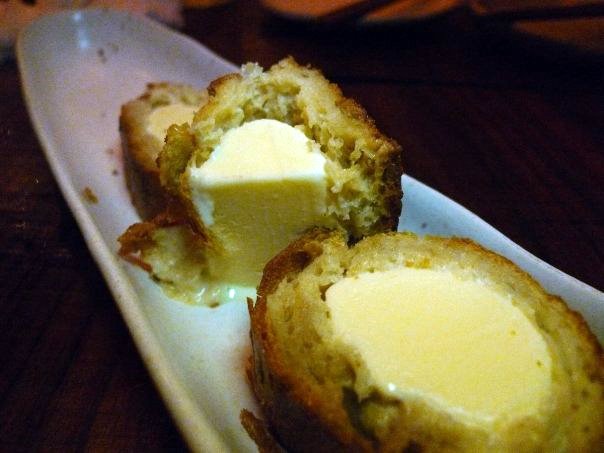
Pan-aisu (bread ice cream) – it is actually a very French baguette stuffed with vanilla ice cream. Can I tell you how wonderful this combination is?
Fondant chocolat – not a traditional Okinawan dessert, I might add!
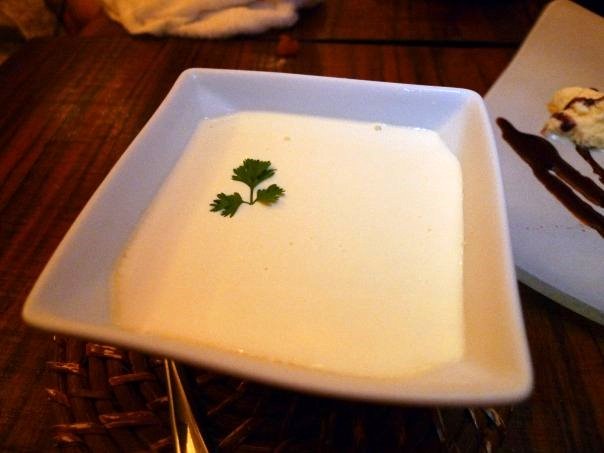
Kokutou purin (brown sugar pudding). Taro’s favorite, the eggless custard on top hides a rich pool of pudding made from an unrefined, molasses-like sugar.
Me and Tawn in the entryway of the restaurant. It contains little counters so if you’re waiting you can go ahead and start eating and drinking… which I guess means you wouldn’t really be waiting.
This was the highlight meal of the trip. I really enjoy restaurants where I can try many different things and of course a “small plates” restaurant really meets that need. There is no Japanese menu but if you make it to Tokyo I would encourage you to seek this restaurant out – the map is above. I’d be happy to get you the name of things in Japanese so you can order. Or just randomly point at things in the menu.
After dinner we went to Advocates Bar, one of the most inclusive bars in the gay district in East Shinjuku. Situated on a corner, the bar only has room for about three people, so it inevitably spills out onto the street.
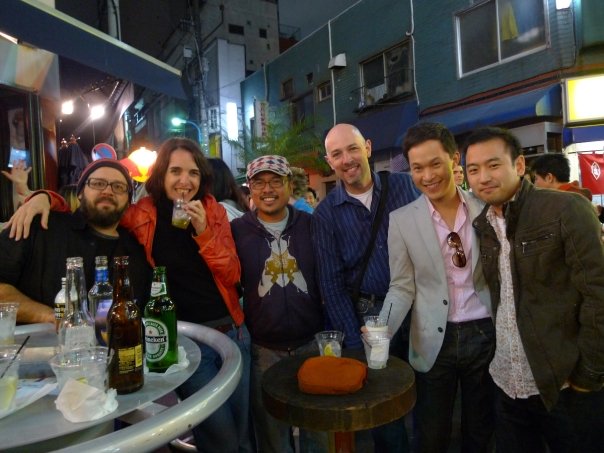
Left to right: Mark, Christina, HP, Chris, Tawn and Taro. Kathy took the picture.
Unlike many of the small bars in Tokyo that are geared very much to only Japanese or only men, Advocates welcomes anyone and everyone. We had a tall Japanese drag queen wandering around, plenty of westerners and women, as well as locals. All in all, a very “community” watering hole.
Last thing to write about: our trip to Tsukiji fish market.
After a night in Hakone Yumoto we headed back to Tokyo on a misty and overcast Tuesday morning for two final days in Japan. Switching hotels from our comfy little place in Ueno, we went upper end and stayed at the swanky Park Hotel in Shiodome.
This hotel, which I initially confused with the Park Hyatt Hotel of “Lost in Translation” fame, is still very nice and a very good value. Located on the 25th-33rd floors of the Shiodome Media Tower (with the lobby on the 25th floor!) this new hotel is centrally located to four subway/rail lines. Rooms are modern and well-equipped and the staff is exceptionally attentive.
Best of all, the view from the room (the same one as from the reception counter in the lobby), is stunning:
The upside/downside of this hotel’s location is that Shiodome is kind of like Century City in Los Angeles: largely a complex of business towers, a glass and steel wasteland that is deserted at night. It is at once well connected to the city and cut off from it.
An example of the stunning modern architecture across from our hotel, along with the kitschy faux tori gate set up in front of it:
Not far from this concrete netherland we did find signs of nature: the landscaped grounds of what is considered one of the world’s finest daily newspapers, the Asahi Shimbun.
Along our way we found more of the ubiquitous vending machines. Water, water all around and not a drop to drink… if you don’t have a 100-yen coin.
One of our stops was the Tokyo Metropolitan Government complex in Shinjuku West. The pair of buildings at the center of the complex house two free observation decks: one of each tower’s 45th floor. The view is wonderful and Tokyo stretches as far as the eye can see. They say that on exceptionally clear days, you can see Mt. Fuji. Today, though, all we could see is this funny egg-shaped building.
It took me a while to find out what building this is, but the internet is a wonderful tool. Thanks to Emporis.com, an international commercial real estate database that is accessible to the public, I located the so-called “Mode Gakuen Cocoon Tower”. This 50-story educational building houses three different vocational schools and was selected by Emporis as the 2008 Skyscraper of the Year. More info here.
On the ground floor of the Tokyo Metropolitan Government towers is an excellent tourism office that provides all sorts of useful, free information about greater Tokyo. One thing they offer (for which you are well-advised to sign up for in advance) is free tours in English. Something I will do differently on my next trip to Tokyo: stop here on day one.
There is also an office providing information about the other prefectures of Japan. Although much of the information is in Japanese, some English language materials are available. There are some fantastic three-dimensional wall displays showing the highlights of various regions. They looked like the hats from Beach Blanket Babylon.
For lunch, we tracked down Funabashiya, a famous tempura restaurant in East Shinjuku recommended by a friend, Masakazu. Dinners run around $50 here but like most restaurants in Tokyo, lunch is a much better deal.
This restaurant is about only one thing, tempura, and they do it incredibly well. They’ve been around for years and their lunch special – about $10 – was a set of two batches of tempura with rice, soup and pickles. The second batch of tempura was a surprise. After receiving a generous serving of light, crispy vegetables and shrimp fresh from the wok, we were already satisfied. Then the waitress returned a few minutes later with a second serving!
It is hard to describe how perfectly cooked this tempura was. Very light batter and not a bit of grease. There were three types of sea salt to sprinkle on the tempura, including a red salt with lots of minerals and a pepper-salt mixture.
After lunch we did a little more shopping in Shinjuku, including a stop at Tokyu Hands, an eight-story crafts/hardware/home improvement/DIY store in which you can definitely find at least one thing you never knew you needed.
On the way back to the rail station we passed something surprising: a large Krispy Kreme donuts outlet. Fellow Xangan Tony took a picture of this on a recent trip to Tokyo but I was surprised to see it in person, and even more surprised by the number of people queued outside at 3:30 in the afternoon!
Nearing rush hour, we hopped on a train, connected at Shibuya and traveled two stops further to a hidden gem that isn’t on the tourist guidebooks’ radar screen, yet: Naka-Meguro.
Everyone wants to find that little hidden corner of a city, one they enjoy because it is hip and cool but not yet discovered. Of course, by the time you find out about it, the secret is already out and Naka-Meguro is no exception. Recently dubbed “the coolest corner of Tokyo” and profiled in the NY Times travel section, Naka-Meguro is a collection of cafes, boutiques and bookstores that runs along an idyllic, tree-lined river.
Sure, gentrification is quickly happening and this area, which has never been inexpensive, is getting pricier by the week. But it is still a cool and relatively quiet area and, given that it is just two stops from Shibuya – home of the intersection that sees two million people a day pass through it – it is amazing that it exists at all. I’d definitely recommend you spend a few hours in the afternoon here, spilling into dinnertime if at all possible.
Left to right: clothing and other fun items recalling Blackploitation and the 70s; Tawn in front of something a hair hipper than a Goodwill Store; a uber-modern Japanese sweets shop.
Left: Another clothing store with a vaguely “rust belt” look; a stock pot cools on the windowsill of a restaurant specializing in squid.
Sadly, evening was falling fast, Tawn was feeling a bit exhausted from all our running around, and we had a 3:45 am appointment the next day, so we excused ourselves from Taro, Mark and HP’s company and headed back to Shiodome, stopping at a tiny hole-in-the-wall tonkatsu place at the JR Shimbashi station and unwittingly finding the best tonkatsu we had in Tokyo!
This tiny place was full of salarymen – the typical Japanese office workers – and there was nothing in English except for the Asahi beer bottle label. We pointed to one thing on the menu (after all, everything there was a form of tonkatsu so how wrong could we get?) and ordered two plates of it.
What arrived was beautiful in its simplicity. The chef cooked and drained cutlets of pork loin, each with a small strip of fat along one side and served with shredded cabbage, rice, pickled daikon radish, and miso soup with baby clams. The setting was pretty plain and the plating was that of a blue plate special, but the tonkatsu was divine: moist and flavorful interior with a crisp, dry exterior. Perfection.
We were in bed by 10:00, trying to catch a few winks before a very early morning on our final day in Tokyo.
After four days in Tokyo, we checked out of our cute little hotel and took the train out of town. Our destination: Hakone, a cute little town with onsen (hot springs) in Kanagawa prefecture and the gateway to the Mt. Fuji region. The timing was perfect: as much as we enjoyed Tokyo, after the first four days we were ready for a little break.
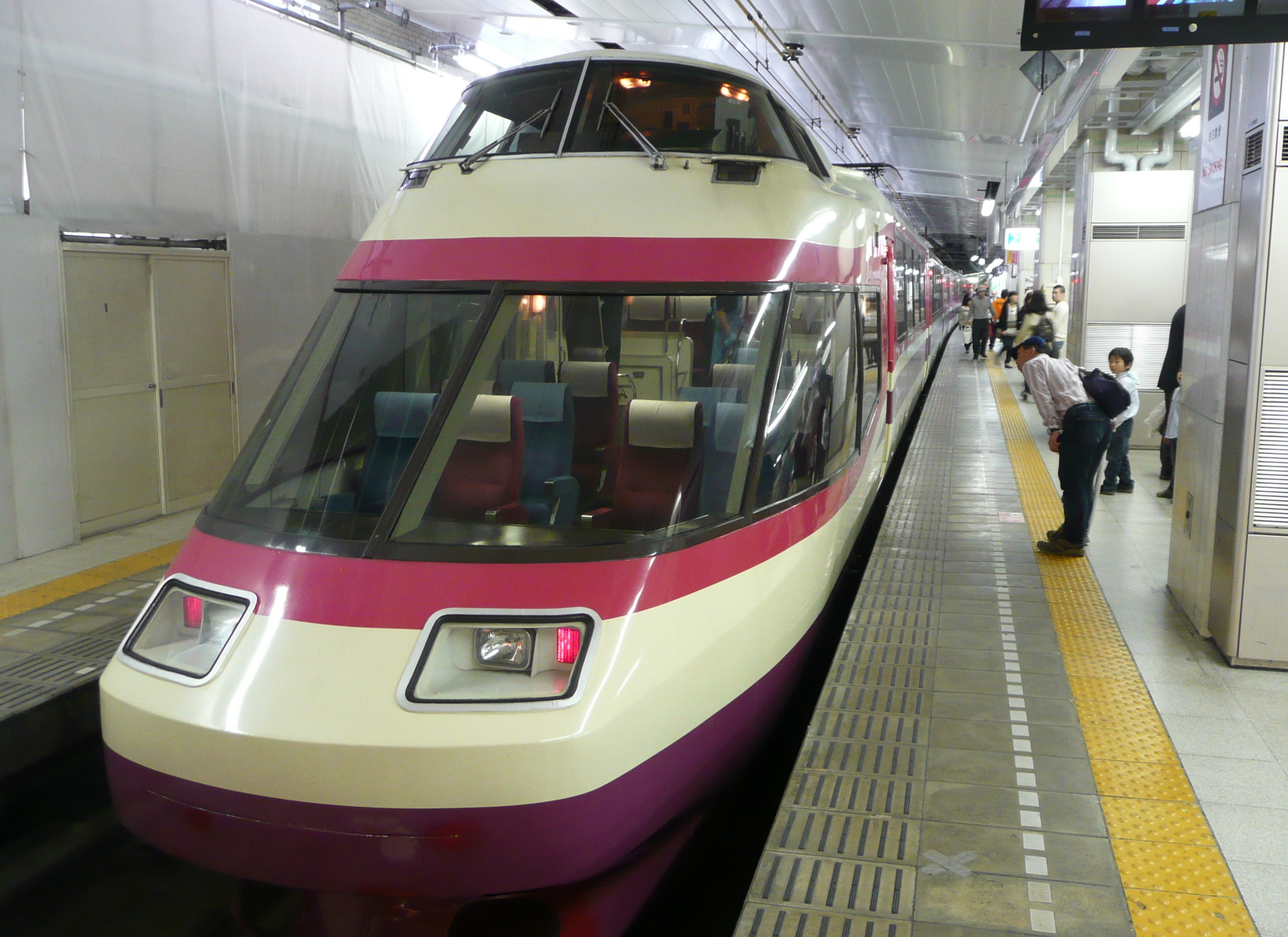
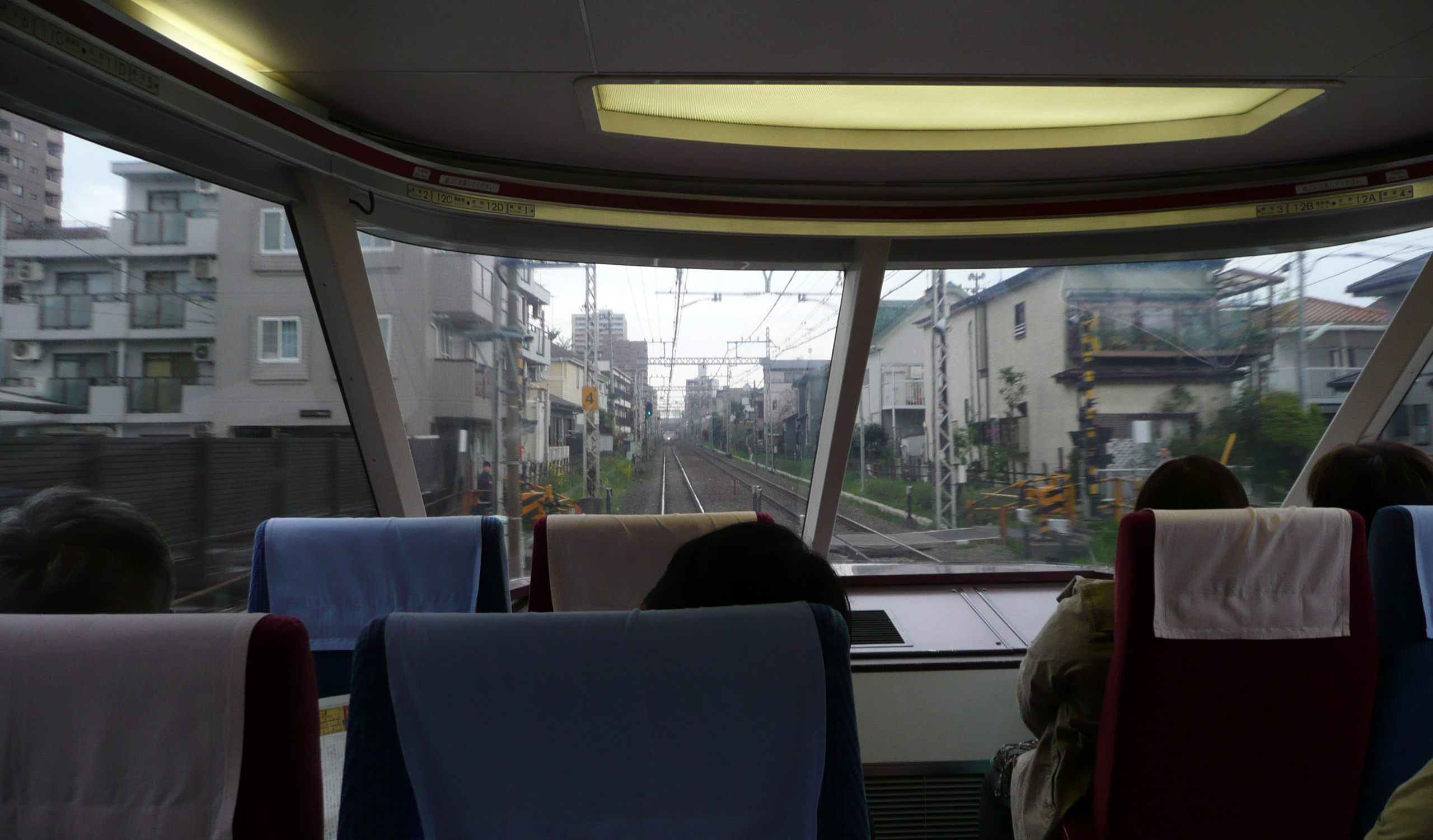
The “Romance Car” is a 90-minute service from Tokyo’s Shinjuku station to the town of Hakone Yumoto. It isn’t particularly romantic but it has forward facing seats as opposed to the subway car that is used for the local service on the same line. The best part of the Romance Car is that it looks vaguely like a Boeing 747.
You can sit in the nose area and have this fantastic view for the whole trip.
Arriving in Hakone Yumoto, we found it to be a charming, quaint town. A small river flows through it and it is easy to walk from the train station to just about anywhere in town.
Our hotel, Hotel Senkei, was a traditional Japanese inn complete with hot springs bathing facilities just a ten-minute walk from the station. Nestled into a hillside, the Senkei is quiet and charming.
One overall observation with travel in Japan – an observation which held true at the Senkei – is that English isn’t that widely spoken. Not that I expect people in other countries to speak in my language, but with the large number of non-Japanese we encountered, both in Tokyo and even here in Hakone, I was a little surprised that there aren’t more people in the tourist industries who speak languages other than Japanese.
That’s not a problem, though. Between Tawn’s few words of Japanese and a good game of charades, we were able to communicate reasonably well with almost everyone. There were only a few times – I had a problem with my train ticket to the Narita airport, for example – when we felt a communication barrier. In that case, I felt like the person working the ticket gates genuinely didn’t want to help me.
In either case, what is there to do in Hakone? Well, seeing Mt. Fuji is the main thing and it was my objective. You can buy a “Hakone Free Pass” which isn’t free but which allows you to travel on all the different types of transportation in the region. And what a range it is!
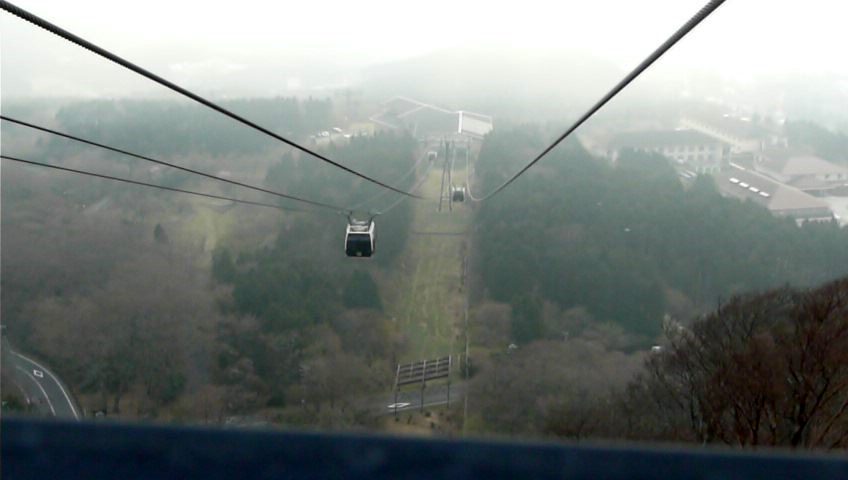
First, you take a cute two-car train about twenty minutes up the mountain. (This isn’t Mt. Fuji, just another small mountain above the town.) Then you transfer to a funicular railroad (above). This leads to the “Hakone Ropeway“, an aerial lift that carries gondolas over the summit of the small mountain and down to the shores of Lake Ashi.
This is what the view from the Hakone Ropeway is supposed to look like.
When we arrived there at 4:30 on Monday afternoon, this was the actual view. The entire lake and mountainside was socked in with fog. It reminded me of San Francisco. So, no Mt. Fuji.
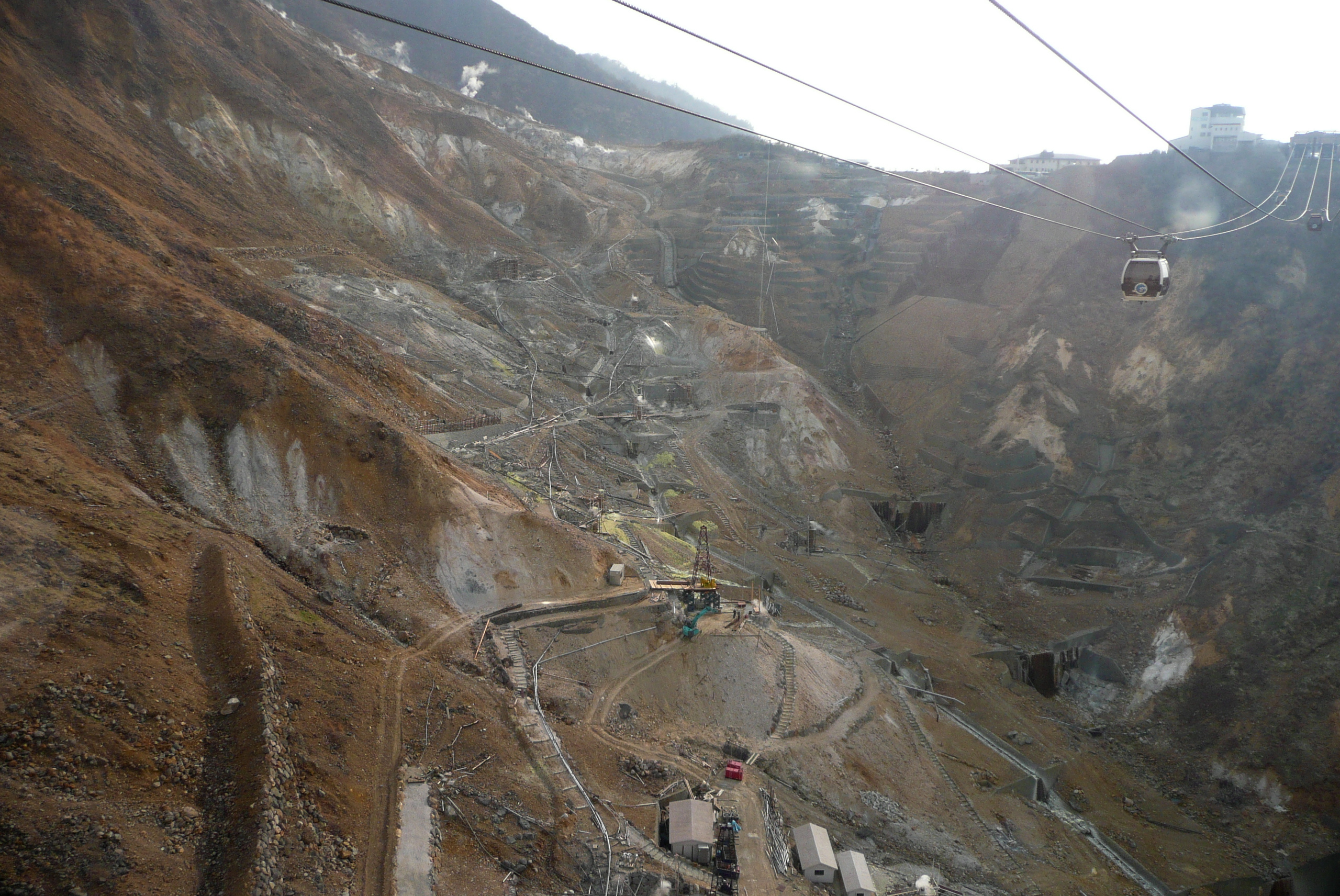
Along the ropeway’s path you cross a large sulfur mine – the so-called Valley of Hell – that really is aptly named. You can see where they’ve stripped away large portions of the mountain and there are large yellow deposits of sulfur. Oh, and it smells like rotten eggs, of course.
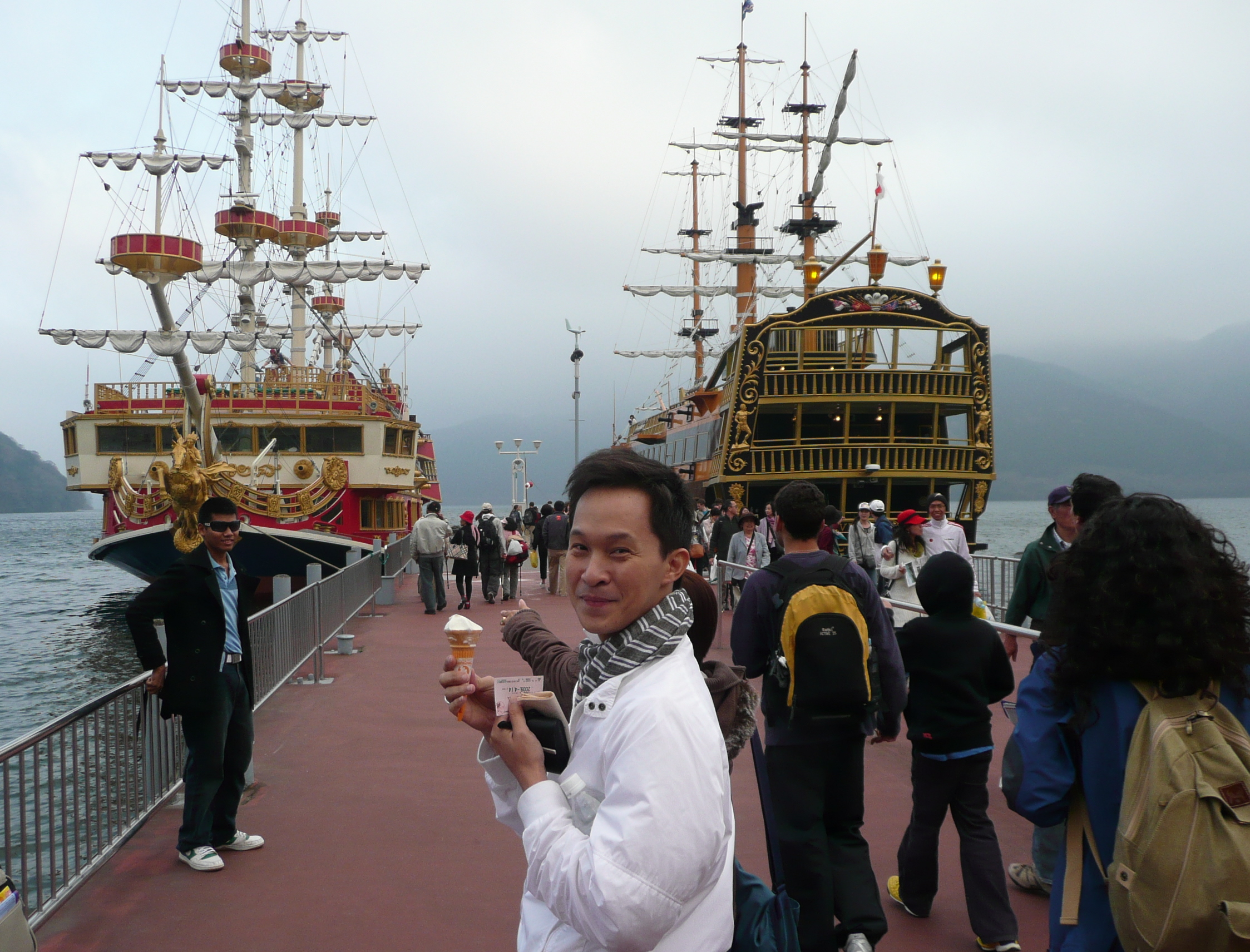
When we arrived at Lake Ashi, it was also socked in. We had just ten minutes before the finally ship of the day would sail to the far end of the lake, a thirty minute journey that normally affords nice views of Mt. Fuji. Incongruously, the ships are decorated like pirate ships.
Why Tawn was eating an ice cream, I don’t know. It was very chilly on that dock and we stayed inside the boat for the whole trip. At the far end of the lake we boarded a bus, completing the circuit back to Hakone Yumoto.
Exhausted, we returned to the hotel and changed into our yukata, the traditional Japanese robes one wears when lounging about the room. We had already been asked of our preferred dinner time and we chose the latest we could – 7:00. This video shows highlights from our entire Hakone trip but a large portion of it shows the elderly Japanese housekeeper who lays out an elaborate dinner spread and tries to explain to us how to eat it.
To say that the meal was elaborate is an understatement. There were some dozen individual dishes, each prepared with great attention to the presentation. They were delicious and beautiful and by the end of the meal, we were truly satisfied.
We had a lacquered tray of five little amuse bouches. Sadly, I can’t tell you what they were, only that each was tasty and fun to eat.
We had sashimi, pickles, potato salad and something in the green jar that I can’t remember.
The main course was shabu-shabu, beef and vegetables boiled in water and dipped in a sesame sauce.
Twenty minutes after we started eating, the housekeeper returned to serve tempura, the lotus root rice, and a cold pork dish. The miso soup in the corner had these tiny clams in it, smaller than my smallest fingernail. The tempura was a new experience: instead of being dipped in a heavy batter, it had just a light egg wash. The inside was a scrambled egg, one pouch with a scallop and the other with a shrimp. The theme was “sakura” – cherry blossoms – and so the little decoration is meant to evoke a sakura in full blossom. The other thing I learned is that with really good tempura, you’re meant to sprinkle a little sea salt on it.
We were so busy taking pictures that the housekeeper was probably wondering if we were ever going to eat.
Not only did I have to take pictures for this blog, but we had another Flat Stanley traveling with us, this one from Monterey, California. Of course, Stanley wanted to try some Japanese food, too!
While Japanese meals don’t usually include dessert, we were served some of the wonderfully sweet local strawberries with a dollop of whipped cream. The perfect way to end the meal.
After dinner, we went downstairs to the hot springs. Hot spring baths, or onsen, are a central part of Japanese culture. These mineral rich waters are said to be good for any number of ailments and I think the simple act of relaxing in a tub of hot water is a good stress-reliever.
The hotel had both indoor and outdoor baths. The single outdoor bath alternates days for men and women. Both sexes had their own indoor bath, though. Japanese baths are the great leveler: everyone is naked and young or old, skinny or fat, the baths make you realize that we are all pretty much the same.
There were signs and cartoon instructions in both Japanese and English making sure the two important rules of Japanese bathing were observed: First, you clean yourself thoroughly before entering the hot springs. There are little stools and shower hoses in a row and you sit down and scrub yourself until you are pink. Second, your little hand towel must never be put in the bath water. You can put it on your head, use it to cover your face, set it on the side of the bath – but don’t put it in the water.
While we were being scalded in the onsen, the housekeeper took down the table and set up our futons. These were not as comfy as the ones in the Ueno hotel but we still had a good night’s sleep after the day exploring, the filling meal and the relaxing bath.
An elaborate breakfast was served bright and early the next morning as light spring rain fell outside the room.
Boiled tofu and seaweed, fish cake, pickles, rice…
and a poached egg (served, oddly enough, a bit cool) in a thick soy sauce.
Checkout time was 10:00 and we were packed and ready to head to the station, re-energized and eager to return to Tokyo for a few more days of exploring.
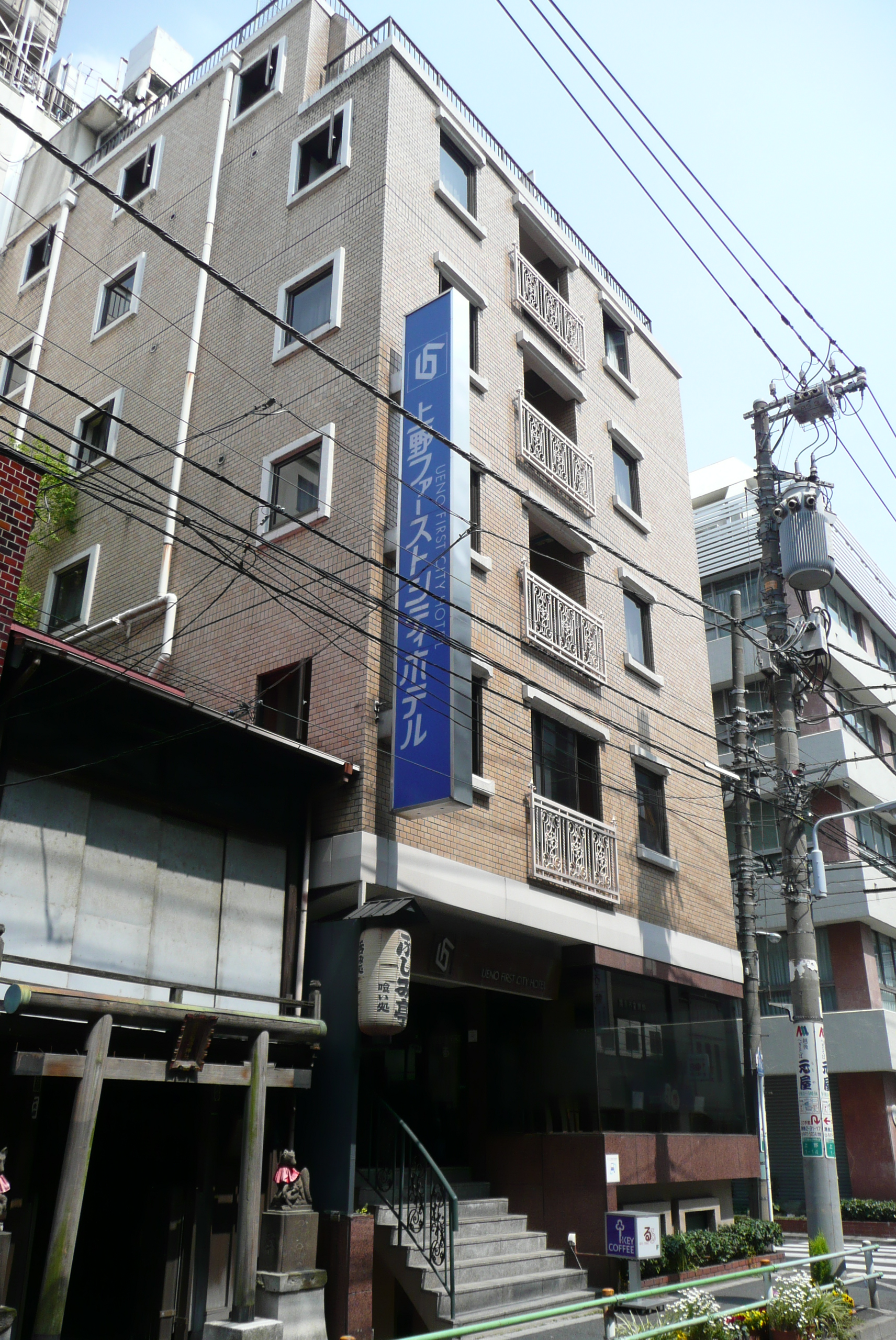
We started Sunday morning at a reasonable hour, leaving our hotel (pictured above) and heading to the Ueno-Oichimachi station.
Still craving those wonderful strawberries, we stopped back by the greengrocer’s next to the station, admiring the wide range of strange produce and fish products before buying another pint of berries.
We took the train to the Harajuku district. First stop: Meiji Shrine, the grandest Shinto shrine, rebuilt in authentic fashion in 1958 after the original was destroyed in the Second World War. If we had been wondering where all the tourists were, we finally found them on the pebble path leading from the railway station to the shrine. “Crunch, crunch, crunch” went the pebbles as they were trod upon by hundreds of dazed and confused tourists.
The shrine itself was beautiful but we couldn’t really appreciate it with the crowds. Not just the tourists but the string of wedding parties that had booked space at the shrine. We saw two in the short while we were there and I imagine more were to come.
If Shibuya is the scene for young Tokyoite’s trendy fashion, Harajuku is where the cutting edge of fashion is located. Known for its “cos-play” (costume play) young people who dress up in bizarrely elaborate outfits on the bridge crossing the railway tracks, this area is where all sorts of hipsters create their own new looks.
The main, tree-lined street doesn’t give a hint of the truly groundbreaking fashion the neighborhood is known for. While very crowded, the main street is lined with shops that would look at home in any major city around the world. Above, on a major intersection in Harajuku you find a Gap store.
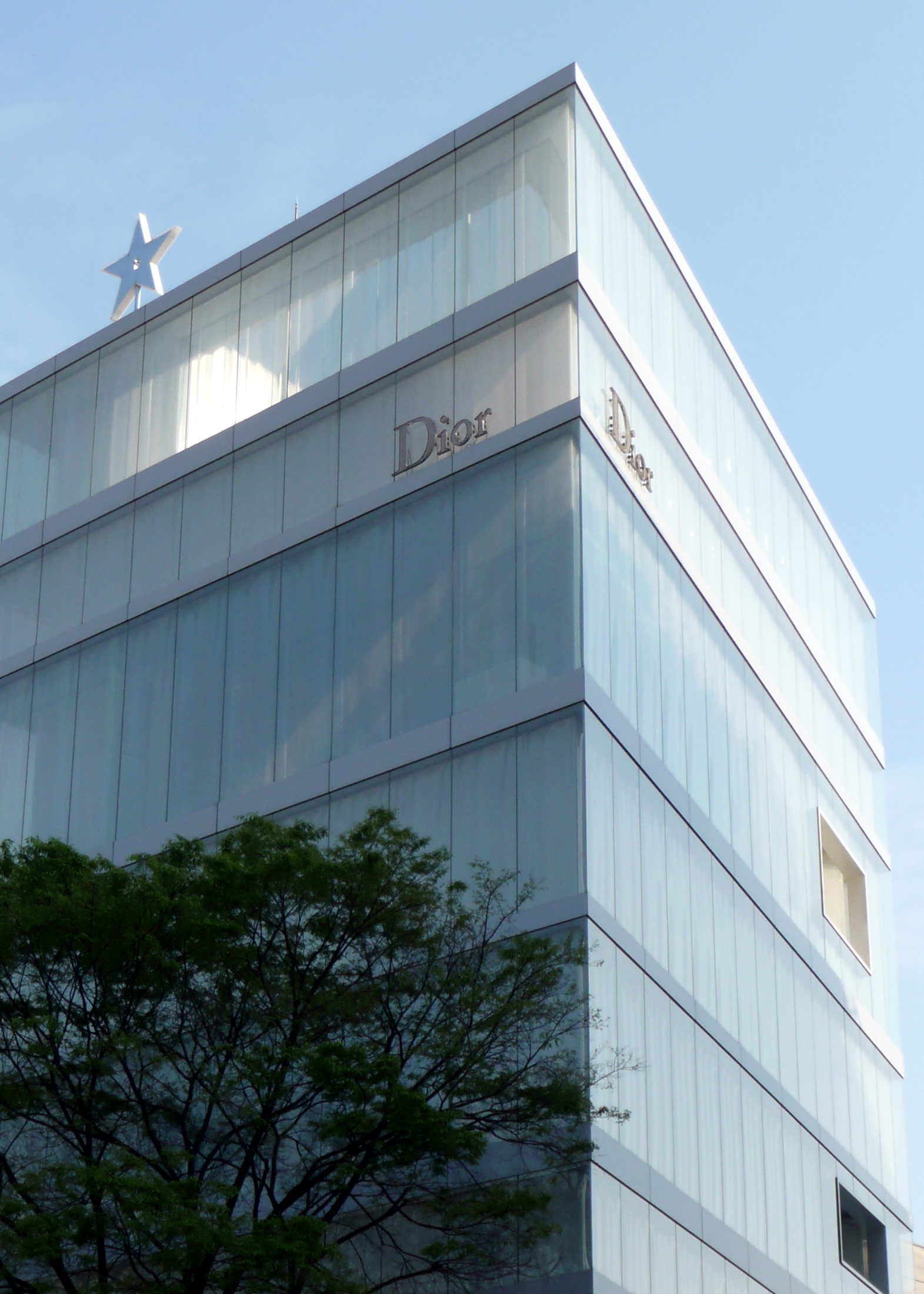
And if that isn’t high-end enough for you, there’s always the beautiful, paper lantern like Christian Dior store.
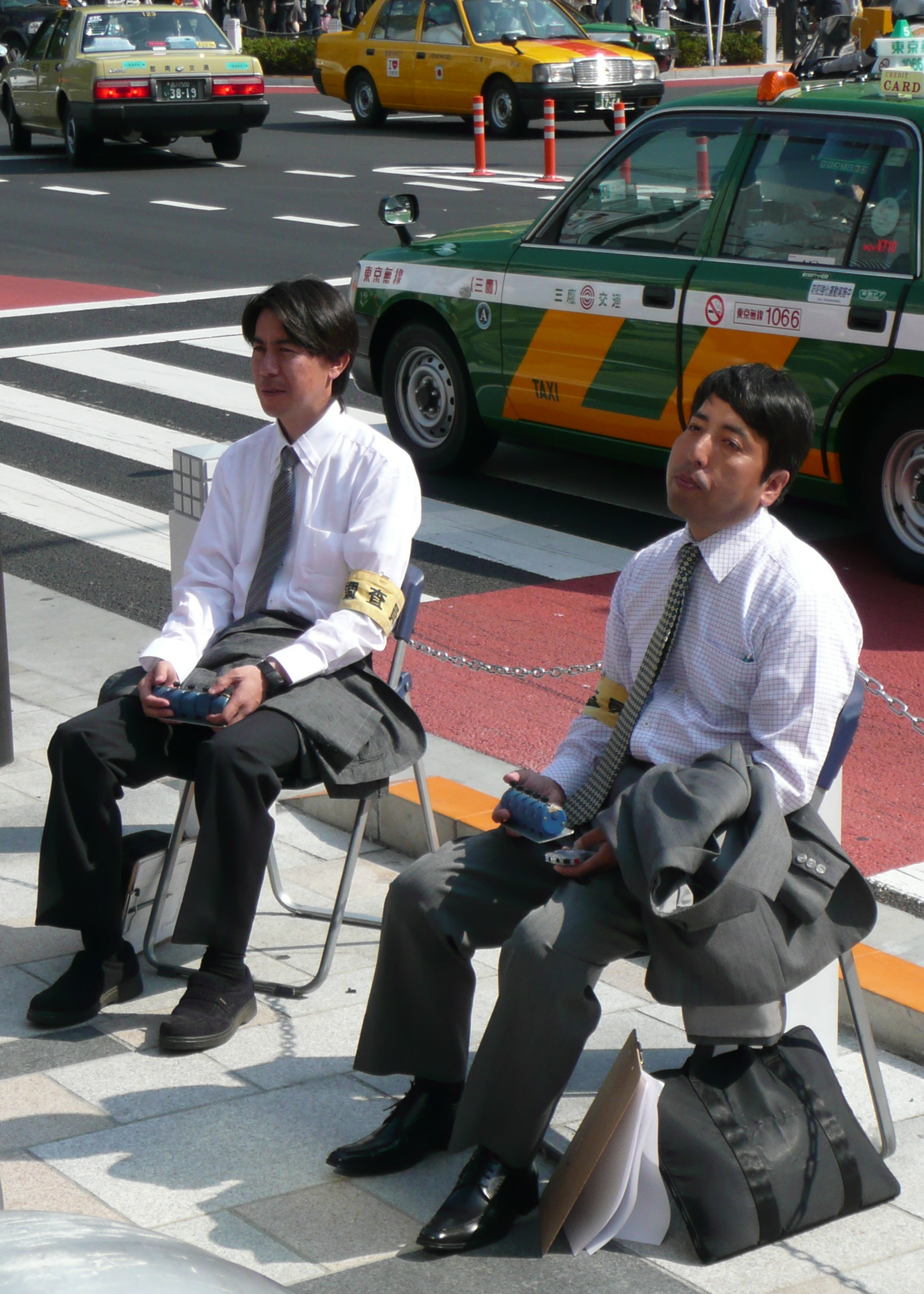
Along this street you will find small groups of men in suits, sitting on folding chairs and holding counters in their hands. Who knows what sorts of demographic data they are gathering?
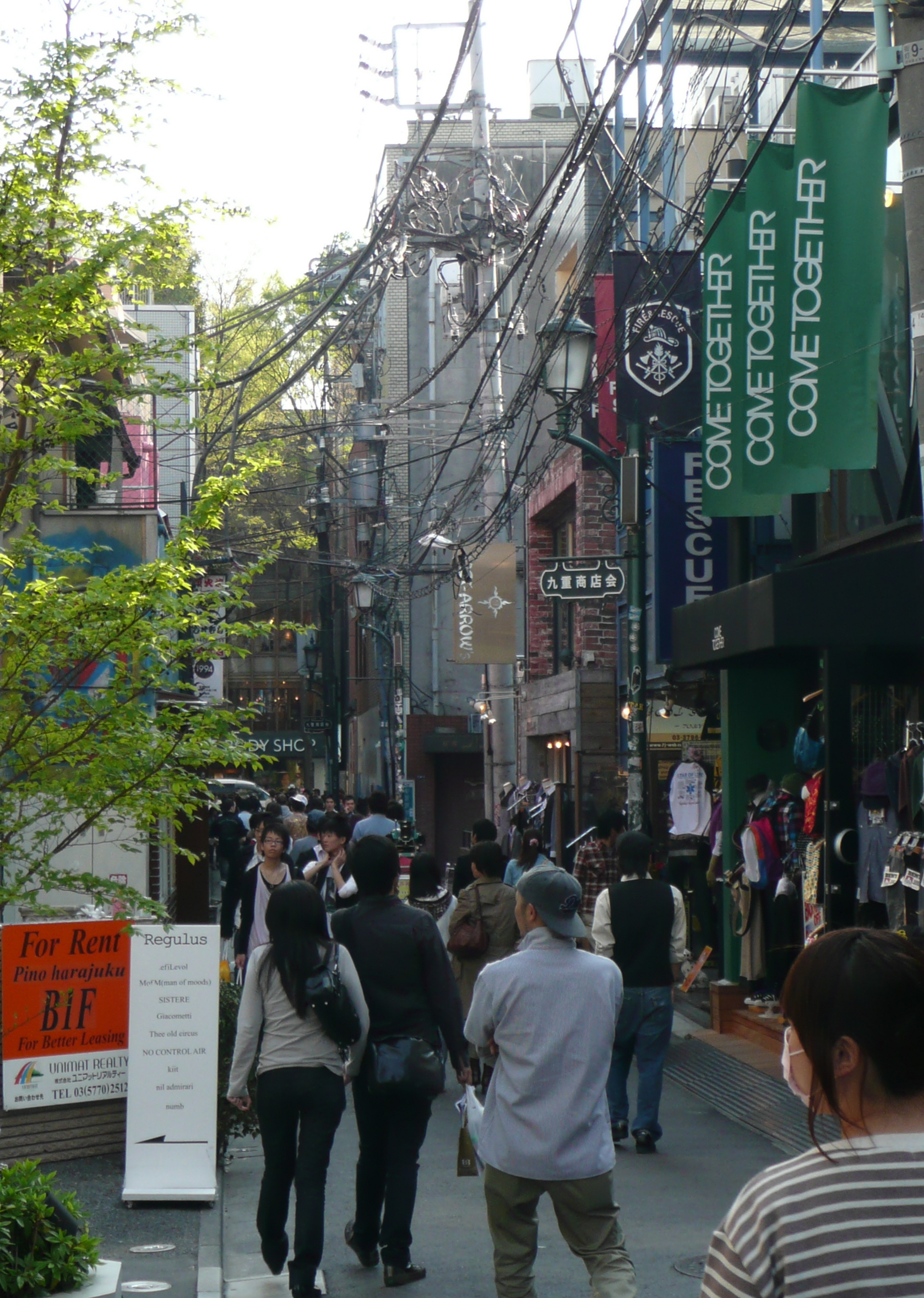
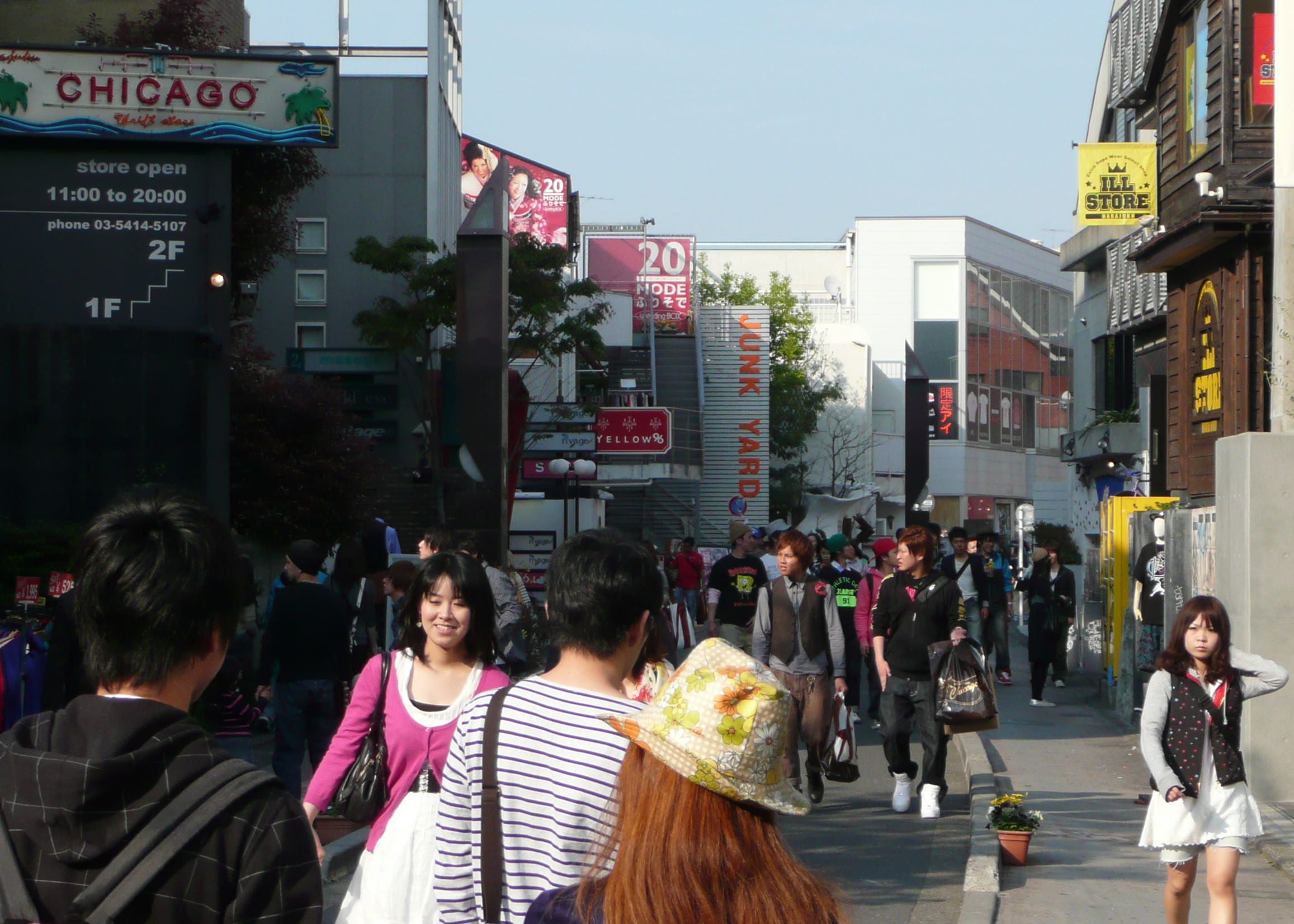
The real fashion is found off the main street, in a warren of alleys that are home to cool shops and small boutiques with names like Come Together, Ill Store and Junk Yard.
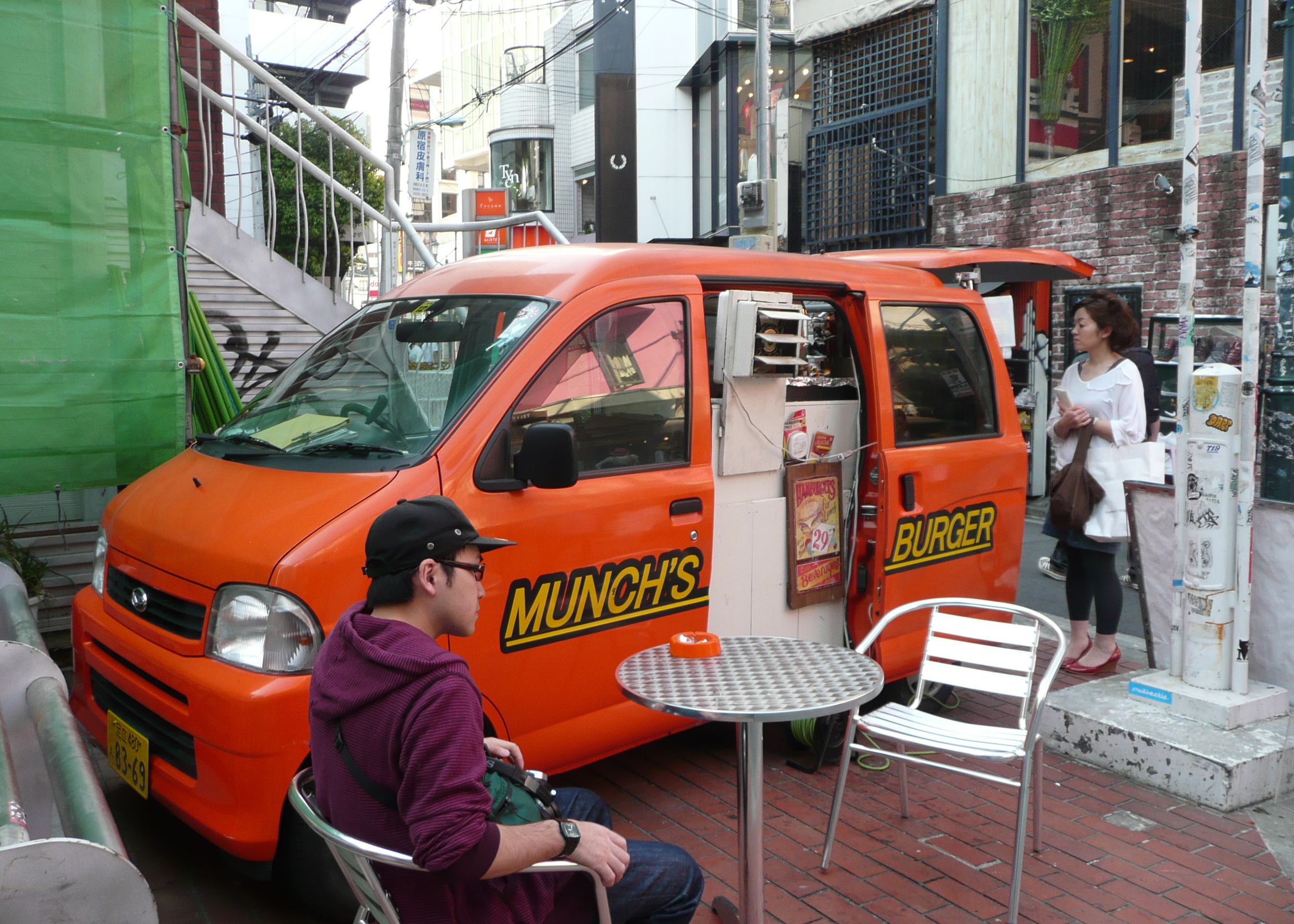
Along these streets we found an interesting place for a distinctly American snack: Munch’s Burger, a mobile hamburger stand. The grill (and griller) are in the back of the van.
Nope, we weren’t hungry so didn’t try them. The burger looked good, though.
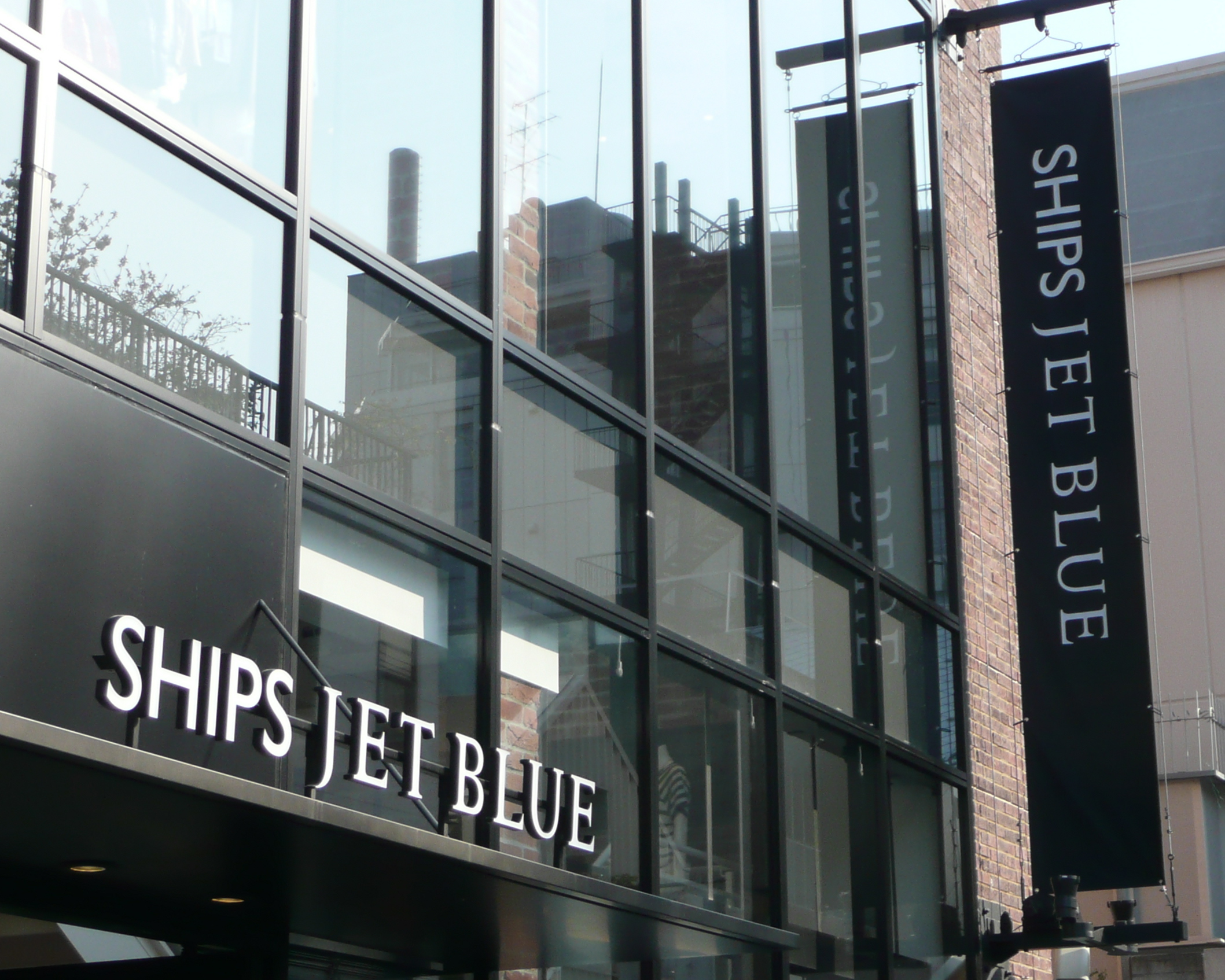
One store that caught my attention – I think my cousin who works for the airline will love this – is Ships Jet Blue.
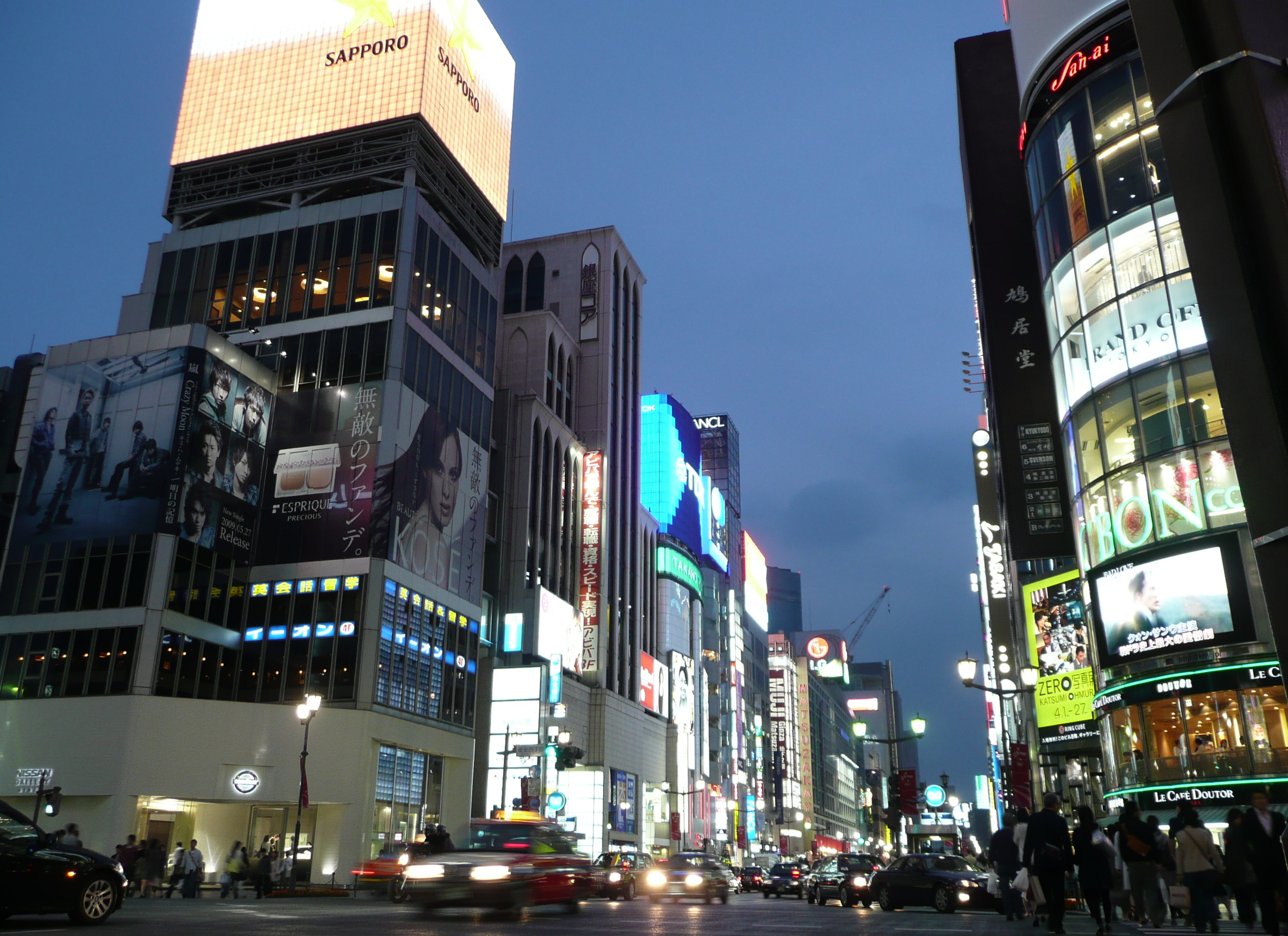
After an hour or two of wandering around we continued to another shopping area, Ginza. This is the original home of haute couture in Tokyo and is still the major shopping district. Every big name has a store or three here, along with outlets of the major Japanese department stores.
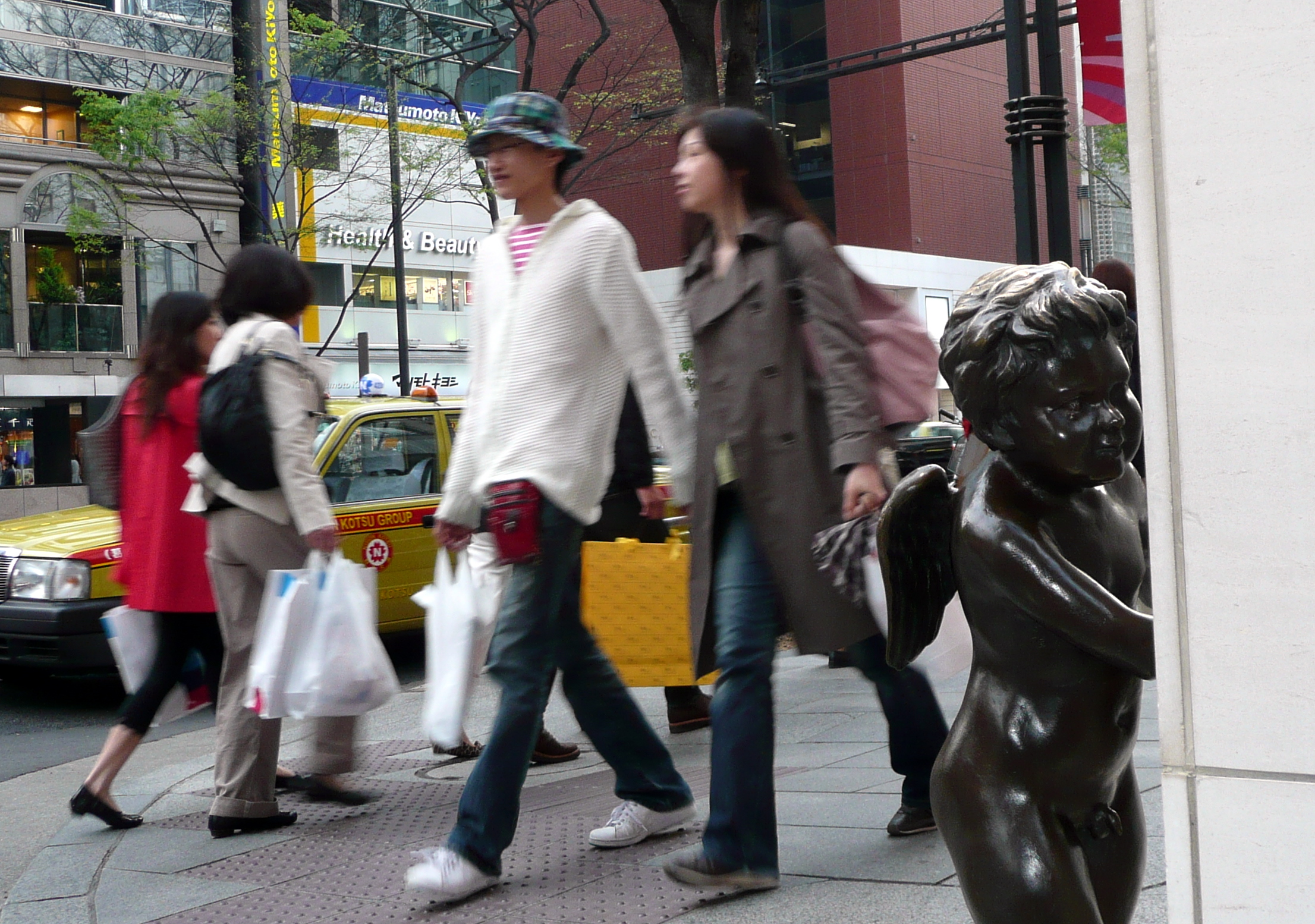
On one side street there is a playful sculpture of Cupid peeking around the corner and down the alley. Who knows where next he will spy love?
Inside the Mitsukoshi department store is the only Tokyo outlet of La Duree, the fine Parisian patisserie. We stopped by to buy some macarons.
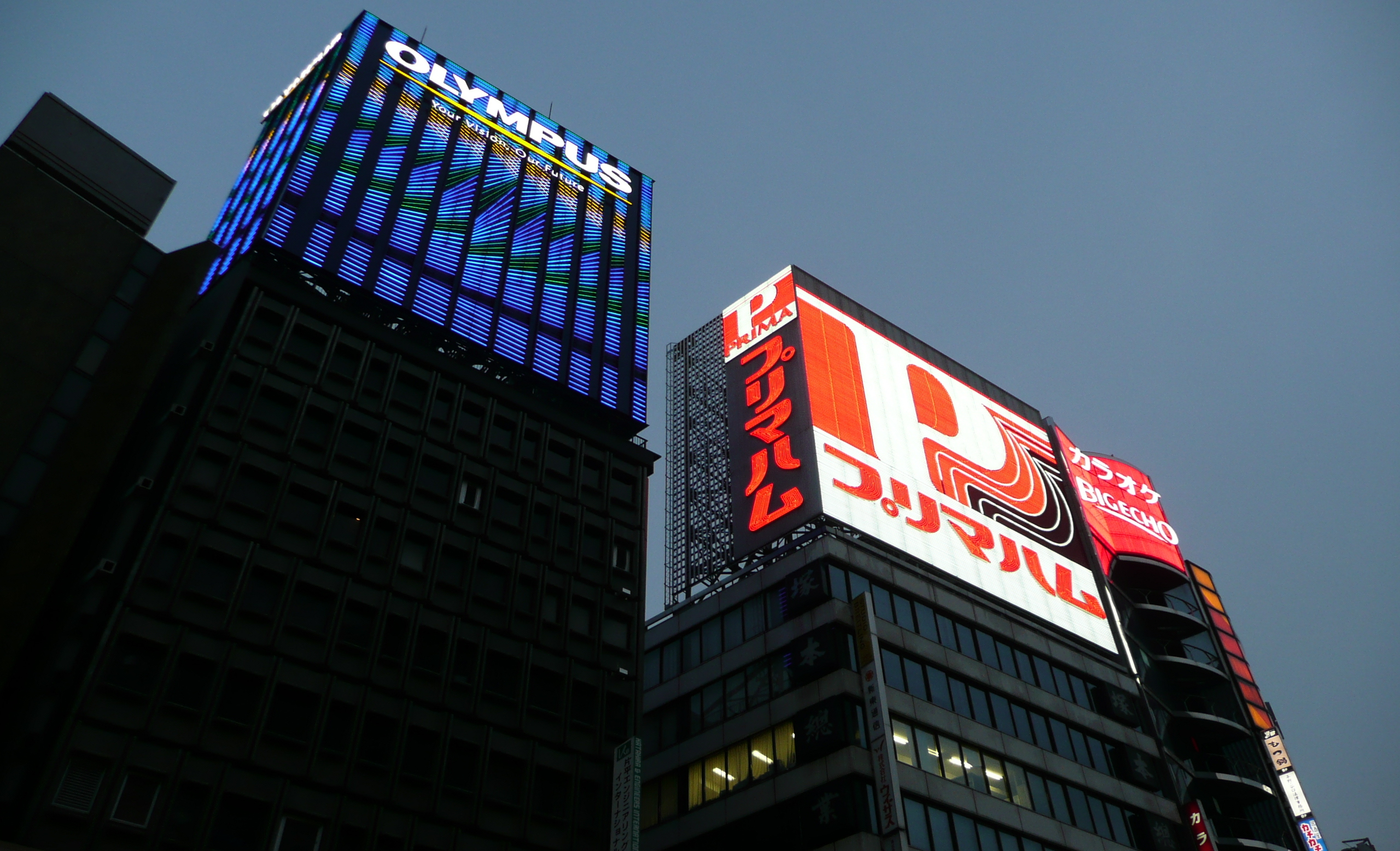
As sun set, I took the opportunity to snap a few more photos of this neon-charged city.





























 christao408