Rainy Season Finally Arrives

This has been an unusually dry monsoon season in Thailand. So much so, that much of the country has been suffering from drought. September is typically the rainiest month by far, and true to form, it brought relief from the dry weather.

IMG_0734

For the most part, the rains have been tolerable. Sometimes heavy, but none of the severe flooding that torrential monsoon rains are known for. Our soi (small street) is prone to flooding after as little as 30 minutes of heavy rain. So far, there has been no need to put on the waders!

IMG_0847

The thing I like best about the rainy season is the cloudy, overcast weather. It amazes me, how much cooler the temperatures are when we are not baking in the direct sun. This time of year is also breezy, which helps keep temperatures more tolerable.

Now that October has arrived, the rains should decrease in frequency and by November, the relatively cooler “cool season” will arrive. This coincides with the start of a new job, which I will take as an auspicious sign.


A Life Left Too Early

originalThis morning, I received news that a friend in San Francisco had died. He was around my age and about six months ago was diagnosed with cancer. In his final hours, friends had shared stories and memories of him on his Facebook page and his family read the posts to him as he lay in bed. Then this morning my time, the family posted that he had passed.

I’m reaching the age, mid-40s, where I’m starting to encounter more deaths of people my age. A few high school classmates, a few colleagues. Of course the frequency will only rise and I know that this is part of life. But there is something that leaves me feeling a bit melancholy to see someone around my age lose their life.

Many times, I have asked myself how I would respond if I was diagnosed with a terminal disease. How hard would I fight to extend my life. Coincidentally, this morning as I drove to work I was listening to a Freakonomics podcast about this question: what is the value of quality of life versus quantity of life, when one is facing a terminal illness?

Of course it is easy to have an opinion on this when not faced with the actual dilemma, but I imagine I would opt for palliative care over aggressive treatment. I would rather enjoy the time I have left, then live longer but be in needless suffering.

Whatever the case, here’s a thought to the life of Wilson Fang. We weren’t close, but my life was better for having known him. And maybe that’s the highest tribute we can give anyone.

Thinglish: Level Up

Level_Up“Thinglish” is a portmanteau of “Thai” and “English”, describing the odd mixture of languages that you encounter as an expat here. One of the words that keeps catching my ear is “level up” which, the more I think about it, is quite an elegant word.

The meaning, as you might expect, is the same as the cumbersome “increase the level of” as in, “We need to increase the level of skill in their leadership capability.” But that is an awkward phrasing. My colleagues will instead say something like, “We need to level up their leadership capability skills.”

Before writing this post, I did some research and learned that “level up” is actually a gaming term, meaning “To progress to the next level of player character abilities, often by acquiring experience points in role-playing games.” Which, come to think of it, does sound a bit like the leadership development we do!

There is no shortage of opportunities to re-learn the English language when you live in a country where it isn’t the primary language. But that’s a good thing: it keeps your mind elastic!

Three Steps to Bring Nuance Back to Public Discourse

When did nuanced public discourse die? Maybe ubiquitous social media has made it easy to see people’s previously-hidden bias against complexity and subtlety. Or maybe around-the-clock news cycles and increasingly-targeted media have suffocated nuance. Whatever the cause of death, it seems we increasingly stake out fixed positions, unwilling to address any nuance or consider any new information. But there are things we can do to bring nuance back into our public discourse.

Systemic 2

Nuance is necessary: the biggest challenges we face – from poverty to terrorism, climate change to globalization, education to healthcare – they are complex systems with numerous factors affecting them. Imagine them as interconnected strings: each string we pull is connected to many other strings and the reactions are usually unclear.

I read so many posts from smart, educated friends who make absolutist statements: Muslims are like this; Immigrants are like this; Feminists are like this; Conservatives are like this; Welfare recipients are like this; Gun owners are like this… As if we could take any group of millions (or billions!) of people and find some easy common denominator that explains everything about them.

I read so many posts from smart, educated friends who post pictures and memes that reduce complex issues into sound-bytes, punchlines, and ultimatums… As if we could solve any complex problem by simply building a wall, banning guns, electing a woman as president, signing an electronic petition, bombing the Middle East, or copying and pasting a Facebook status.

May I make a modest proposal? Borrowing from the critical thinking and systemic thinking skills I teach to leaders, I would suggest that before we post anything on social media (or voice any opinions about the events of the world), we do three things:

  • First, recognize what assumptions we make. Are we over-generalizing? Are we verifying the truth behind the statement from multiple, independent sources? Usually a quick search on the internet is enough to challenge our assumptions and learn more about the subject.
  • Second, embrace other perspectives. Most issues have many perspectives, not just two. What are those other perspectives? Especially, who are the people affected by this issue and are their perspectives being told? Often, those most affected do not have the power to tell their own story and share their perspectives.
  • Third, be open to new information. My grandmother had a clipping from a newspaper posted on her refrigerator door: “Only a dead man and a fool never change their minds.” When presented with new facts, new information, are we willing to update our opinions and retract or revise what we have already shared? I see so many people who when they learn that information they posted is incorrect, do not remove the post from their social media.

Do these seem like too many steps, too much of an effort to take before posting something? Maybe so. A friend commented recently that we have become people who just re-post other’s content rather than creating anything original of our own. It is easier to just hit the “share” button when your righteous indignation swells around any particular issue.

But wouldn’t we be a better-informed public if we took the time to think about issues and write our own positions on them, wrestling with the complexities and engaging others in nuanced conversations?

What I Do

In my previous post, I wrote about quitting my job. As difficult as it is for me to quit, it is even more difficult to stay in a position where my interests and passions are not well-aligning with my opportunity to fulfill them. So what are those interests and passions?

IMG_0698My interest and passion is in helping people reach their full potential. How do I do that? Mostly through the field of “Organizational Development”. This subset of Human Resources goes a lot deeper than just training – a one-time event – and looks at the full experience of talent within your organization.

How do you find, attract, and on-board the right people? How do you get them up-to-speed quickly? How do you ensure that all of the processes, incentives, expectations, and tools align with the outcomes you expect from your people? How do you ensure they can perform at a high level? And how do you retain them, giving them new opportunities and the ability to advance? All of these fall under the “HR OD” umbrella.

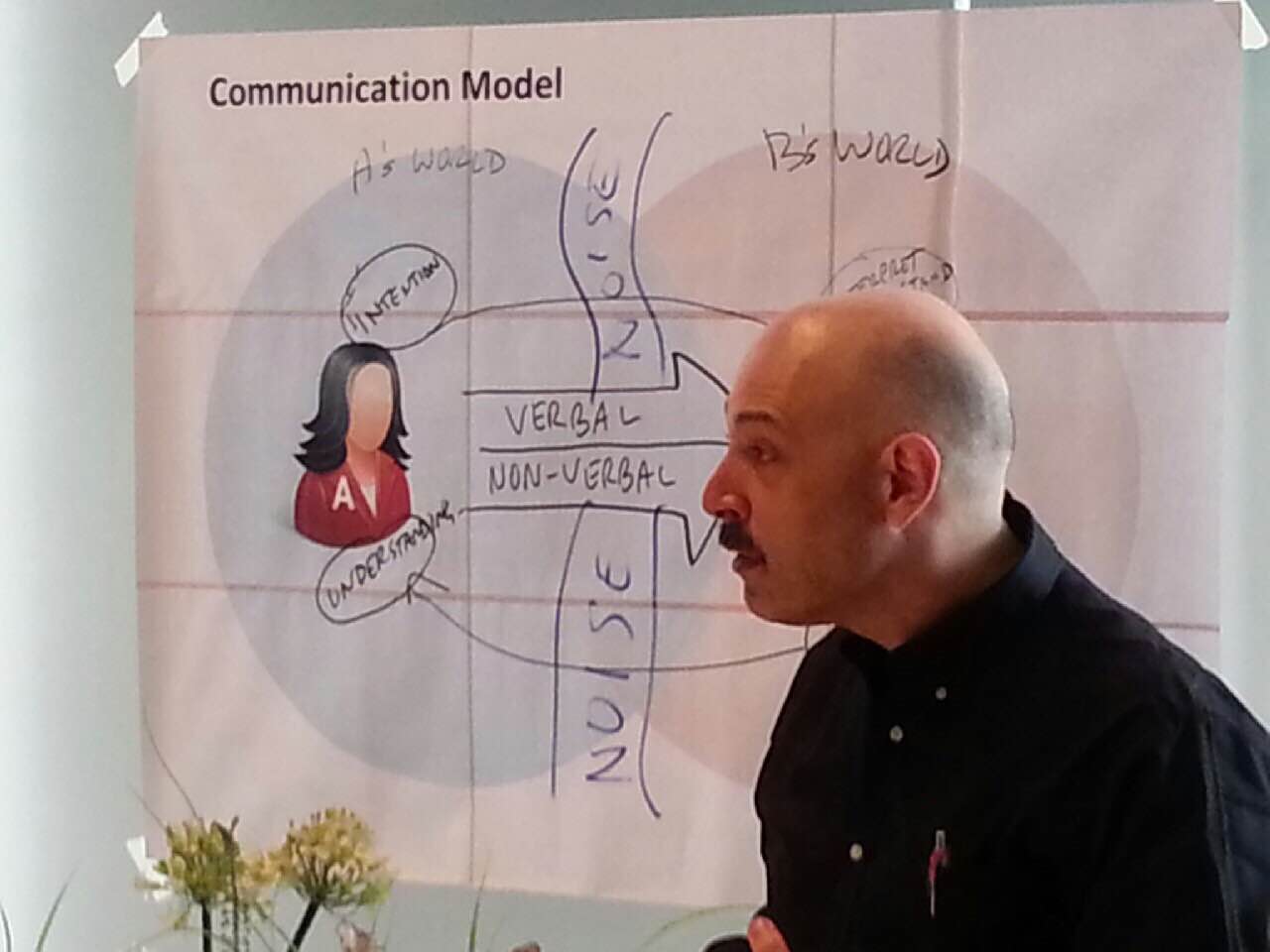
IMG_0694At one level, my work still involves building and delivering workshops. I find myself in front of a conference room full of people, helping them make sense of different subjects and, most importantly, understanding how to apply those subjects in their day-to-day-work.

The workshop delivery itself is just a small part of my work. The more important part is looking at the underlying skills and capabilities people need and what those look like when applied in real life. “Communication” is a broad thing: what does effective communication look like when you are conducting a 9:00 am Monday sales meeting? By knowing this level of detail, I can design learning interventions that best help people build those skills and capabilities.

IMG_0696Ultimately, I find it very satisfying when I hear back from people weeks, months, and even years later, telling me that something I said, some way I explained things, helped make them more effective in their jobs. I’ve had the pleasure of hearing from some people I worked with 15 or 20 years ago – in the late 1990s! – who thanked me and shared what they learned from me.

That’s ultimately the most satisfying part of my work, and it is the reason that I am heading to a situation that I think will better allow me to achieve more of that.

The Upside of Quitting, or Why I Resigned

“Opportunity Cost” is an economic concept. It is defined as, “the loss of potential gain from other alternatives when one alternative is chosen.” In other words, if I decide to spend 20 minutes writing this blog entry, I have lost any benefit I could have enjoyed from spending that 20 minutes doing something else. This applies to work, too. If I spend the next year working in a particular job, what benefits have I lost by not doing something else?

IMG_0575

That’s a question I have been asking myself a lot lately, after spending nearly two years working as a consultant for a family-owned HR Organizational Development consultancy. In that time, I have learned a lot (usually by metaphorically stubbing my toes and learning not to repeat that mistake!) and have worked with some very talented and committed people. Still, the question of opportunity cost has bubbled up in my mind frequently and I have repeated asked myself whether I am growing, or just learning.

Another economic concept is “sunk cost”. It is defined as, “a cost that has already been incurred and cannot be recovered.” In behavioral economics, people often make irrational decisions because they have already invested so much time, money, or other resources. In my case, that would be the part of my mind that kept thinking, “I’ve already invested almost two years to this job; I should keep at it a while longer.”

Ultimately, I decided to quit. I’ve been working for nearly 30 years and know myself pretty well. I know my strengths, my weaknesses, my motivations, and my aversions. So when two opportunities came along through my network, I recognized quickly that either opportunity would better match with who I am while allowing me to continue growing.

The decision to quit was not easy, but as I recall from one Freakonomics podcast called The Upside of Quitting, we have to recognize when something is not right for us and be able to face it squarely, own up to it, end it, and then move on. As I look at my life, I’ve had examples where I’ve been able to do this well (I attended three schools and majors en route to my bachelor’s degree) and examples where I’ve struggled on at something that wasn’t worth struggling on with (my second boyfriend).

On Friday, I gave my notice. It was a nearly two-month notice to allow sufficient time to transition all my projects and clients smoothly. Over the weekend, I’ve realized that for the first time in nearly a year, I feel very unburdened. This reinforces to me that I’ve made the right decision.

In the coming weeks and months I will share more about the new job. I anticipate it will give me time to resume blogging, which is another good sign.

Making Everywhere More the Same

There is a dynamic tension when you move abroad. You celebrate what is different about your new home. At the same time, you miss things about what you left behind. After more than nine years living in Thailand, a conversation with a Thai friend who is considering returning to Bangkok after a long time in the United States, made me realize that everywhere is becoming more similar.

As I put it to him, “In the nine years I have lived in Bangkok, I have gone from really missing many things about living in the United States, to now being able to find most of those things here.” The obvious exception being family and friends who still live back there.

But when it comes to brands, foods, and treats that I used to think of as specific to one area or another, more of those items are available in most major cities around the globe.

IMG_6327

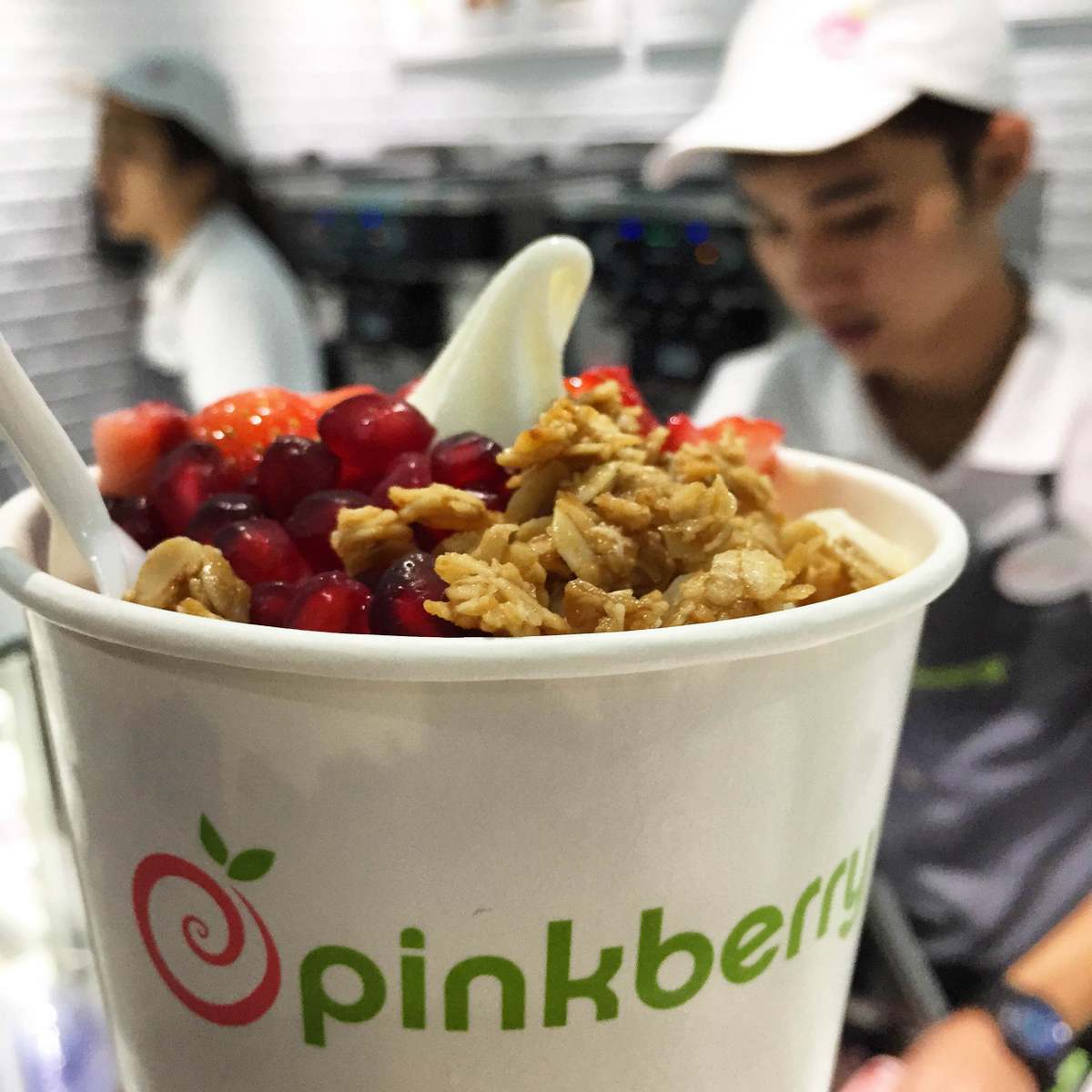
Pinkberry is a Los Angeles-based frozen yogurt chain whose loyal customers’ cult-like adoration of the brand is similar to what you see when Krispy Kreme donuts opens in a new corner of the world. (Which happened here two years ago…)

I really like Pinkberry and enjoy getting some when I am back in California. No longer must I wait for a trip to the United States, though, as the first Pinkberry opened a few weeks ago at Central Chidlom mall in Bangkok. Certainly more branches will follow.

Harrods, Eric Kaiser, Fauchon, Laduree, Isetan, Uniqlo, Gap, Starbucks, Din Tai Fung, Krispy Kreme, Bon Chon, Muji, and now Pinkberry. The list of items you miss from home gets shorter and shorter as more and more of those items become available here. And that’s not to mention the items like tasty southern-style barbecue or European-style bread that is available from local providers.

That is a good thing, from a quality of living standpoint. But it causes me to wonder if there isn’t a downside to the ease and convenience with which I can get previously-regional items anywhere across the globe.

Does a place become a little less special when the local specialties are now available across the globe? Do we become a little more spoiled when an increasing number of our desires can be fulfilled, no matter where we are? And at some level, does “place” cease to matter?

No easy answers to those questions, but they are worth asking.

Trying My Hand at Making Bao Burgers

After a long while, I finally had the opportunity to try making my own Chinese-style bao burgers. The verdict? Pretty tasty and easier than I expected!

One of my favorite restaurants in the word is Little Bao in Hong Kong. (Read my review of it.) They are one in a crowd of restaurants doing more modern twists on the Chinese (specifically, Taiwanese) gua bao, steamed flour buns folded in half around pork belly, braised chicken, or other fillings.

P1280602A spicy fried chicken with garlic black bean mayo and scallion coleslaw bao from Little Bao in Hong Kong.

The conceit at Little Bao is that instead of a folded bun, they make their bao more like hamburger buns. This makes it possible to include more tasty fillings, offering a better balance of bread to filling. It was that hamburger-like quality that I wanted to achieve.

Day One

I worked with my friend Chow (aka the Bangkok Glutton), my frequent co-conspirator in the kitchen. The basic recipe for the bao is simple: flour, water, yeast, a bit of baking powder and a bit of salt. Some versions have some milk added for softness – I didn’t try that this time. You let the dough rise a few times, punching it down between rises but trying to avoid over-working it, because bao are meant to be soft, not chewy.

IMG_4867The first day, we made bao the traditional way, rolling them out into an oblong shape and them folding them in half over a piece of wax paper. This allows them to be opened and stuffed more easily. They are then steamed for about 8-10 minutes and can either be served warm or kept covered and reheated if necessary.

As for the red decoration, I found that trick in one online recipe. You use red food coloring and the tip of a chopstick to decorate the buns just before steaming. Looks pretty professional! Our kitchen assistants became more creative and so we ended up with all sorts of designs on our bao.

IMG_4872For the first day’s bao, we used some braised pork belly, homemade radish pickles, some braised cabbage, and some Italian parsley. It turned out okay, but the bao were a bit flat, brittle at the fold, and the fillings were underwhelming in flavor. All in all, though, a good first attempt.

Day Two

The second day we let the dough rise more and also shaped it into balls, making it more like a hamburger bun. This worked better although I think we over-worked the dough a bit, as it was tough.

IMG_4928The pictures don’t do justice, but the fillings were a great deal better this time around. We tried a different recipe for the pork belly, which had much more flavor than the original recipe.

IMG_4933We also did a duck breast, which I paired with the seasonings I had used the day before for the pork belly. This, too, was very nice.

IMG_4939The star of the show was a more traditional Taiwanese version with chicken thigh meat braised in Chinese rice wine and soy sauce served with chopped peanuts. This was so tasty, I could have eaten a half-dozen and I will have to try it again soon.

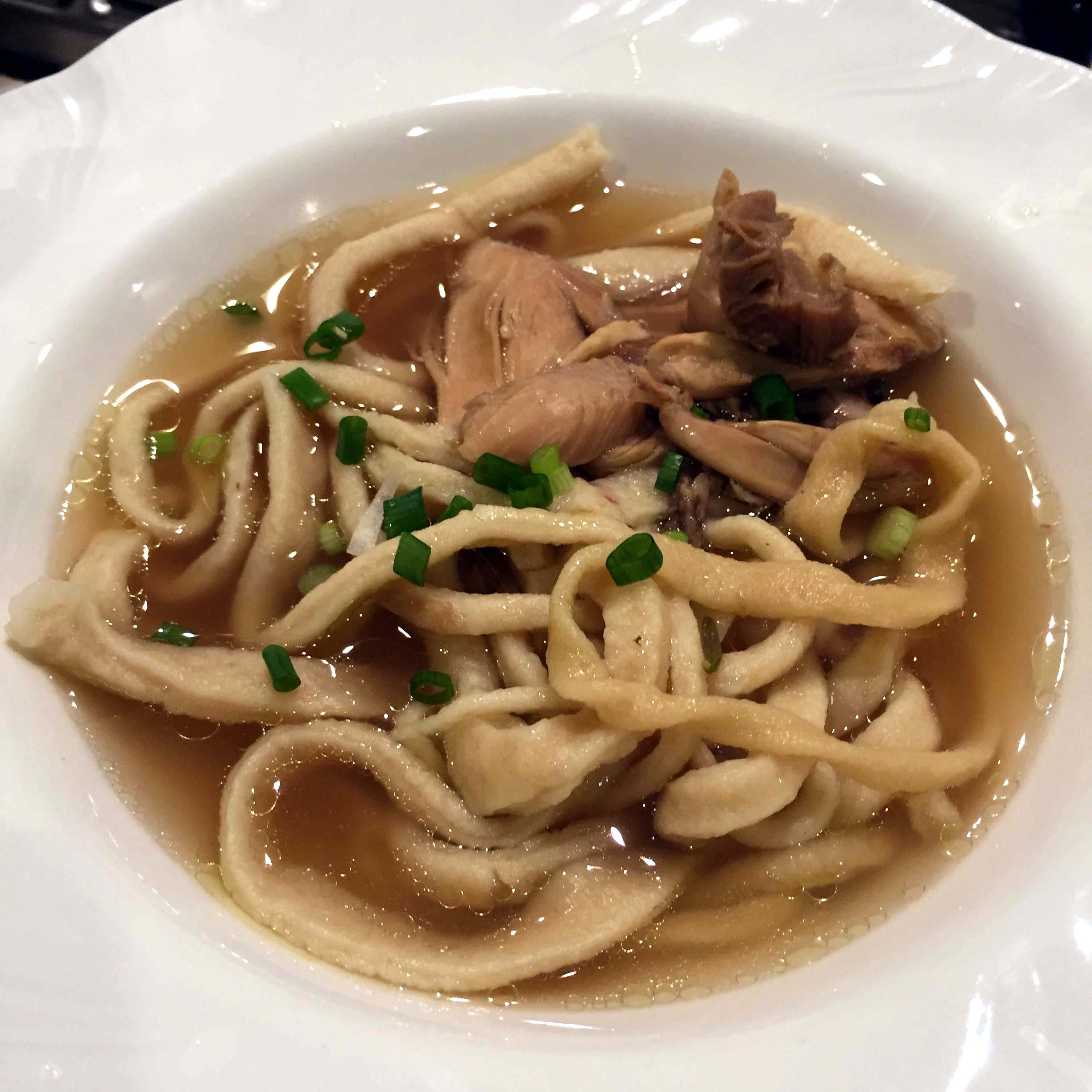
IMG_4937As an added bonus, since I was also teaching two friends’ children to cook, we made a homemade chicken noodle soup with both the broth and the noodles from scratch. I think the noodles came out a bit too “spaetzle-like” but they were tasty and the broth was the first time I’ve made a chicken broth that really wowed me.

Stay tuned for more from the kitchen.


Taper Restaurant

In addition to having a spate of restaurants serving “Grandma style” cooking, Bangkok is also seeing a blossoming of brunch restaurants. The trend has been a bit longer in the making, but the rate of new openings seems to be increasing. We recently made two trips to Taper, one of the newest brunch restaurants in the Thong Lor neighborhood.

IMG_4844


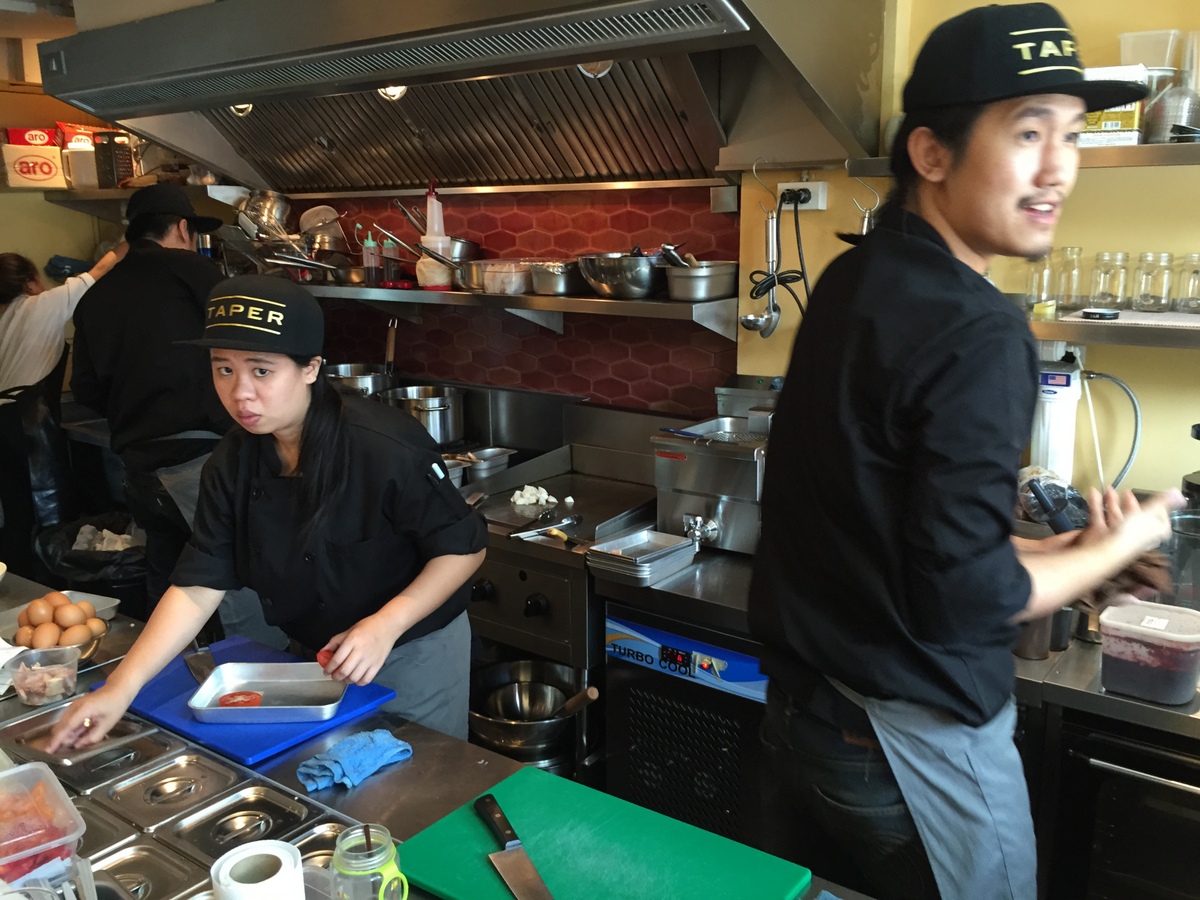
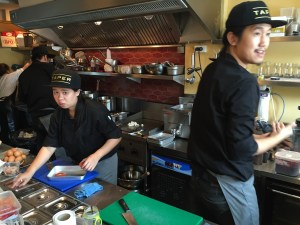
Located on Soi Akkaphat, the awkward soi that runs parallel to Thong Lor from Soi 5, across Soi 13, and eventually turns into Soi 17, Taper is neighbors with Little Beast. Located on the bottom two floors of a shop house, Taper has a pleasing design with counter seating around an open kitchen on the ground floor, and a more formal dining areas on the mezzanine.
IMG_4505

The restaurant is a partnership between the two chefs from Le-Du restaurant and a third chef, who was a classmate at the Culinary Institute of America with one of the Le-Du partners. The interior is described as “modern Scandinavian” which would explain why when I first entered, I thought I had walked into a replica of the slightly more elegant Rocket Coffeebar on Sukhumvit Soi 49.

The most outstanding point of Taper is the friendly service. From the wait staff to the cooks to the partners, everyone was welcoming and checked in frequently during both our visits to see how we liked the food. Attentive, friendly service is a welcome thing and came across as most sincere.

IMG_4847

The menu is self-described as “Asian inspired brunch”. One example of this is their “world famous congee” – brown rice, mushroom, belly bacon, a soft boiled egg, and soy sauce reduction with ginger. What came out wasn’t really congee, but rather a thick blended soup, muddy in color, with a distinctly mushroom flavor. There was nothing particularly wrong with it, but at 330 baht, it wasn’t particularly outstanding, either.

IMG_4526


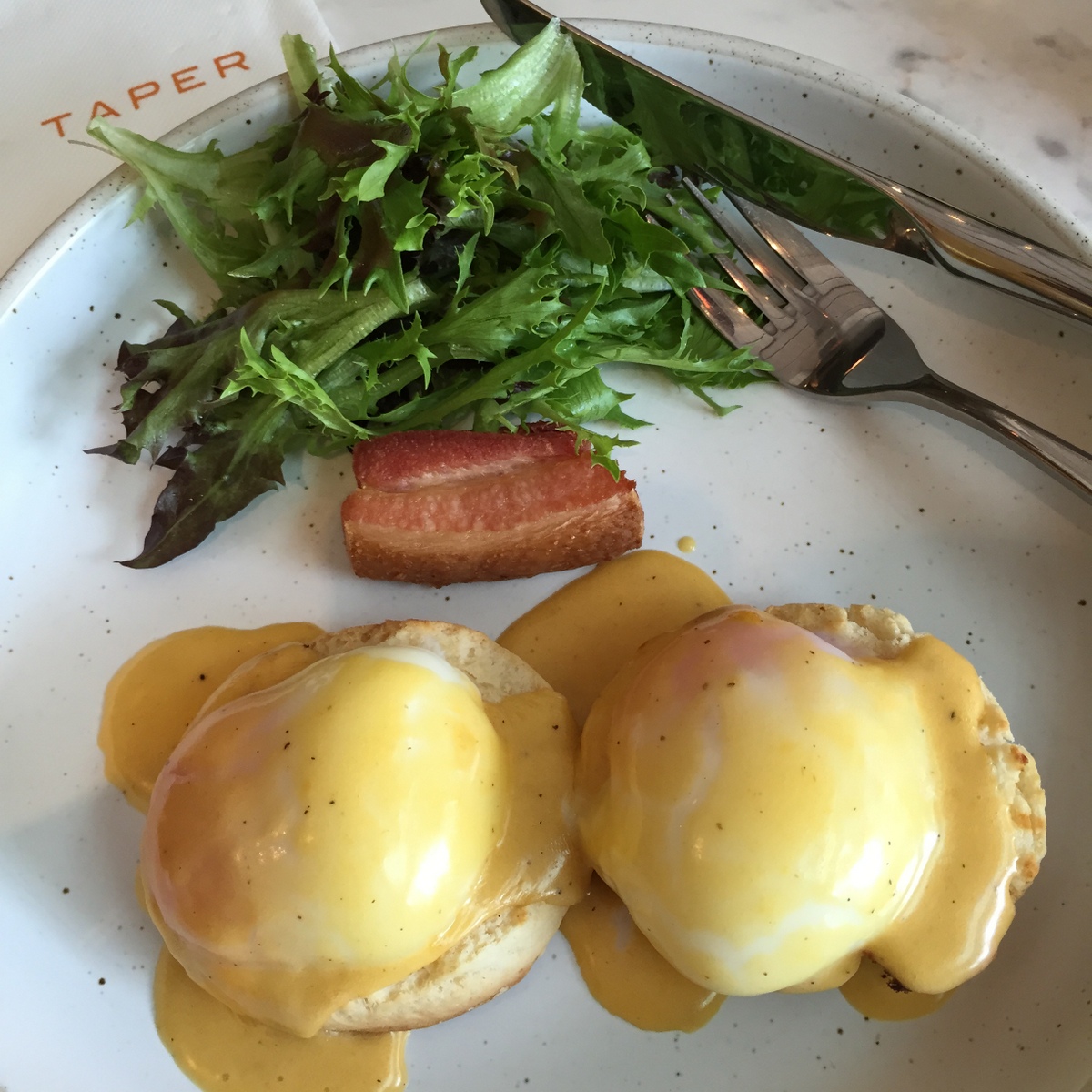
The Taper Benedict is a homemade buttermilk biscuit, so-called “63c” eggs, Hollandaise sauce, “thick cut bacon” (same as the “belly bacon” in the congee), and small rocket salad. The biscuits were nice enough, the sauce was very pleasant (but the surface congealed quickly because of the powerful air conditioner blowing above the kitchen-front counter), but on this visit the eggs had not been poached sufficiently.

Let’s not be nit-picky here, but the entire point of a 63-degree egg is that the proteins in the white are set but the yolk is still runny. (See the link above for more.) The whites in my eggs were still the consistency and color of cloudy mucus. I like soft eggs, but these were simply undercooked.

The thick cut bacon is such a tiny portion (and tough to cut) that it feels rather stingy. I would rather have two or three slices of regular bacon than to feel, at 290 baht a plate, that I’m getting short-changed.
IMG_4534

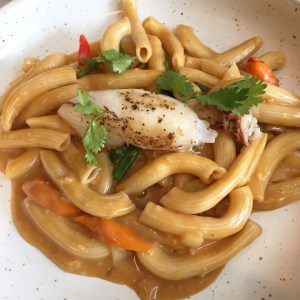
We tried another Asian-inspired dish, the “squid and salty egg”, which was fresh pasta with a sauce made of salted egg yolk served with grilled squid, chili, and coriander. This was a pretty interesting dish, the salted egg yolk giving a different taste than you might usually expect in a pasta sauce. The sauce was gloppy, though. The squid was tasty but being grilled ever so briefly, the texture offered no appealing counter-point to the pasta. Perhaps if it had been pan-fried and was slightly crispy, it would have contrasted better. At 290 baht, this was probably the best value of the four dishes.
IMG_4511

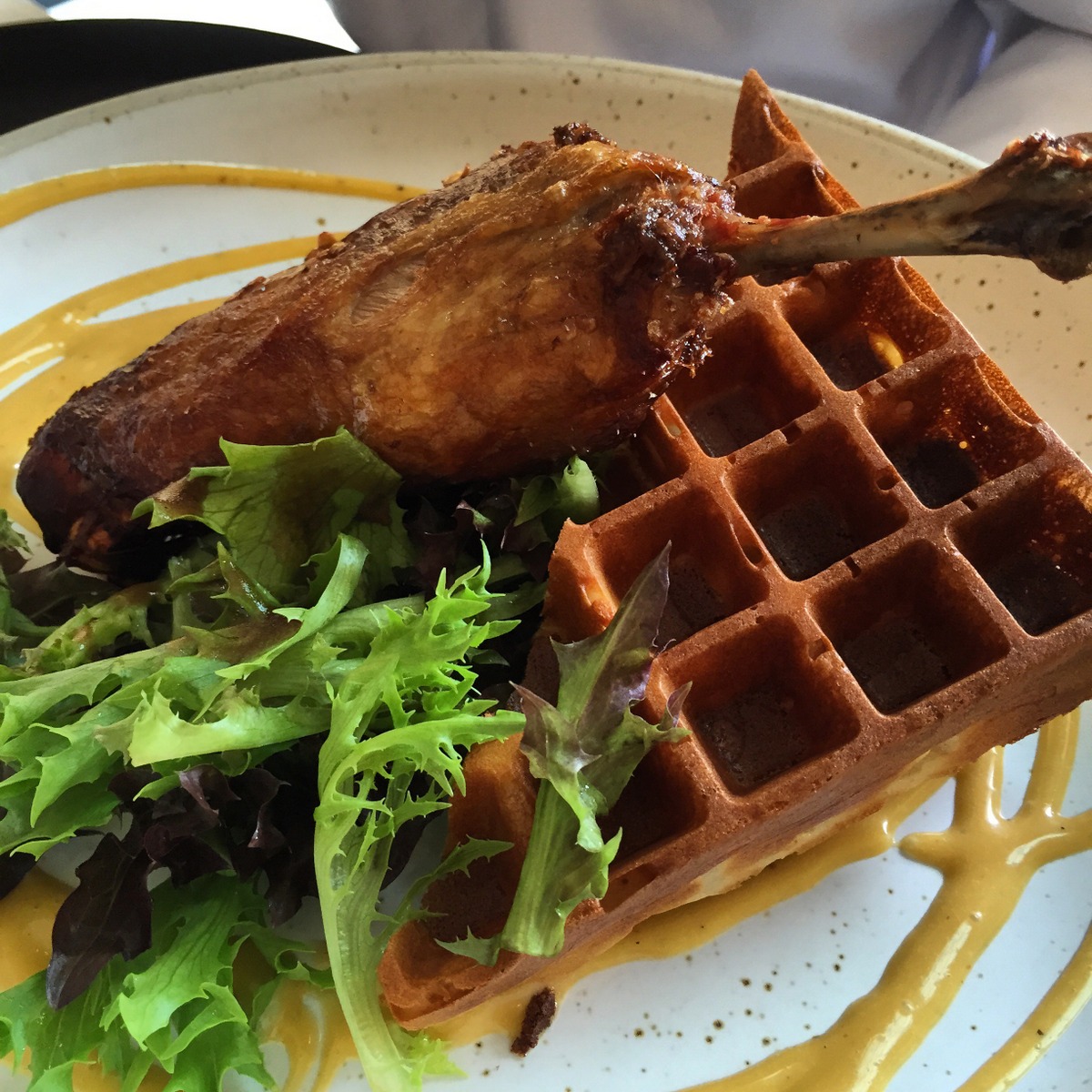
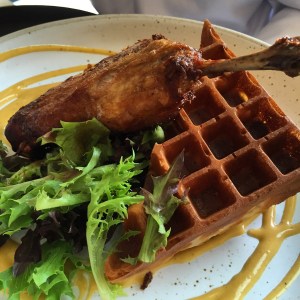
The fourth dish we tried was the duck and waffle, a crispy duck leg, tom yum mayo, buttermilk waffle, and honey butter. This is such a pretty dish and tasted fine, but bits and pieces were underwhelming. The duck didn’t seem to be a proper confit, so the meat was a bit dry and stringy. The waffle was nicely crisp but the tom yum mayo seemed quite thick, the sort of sauce I would turn out (as an amateur cook) from my kitchen. The flavor combination of the mayo mixed with the honey butter was enjoyable, but seemed a bit unsophisticated. The price for this dish was 390 baht, which was okay given what it was.

Concluding thoughts

So what to make of Taper? On our two visits we enjoyed the space and the pleasant service. It is clear that a lot of thought has gone into the food and when we spoke with the chef, he seemed genuinely interested in our feedback.

The ideas are interesting, but it seems that the execution is still not quite right. The “congee” either needs to be a soup or actually be congee, especially at that price. The sauces need to be a bit more refined. The bacon either needs to be otherworldly or else more generous, portion-wise. The 36-degree eggs need to actually stay in the water long enough to reach 36 degrees.

I like what they are doing and want them to succeed, so will probably make another trip or two in the coming month to see if these rough edges get smoothed off. If so, I think Taper will settle into the neighborhood and last.



Vanilla Home Cafe

About two years ago, I asked Jarrett Wrisley, the American food writer and proprietor of Soulfood Mahanakorn and two other restaurants in Bangkok, what he thought the next food trend would be here in the City of Angels. His response: home style Thai food cooked by locals with really good quality ingredients and refined technique.

IMG_4228

He was spot on. In 2014, we started to see more and more restaurants here in Bangkok that serve what you might call “Grandma’s food” – dishes that you rarely see most Thai restaurants serve, especially outside of Thailand. There are many places that are doing this trend well, and in this entry I visit Vanilla Home Cafe.

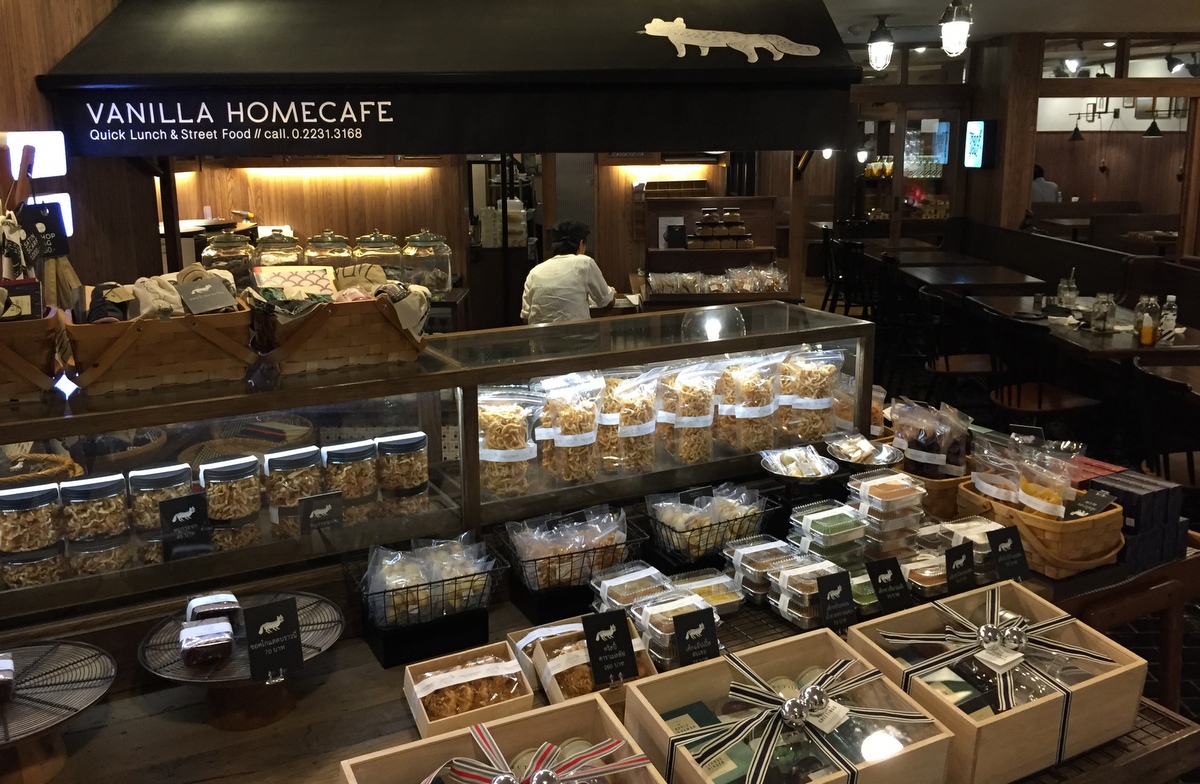
Located in the basement of the recently remodeled Silom Complex, Vanilla Home Cafe comes from the same family-run business that owns the S&P chain of eateries. Interestingly, some of the “Grandma’s food” menu items from Home Cafe are making their way onto the S&P menu, which I count as a good thing.

IMG_4209

Appetizer of Gratong Tong – crispy golden cups with minced chicken and sweet corn. This isn’t the rarest of dishes but is one that be a candidate for the endangered list. Crispy cups with a chicken and corn relish. What’s not to like?

IMG_4211

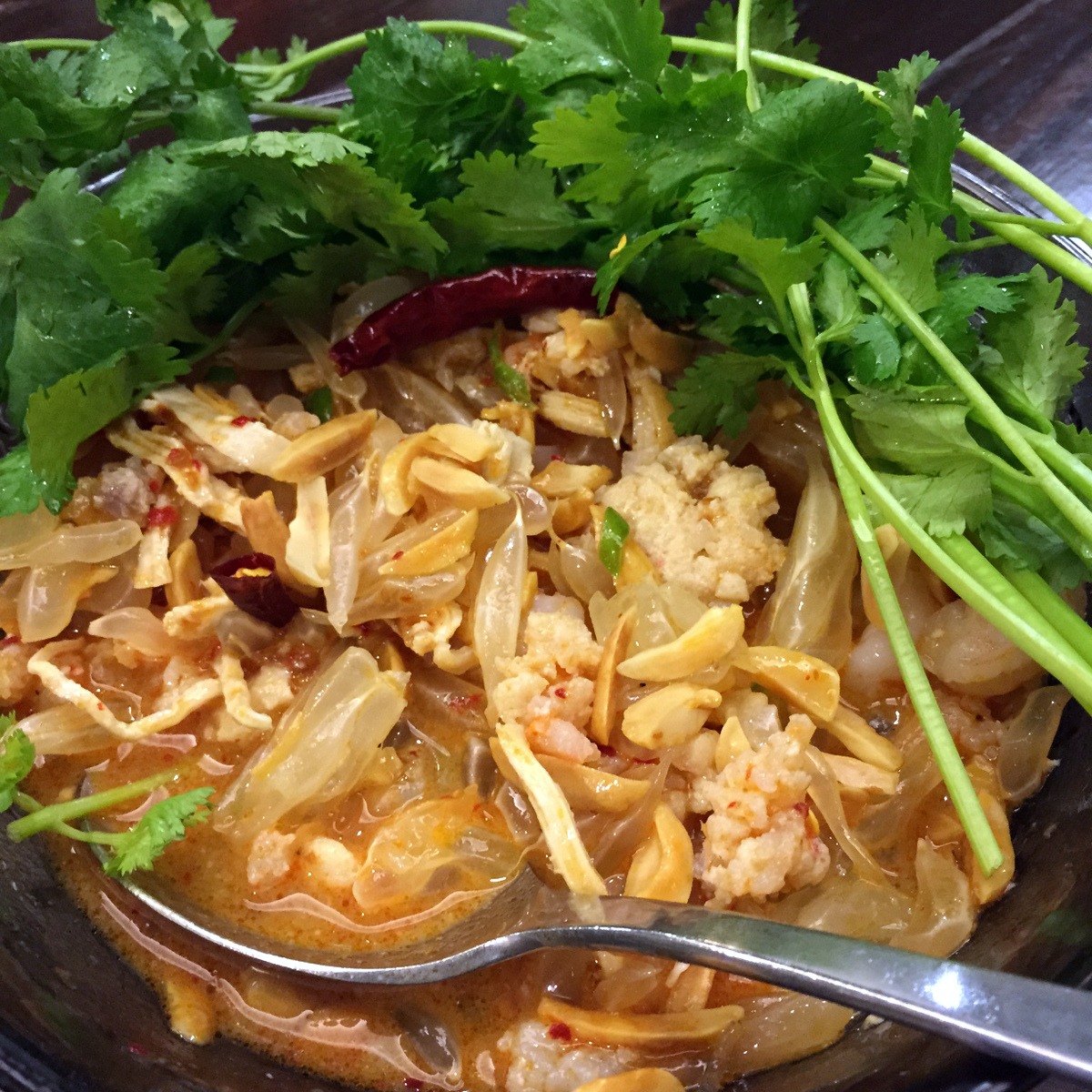
Yam som-oh – pomelo salad with a dressing of lime, palm sugar, fish sauce, shallots, and chilies. This is also pretty common. The “yam” style salad can be made with countless ingredients but the pomelo version is one of my favorites. Perfect balance of flavors and not too sweet.

IMG_4214

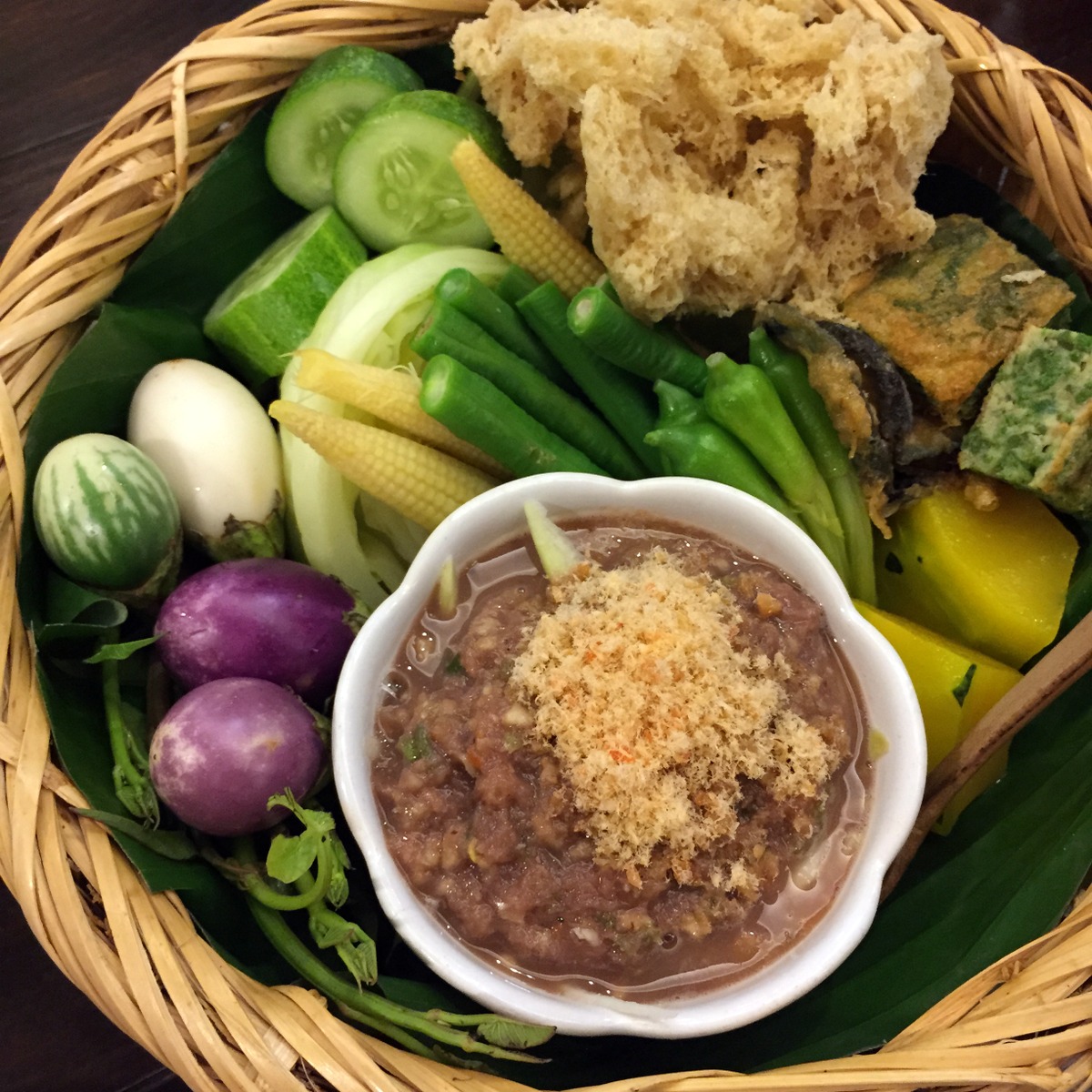
Naamprik mamuang gunghaengbon plaasalidpuu – green mango chilli relish with crispy fish. The “naamprik” is really the dish that set this “Grandma’s food” trend in motion. There are many different versions of this dip, all of which are served with blanched vegetables and other condiments. Some are fiery, others not so much. This version with green mangos has a really nice balance of flavors. Spicy, but with just a small amount with some veggies to cool the fire, it is fantastic and fantastically healthful.

IMG_4216

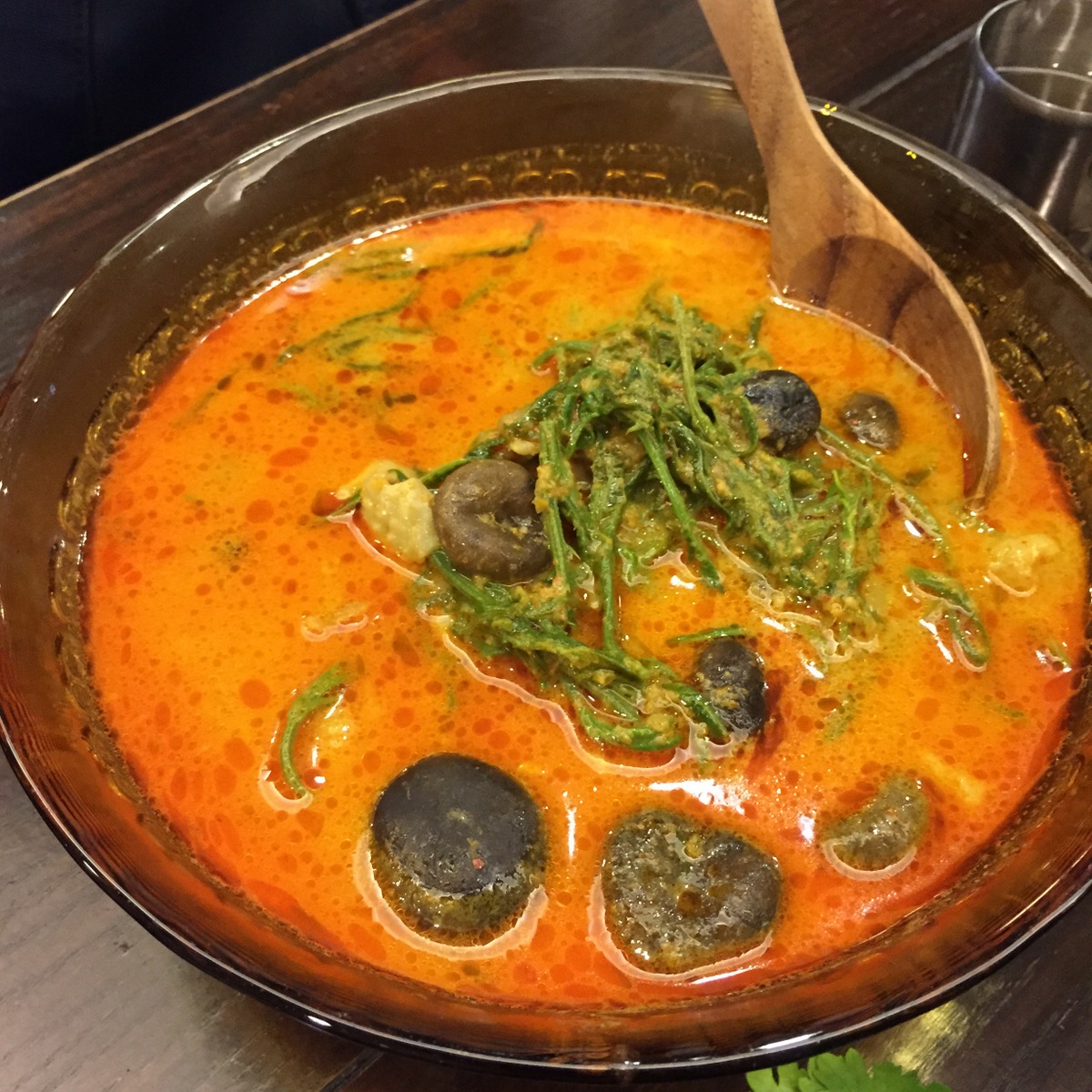
Gaeng kuahaed paw – Earthstar mushroom curry, a forest mushroom in a rich curry that isn’t as spicy as you might expect. Served with an interesting local green that has the same effect as asparagus on your urine’s smell.

IMG_4218

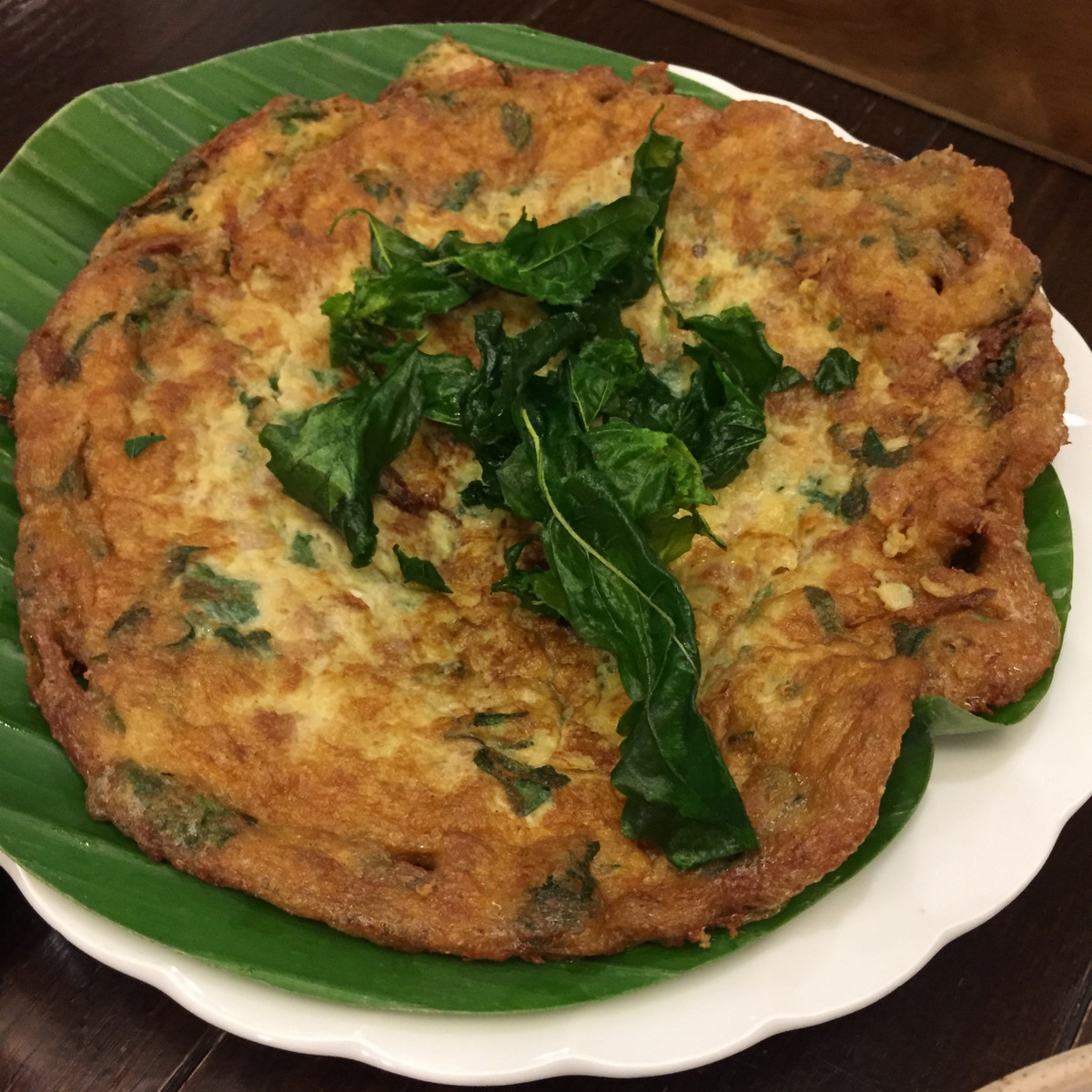
Kaijiaw gapraw muusap – minced pork with chili and basil omelet. Probably the most common dish but a classic that grandma would be remiss not to serve!

IMG_4221

Muutod plaakhem – deep fried pork patty with salted fish. Yes, at first you think it is just a pork patty. And then you taste the salted fish. And the chilies. And the shallots. And the lime. And the coriander. Wow, there is a lot of flavor going on here!

IMG_4231

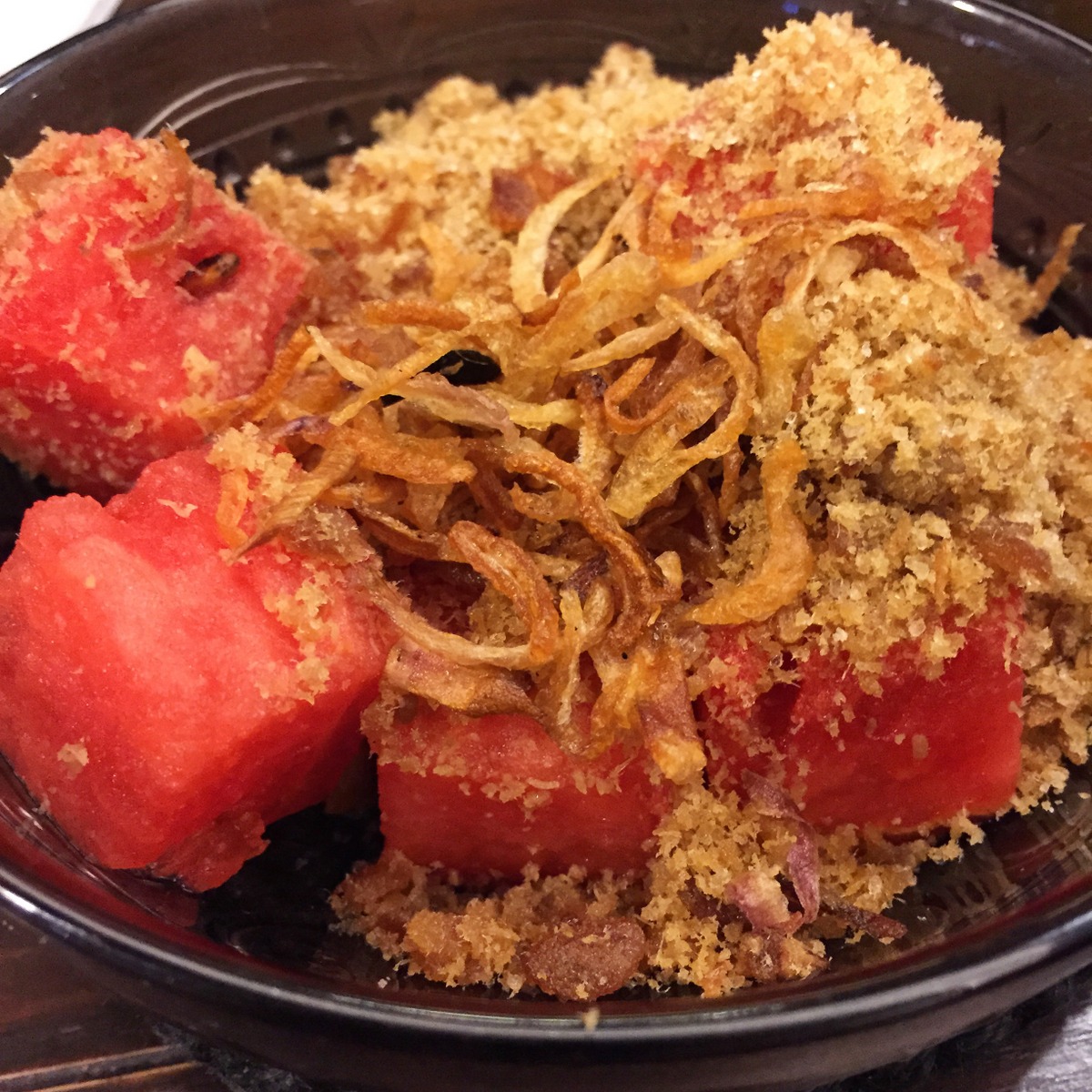
Plaahaeng taengmo naamkaengsai – crazy obscure dessert. Perfectly ripe watermelon served over crushed ice with dried fish. Yes, you read that right. Think of it this way: you know how sweet watermelon and salty feta cheese is all the rage these days? This is the non-dairy version of that flavor combination.

Location: Basement of Silom Complex, adjacent to Saladaeng BTS station in Bangkok.