Inexpensive dining in Paris: La Kantine

For a less expensive meal while in Paris, La Kantine, a cafeteria on the top floor of Le BHV department store in the Marais district, offers a wide selection at reasonable prices plus a well-lit dining area with a rooftop view of the neighborhood surrounding Hôtel de Ville in the fourth arrondissement.

IMG_1017

The new, modern BHV Marais department store is an update of the old Bazar de l’Hôtel de Ville created in 1856. It is a good place to shop for souvenirs – the selection of teas, confections, etc. is extensive so if you want to bring some relatively inexpensive gifts home that aren’t the tacky touristy items, this is a good place to find them.

IMG_1015

The restaurant is a buffet: grab a tray and help yourself to whatever food you like. There are stations on the left that prepare foods to order including pasta dishes. There are a selection of quiches, soups and meat platters. There are different cheeses and desserts, as you would expect. And prices are clearly marked.

IMG_1012

The seating is bright and airy, a combination of communal tables and some smaller tables. There is a good view and one that might feel a bit out of the movie “Ratatouille” – the rooftops of Paris. There is no feeling of being rushed, so you can also use this as a place to catch your breath and plan your attack for the next part of the day.

Information:

Address: 52, Rue de Rivoli
Telephone : 0977 401 400
Located near Métro station Hôtel de Ville (line 1)
Open Monday through Saturday from 9:30 am until 8:00 pm (Wednesdays until 9:00 pm)


Holybelly

What would happen if an Australian or American style brunch place landed in the City of Light? No need to hypothesize: head to the 10th arrondissement and visit Holybelly to find great coffee, great breakfasts and friendly service.

IMG_1341

Holybelly is located near the Canal Saint-Martin, a working class neighborhood that has been increasing in popularity over the past few years and is gentrifying at an increasing rate. It still has its rough edges but the yuppies and hipsters of Paris are plentiful.

IMG_1330

The narrow interior leads to a larger, skylit seating area near the kitchen. The restaurant would be at home in Melbourne or San Francisco and differs from most breakfast restaurants in Paris by being coffee obsessive and offering a larger range of foods on the menu.

One notable difference from Parisian peers is the restaurant’s bold friendliness: the board above the coffee bar announces “Welcome to Holybelly, where the customer is always loved but ain’t always right.” The menus also offer similar salutations in both English and French. Tawn and I were first to arrive followed quickly by a rush of customers, most of whom seemed to be regulars, greeted warmly in French and English by the employees.

IMG_1336

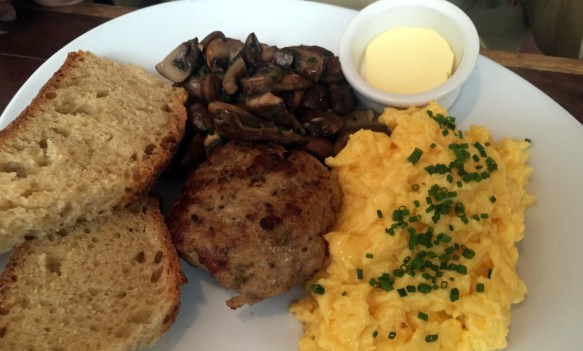
The menu is fairly simple. We chose eggs cooked to order with two sides: roasted and pan fried mushrooms with thyme and garlic, and a homemade pork sausage patty. Everything came with beautiful artisanal bread from Du Pain et des  Idees bakery, where we had nearly wound up with a dozen croissants the previous morning. They also offered some varieties of pancakes and homemade granola for breakfast. A brief lunch menu kicks in mid-day.

IMG_1340

The highlight is the savory stack: a stack of griddled pancakes with fried eggs, bacon, homemade bourbon butter and maple syrup. You can turn that into “The Champ” by also ordering a topping of roasted and fried mushrooms. It was a pretty outrageous, and outrageously delicious, dish!

The coffee was fantastic, brewed from locally-roasted beans from la Brulerie de Belleville. Nice to have a proper latte after several days of cafe cremes that showed that Parisian coffee these days isn’t as great as it once was.

If you want to better understand Holybelly, read the facts page on their website, complete with Game of Thrones references. Better yet, fly to Paris and visit them.

Holybelly
19 rue Lucien Sampaix
75010 Paris

Open 9:00 am weekdays, 10:00 weekends, closed Tuesday and Wednesdays


From a Land Down Under

After several months of a gradual easing-in, my work travel has increased considerably. At turns wearying and exhilarating, the travel presents interesting opportunities for reflection. 
Today I am writing from Melbourne Tullamarine Airport, waiting to board a trans-Tasman flight to continue a two-week stint of training in the Southern Hemisphere. The first week in a suburb east of Melbourne was trying: first time delivering a pair of classes and faced with a more senior and more skeptical audience than I have previously faced. 

  
In the end, the senior most participant stood to thank me on behalf of the class, sharing that he had been especially resistant at the start of the week but had come to reassess his way of managing and would embrace new ideas to be more of a leader.  That thrilled me. 

Another nice part of this trip has been the opportunity to spend two weekends down here with friends and their families. The weather is perfectly autumnal, the crisp coolness contrasting with Bangkok’s peak heat. 

Over time, I will learn how to make these trips more effective so their impact on the home life isn’t as great. As with everything, their is a measure of good and bad in it, and what you make of it is more a matter of how you choose to view it. 

Responding to the Fear about Muslims

Do you receive emails forwarded from relatives expressing shock about “Islamic extremism” and concern about the influence of Muslim immigrants on “Western values”? If so, you are not alone.

You realize that their concern is misplaced, hysteria whipped up by media and politicians who need fear to drive ratings and reelection. You want to do more than just roll your eyes in exasperation. You want to help them take a step back, gather their breath, and climb down from the ledge.

This is the situation I’ve found myself in and I feel like it is time to do some research and provide some tools to help all of us respond to the fear about Muslims and Islam that is so pervasive in the west right now.

This will probably turn into a multi-part series and I encourage you to share your thoughts about how to help people avoid being sucked into the hysteria that I would describe as “radial Islamophobia”.

Islamophobia

“Us versus them” is as old as humanity

The first thing I would say is that we should acknowledge that, by our very nature, humans are tribal creatures and are prone to an “us versus them” mentality. This has served us well over thousands of years – to an extent – but has served us poorly, too.

When you are exposed to something that appears different from what you are familiar with, it is no surprise that you might feel uncomfortable with it. You might be shocked, offended, or at the least a bit uncertain. Is it safe? What does it mean? How will it affect me? These are all reasonable questions.

By acknowledging that these feelings are natural, perhaps we can then move on to explore them. What are they based on? Are those feelings reasonable, when we exposure them to the bright light of fact?

This step is important, because blaming people for feeling uncomfortable with difference will only make them defensive. So let’s begin by empathizing a bit and acknowledging that things that are unfamiliar can make us uncomfortable or uncertain.

Once we do that, we can have a constructive conversation about history.

We are doomed to repeat our history unless we learn from it

Nativism, the political position of generally being anti-immigrant, has a long history. For this entry, I will focus on the United States, as that is my country of origin. Here’s an interesting passage written by a well-known American:

“Few of their children in the country learn English… The signs in our streets have inscriptions in both languages … Unless the stream of their importation could be turned they will soon so outnumber us that all the advantages we have will not be able to preserve our language, and even our government will become precarious.”

The grammar certainly is more elegant than anything Bill O’Reilly or Donald Trump could muster! In fact, these are the words of Benjamin Franklin, written about German immigrants in the 1750s. [source]
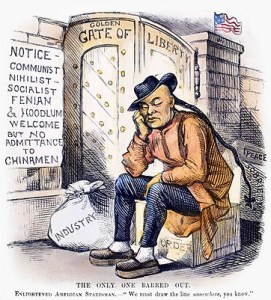
chinese-exlcusion

A political cartoon from the early 1880s after the Chinese Exclusion Act was signed

There have been successive waves of anti-immigrant sentiment in the history of the United States: Germans, Italians, Irish, Chinese, Poles, Russians, Chinese, Japanese (remember the internment camps?), Vietnamese, Mexicans, and Latin Americans have all been the target. And those are just nationalities. There have also been significant and sustained anti-Catholic and anti-Jewish periods.

All of these waves have been fueled by the same rhetoric involving some or all of the following: they will use up all our benefits, they refuse to learn our language, they steal jobs that would otherwise go to deserving Americans, they overpopulate our country, they will replace our culture and laws with their own, they will undermine our values.

Sound familiar? This is the same rhetoric being used with the current anti-Muslim propaganda. For more than fifteen generations in America, we have been making the same claims about the sky falling.

Muslims have been arriving here since the 17th Century, long before the colonies became the United States. A simple reading of history should be enough to help us be less hysterical.

[Interesting learning resource: a PBS lesson for grades 7-9 titled A Cold Reception: Anti-Immigrant Sentiment in the United States]

But things are different today!

Which brings me to my final point: we only need to turn on the news or search the internet to know that things are different now. Yes, we have had waves of anti-immigrant sentiment that were just misplaced fears, but things are different today. The beheadings, the jihads, the terrorist attacks, the hijabs! Al Qaeda, ISIS, ISIL, Sunnis, Shias!

The imagery we see is fearful and the attacks on civilian targets are horrific. Extremists who want to provoke us are tremendously media savvy, especially effective at using social media to shock, scandalize, terrorize, and recruit.

The thing we need to ask, though, is whether what we are seeing is in any way representative of reality. First, do these extremists represent the Islamic faith? Second, how significant is the threat posed by these groups?

To answer the first question, consider when in the world have the actions of deranged individuals ever been representative of larger groups of which they are a member, even when they claim to be representatives of the group? The answer is, never. We don’t consider the recent racially-motivated shooter at a Charleston, South Carolina church as representative of white Americans despite his self-identification as a white supremacist. Likewise, just because someone claims to represent Islam doesn’t mean they do.

KareemShahMother

The mother of U.S. Army Specialist Kareem Rashad Sultan Khan, who died serving in Iraq

To answer the second question, let’s consider the media environment in which we live: the news media is inherently drawn towards the sensational because the only way to attract and retain an audience is to capture their attention with stories that are extreme, different, or engaging. A video of a religious zealot threatening to overthrow America is much more sensational than a video of normal, everyday, law-abiding citizens doing household chores and getting on with life.

What we see in the media (and, by extension, what politicians and everyone else talk about) is the sensational. Because of a number of cognitive biases, we over-estimate the frequency or representativeness of an event based on how easily we can recall such an event or how emotional charged that event may be.

Case in point: since 2001, more than 450,000 people have died in road accidents in the United States. Depending on how you count, there have been less than 200 terrorism-related deaths in the United States in that time. (You may argue with how exactly to define a terrorism-related death, but the point remains, the risk of death by terrorism in the United States is significantly lower than the risk of death by lightning strike.)

Politicians are especially guilty of this. They can say the most inaccurate things and get away with it, because they know that riling people up and playing to their base fears will increase their media coverage and, quite often, their poll numbers.

[To learn more about how not to be ignorant in a world with personal bias, news bias, and outdated and incorrect information, watch this fascinating 19-minute Ted Talk.]

People talk about Muslims taking over countries and changing the very culture and composition of the land. But look at the facts for a minute: in France, the Western European country with the largest Muslim population, is about 10% Muslim. That’s the same percentage as Christians in Egypt and in Indonesia, the world’s most populous Muslim country. In the United States, Muslims make up only about 1% of the population. The amount of population change necessary to become a majority in France, let alone in the United States, is preposterous. Immigration rates and birth rates of immigrants pose no threat at all of Muslims taking over western nations.

I-AM-AMERICA_RidzDesign

Concluding thoughts

There are countless other points that can be made, separating the rhetoric of fear from the reality. I would encourage you to share the above points with your worried loved ones who forward you Islamophobic rants.

I also suggest that you encourage them to do some fact checking. The key to good fact checking is to recognize all of the potential assumptions and biases in your source data, and then to set out to test those assumptions and biases. Look for multiple independent sources, particularly reliable sources.

I also suggest that you encourage them to shift their cognitive biases: go visit Islamic community centers or otherwise get to know your local Muslim community. As you learn more, you will come to see that they are not the “other”. They are you and me and just like every other American around us.

[Further reading: 10 Reasons we Shouldn’t Fear Islam]

Again, I encourage your contribution to a constructive conversation. Let me know your ideas about how we can help people broaden their understanding and deal with fear in these uncertain times.

 

Visiting Tong Hua Night Market in Taipei

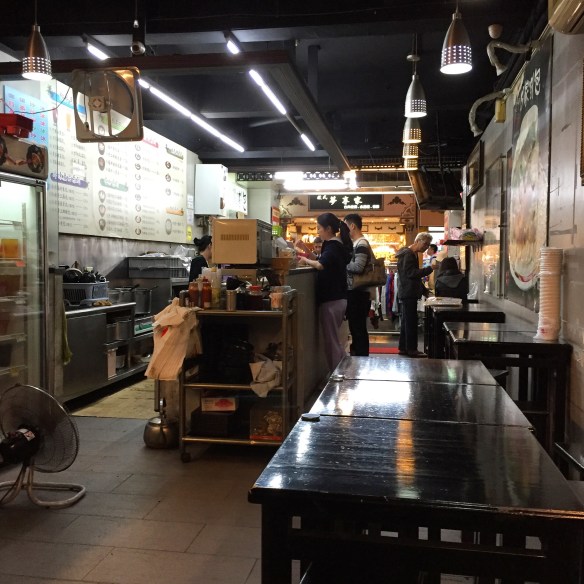
Last week I was in Taipei on business. One of my rules of business travel is, whenever possible, to explore the city and eat at least one meal out and about, so I come away with at least some sense of the city. Thankfully, Taipei is a familiar city and I was fortunate to have two friends join me for a trip to the Tong Hua Street Market in Da’an District.

image

The objective of this visit was to locate a popular restaurant that serves gua bao, the steamed buns filled with braised pork belly and other goodies that I’ve previously tried making and have enjoyed at Little Bao in Hong Kong.

image

Thankfully, one of the local HR team members did some research for me and found a helpful article on the Lauhound food blog. The target restaurant was Shi Jia Gua Bao, a local chain famous for their gua bao.

image

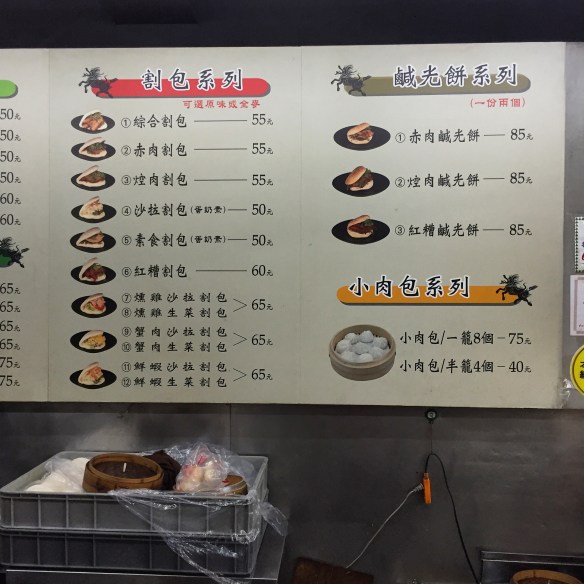
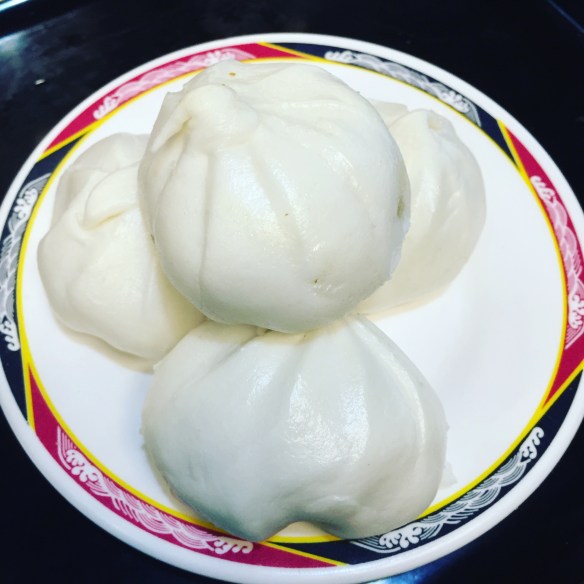
The menu is limited: basically there are steamed gua bao with a few different types of fillings, a baked bagel-like bun with a more limited selection of fillings, and the Taiwanese version of xiao long bao, a steamed pork bun.

image

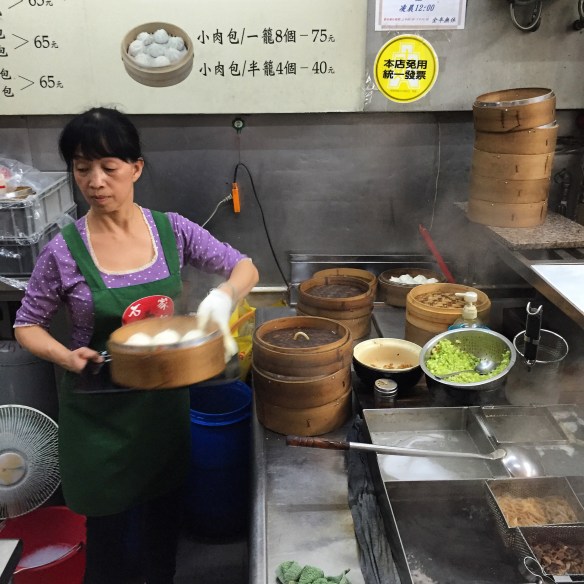
The shop manager was friendly and more than happy for me to take pictures. Vats of steaming buns and all the ingredients sat at the ready, ensuring us of a freshly-made, high-quality meal.

image

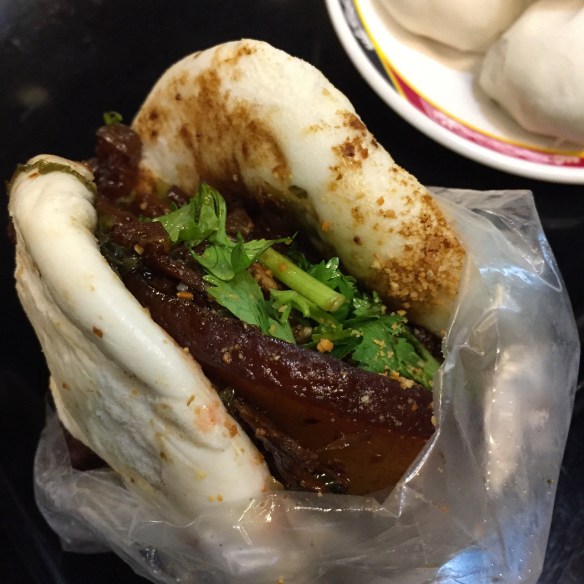
The basic gua bao features both slices of fatty belly and slices of leaner meat. The size of the bao is larger than I have seen at some places: about the size of a McDonald’s hamburger. While a little messy to eat, the flavor was rich and satisfying.

Prices range from 50-65 New Taiwan Dollars, or less than US$2. Quite a bargain for the quantity and quality of food.

image

The baked version, somewhat akin to a bagel, was not as enjoyable. While filled with the same tasty ingredients, the baked bun was dry and brittle, leaving me thirsty. Better to stick with the steamed version.

image

Another interesting item was the xiao long bao. The Shanghainese version with which I am familiar (think of the ones at Din Tai Fung restaurant) feature as paper-thin noodle skin and the filling includes not only pork but a cube of flavorful gelatinized stock that melts when the bun is steamed, producing hot soup that will gush all over if you do not eat it carefully.

In contrast, the traditional Taiwanese version is made with a thicker bread dough so there is no stock inside, as it would only be absorbed by the bread. This was much less satisfying, although the pork filling was tasty enough.

image

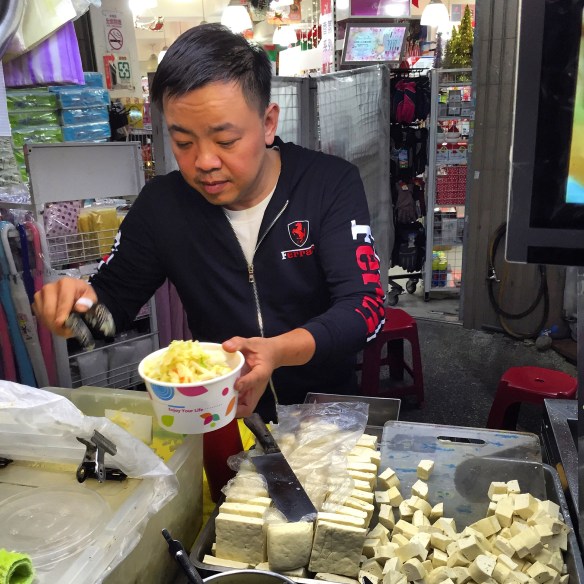
Wandering through the rest of the market, we encountered a stinky tofu vendor. The tofu was stinky, not the vendor! Made by fermenting the tofu in a brine that can contain all manner of ingredients, the smell of stink tofu is as strong as that of blue cheese. It sparks similar responses, with some people loving it and others repulsed by it. Also similar to blue cheese, the flavor and the smell are different.

image

Here, the tofu is served lightly deep fried with a healthy dose of chili oil and pickled cabbage as a garnish. It was a very satisfying dish to try, although the bottom pieces, thoroughly soaked in the chili oil, were blindingly spicy.

image

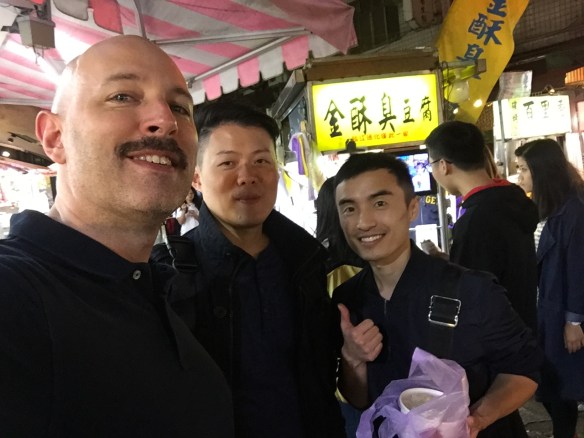
My friends Nathan and Andrew (aka loserstepaside here in WordPress) join me at the Tong Hua night market. The stinky tofu was Andrew’s idea.

image

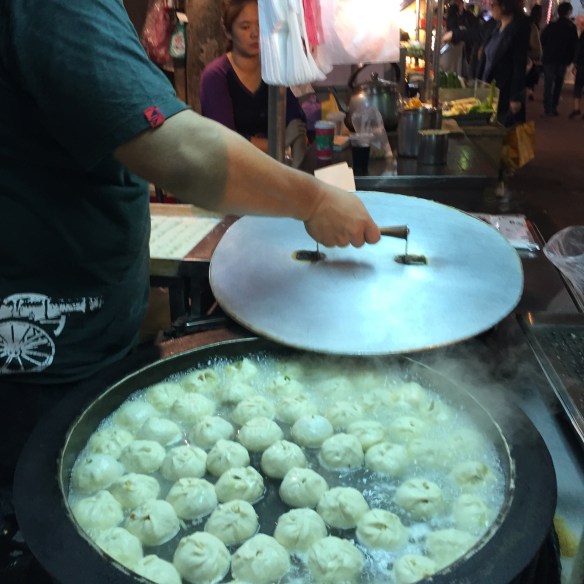
At the far end of the market was a vendor selling sheng jian bao, a pan-fried bun that I fell in love with in Shanghai, where I ate several times at Yang’s Buns.

image

The skins are moderately thick, not as much as the gua bao but not so thin as gyoza. However, like gyoza they are fried on a cast iron pan that is filled with a generous amount of water, covered, and allowed to steam. The cover is removed after about five minutes and the remained of the liquid boils off.

image

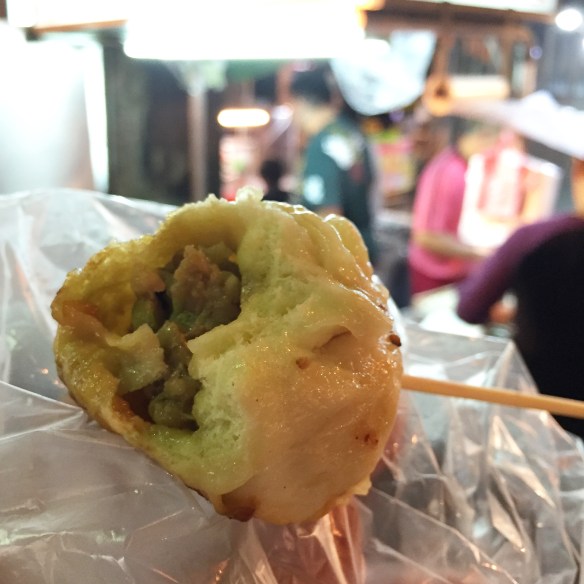
The sheng jian bao are served in a box of ten or a bag of five, sprinkled with sesame seeds and, in some places, chopped green onions.

image

The insides are still steaming hot and the pork, ginger, and green onion filling is juicy and salty. These are a mess to eat but worth it, as the combination of crunchy bottom, pillowy soft wides, and warm, juice filling is too much to resist.

All in all, the Tong Hua market will give you many great things to see, do, and eat!

Also known as the Linjiang Street Night Market, located near Xinyi Anhe MRT station.

A Week of Lessons

Last week was our annual manager’s meeting, held for the top 100 or so leaders in the company. It was an opportunity for me to meet a lot of people with/through whom I will need to work, and an opportunity for me to learn more about the company’s leadership principles.

IMG_3414

While I won’t speak specifically about the company’s leadership principles, I will share some insights from the presentations by the facilitator and consultant. His team’s work is very much of the “The Power of Now” and Tony Robbins school of thought, which was much more “touchy-feely” than I would expect at a Swiss-based company!

Here are some of the insights I walked away with:

Common sense does not equal common practice

Initially, I felt resistance to some of the lessons being shared. “They are just spouting common sense!” I thought to myself. But then the facilitator made a great point: “Common sense does not equal common practice.”

So often, we already know the right thing to do. We do not need advice. We just need to do what we already know is right.

Business is about people and, thus, communication

Everything a business does is, at its root, about people and the relationships between them. Your employees are people. Your customers are people. There is no business without effective relationships between people.

Relationships between people are, at their root, about communication. You cannot not communicate. The basic responsibility of leaders is towards people and towards effective communication. Everything else is secondary to this.

Freedom is the ability to choose your response

Whenever you respond to a situation without thinking, whenever you instinctively respond to an external stimulus, you are being a victim. You can only be free when you exercise your ability to choose your response.

When you blame your response on the external factor – “he made me angry!” – you are being a victim. The anger came from within you, not from the external factor. Own it and examine what the root of your response is. Be response-able for it.

The solution is to move towards the challenge

As tempting as it is to pull back into our comfort zone and avoid the uncertainty or discomfort of a new challenge, that will lead us nowhere. Worse, trying to avoid the challenge will lead to our decay, because there is no “staying the same” in nature. The world is always changing and if we try to stay the same, we are actually degrading subjective to everything else.

Instead, we must lean forward and move towards the challenge. It will be uncomfortable, but once we are past it we will have discovered that we have learned and grown from the experience.


Los Angeles to Kansas City on United

We cashed in some United Mileage Plus miles for one leg of our domestic travel. Thankfully there were “saver” fares – discounted – for first class so we routed through Houston on the Boeing 787-9 Dreamliner to try their BusinessFirst product. 


The Dreamliner is the newest plane in United’s fleet, a fuel-efficient composite construction wide body jet. 

  
The plane’s lines are beautiful, and the wing flexes gracefully during flight. 

  
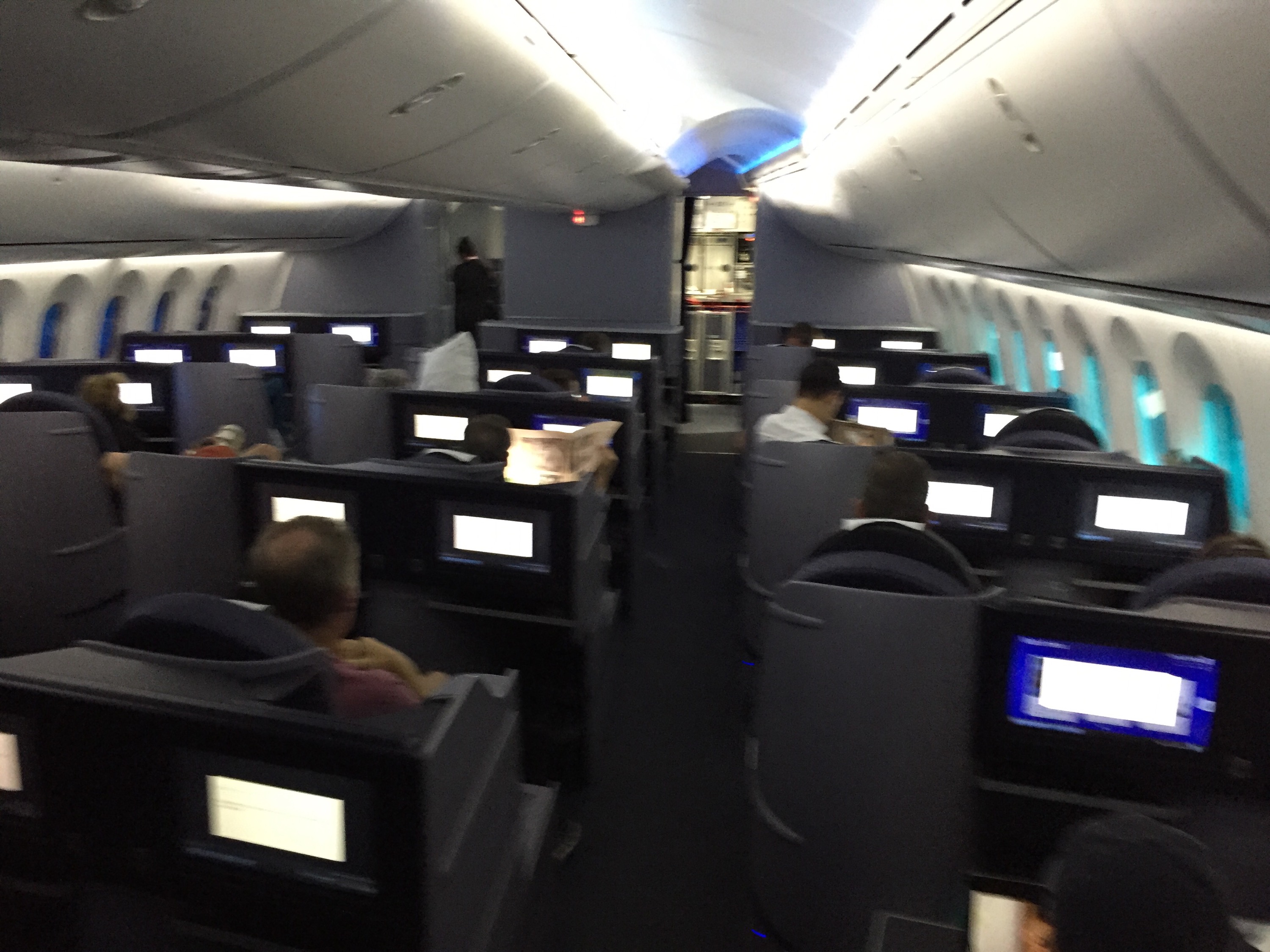
The BusinessFirst cabin features pairs of seats, angled to provide some privacy but close enough for couples who are flying together. 

  
Seats recline fully flat so you can sleep. 

  
I dozed for an hour or so fairly comfortably, although the narrow end for your feet is a tight fit. Not all the seats have the same amount of foot space, I discovered. 

  
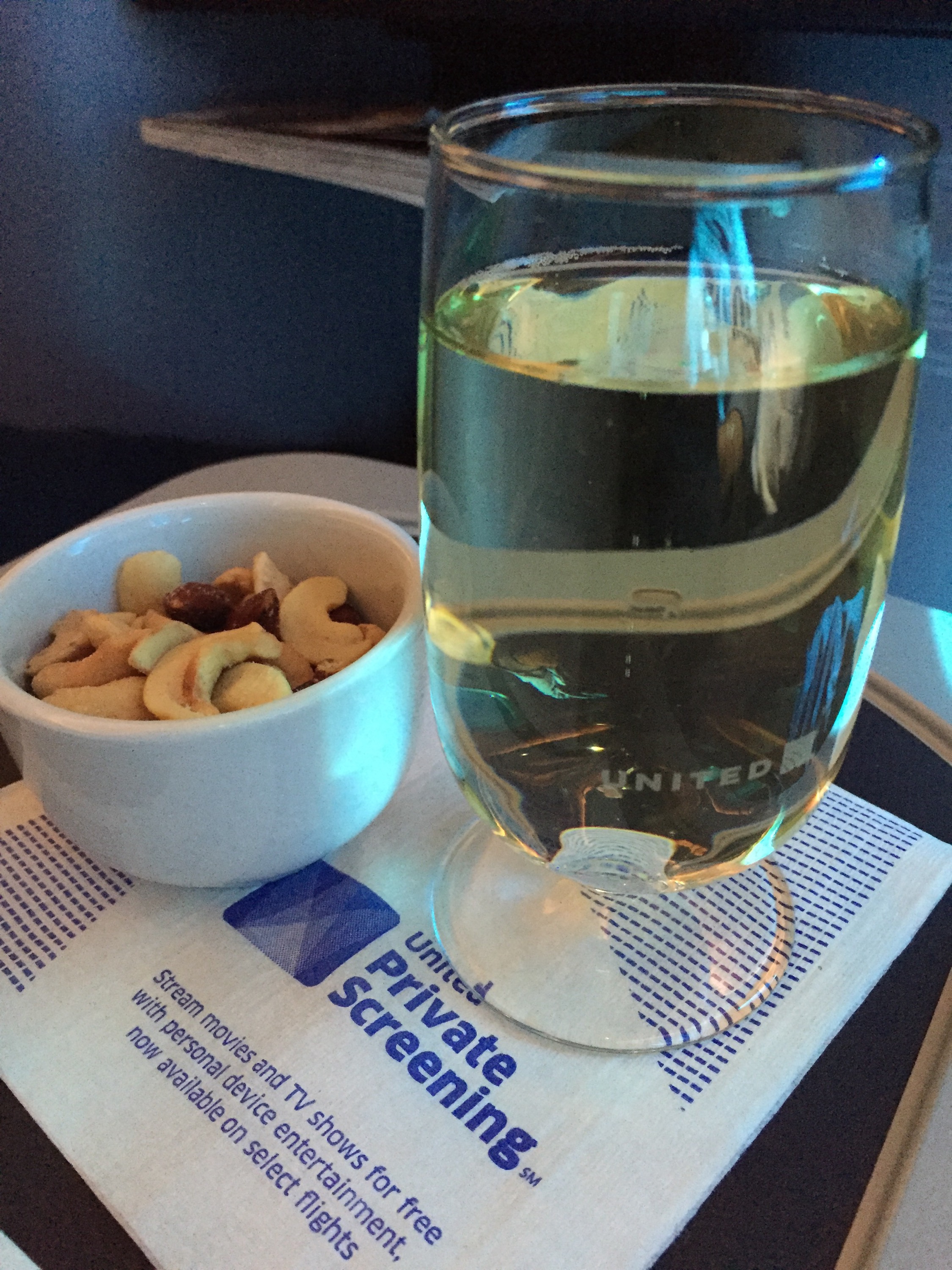
While it was a domestic flight, nuts and sparkling wine were served shortly after reaching cruising altitude. 

  
There was a choice of two entrees: a beef chili with melon and feta salad. 

  
Option 2 was enchilada soup and chicken salad. Both were fine for a three-hour flight. 

  
Warm chocolate chip cookies for dessert. 

  
Large touch screen monitors provide a ton of on-demand entertainment options. 

  
Two happy travelers!

  
With nearly three hours to kill in Houston, we made use of two United Club passes a friend gave me. The club in the E terminal has sweeping views of the gates. 

  
After sunset, we made our way to the gate for our connecting flight to Kansas City aboard an Airbus A319. 

Overall, the flights were positive. The service was friendly and the experience was with the miles (25,000 each) that we redeemed. 
 

Three Steps to Bring Nuance Back to Public Discourse

When did nuanced public discourse die? Maybe ubiquitous social media has made it easy to see people’s previously-hidden bias against complexity and subtlety. Or maybe around-the-clock news cycles and increasingly-targeted media have suffocated nuance. Whatever the cause of death, it seems we increasingly stake out fixed positions, unwilling to address any nuance or consider any new information. But there are things we can do to bring nuance back into our public discourse.

Systemic 2

Nuance is necessary: the biggest challenges we face – from poverty to terrorism, climate change to globalization, education to healthcare – they are complex systems with numerous factors affecting them. Imagine them as interconnected strings: each string we pull is connected to many other strings and the reactions are usually unclear.

I read so many posts from smart, educated friends who make absolutist statements: Muslims are like this; Immigrants are like this; Feminists are like this; Conservatives are like this; Welfare recipients are like this; Gun owners are like this… As if we could take any group of millions (or billions!) of people and find some easy common denominator that explains everything about them.

I read so many posts from smart, educated friends who post pictures and memes that reduce complex issues into sound-bytes, punchlines, and ultimatums… As if we could solve any complex problem by simply building a wall, banning guns, electing a woman as president, signing an electronic petition, bombing the Middle East, or copying and pasting a Facebook status.

May I make a modest proposal? Borrowing from the critical thinking and systemic thinking skills I teach to leaders, I would suggest that before we post anything on social media (or voice any opinions about the events of the world), we do three things:

  • First, recognize what assumptions we make. Are we over-generalizing? Are we verifying the truth behind the statement from multiple, independent sources? Usually a quick search on the internet is enough to challenge our assumptions and learn more about the subject.
  • Second, embrace other perspectives. Most issues have many perspectives, not just two. What are those other perspectives? Especially, who are the people affected by this issue and are their perspectives being told? Often, those most affected do not have the power to tell their own story and share their perspectives.
  • Third, be open to new information. My grandmother had a clipping from a newspaper posted on her refrigerator door: “Only a dead man and a fool never change their minds.” When presented with new facts, new information, are we willing to update our opinions and retract or revise what we have already shared? I see so many people who when they learn that information they posted is incorrect, do not remove the post from their social media.

Do these seem like too many steps, too much of an effort to take before posting something? Maybe so. A friend commented recently that we have become people who just re-post other’s content rather than creating anything original of our own. It is easier to just hit the “share” button when your righteous indignation swells around any particular issue.

But wouldn’t we be a better-informed public if we took the time to think about issues and write our own positions on them, wrestling with the complexities and engaging others in nuanced conversations?