What Are My “Must Eats”?

Sorry to report, but I’m suffering from a bit of post-vacation depression.  Okay, maybe “depression” is a bit too strong a word, but in the nine days I’ve been back, I have had more than my fair share of “Oh, this isn’t any fun… I wish I were still back in New York on holiday” thoughts. 

Deciding to not be gripped by this emotions, I tried to take the detached, Buddhist approach and examine it.  What was at the root of these feelings?  The answer, I realized, was food.

P1190307

Above, Sukhumvit Soi 38, the nighttime “Food Street” near my house.

Upon examination, I concluded that one of the things I like most about any place is the food.  I could write a lot more about this (and possibly will in a future entry) but I think that food is really the tent pole of a culture to which I tether my experience and perceptions. 

As I think about places I’ve lived and places I’ve loved (to visit), specific food memories come to mind.  These usually revolve around not just certain dishes, but even specific restaurants or vendors where I had especially good versions of those dishes.  The sauteed mushrooms with garlic at Cha Cha Cha in San Francisco.  The gyoza at Rising Dragon in Ueno district, Tokyo.  The bistecca alla fiorentina at Ristorane del Fegioli in Florence.  The bánh xèo at that little outdoor restaurant in Saigon, the name of which I now forget and would have to look up.  The truffled egg toast at ‘ino in New York.

See?  Specific food memories.  Things that, if I’m back in that town, I feel that I absolutely must eat them again.  But when it comes to life here in Krungthep, I’m at a loss to name any specific “must eats”.  Please understand, I really enjoy Thai food and, as Tawn put it, when I’m away, I miss eating Thai food when I am away from Thailand.  But other than the sticky rice and mango place at the corner of Thong Lor and Sukhumvit (the best in town, I assure you), northing immediately pops into my mind.

This strikes me as a problem, a problem which may actually go a long way towards explaining why, when I have guests in town, I struggle to figure out the best places to bring them to eat.  There isn’t anything that jumps to the top of my mind, shouting “Must eat!”

This also strikes me as an opportunity, a task to which I must devote at least some of my attention in the days and weeks to come.  I need to brainstorm and if necessary, explore some more, in order to start building my list.  I may already know of some places and all that is required is some gentle nudging to my memory.  But I may need to start looking and tasting to see if I can build that list of “must eat” places here in the Big Mango.

What about you?  What foods and places are on your “must eat” list?


Le Bernardin

Eric RipertOf all the thoughtful wedding gifts we received from our friends and family as part of the “New York City Honeymoon” package, the gift certificate and reservations to Le Bernardin was the one about which I was most excited.  As a certified foodie, the opportunity to dine at a three-star Michelin restaurant was one not to be missed.  Now that I know what those three stars mean, I can define what food heaven must be like.

We modified our reservations – originally, dinner, “Billy Elliot” and the hotel were all scheduled for Thursday night – and chose 9:30 Wednesday for this gastronomic adventure.  We also invited my cousin Brad, so there would be a representative of the family to witness this event.

A little bit of background:  Le Bernardin is a seafood restaurant started in Paris in 1972 by siblings Maguy and Gilbert Le Coze.  They moved it to New York City in 1986. 

After Gilbert died in 1995, Eric Ripert succeeded him as head chef.  Ripert, a 44-year old Frenchman pictured to the right, learned to cook in his grandmother’s kitchen and, unlike many celebrity chefs, still regularly works in his own kitchens.

In fact, you may recall an early episode of Anthony Bourdain’s “No Reservations” in which he and Ripert, a chef he has long admired, work a full shift in the Bourdain’s former kitchen at Les Halles, to see who has the stamina to still work in an everyday kitchen.  Ripert breezes through the evening while Bourdain is breathless and achey by the end.

lebernardin Le Bernardin is located on 51st Street between Sixth and Seventh Avenues, just on the north side of Times Square.  The dining room has a clean, contemporary design that looks a bit like a fusion of a French dining room and a Japanese sushi bar.  Jackets are required for gentlemen diners, something I rarely experience.

The menu has three options: Two tasting menus, which are $135 or $185 per person (seven or eight courses, respectively, $220/325 with wine pairing), and a four-course menu which is $109 per person.  With three of us dining, we went for the four-course option, which would allow us to sample up to twelve dishes.

The four-course menu verges on the overwhelming.  It has three all-seafood sections: “Almost Raw”, “Barely Touched”, and “Lightly Cooked”, which correspond to the degree of preparation.  Basically, you choose one course from each section, plus a dessert.  There were also four non-seafood items that could be substituted as requested.

Some examples of dishes we didn’t choose in each area:

Almost Raw

  • Oyster – Progressive tasting of Kumamoto oyster “en gelee”; from light and refreshing to complex and spicy.
  • Salmon – Yuzu cured Wild Alaskan Salmon; endive and shaved red beet; coriander infused verjus.
  • Scallop – Carpaccio of scallop; ginger; shiso-infused shitake broth.

Barely Touched

  • Sea Urchin – Sea Urchin risotto; toasted nori; urchin-citrus emulsion.
  • Soft Shell – Peppered Soft Shell Crab; avocado-coconut cream; sunflower sprout salad; lime sauce vierge.
  • Mackerel – Seared Spanish Mackerel; parmesan crisp and sun-dried tomato; black olive oil.

Lightly Cooked

  • Skate – Skate “au bambou”; cellophane noodle and wood ear mushroom; spiced bamboo broth.
  • Monkfish – Pan roasted Monkfish; Israeli couscous tabbouleh; black garlic and Persian lemon sauce.
  • Codfish – Sauteed Codfish; stuffed sweet peppers; octopus-red wine sauce and Basquaise emulsion.

As you can see, Ripert’s combinations are pretty fuss-free.  Usually, the main dish will have two or three complementary flavors, leaving the main ingredient’s flavors free to be explored.

Service during ordering could best be described as “unintrusive”, to the extent that I wish the person taking the orders had been a little more assertive in helping us navigate the menu.  I realize that for people who can afford to eat at these sorts of restaurants on a regular basis, such help may be unnecessary, but I found myself struggling with a third course that would follow nicely after the previous two.  When he came back and asked if we had any questions, I responded with a desperate, “Yes!”

Let’s take a look at what we ordered.  Lighting was subdued so even with my gorilla tripod, pictures came out a little dark.

P1190048
Amuse-bouche: a small portion of tuna tartare served with a citrus vinaigrette and micro greens.  Refreshing flavor really cleansed the palatte for the meal to come.

P1190049
My first course was marinated Hamachi done Vietnamese style with a Nuoc Mam vinaigrette.  Truthfully, it tasted more Thai style.  The vinaigrette had a lot of lime juice in it, effectively “cooking” the meat with the acid.  This was very nicely prepared, although if the vinaigrette had been slightly less acidic, it would have been more pleasant.

P1190051
Tawn had the Black Bass tartare served with a mint and ice plant salad and chilled lemon nage (poaching broth).  This was a very nice dish, perfectly balanced flavors.

P1190053
Brad enjoyed a starter of layers of thinly pounded Yellowfin Tuna, foie gras and toasted baguette with shaved chives and extra virgin olive oil.  This was another lovely dish that really showed off the flavors of the fish nicely.

P1190058
For the second course, both Tawn and I had seared Langoustine (a type of slim lobster) with mache and wild mushroom salad, shaved foie fras and a white balsamic vinaigrette.  This was a pretty hearty dish and was very nicely done.  The langoustine was perfectly cooked – not overdone or tough at all – and the salad’s eathiness went nicely with the rich flavor of the meat.

P1190056
Brad’s second course was a curried Crab and zucchini panna cotta (being married to an Italian, Brad loves panna cotta), with vadouvan spiced broth.  (Want to know what vadouvan is?  Click here.)  This was really tasty, too.  The crab flavor stood up nicely to the more assertive notes of the curry seasoning.

P1190060
For the main course, I had a crispy Black Bass with braised celery and parsnip custard, served with an Iberico ham and green peppercorn sauce.  I had asked for a recommendation of a third course, not sure what would go nicely after the langoustine.  I had debated between this dish and a poached Halibut, and the order-taker steered me towards this.  It was also very nice, although the sauce cooled quickly in the air conditioned room and began to gel, creating an unpleasant texture.

P1190062
Tawn had the barely cooked Wild King Salmon with sweet pea and wasabi puree, spring vegetables and a citrus-yuzu emulsion.  I love my salmon a bit rare so I found this a really lovely dish.  Tawn, however, prefers his meat drier so for him, it was way undercooked.

P1190061
Brad, not a huge seafood fan, departed to the “Upon Request” section for his main, enjoying a buffalo mozarella tortellini with wild  mushroom consomme, nettle and a parmesan emulsion.  This was really good.  The consomme was really salty but very flavorful.

With our meal, we enjoyed a $50 bottle of Long Island rose recommended by Aldo Sohm, chef sommelier of Le Bernardin.  In fact, he’s been named the best sommelier in America and won several awards.  This is the first time I’ve been to a restaurant where the wine was tasted (using a little silver cup attached by chain to the sommelier’s waist) before being poured.  Sadly, I didn’t make note of the winery from which the bottle came, but I’ve enjoyed many Long Island wines during other meals in New York City.  One of these days I’ll have to travel out to Long Island again, this time for the purpose of wine tasting.

P1190063
For dessert, Tawn had the chocolate-chicory, a chocolate cremeux, pain de genes, orange “meringue” and chicory ice cream.

P1190064
Brad continued the panna cotta theme, having a grapefruit panna cotta with vanilla cream, grapefruit sorbet, tarragon coulis and a crisp merringue.

P1190068
I had the vanilla poached apricot, with apricot cream and coulis wrapped in white chocolate, with noyau ice cream.  (Noyau being a French liqueur made from brandy and apricot kernels.)

P1190066
Additionally, having been informed when the original reservation was made that this was a special occassion, the kitchen sent out a complimentary “happy anniversry” cheesecake.  Yes, our fifth day anniversary, I suppose.

P1190069
After it all, some petits-fours were served.  These were actually better than the desserts themselves, if you want my opinion.  Four little bites, each different, each wonderfully done.  The desserts seemed a little fussy, compared with the meal itself.

All in all, it was a pretty amazing meal experience.  The fish dishes were really well-prepared and very enjoyable.  The service throughout the evening was of the highest calibre.  We went through more silverware, and more differently designed silverware, than I ever knew existed.  Did you know that there are a half-dozen different types of fish forks, depending on the type of fish being served?

If I may make an observation, though: my experience at Le Bernardin reinforces my opinion that “fine dining” is in the eye of the beholder.  You don’t necessarily need to spend a ton of money in order to eat very well-prepared food.  Thinking back to the dinner I had at Orris in Los Angeles, I’d say I enjoyed that dining experience every bit as much as I enjoyed this dinner at Le Bernardin, when it comes strictly to the food itself.  Sure, the service and atmosphere at Le Bernardin were ten times more sophisticated than at Orris, but when it comes down to the most fundamental thing – the food – both were very good.

That’s not to say I didn’t enjoy Le Bernardin – it was a fantastic dining experience and a spectacular way to celebrate our marriage.  But for those of you who may feel like you’ll never be able to afford to eat well, I would stress that eating expensively isn’t a prerequisite for eating well.  Many of my readers are foodies, too, and I’m sure they’ll agree.

So that’s a wrap on the New York entries.  We returned Monday morning to Krungthep and are settling back into work and our regular routine. 
 

Musings on Southern California

Los Angeles area. Twice I’ve moved away.Despite this, I find myself returning from time to time to see what has changed.In some ways, little has. Los Angeles is an enigma, the literal expression of a Tinseltown ideal. But there are some signs of change, interesting ones. I think of the gentrification of post-World War II housing in the cities surrounding Long Beach, units that were sold to bachelor soldiers and new families working at the Douglas Aircraft plant in the late 1940s and 1950s as Southern California experienced its post-war boom. I think of an increase in community events such as farmers’ markets and street fairs. Slowly, I recognize signs of renewal, of things that were always so new that they seemed like facades on a movie set.

Perhaps the biggest strength of Southern California is the rich diversity here. Of all the places I’ve lived in the US, I’ve most noticed that creeping change brought about by immigration here. When I first lived here nearly twenty years ago, there were certainly many different cultures present, but it has been wonderful to see how those cultures have blossomed, become increasingly visible and become such a part of the Southland fabric. Not living here anymore, it is hard to say how integrated those different cultures have become.But their visibility is a first measure of health.

Despite that, I don’t know if I would enjoy living here again. The weather is nearly ideal, yes, but it is still too suburban and sprawled an area for my tastes. Despite the buses and bicyclists, signs that there are at least some alternatives to individual car ownership, it is an example of that American dream that existed hand-in-hand with the post-war era: a dream that promised prosperity, growth and limitless consumption. A dream that gave everyone a sunny optimism and friendly, if plastic, demeanor while isolating everyone in their steel and glass bubble, ensuring no real connection.

This critique isn’t just about Los Angeles, of course.It is symptomatic of American culture in general, a good example of what I don’t appreciate much about life here and what I don’t miss about it.

It is easy to get caught up in the list of the things I don’t like, easy to identify the reasons that I don’t live here anymore. It is worth the effort, though, to categorize the things that are positive about the Southern California culture. There is an admirable optimism here that contrasts markedly with the nearly fatalistic outlook of the society where I currently live, one that believes fate, chance and inescapable karma have pretty much written your destiny. There is a continual push here, even amidst the congestion and traffic, to improve the quality of living and the breathability of the air.These are no small things.

Maybe these are just the musings of an expat, required every time I cross the border from current home to previous. Required because I have to understand why I no longer live where I once did. Required because – a common theme of long-term expats – I cannot help but to feel a bit of alienation in my homeland, a sense of being set apart from the rest of the society in which I was raised.

Time, then, to set those musings aside, turn on the radio of my rental car, and make my way to the local In-n-Out Burger for a double double, animal-style, with grilled onions.


New Feature – Travel Guides

When I was thinking about features for a new phone, GPS was one that strongly piqued my interest.  This is because when I explore the world, I like to be able to share recommendations of sights, places to stay, places to eat, etc. with others  Combining GPS and a camera would make it easy to create such recommendations, with pictures and geo-tagging all in one.

However, I didn’t get such a camera.

New Feature But my interest in sharing recommendations continues.  Recently, a friend told me he was heading to Tokyo and was going to browse my entries for suggestions of where to go and where to eat.  Great idea, I thought.  Unfortunately, not every entry actually provided specific locations for things.

So I logged into Google Maps and created a Tokyo Map that has all my recommendations plotted out, complete with links and pictures.  I’m not the first to think of this by any means.  My friend Daniel created such a map of Montreal for another friend who was visiting there in December.  I’ve also found a map like this for Krungthep, with lots of restaurants I want to explore.

Since these things take a fair bit of work, it is a shame that they don’t see more use.  Because of that, I’ve added a new feature to my blog: travel guides.  It will take a while to pull them together, but when I’ve traveled somewhere (or a friend shares a map and recommendations with me), I’ll post the information here in the hopes that you or a friend of yours will find it useful.  This new feature is on the left-hand column on my blog.

I hope these are helpful and I encourage you to add your recommendations, too.  I’m not going to recreate TripAdvisor by any means, nor would I want to since the recommendations there aren’t always very discerning.


Biking in Prachinburi

Right before heading to Japan, Stuart and I completed a biking adventure up to Prachinburi province, northwest of Krungthep (Bangkok).  We had talked about doing a combined train-bike day trip just for the experience, so with the clock ticking before his move to Phuket, we decided we had better get this trip done.

(It is worth noting that this entry is actually a month old but I didn’t get a chance to edit the video until this past weekend.)

P1140864
A view of the station from a bridge heading into the old city.

We started early on Sunday April 5th, leaving the Thong Lor area about 6:30 am for the 10-km ride to Hualamphong Station, the main rail station in the city.  Stuart has ridden the Thai rails before but this was a first for me.

P1140867
The lovely Italian Neo-Renaissance exterior of this station.

Hualamphong is a big station and was teeming with travelers even at this early hour on a Sunday.  While Stuart watched the bikes I went to buy tickets and inquire about what to do with our bikes.  Even with both of us speaking a fair amount of Thai, this process wasn’t very clear.

P1140870  
Interior of the station waiting area – crowded even on a Sunday morning.

The ticket agent directed us to somewhere near track two for our bicycles.  Once we entered the track area it wasn’t clear where we were going so we stopped at an information kiosk.  The agent there vaguely waved towards the far end of the station.  Eventually, walking way down the tracks, we found the cargo area.

There, they checked out tickets and then explained that our particular train wouldn’t have a cargo car on it, so we were going to have to carry out bikes into the passenger car.  They then pointed to the other end of the tracks, indicating that we needed to go pay some surcharge to do that.

We walked back up the track and eventually fond another kiosk where we paid for “excess baggage”.  For our 122 km journey the fare was a whopping 26 baht per person, each way.  That’s right, less than one US dollar.  The baggage fee for the bicycles was something like 80 baht per person.

P1140873
Stuart and his bike share space with another passenger.  These two benches are meant to seat four people.

We eventually got everything straightened out and got on our train moments before it was supposed to depart.  Had we known how crowded the train would be, we would have boarded earlier.  As it was, we had to remove the front wheels from our bikes in order to make them fit.  Fellow passengers, who were mightily inconvenienced by our bikes, were very gracious about it.  Next time, we need to make sure there is a cargo car on our train.

P1140890   
A young boy enjoys the view from the window seat.

The train tracks snake through the heart of Krungthep, affording a front-row view of the belly of the Big Mango.  Needless to say, it isn’t the prettiest of views.

P1140892
One of the smaller stops within Krungthep complete with banana trees.

There are vast areas of low-income housing and many markets which are built right up to the edge of the tracks.  What is amazing is how vibrant life in this communities is: there is an entire world going on right next to the train tracks, paying no attention to the iron intruders that cut through their towns.

P1140902

The entire train was third-class seating, unassigned and un-air conditioned.   With the breeze and fans, the trip was fairly pleasant.  Vendors walked up and down the aisles with snacks and beverages, so it wasn’t much worse than a flight on one of these low cost airlines.

P1140907
Eventually, we found ourselves outside the city, spilling into the rice paddies that are a familiar sight in the central region of Thailand.

P1140917
One has to wonder at the lack of safety gear.  There was nothing to prevent people from falling between the engine and the train or out of any of the doors, all of which were open to the passing landscape.

At each stop we picked up more passengers until the train was near capacity.  Most everyone stayed on for the first two hours until we hit Chachoengsao Junction, where the northeastern and easter lines split.  At this station about two-thirds of the passengers disembarked, after which we had enough room to spread out and not worry about people getting greasy as they walked past our bikes.

P1140914

Our stop, Prachinburi Province, was an additional hour past Chachoengsao.  By this point it was nearing 11:30.  We offloaded our bicycles and watched as the train pulled away.  Checking our time, we had five hours before the return train arrived, and about 80 km planned on this hot day.

After a light meal in a small restaurant across the parking lot from the station we set out.  Frankly, there wasn’t a lot of memorable sights.  An “ancient city” was hard to find, or at least what we did find wasn’t very exciting.  It ended up being an ancient water storage pond with carvings of elephants along the side.

P1140931

It was cool in a sort of, “oh, that’s interesting” way.  But not in a “wow!” sort of way.

One stop that ended up being fun was the largest and oldest Bodhi tree in the kingdom: Ton Pho Si Maha Pho.  It is located across from a temple way out in the outskirts of the province.

P1140937

It is actually a beautiful tree and of course is well-venerated.  They say that some 2000 years ago, Phrachao Thawanampayadit, the ruler of Mueang Si Mahosot during the Khmer empire, sent his representatives to India to bring back a branch from the bodhi tree in Buddhgaya, India, under which Buddha attained enlightenment.  This is ostensibly the tree grown from that branch. 

Across the street in a temple, we encountered a group of novice monks.  During the summer months when school is out of session, parents will send their sons to the temples.  This time spent in the monastery is meant to gain merit for the parents’ future life, but sometimes I think it is more a form of summer school, just to keep the sons out of trouble.

P1140939

The young monks enjoyed the distraction of two bicycling farang and had many questions for us.  One was particularly fascinated with Stuart’s iPhone.  We visited for about fifteen minutes, drank some water that they offered, and then continued.

Along the ride, I was making great efforts to stay hydrated.  I had my 2-liter Camelback water pack with me.  But what I forgot was that staying hydrated is only half the battle.  After a while the water was warm and my body temperature was climbing.

After some 60 km, as we were working our way back around the loop to the provincial capital, I had to stop several times to cool down, buying ice-cold water at some stores and not just drinking it but holding the bottles to my neck to bring my temperature down.  Truly, by the end of about 80 km, I was frighteningly close to heat exhaustion.

P1140942

We made it back to the station about fifteen minutes before the return train, thoroughly wiped out from the ride.  The trip back was spent mostly staring, zombie-like, out the windows.  The good news was that this return train had a cargo car so we didn’t have to manage our bicycles during the ride.

P1140945

Along the way, we had fun with some “hanging out the door” shots.

P1140953

We also saw some exciting sights like large bonfires next to the track.  I guess burning is the most effective trash disposal option out here in the middle of nowhere. 

P1140958

By the time I returned home some 14 hours after leaving, my legs were red.  Not with sunburn, mind you: I had been very liberal in my reapplication of sunblock.  The red was from the dust of the volcanic soil in the northeast region.  Riding the road had left me covered with it from head to ankle!

All in all, it was a fun trip.  Exhausting, yes, but sometimes it is pushing yourself to the limit that helps you know what you really are capable of.  Here’s a video of the trip, mostly focusing on the train portion of it.

Narita

I told you we were done with Tokyo and, yet, we’re not.  After checking in at the airport, Tawn and I took the train back one stop to the town of Narita.  Longer-term readers may recall that we did this during an 8-hour layover in Tokyo in March 2007.  For those of you who haven’t been reading that long, here’s a brief account:

Narita is the town where Tokyo’s main international airport is located.  It is an hour by train northeast of the city, has a very old and beautiful temple, and is known for its unagi – grilled eel.

P1160231

Taking the local train from the airport back to Narita, I remembered to take a picture of the daily news headlines posted in the train car.  You don’t need to be able to read Japanese to tell that sex sells!

P1160215-1

Narita isn’t a very large town, maybe 100,000 people, and its agricultural roots are still visible, although much of the town now supports the nearby airport industries, including the many hotels where overseas aircrew spend their one- or two-night layovers.

The walk from either of the train stations to the temple is only about ten minutes, following a cute street lined with little shops selling all sorts of trinkets and souvenirs.  Just in the last two years, we’ve noticed a lot of change on this street, though, with several older buildings and mom-and-pop shops demolished in favor of newer, more generic stores, restaurants and bars.

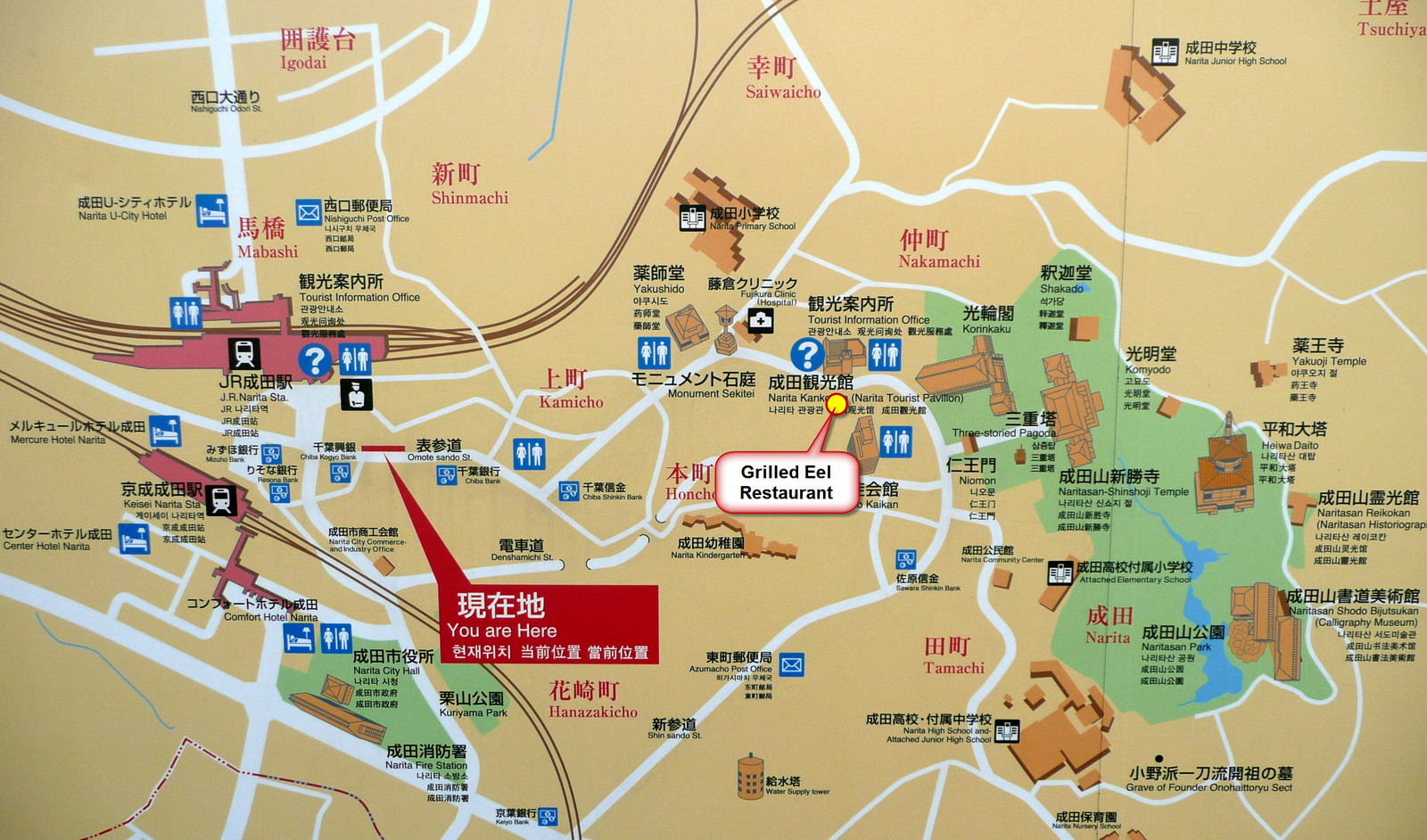
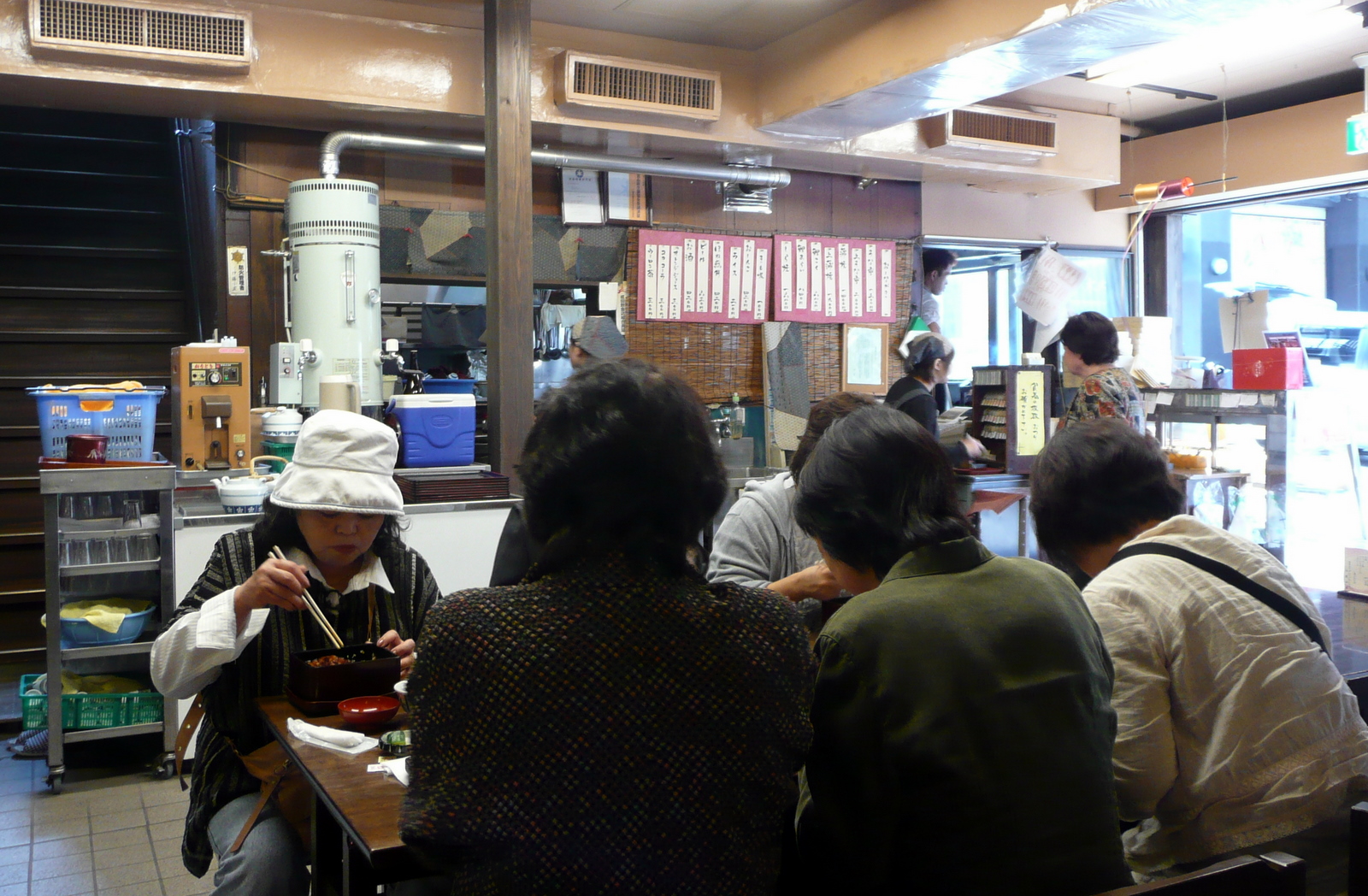
Right across from the tourist information office is a small grilled eel restaurant.  The kitchen faces the street and you can look in and watch the chefs grill the skewers of fresh eel.

P1160216

You order and pay at the front counter, receiving little paper tickets.  Then take a seat at a table (or in the traditional seating area on tatami mats, at the back of the restaurant).  A few minutes later, tender, sweet and crispy unagi comes your way!

P1160224

I’ve said it before and will say it again: if you have about six hours between flights at Tokyo Narita Airport, it is worth your effort to go through immigration and take the train into Narita Town.

After our return to the airport, Tawn did a little browsing in the shops and I went up to the observation deck.  Japanese airports still have observation decks that are open to the public, which I think is a great thing.  (Being an aviation enthusiast and all…)

P1160246

A Japan Airlines 747 touches down on the main runway, the same one that the FedEx MD-11 crashed on a few weeks ago.  I wasn’t able to spot any signs of that accident.  In the foreground is a Korean Airlines 777.

P1160255

With Delta Airlines’ recent acquisition of Northwest Airlines, they have been quick to repaint the Northwest fleet, at least the planes flying internationally.  Now you are able to see something that didn’t exist just a few months ago: a Delta 747 and A330.

P1160264

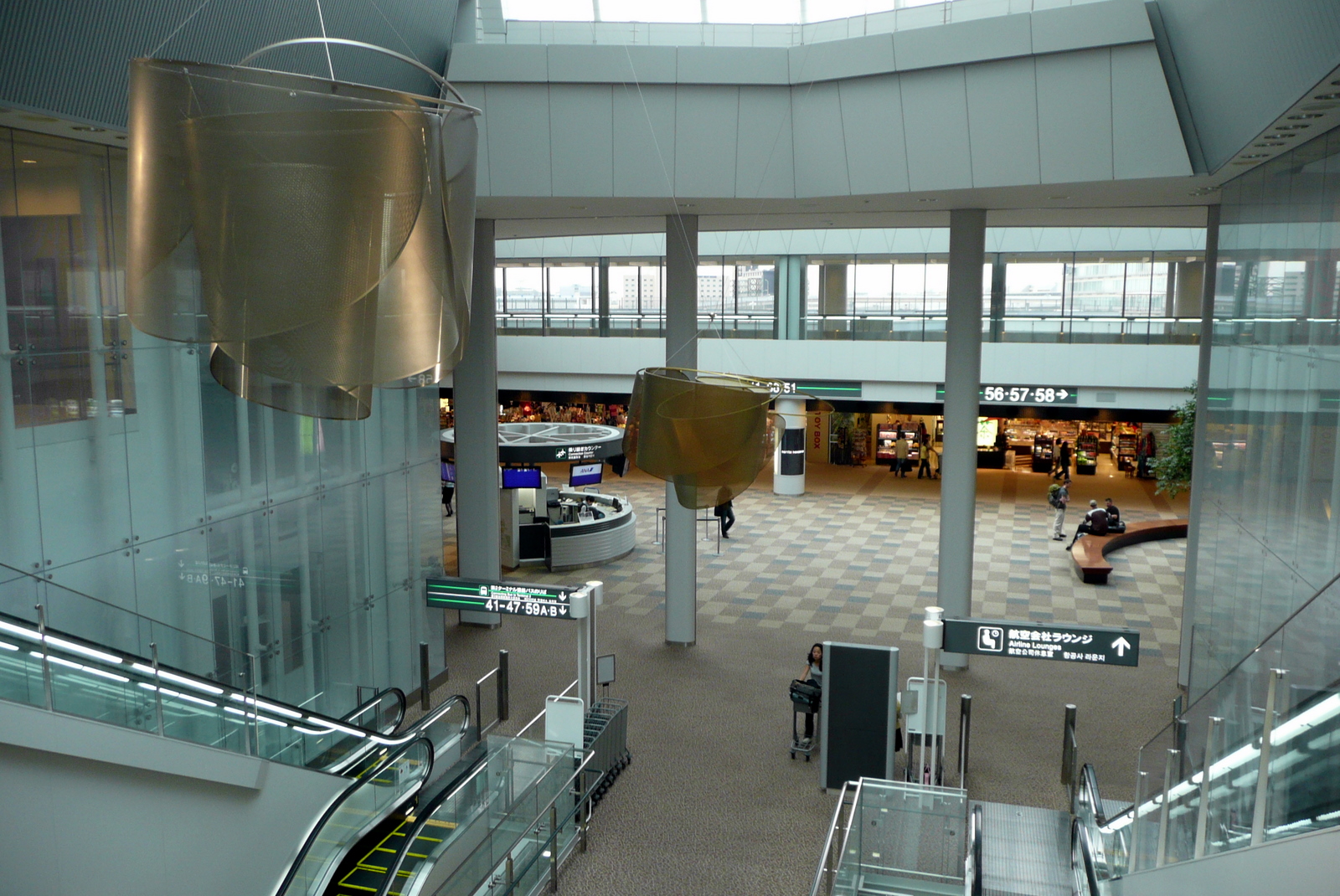
Beautiful new area in Terminal 1.  While Narita doesn’t have all the amenities of Singapore Changi Airport, it is a more beautiful airport.

P1160269

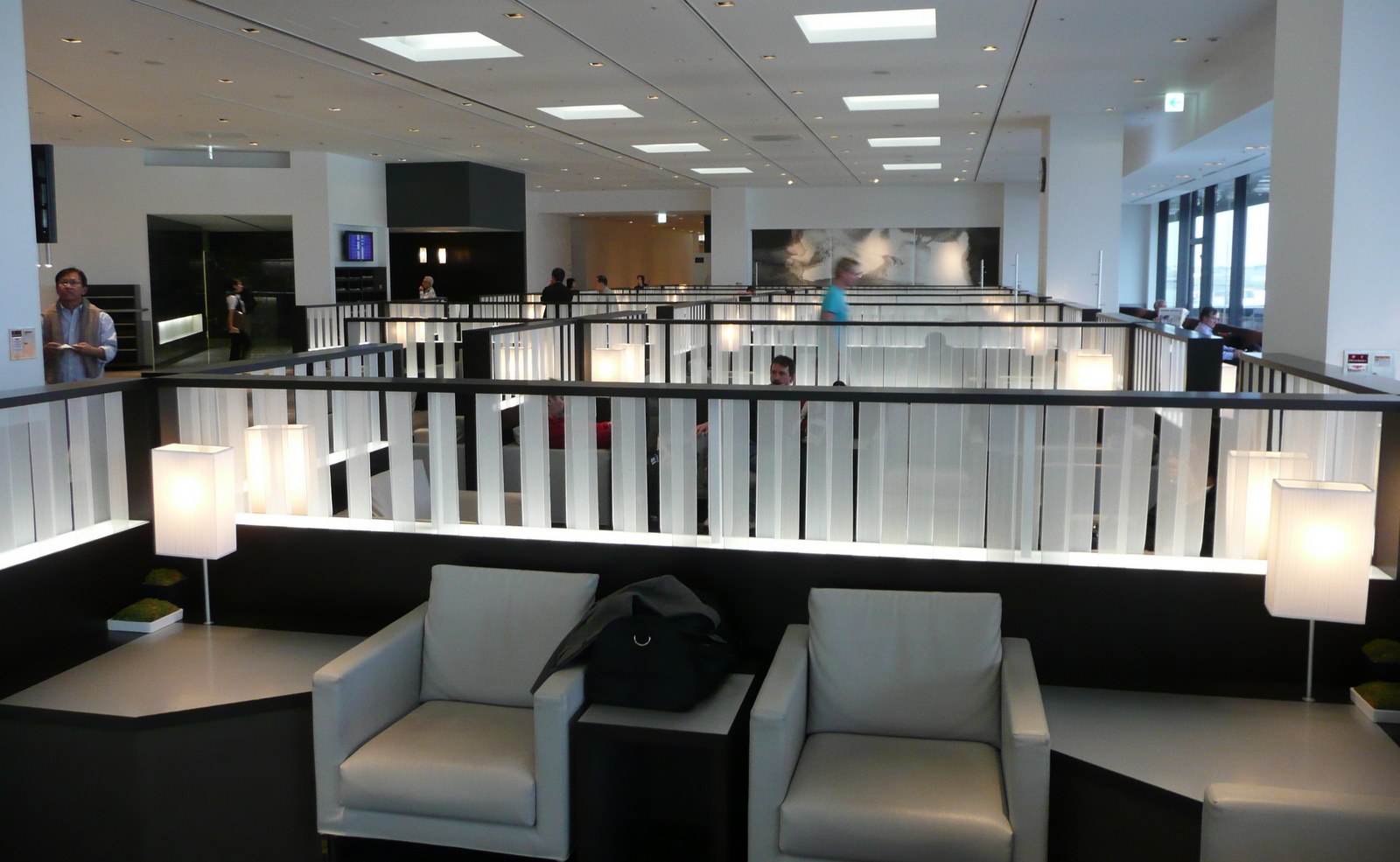
Since we had cashed in a few remaining miles to fly business class, we stopped by the All Nippon Airways lounge.  If you are flying Star Alliance through Tokyo, don’t bother with the United Airlines lounge – go straight to ANA’s as it is much nicer.

With shower facilities and a good selection of food and beverage – not to mention an excellent view of the airfield – the ANA lounge was a nice place to relax before boarding the flight home.

Our friend Masakazu, whom we had joined for shabu-shabu and sukiyaki a few nights earlier, had emailed several of his friends who were working the flight back to Bangkok.  The upside of this was that we received very friendly and attentive service on the way back home, including a complimentary bottle of wine to slip into our bag just before arrival!

Tsukiji Fish Market

After a full week in Tokyo, we work up at 3:00 am Thursday to check one last thing off our list: a visit to the Tsukiji Market, also known as the Tokyo Central Wholesale Market.  Pronounced “tskii-jii”, this is the largest fish market in the world, doing some US$28 million of business each day.

The guidebooks all say that that the Tokyo Metropolitan Government has placed restrictions on what tourists can access at the market, after crowds caused concerns about sanitation and got in the way of the market workers.  That, combined with my perception that a wholesale fish market isn’t a place I want to be wandering around on my own, aimlessly, prompted me to search out guided tour options.

P1150967

Several reviews on the web sang the praises of Naoto Nakamura, a former market middleman who now gives tours three mornings a week.  While pricey at 7500 yen per person (about US$75), he limits his groups to no more than six and adjusts his tours each time based on the conditions of each day.

This, I was certain, would be a good way to learn about the market from someone with first-hand experience.

P1160032

My certainty was well-founded as the tour turned out to be every bit as insightful and informative as I could have hoped for.  Nakamura-san’s English was excellent and his sense of humor very dry.  We met our other two tour members, a pair of women (one who was half-Thai) visiting from the US.

The underlying subtext for the morning was a cat-and-mouse game.  Outsiders (non-employees) are not allowed in many areas of the market, especially on the auction floors around the seafood.  White-booted Tokyo Municipal Government inspectors were about and the captain of the market, Nakamura-san’s nemesis, kept appearing around corners and down hallways, so we would climb stairs, duck out side doors and do everything we could to avoid a confrontation.

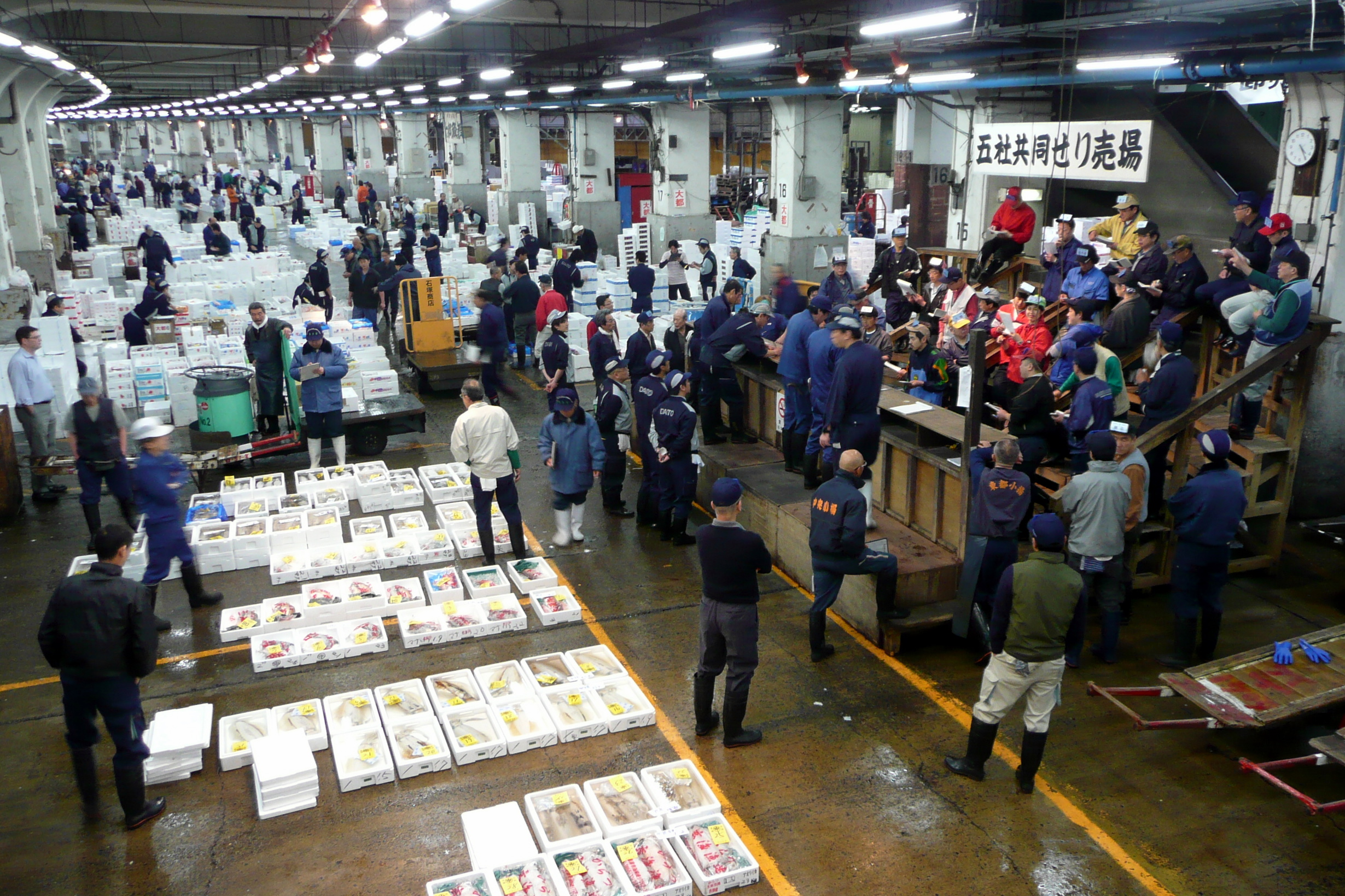
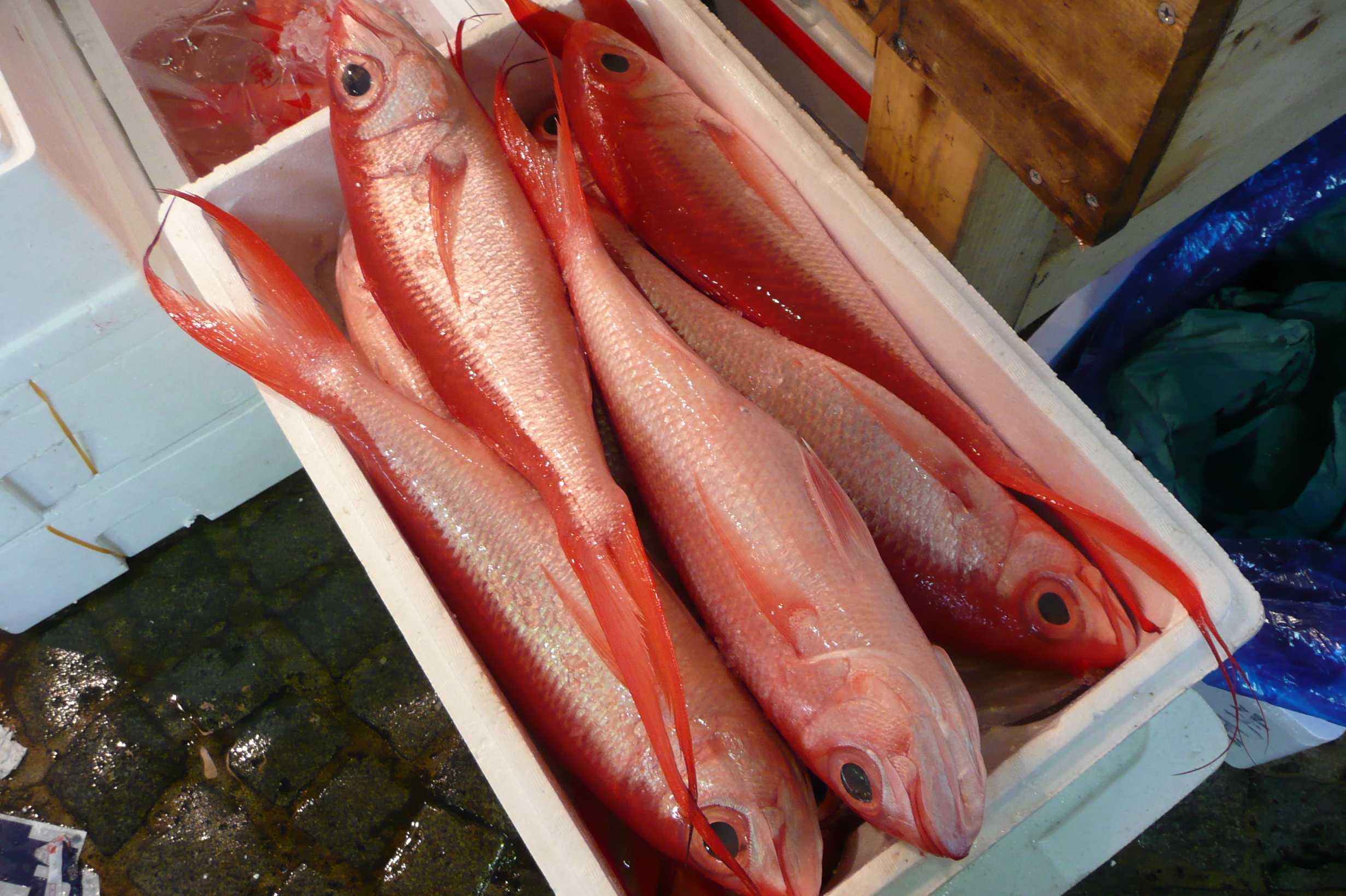
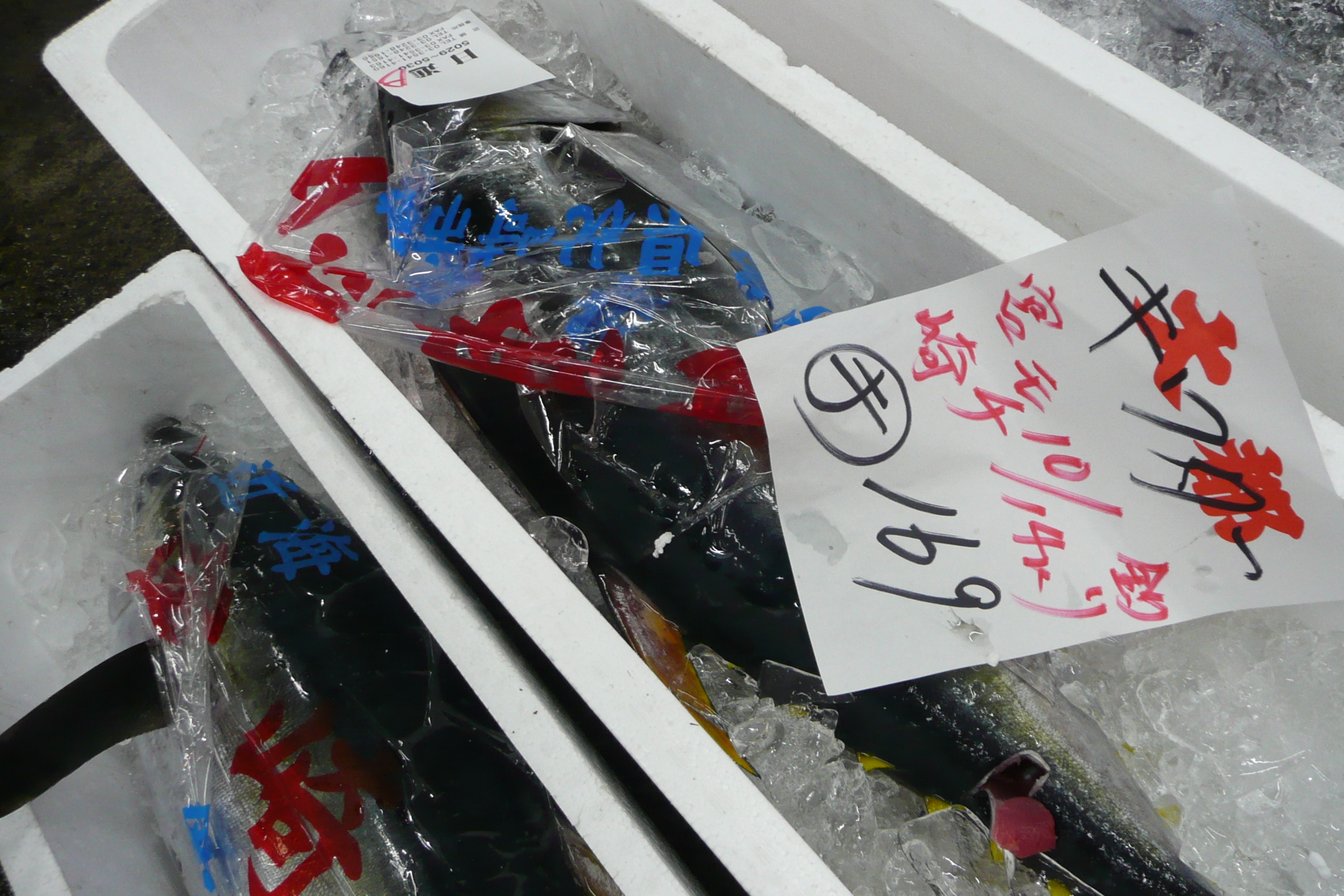
We started our tour in the fresh fish area, observing an auction and taking a look at the huge variety (more than 400 types!) of seafood for sale at Tsukiji.  The fish arrives between about 6pm and midnight and is arranged by the vendors for inspection.  By 3 am the middlemen start poking around, looking at the seafood and evaluating it.  These days a lot of the sales are pre-negotiated, so auctions play a smaller role.

P1150993

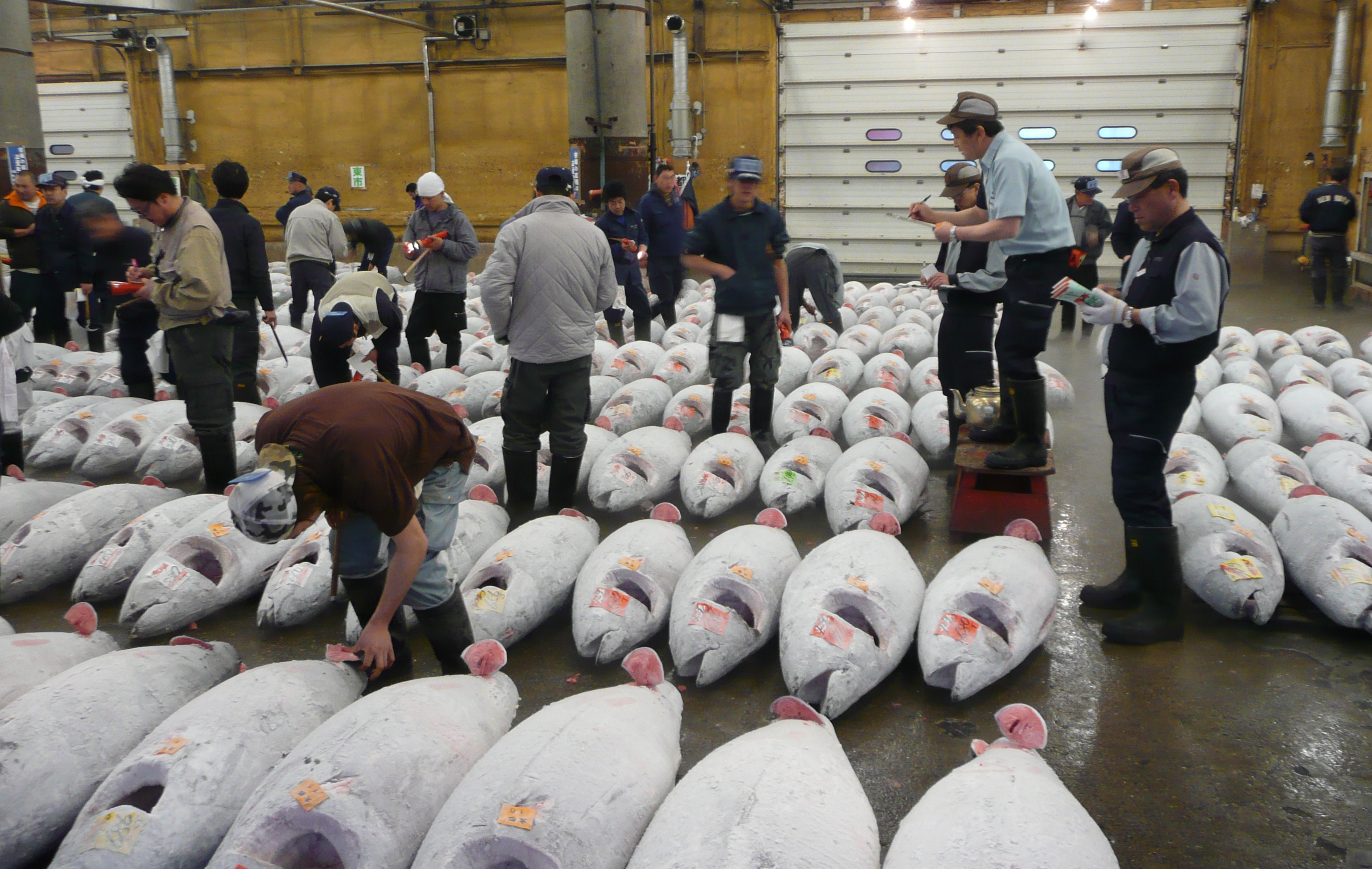
We then went to the fresh tuna warehouse, where these 70 kg (150 lbs) fish lay in neat rows, being inspected by middlemen, notches in the side allowing a clear view of the quality – and fattiness – of their flesh.

P1160017

This is the key area that visitors are no longer allowed.  So this picture was actually taken crouching down looking under a rolling door that was open about two feet high.  The things I’ll do to get my shot.

We attended the auctions for fresh fish, live fish and sea urchins, marching away through the busy market, dodging electric carts that would silently creep up on you.

It was obvious that the market workers don’t really enjoy having tourists in their way, so it took a lot of concentration to keep out of trouble.  I was amazed when, later in the morning, I saw tourists on their own, dragging children as young as about five around.  Dangerous and inconsiderate of the people working here.

P1160145

The frozen tuna auction is by far the most interesting, at least visually.  These frosted fish look surreal, lined up with frozen mist rising around them like smoke.  We had just a few minutes at the rolling door before it was closed on us, so we headed to the live fish auction.

P1160087

Nakamura-san was able to get us up close for the live fish auction, above.  This moves very fast as there are two auctions going on at the same time.  Nearby, we saw workers pulling live fish from tanks based on the auction results, bashing them on the head with a knife, slitting their tail so the blood would drain out, then ramming a steel rod through their mouth and down their spinal nerve, killing them.  Not quite so gruesome as it sounds, but definitely gives you an appreciation for the food you eat.

At the live tuna auction, the market’s captain caught up with us and gave Nakamura-san a lecture.  Afterwards, he said, “At least he’s calling me ‘Nakamura-san’ now instead of the nasty names he used to use.”

P1160195

The auctions run from about 4:30-5:30, one after another.  Even before the last fish is sold, middlemen start carrying their purchases off to their stalls, where they prepare the fish for sale.  This is the last step in the transformation from whole fish to retail-ready cuts.

P1160045

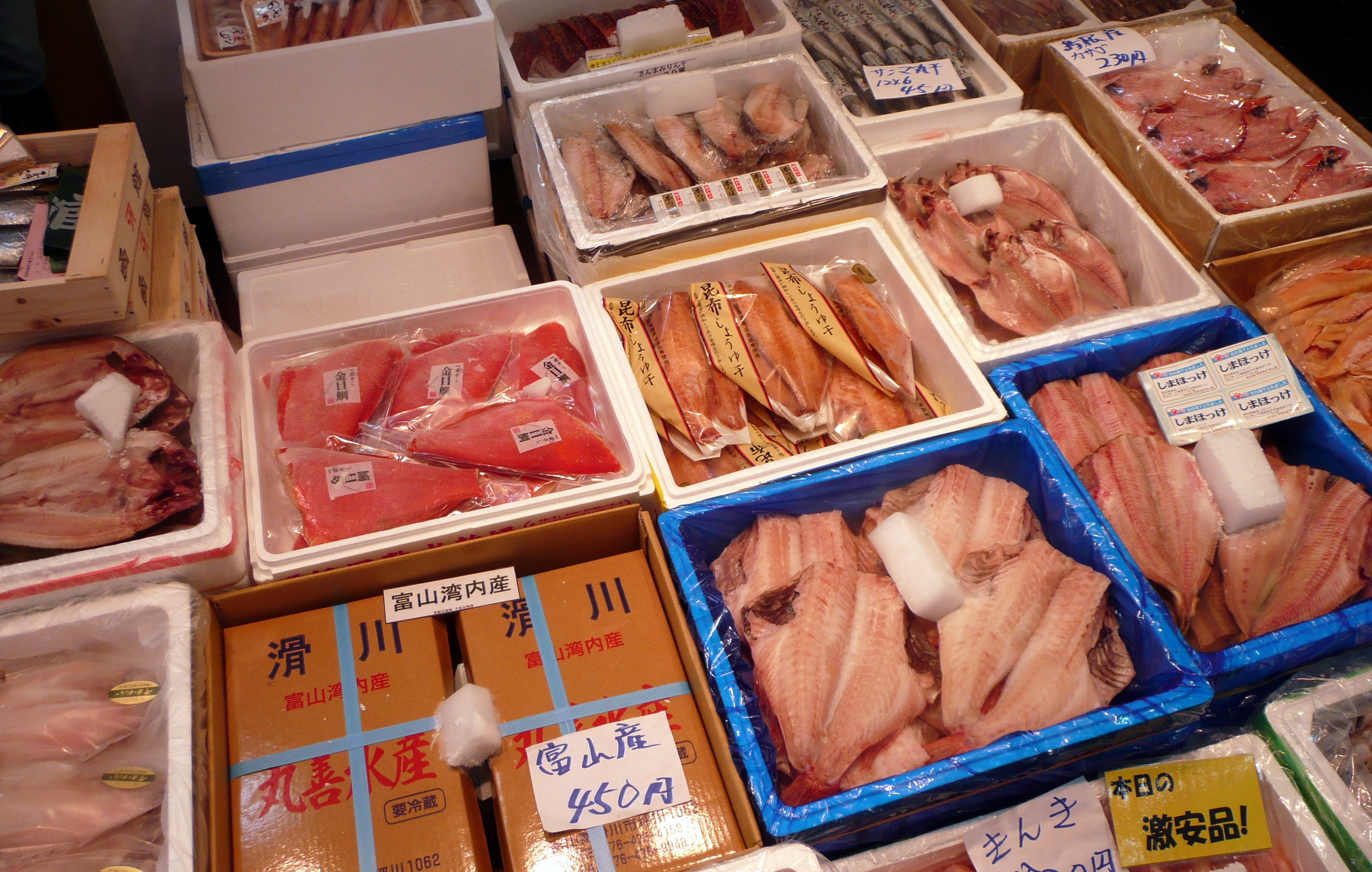
Recognize this fish? It is whale meat.  The two rows on the right are from smaller whales but the back row is from whatever large-size whales Greenpeace tries to intervene in the hunt of.

Nakamura-san provided some perspective on why the Japanese are resistant to international pressure to end whaling.  After World War II, the whaling industry we re-established in Japan to help with severe food shortages.  For many baby boomers, whale meat was one of their main sources of protein during their childhood years.  To this day, it has strong resonance with the population even if its consumption has sharply declined.

According to statistics, almost 50% of the total animal protein consumption in 1947 in Japan was whale meat.  (Source: http://luna.pos.to/whale/jwa_trad.html)

P1160168

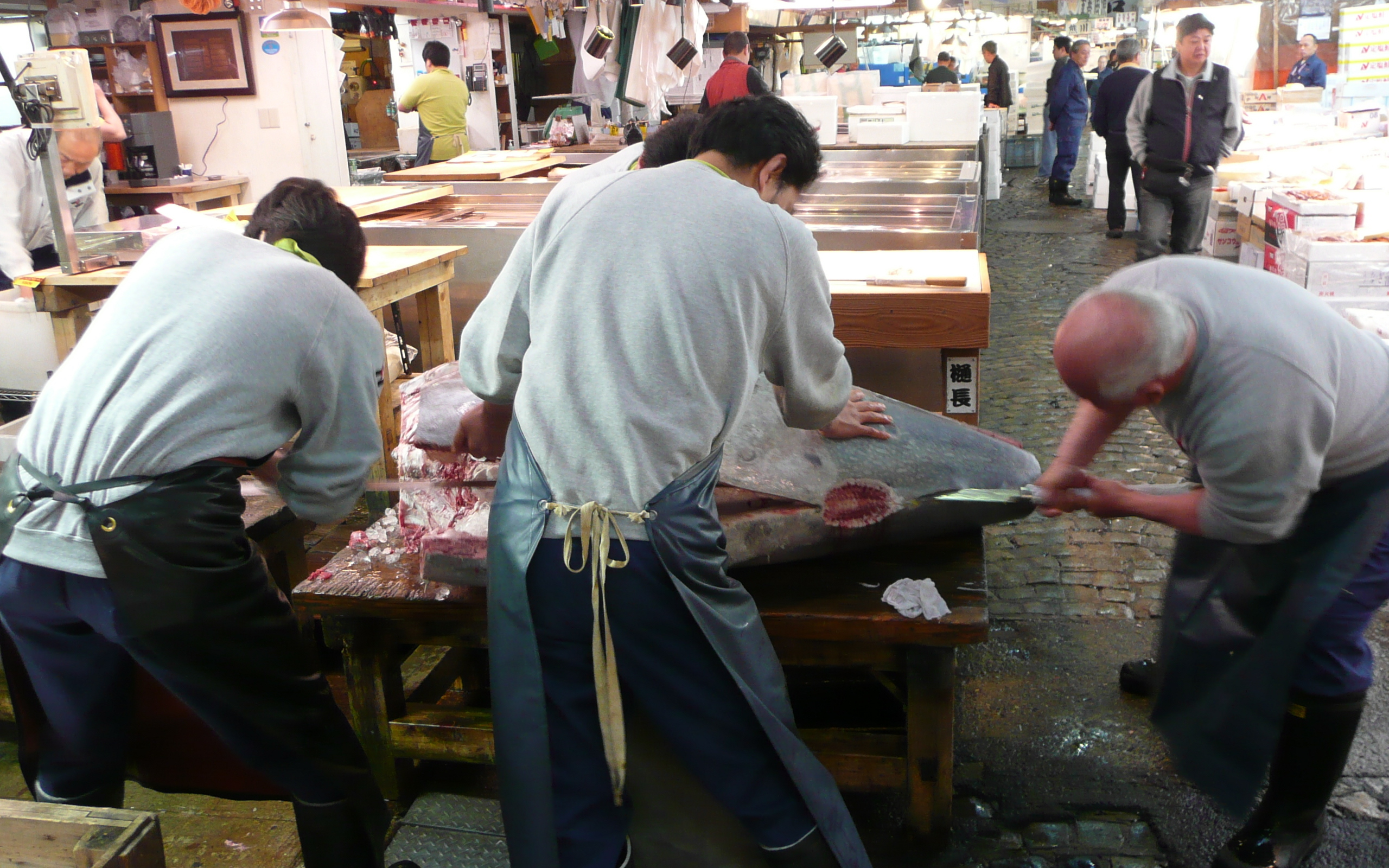
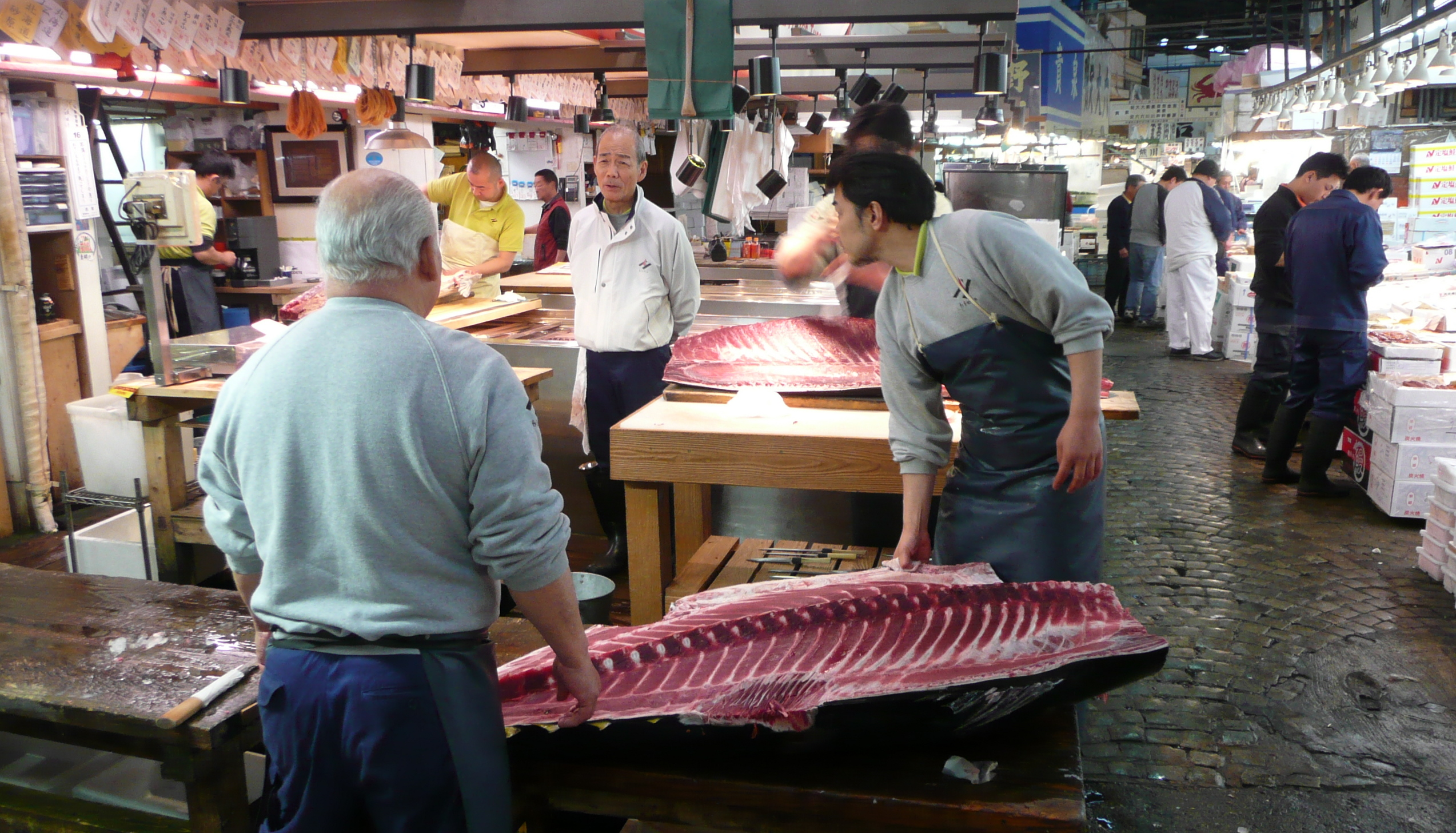
Watching the middlemen do their work was fascinating.  Knife skills are a beautiful art and this balding man in the picture below really was an artist.  Using a knife longer than a samurai’s sword, it took four men to carefully quarter a large fresh tuna.

The middlemen who bought frozen tuna had an easier time of it, using band saws to cut through the flesh.

P1160184

By 5:45 or so, many tourists had shown up, most guiding themselves and trying to edge in on our tour for free.  While they did get a peek at the tuna auction, I can’t imagine that they walked away with much of an understanding of the whole market.  For that reason, I’m glad we did the tour.

By shortly after 6:00, Nakamura-san had shown us all we needed to see.  He pointed out a few good sushi restaurants, took our money and thanked us.  Since we were already there and we knew the sushi would be fresh, Tawn and I queued up to eat the best sushi we’ve ever had.

P1160197

There are two restaurants in alley 6 of the “auxiliary market” (where the vendors that serve the needs of the market workers are located), both of which get quite a queue out their front doors.  These are are the two most highly recommended sushi bars.

Here’s what we ate.  Sorry that I can’t identify what everything was.

P1160199

Something very fatty (toro?) and squid

P1160202

Ebi (Shrimp) and Maguro (Blue Fin tuna)

P1160207

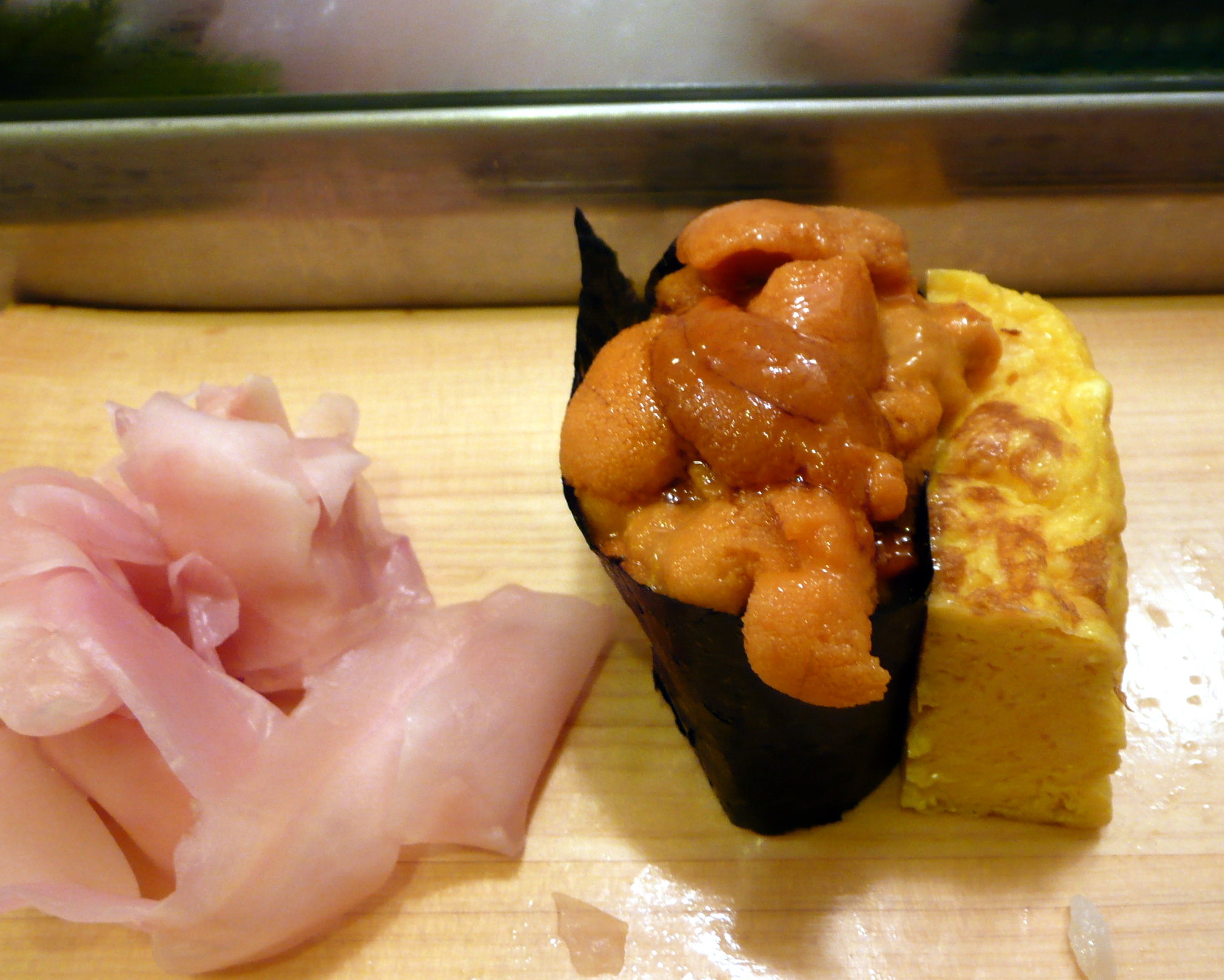
Uni – sea urchin with scrambled egg

P1160209

Tuna and Ikura (Salmon Roe) Nigiri (seaweed-wrapped sushi); and I think Grilled Saba (Mackerel) and Hamachi (Yellow Tail tuna).  But I’m not certain.

Total cost for the set including rice, soup and tea: 3500 yen, about US$35.  Pricey, but really good.  This is one of the few times I was willing to really splurge.

Again, I can’t say enough good things about the tour.  If you’re going to Tokyo and are interested in the tour of the market, you can find Nakamura-san’s website here.

Here’s a video of our trip to the market:

After “breakfast” we returned to the hotel for a few more hours of sleep, then packed our bags and headed to Narita Airport for the flight home.  And with that, eight days in Japan came to an end.

Shiodome and Naka-Meguro

After a night in Hakone Yumoto we headed back to Tokyo on a misty and overcast Tuesday morning for two final days in Japan.  Switching hotels from our comfy little place in Ueno, we went upper end and stayed at the swanky Park Hotel in Shiodome. 

This hotel, which I initially confused with the Park Hyatt Hotel of “Lost in Translation” fame, is still very nice and a very good value.  Located on the 25th-33rd floors of the Shiodome Media Tower (with the lobby on the 25th floor!) this new hotel is centrally located to four subway/rail lines.  Rooms are modern and well-equipped and the staff is exceptionally attentive.

Best of all, the view from the room (the same one as from the reception counter in the lobby), is stunning:

P1150921

The upside/downside of this hotel’s location is that Shiodome is kind of like Century City in Los Angeles: largely a complex of business towers, a glass and steel wasteland that is deserted at night.  It is at once well connected to the city and cut off from it. 

An example of the stunning modern architecture across from our hotel, along with the kitschy faux tori gate set up in front of it:

P1150801

Not far from this concrete netherland we did find signs of nature: the landscaped grounds of what is considered one of the world’s finest daily newspapers, the Asahi Shimbun.

P1150808

Along our way we found more of the ubiquitous vending machines.  Water, water all around and not a drop to drink… if you don’t have a 100-yen coin.

P1150806

One of our stops was the Tokyo Metropolitan Government complex in Shinjuku West.  The pair of buildings at the center of the complex house two free observation decks: one of each tower’s 45th floor.  The view is wonderful and Tokyo stretches as far as the eye can see.  They say that on exceptionally clear days, you can see Mt. Fuji.  Today, though, all we could see is this funny egg-shaped building.

P1150826

It took me a while to find out what building this is, but the internet is a wonderful tool.  Thanks to Emporis.com, an international commercial real estate database that is accessible to the public, I located the so-called “Mode Gakuen Cocoon Tower”.  This 50-story educational building houses three different vocational schools and was selected by Emporis as the 2008 Skyscraper of the Year.  More info here.

On the ground floor of the Tokyo Metropolitan Government towers is an excellent tourism office that provides all sorts of useful, free information about greater Tokyo.  One thing they offer (for which you are well-advised to sign up for in advance) is free tours in English.  Something I will do differently on my next trip to Tokyo: stop here on day one.

There is also an office providing information about the other prefectures of Japan.  Although much of the information is in Japanese, some English language materials are available.  There are some fantastic three-dimensional wall displays showing the highlights of various regions.  They looked like the hats from Beach Blanket Babylon.

P1150832 P1150833
P1150834 P1150835

For lunch, we tracked down Funabashiya, a famous tempura restaurant in East Shinjuku recommended by a friend, Masakazu.  Dinners run around $50 here but like most restaurants in Tokyo, lunch is a much better deal.

P1150848 
P1150842 P1150838

This restaurant is about only one thing, tempura, and they do it incredibly well.  They’ve been around for years and their lunch special – about $10 – was a set of two batches of tempura with rice, soup and pickles.  The second batch of tempura was a surprise.  After receiving a generous serving of light, crispy vegetables and shrimp fresh from the wok, we were already satisfied.  Then the waitress returned a few minutes later with a second serving!

P1150846

It is hard to describe how perfectly cooked this tempura was.  Very light batter and not a bit of grease.  There were three types of sea salt to sprinkle on the tempura, including a red salt with lots of minerals and a pepper-salt mixture.

After lunch we did a little more shopping in Shinjuku, including a stop at Tokyu Hands, an eight-story crafts/hardware/home improvement/DIY store in which you can definitely find at least one thing you never knew you needed.

On the way back to the rail station we passed something surprising: a large Krispy Kreme donuts outlet.  Fellow Xangan Tony took a picture of this on a recent trip to Tokyo but I was surprised to see it in person, and even more surprised by the number of people queued outside at 3:30 in the afternoon!

P1150855

Nearing rush hour, we hopped on a train, connected at Shibuya and traveled two stops further to a hidden gem that isn’t on the tourist guidebooks’ radar screen, yet: Naka-Meguro.

P1150859

Everyone wants to find that little hidden corner of a city, one they enjoy because it is hip and cool but not yet discovered.  Of course, by the time you find out about it, the secret is already out and Naka-Meguro is no exception.  Recently dubbed “the coolest corner of Tokyo” and profiled in the NY Times travel section, Naka-Meguro is a collection of cafes, boutiques and bookstores that runs along an idyllic, tree-lined river.

P1150869

Sure, gentrification is quickly happening and this area, which has never been inexpensive, is getting pricier by the week.  But it is still a cool and relatively quiet area and, given that it is just two stops from Shibuya – home of the intersection that sees two million people a day pass through it – it is amazing that it exists at all.  I’d definitely recommend you spend a few hours in the afternoon here, spilling into dinnertime if at all possible.

P1150873 P1150898 P1150907

Left to right: clothing and other fun items recalling Blackploitation and the 70s; Tawn in front of something a hair hipper than a Goodwill Store; a uber-modern Japanese sweets shop.

P1150878 P1150886

Left: Another clothing store with a vaguely “rust belt” look; a stock pot cools on the windowsill of a restaurant specializing in squid.

P1150892

Sadly, evening was falling fast, Tawn was feeling a bit exhausted from all our running around, and we had a 3:45 am appointment the next day, so we excused ourselves from Taro, Mark and HP’s company and headed back to Shiodome, stopping at a tiny hole-in-the-wall tonkatsu place at the JR Shimbashi station and unwittingly finding the best tonkatsu we had in Tokyo!

P1150917

This tiny place was full of salarymen – the typical Japanese office workers – and there was nothing in English except for the Asahi beer bottle label.  We pointed to one thing on the menu (after all, everything there was a form of tonkatsu so how wrong could we get?) and ordered two plates of it.

P1150914

What arrived was beautiful in its simplicity.  The chef cooked and drained cutlets of pork loin, each with a small strip of fat along one side and served with shredded cabbage, rice, pickled daikon radish, and miso soup with baby clams.  The setting was pretty plain and the plating was that of a blue plate special, but the tonkatsu was divine: moist and flavorful interior with a crisp, dry exterior.  Perfection.

We were in bed by 10:00, trying to catch a few winks before a very early morning on our final day in Tokyo.

Overnight in Hakone

After four days in Tokyo, we checked out of our cute little hotel and took the train out of town.  Our destination: Hakone, a cute little town with onsen (hot springs) in Kanagawa prefecture and the gateway to the Mt. Fuji region.  The timing was perfect: as much as we enjoyed Tokyo, after the first four days we were ready for a little break.

P1150763

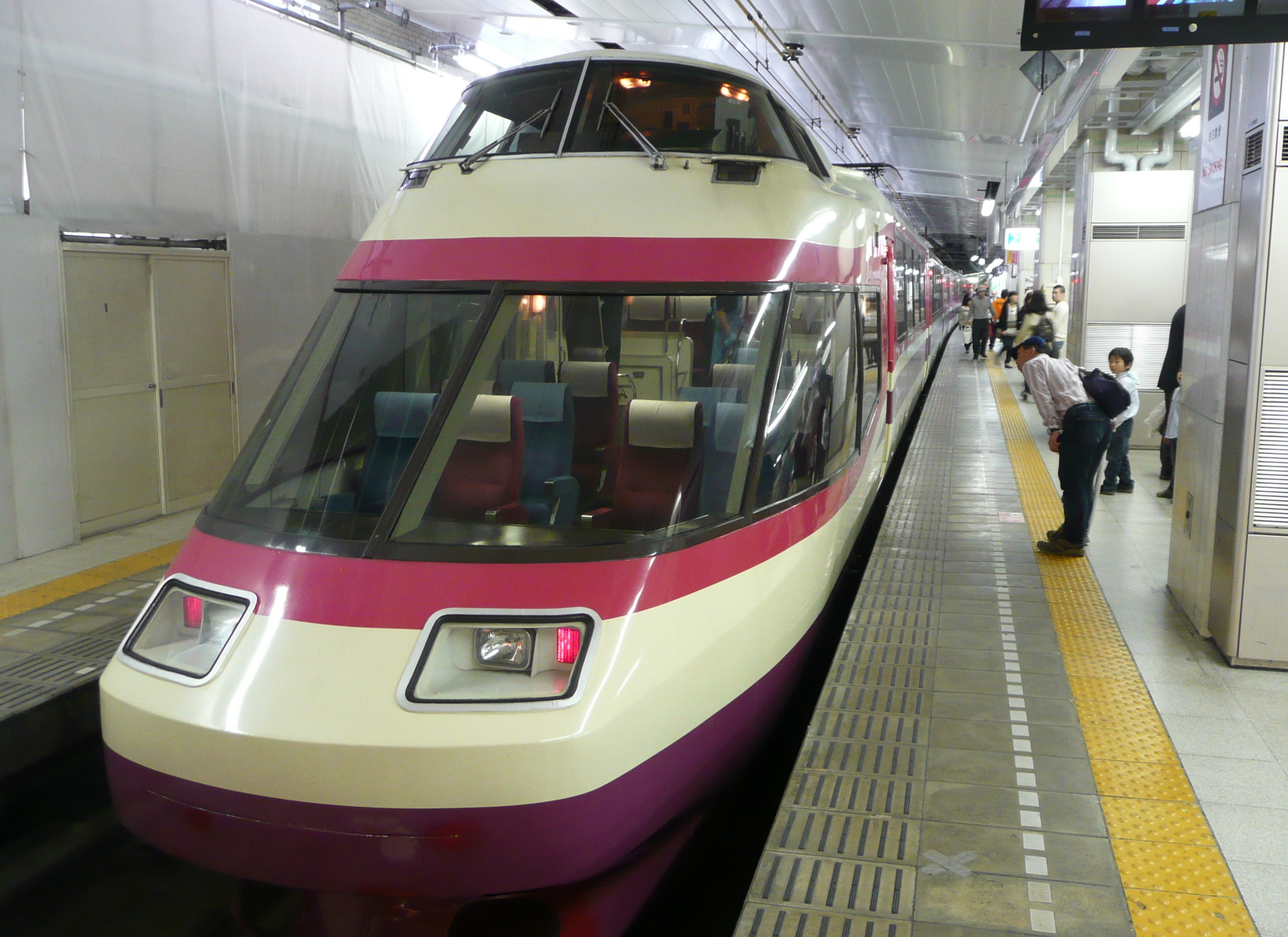
The “Romance Car” is a 90-minute service from Tokyo’s Shinjuku station to the town of Hakone Yumoto.  It isn’t particularly romantic but it has forward facing seats as opposed to the subway car that is used for the local service on the same line.  The best part of the Romance Car is that it looks vaguely like a Boeing 747.
P1150759

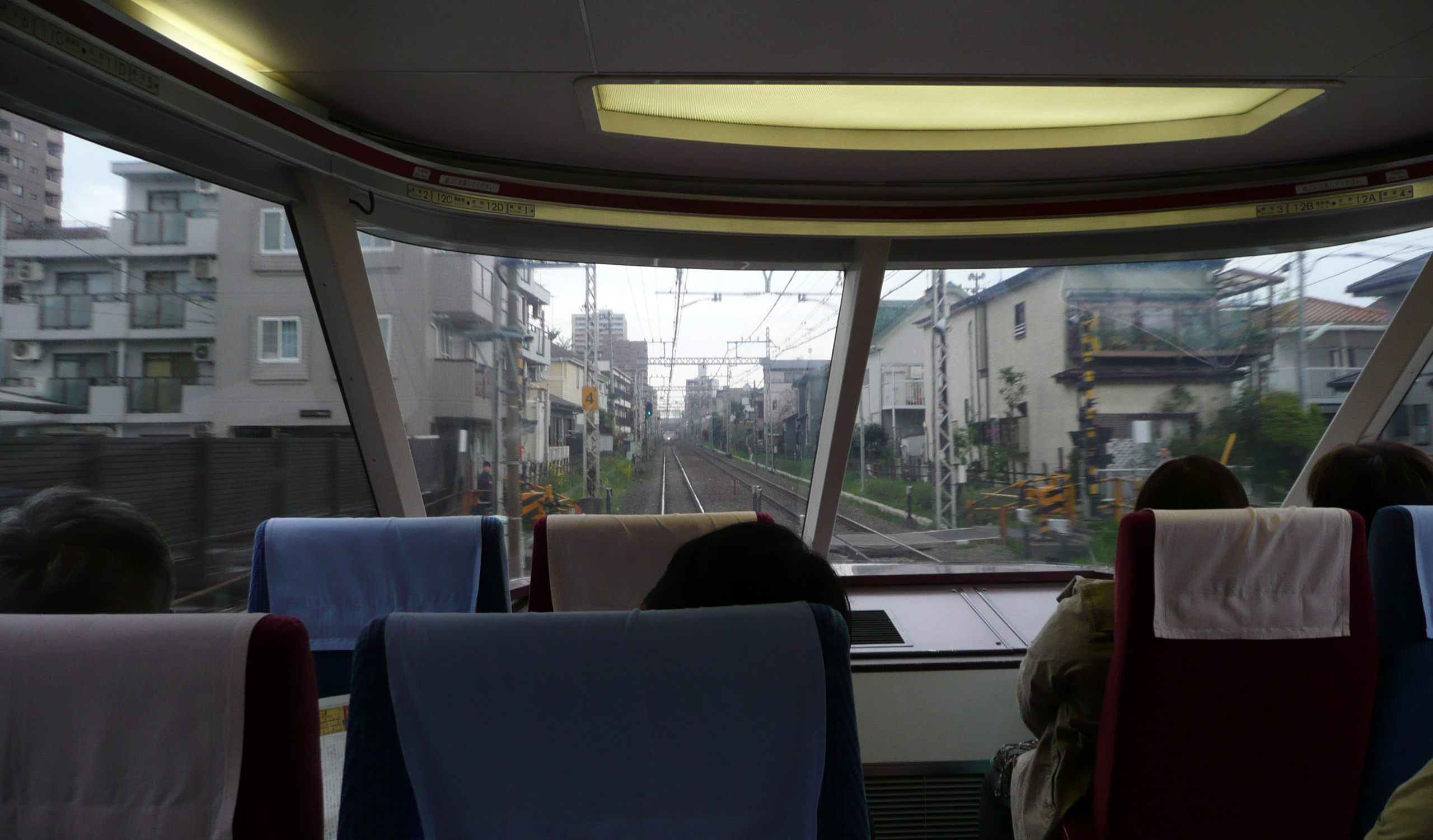
You can sit in the nose area and have this fantastic view for the whole trip.

P1150649

Arriving in Hakone Yumoto, we found it to be a charming, quaint town.  A small river flows through it and it is easy to walk from the train station to just about anywhere in town.

P1150747

Our hotel, Hotel Senkei, was a traditional Japanese inn complete with hot springs bathing facilities just a ten-minute walk from the station.  Nestled into a hillside, the Senkei is quiet and charming.

One overall observation with travel in Japan – an observation which held true at the Senkei – is that English isn’t that widely spoken.  Not that I expect people in other countries to speak in my language, but with the large number of non-Japanese we encountered, both in Tokyo and even here in Hakone, I was a little surprised that there aren’t more people in the tourist industries who speak languages other than Japanese.

That’s not a problem, though.  Between Tawn’s few words of Japanese and a good game of charades, we were able to communicate reasonably well with almost everyone.  There were only a few times – I had a problem with my train ticket to the Narita airport, for example – when we felt a communication barrier.  In that case, I felt like the person working the ticket gates genuinely didn’t want to help me.
In either case, what is there to do in Hakone?  Well, seeing Mt. Fuji is the main thing and it was my objective.  You can buy a “Hakone Free Pass” which isn’t free but which allows you to travel on all the different types of transportation in the region.  And what a range it is!
P1150653

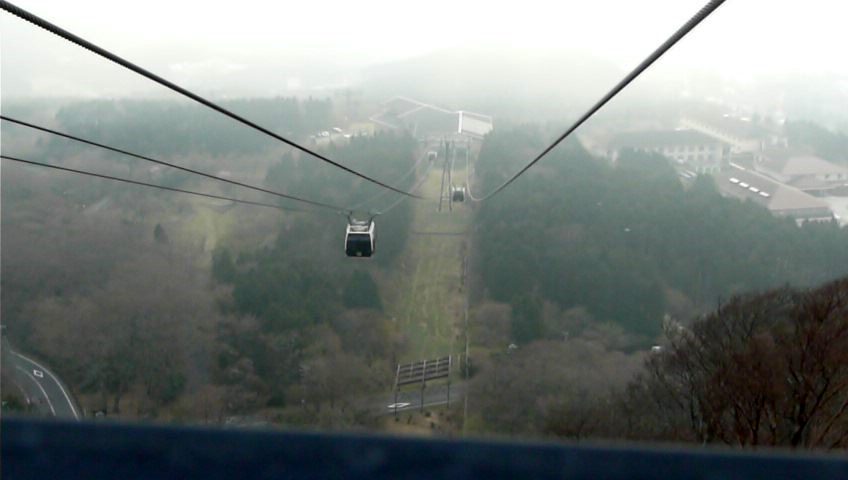
First, you take a cute two-car train about twenty minutes up the mountain.  (This isn’t Mt. Fuji, just another small mountain above the town.)  Then you transfer to a funicular railroad (above).  This leads to the “Hakone Ropeway“, an aerial lift that carries gondolas over the summit of the small mountain and down to the shores of Lake Ashi.

Hakone Ropeway

This is what the view from the Hakone Ropeway is supposed to look like.

P1150689

When we arrived there at 4:30 on Monday afternoon, this was the actual view. The entire lake and mountainside was socked in with fog.  It reminded me of San Francisco.  So, no Mt. Fuji.

P1150665

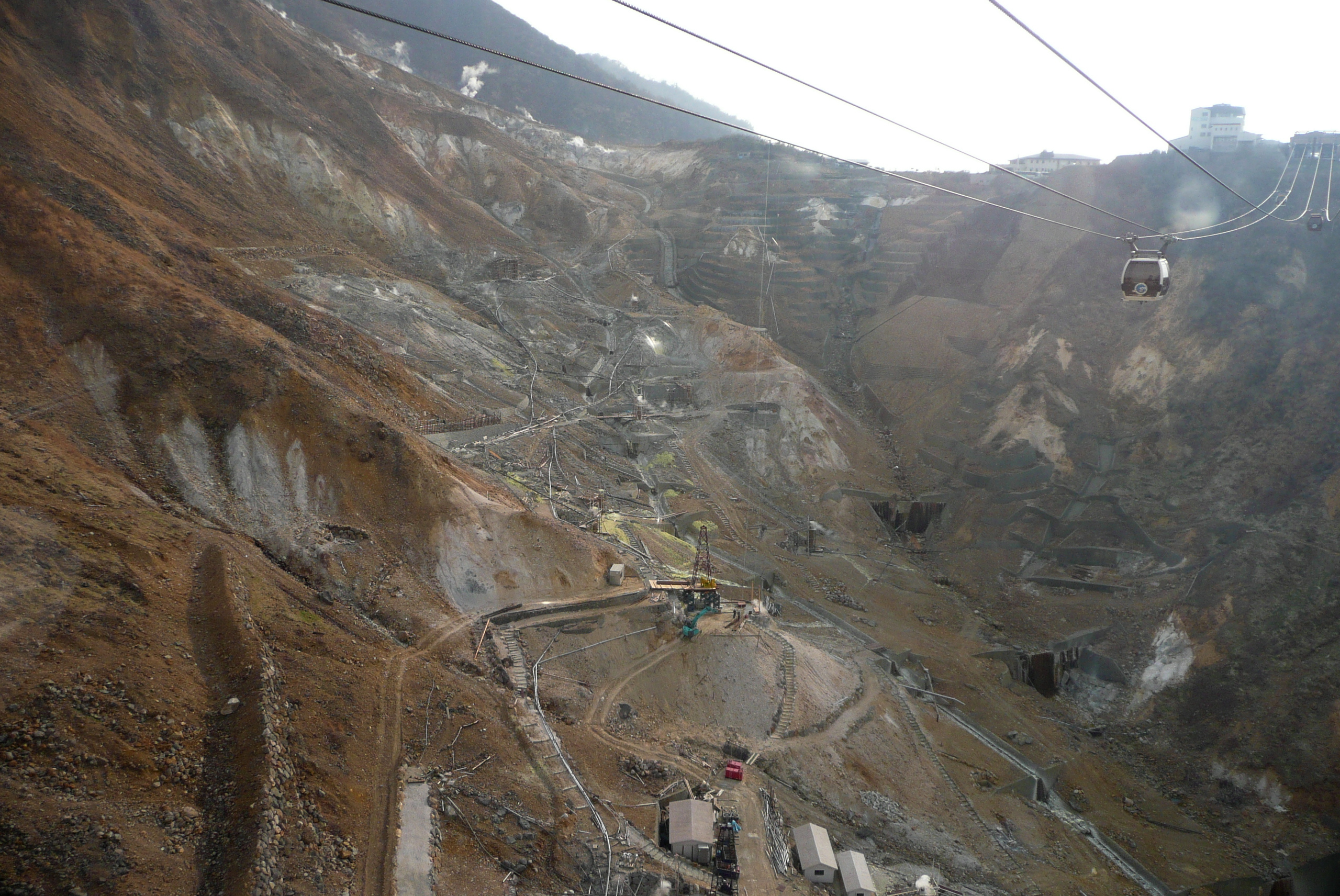
Along the ropeway’s path you cross a large sulfur mine – the so-called Valley of Hell – that really is aptly named.  You can see where they’ve stripped away large portions of the mountain and there are large yellow deposits of sulfur.  Oh, and it smells like rotten eggs, of course.

P1150691

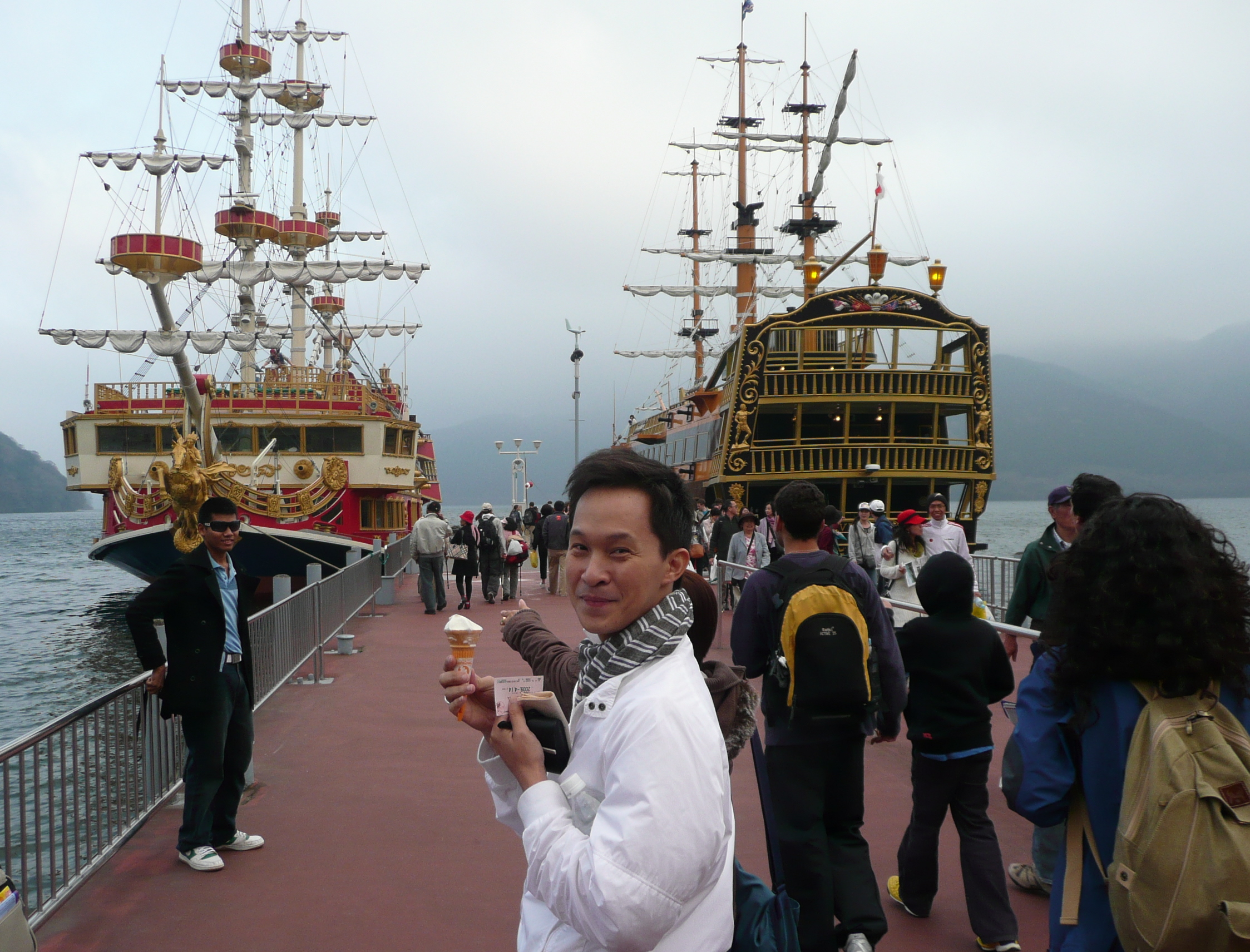
When we arrived at Lake Ashi, it was also socked in.  We had just ten minutes before the finally ship of the day would sail to the far end of the lake, a thirty minute journey that normally affords nice views of Mt. Fuji.  Incongruously, the ships are decorated like pirate ships.

Why Tawn was eating an ice cream, I don’t know.  It was very chilly on that dock and we stayed inside the boat for the whole trip.  At the far end of the lake we boarded a bus, completing the circuit back to Hakone Yumoto.

Exhausted, we returned to the hotel and changed into our yukata, the traditional Japanese robes one wears when lounging about the room.  We had already been asked of our preferred dinner time and we chose the latest we could – 7:00.  This video shows highlights from our entire Hakone trip but a large portion of it shows the elderly Japanese housekeeper who lays out an elaborate dinner spread and tries to explain to us how to eat it.

To say that the meal was elaborate is an understatement.  There were some dozen individual dishes, each prepared with great attention to the presentation.  They were delicious and beautiful and by the end of the meal, we were truly satisfied.

P1150728

We had a lacquered tray of five little amuse bouches.  Sadly, I can’t tell you what they were, only that each was tasty and fun to eat.

P1150725

We had sashimi, pickles, potato salad and something in the green jar that I can’t remember.

P1150727

The main course was shabu-shabu, beef and vegetables boiled in water and dipped in a sesame sauce.

P1150736

Twenty minutes after we started eating, the housekeeper returned to serve tempura, the lotus root rice, and a cold pork dish.  The miso soup in the corner had these tiny clams in it, smaller than my smallest fingernail.  The tempura was a new experience: instead of being dipped in a heavy batter, it had just a light egg wash.  The inside was a scrambled egg, one pouch with a scallop and the other with a shrimp.  The theme was “sakura” – cherry blossoms – and so the little decoration is meant to evoke a sakura in full blossom.  The other thing I learned is that with really good tempura, you’re meant to sprinkle a little sea salt on it.

P1150731

We were so busy taking pictures that the housekeeper was probably wondering if we were ever going to eat.

P1150733

Not only did I have to take pictures for this blog, but we had another Flat Stanley traveling with us, this one from Monterey, California.  Of course, Stanley wanted to try some Japanese food, too!

P1150742

While Japanese meals don’t usually include dessert, we were served some of the wonderfully sweet local strawberries with a dollop of whipped cream.  The perfect way to end the meal.

After dinner, we went downstairs to the hot springs.  Hot spring baths, or onsen, are a central part of Japanese culture.  These mineral rich waters are said to be good for any number of ailments and I think the simple act of relaxing in a tub of hot water is a good stress-reliever.

The hotel had both indoor and outdoor baths.  The single outdoor bath alternates days for men and women.  Both sexes had their own indoor bath, though.  Japanese baths are the great leveler: everyone is naked and young or old, skinny or fat, the baths make you realize that we are all pretty much the same.

There were signs and cartoon instructions in both Japanese and English making sure the two important rules of Japanese bathing were observed: First, you clean yourself thoroughly before entering the hot springs.  There are little stools and shower hoses in a row and you sit down and scrub yourself until you are pink.  Second, your little hand towel must never be put in the bath water.  You can put it on your head, use it to cover your face, set it on the side of the bath – but don’t put it in the water.

P1150743

While we were being scalded in the onsen, the housekeeper took down the table and set up our futons.  These were not as comfy as the ones in the Ueno hotel but we still had a good night’s sleep after the day exploring, the filling meal and the relaxing bath.

P1150750

An elaborate breakfast was served bright and early the next morning as light spring rain fell outside the room.

P1150751

Boiled tofu and seaweed, fish cake, pickles, rice…

P1150752

and a poached egg (served, oddly enough, a bit cool) in a thick soy sauce.

Checkout time was 10:00 and we were packed and ready to head to the station, re-energized and eager to return to Tokyo for a few more days of exploring.

Here’s a video of the meal:

Around Ueno

Sorting through pictures last night, I realize that there are so many things we’ve seen and done and so many things we’ve eaten, that unless I write huge entries, I’ll be writing about this trip for the rest of the month!  At some point I’ll have to wield a sharper editor’s sword.

P1150178

After a morning wandering Ueno Park viewing sakura (cherry blossoms), we went to Ueno Station, one of the larger stations in the city and the convergence of several subway and rail lines.  The station itself has been transformed into a bright and modern shopping arcade and it is a pleasant place to transit through.

We were there to meet Alex, our friend Doug’s brother who has been living in Tokyo for several years and was so helpful in answering questions and making recommendations before our arrival.  He continued to be a perfect host, spending the afternoon to show us around Ueno, the residential district on the north side of town that is home to Tokyo University and many of the city’s museums.

First stop, though: lunch.  A block from the station, tucked under the tracks, is a hole in the wall gyoza shop called Rising Dragon.

P1150193

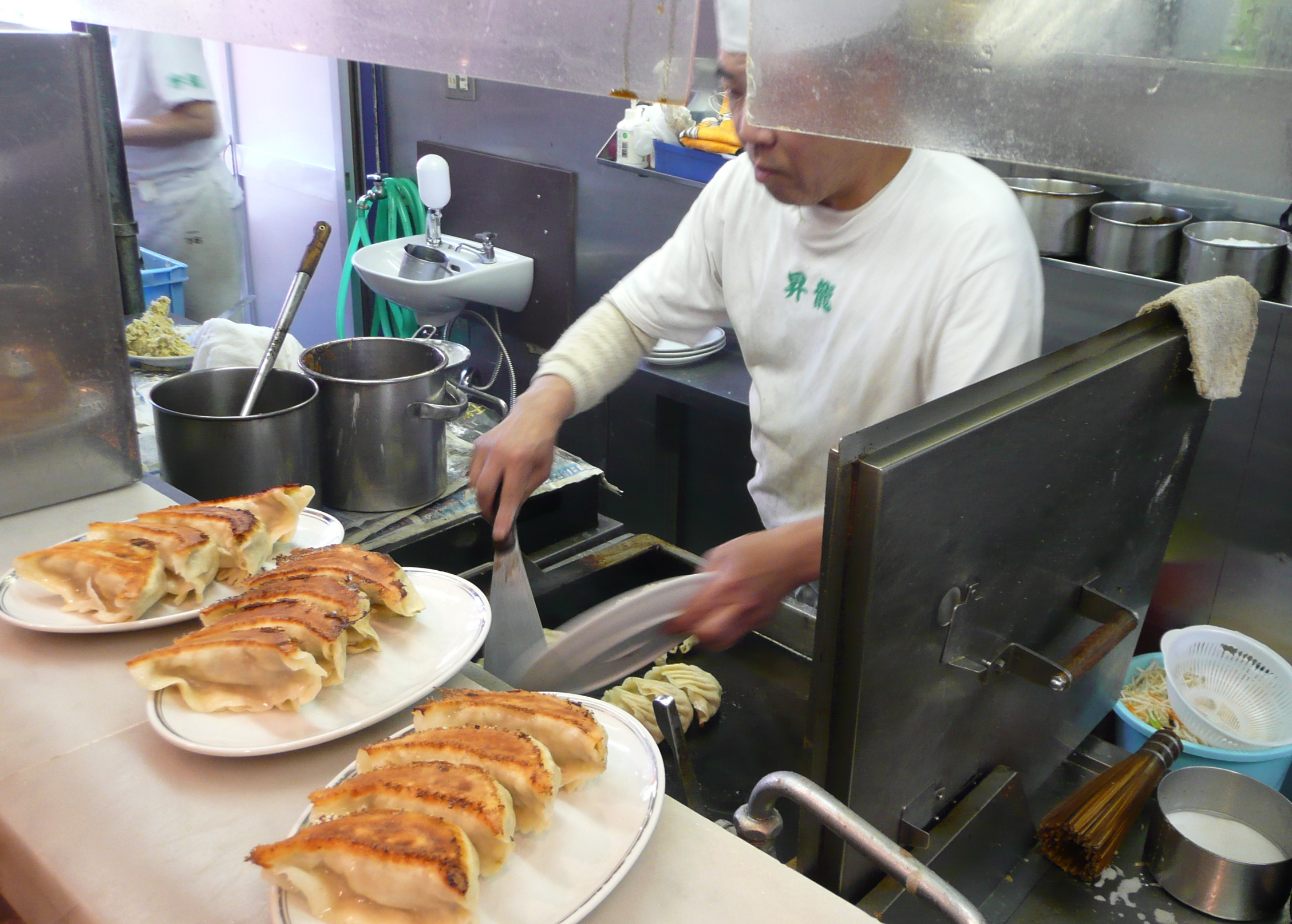
How do you know the good places to eat?  The queue snaking out the front door.  These family-run operations are really efficient, tight ships both in terms of organization and efficiency.  Out in front one man was making trays of gyoza – the Chinese-inspired dumplings you probably know as “pot stickers” – and packaging them uncooked in take-home trays for those commuters who wanted to prepare them fresh that evening.

P1150198

How many gyoza are made each day?  Guessing from the vat of pork filling, which was several gallons in size, I’d say the answer is easily in the thousands, served four at a time to hungry customers.  There are only ten seats in the place, all along a single marble counter facing the galley kitchen.  The place is spotless – not surprising in Japan but still amazing given the quantity of oil and high temperatures used in cooking.

P1150186

The menu was simple: noodle dishes served either as stir-fries or as soups and, of course, gyoza.

P1150187

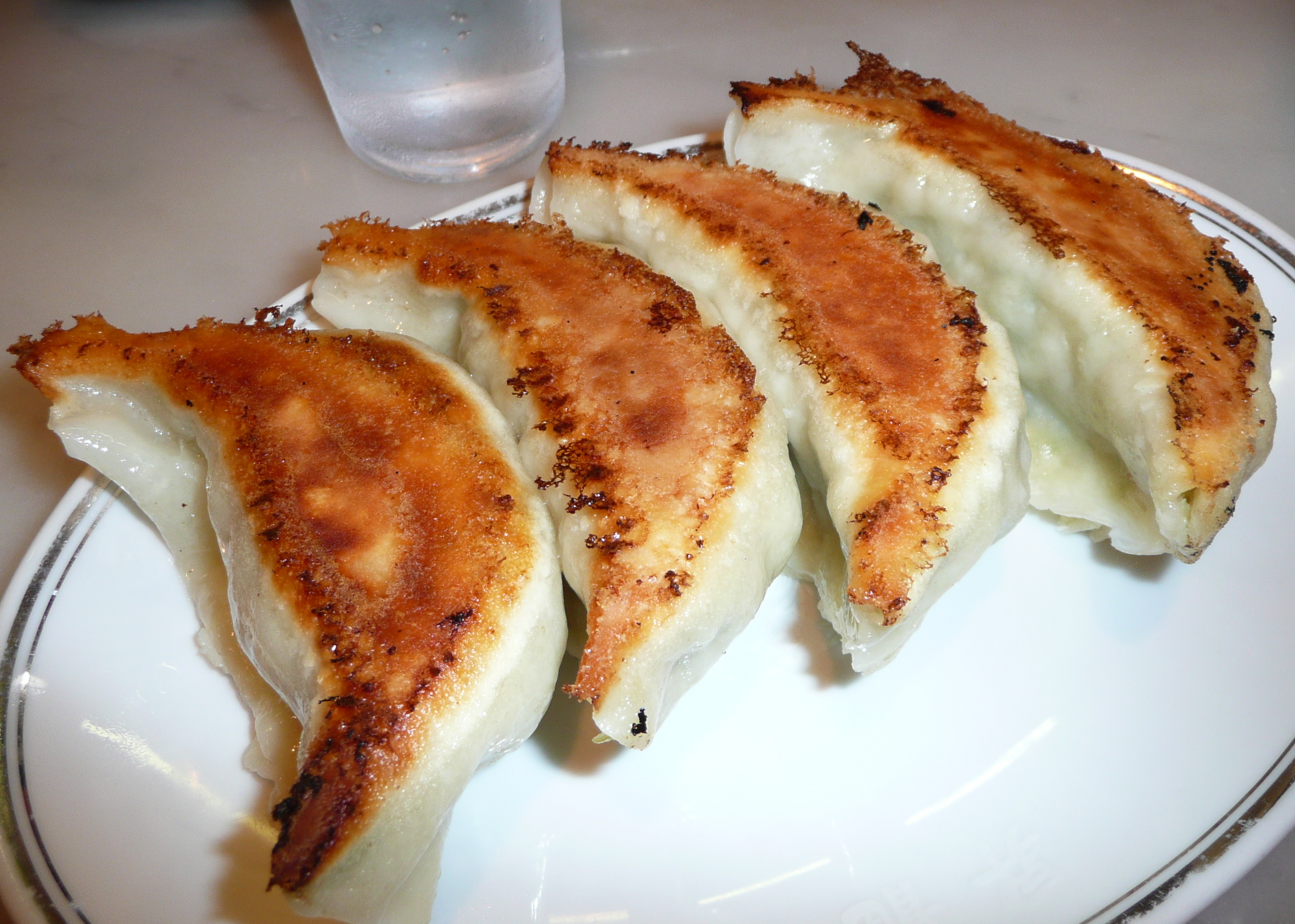
These gyoza are about three times the size of the typical one and I can safely say they were the best “pot stickers” I’ve ever had.  The exterior was perfect: steamed to a tender but not mushy consistency with a crisp but not tough bottom.

P1150191

We also had a few noodle dishes: yakisoba (fried soba noodles) and a vegetable stir fry with bean sprouts and pork.

After lunch we headed through the park again up towards the University.  Alex’s touring brought us through back streets and a thorough exploration of the neighborhood where he lives.

This was an excellent introduction to Tokyo as friends who have visited before have told us how overwhelmed they were with places like Shibuya and Shinjuku – some of the most crowded intersections in the world.  Starting small allowed us to explore the life of Tokyoites without the Blade Runner-like aspects of the busiest corners.

P1150205

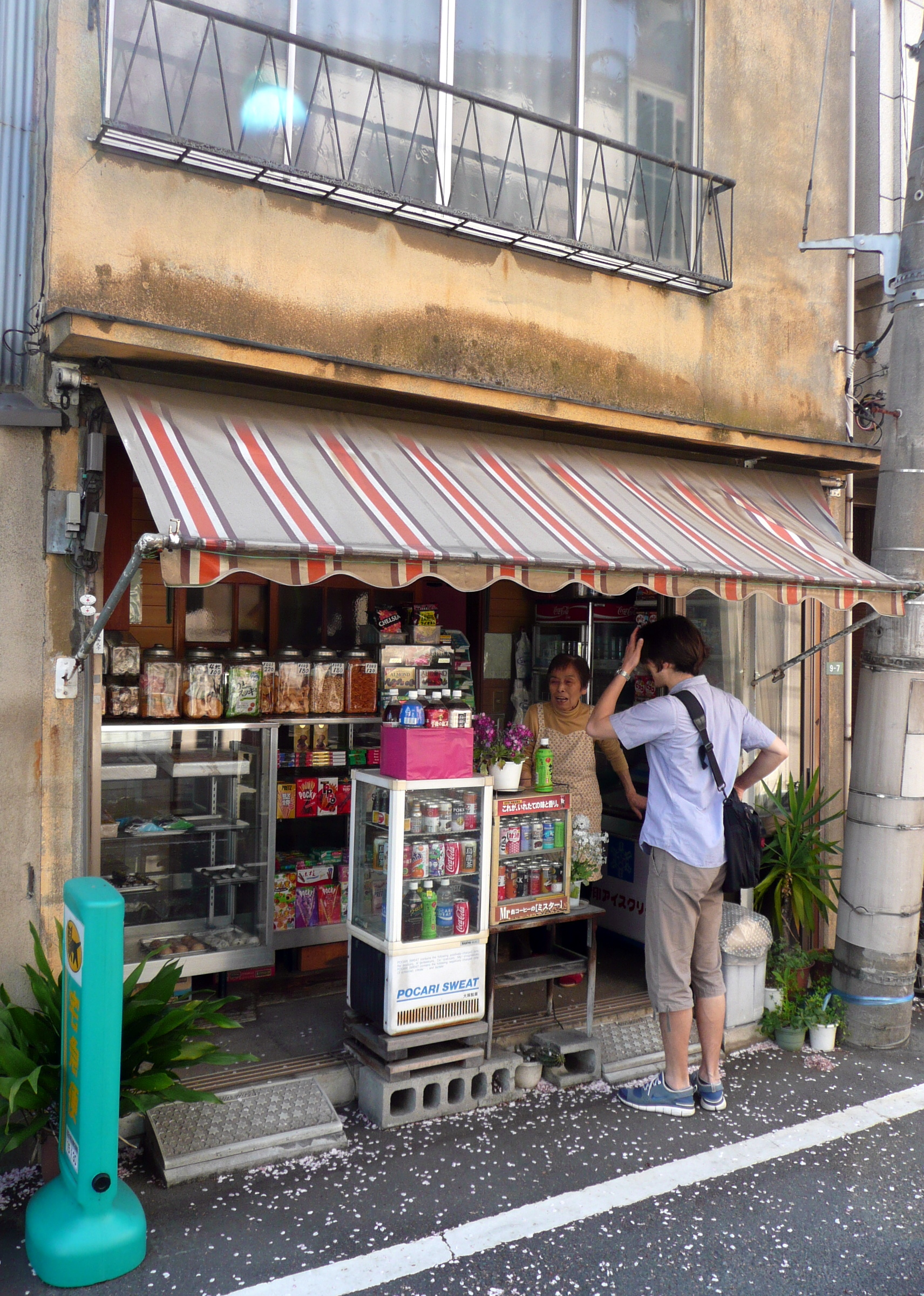
Above is an example of a small mom-and-pop convenience store that, until Family Mart and 7-11 started showing up, was a typical sight in neighborhoods.  This is where you bought snacks, beverages, and little supplies for your daily use.

Sadly, these are the types of stores that are disappearing.  Still, in the densely packed neighborhoods without a lot of free space, there might be a place for stores like these because there isn’t enough room for a modern convenience store to operate.

P1150208

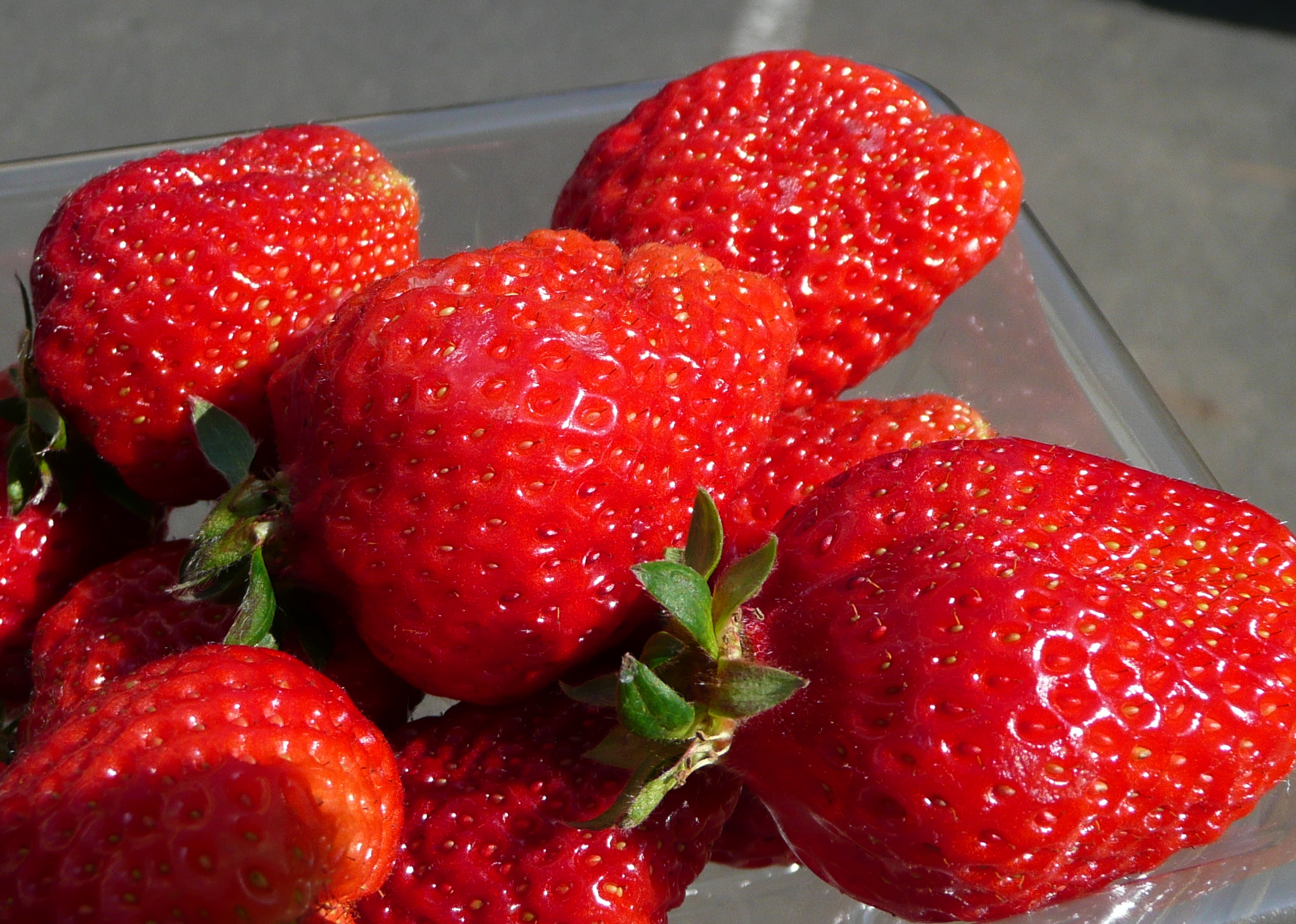
At another little shop, a green grocer, we bought some beautiful looking strawberries.  Alex informed us of Japanese strawberries’ reputation: supposedly the best in the world!

Were they?  Watch the video to find out.

P1150210

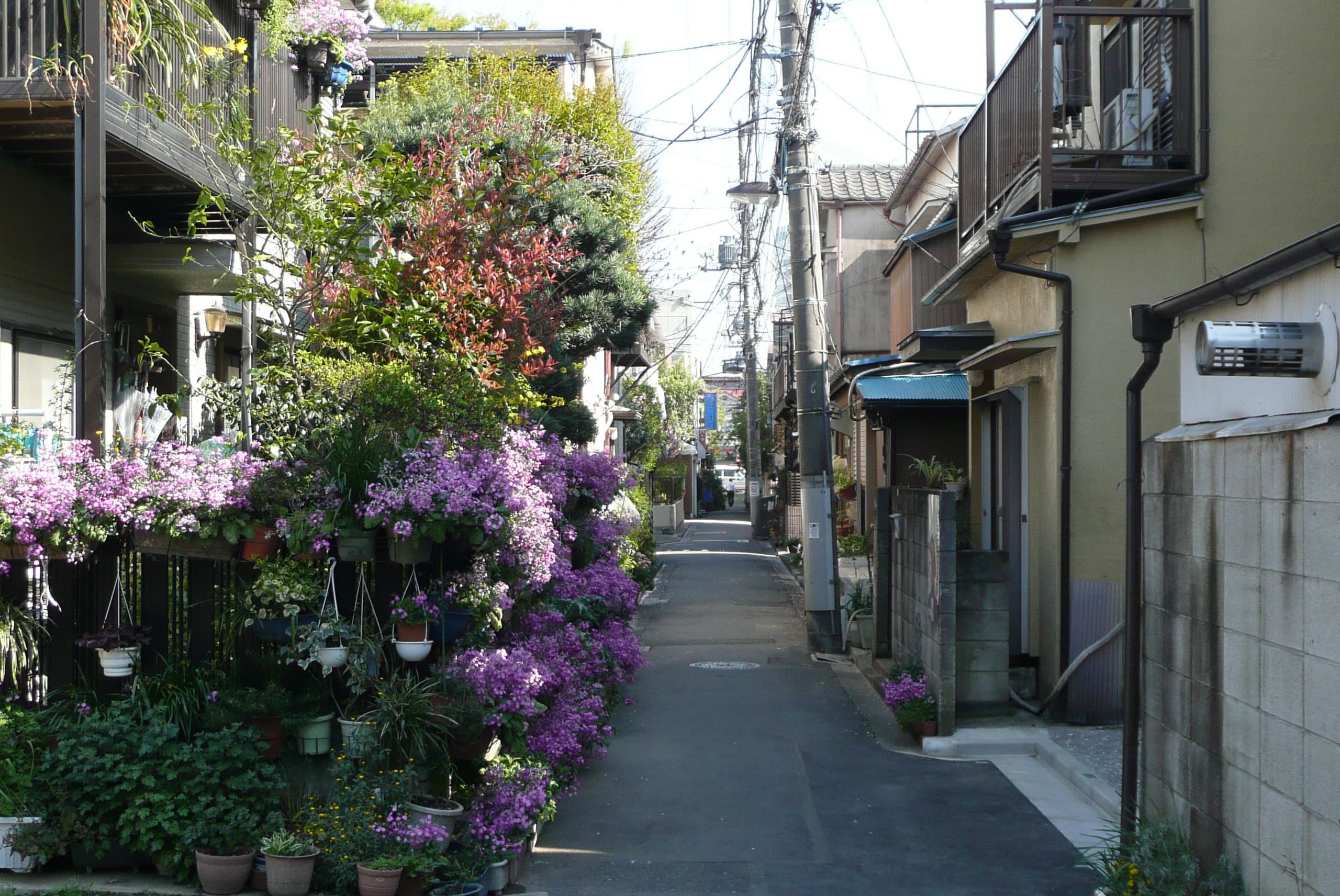
This is an example of some of these smaller back alleys that are typical of this neighborhood.  They are confusing to navigate but fascinating to explore.  One house had all of these small flowering potted plants sitting on shelves out front, a good example of something we saw again and again: people tried very hard to incorporate nature into their lives, even in a place that is as urban and paved as this one.
P1150226

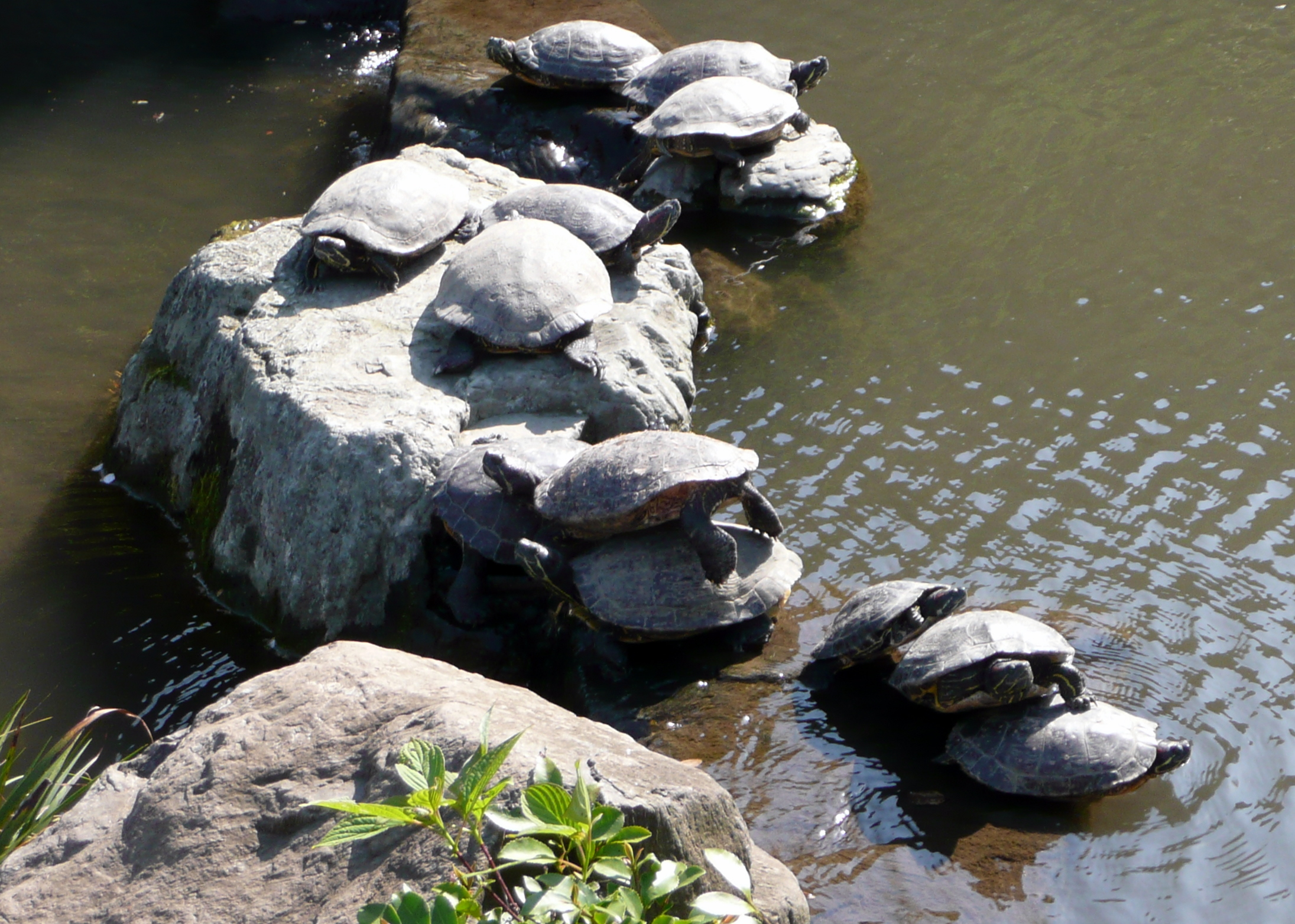
We continued through another park and shrine where we caught a group of turtles dozing on top of one another in the afternoon sun.  It was pleasant weather – about 22 C / 72 F and a light breeze.  We couldn’t have asked for better temperatures.
P1150258

Another street shop in the Ueno area, this one more typical of a street large enough for cars.  There were so many interesting shops in this area and very friendly people.  Of course, it helped that we had someone fluent in Japanese with us, but I suspect they would be just as friendly even if we were alone.

P1150249

A nice contrast of colors parked in front of a shop.  I’m amazed at how many people ride bicycles in this city.  When they park them they just lock a chain through the back wheel.  The bicycles themselves could easily be picked up and carried away but that doesn’t seem to be a concern.

P1150265

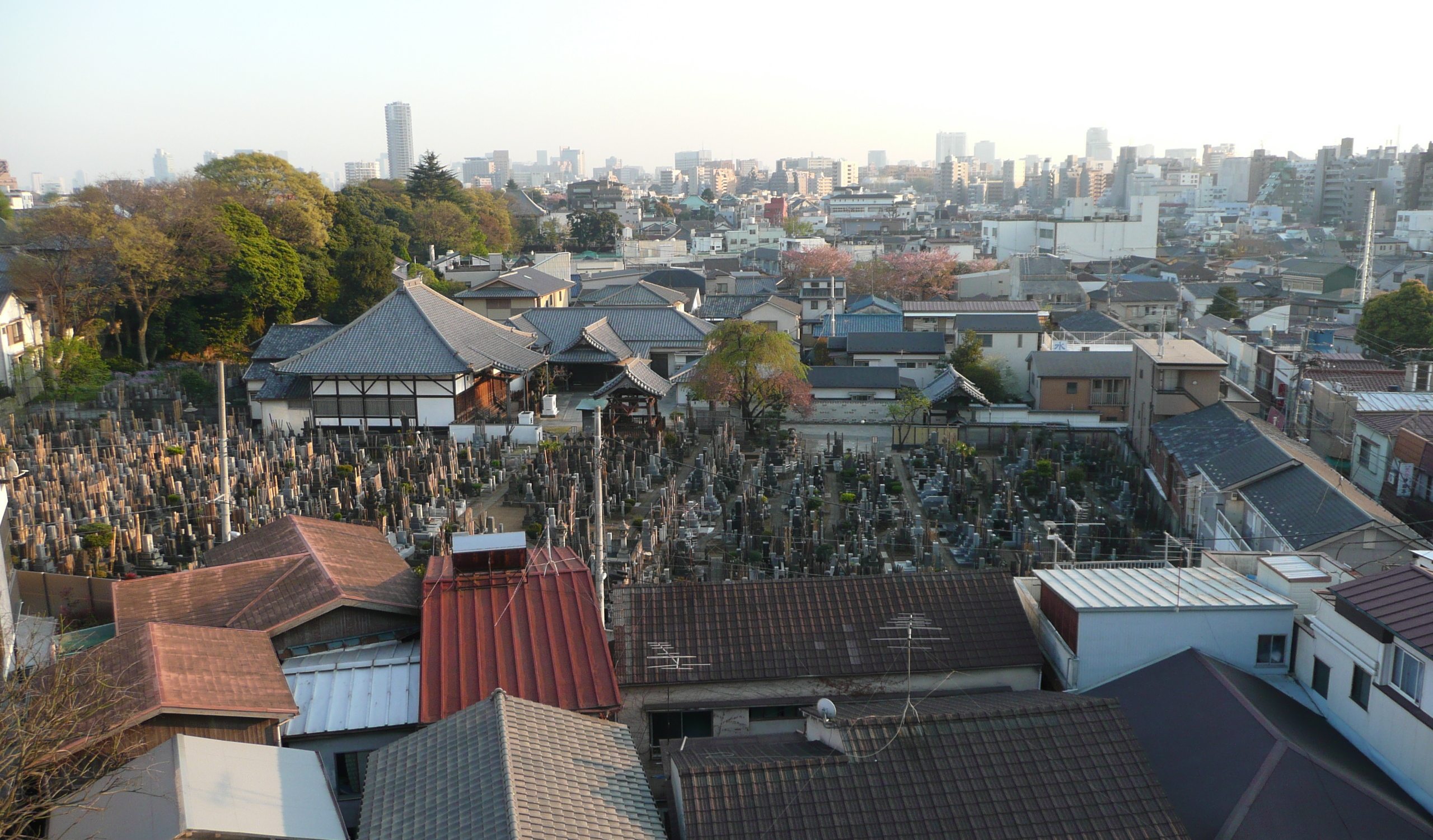
In Alex’s neighborhood there is another shrine and small cemetery.  Cremation is typical and so an entire family’s ashes will be stored in a single grave site.  The wooden sticks are prayers that are written and placed at the grave on the anniversary of a family member’s death.

P1150276

Same graveyard but looking from the top of Alex’s condo, the building on the left of the picture.

P1150284

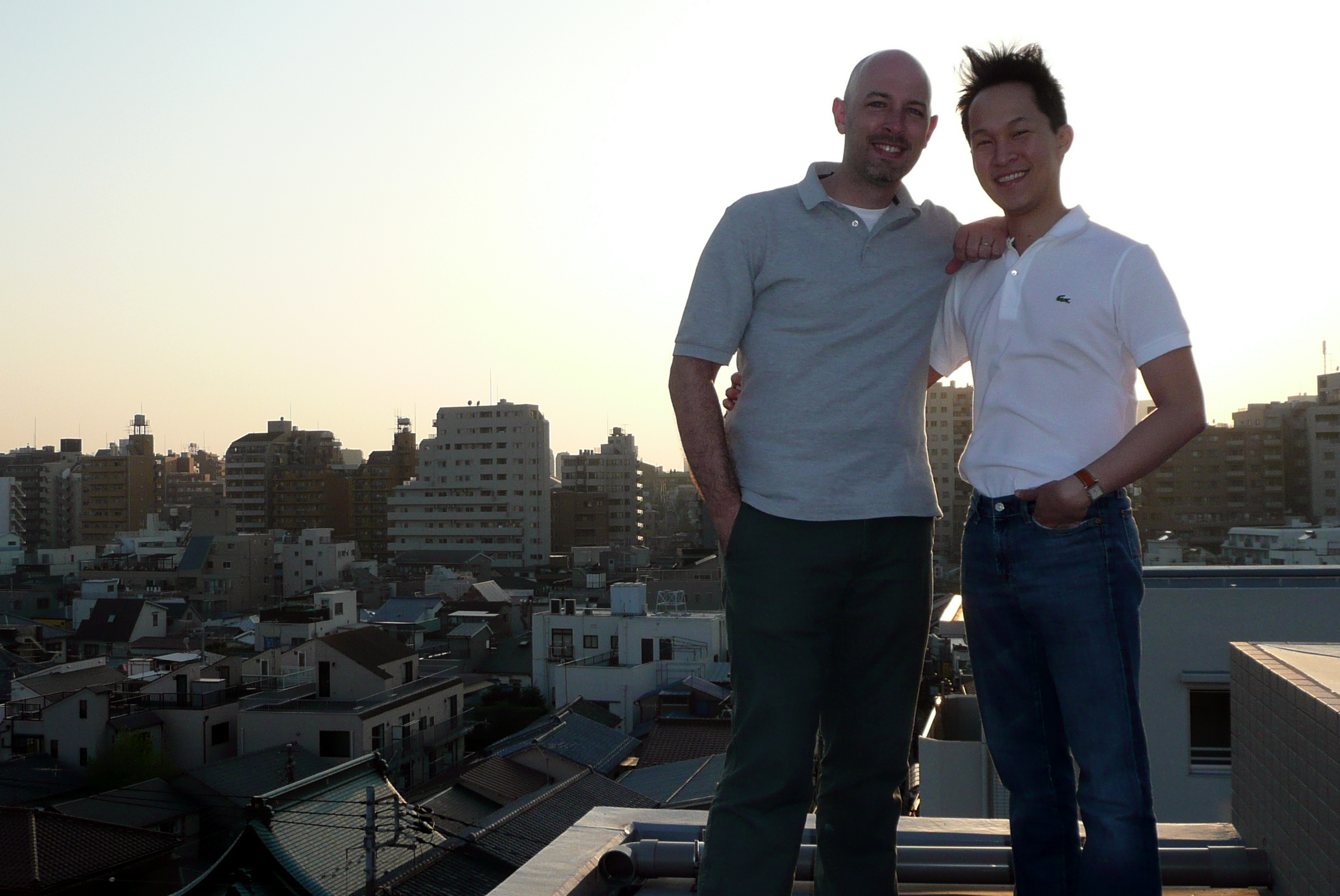
We stopped by Alex’s condo for a drink of water and then to climb onto the room and take in the view of Tokyo as the sun lowered.  As you can tell from Tawn’s hair, it was a bit breezy at this point.

P1150310

As Alex had another appointment, we navigated back to our hotel, walking through another beautiful cemetery, Tokyo University and Ueno Park before returning to the bright lights and bustle that we had previously associated with Tokyo.

P1150309

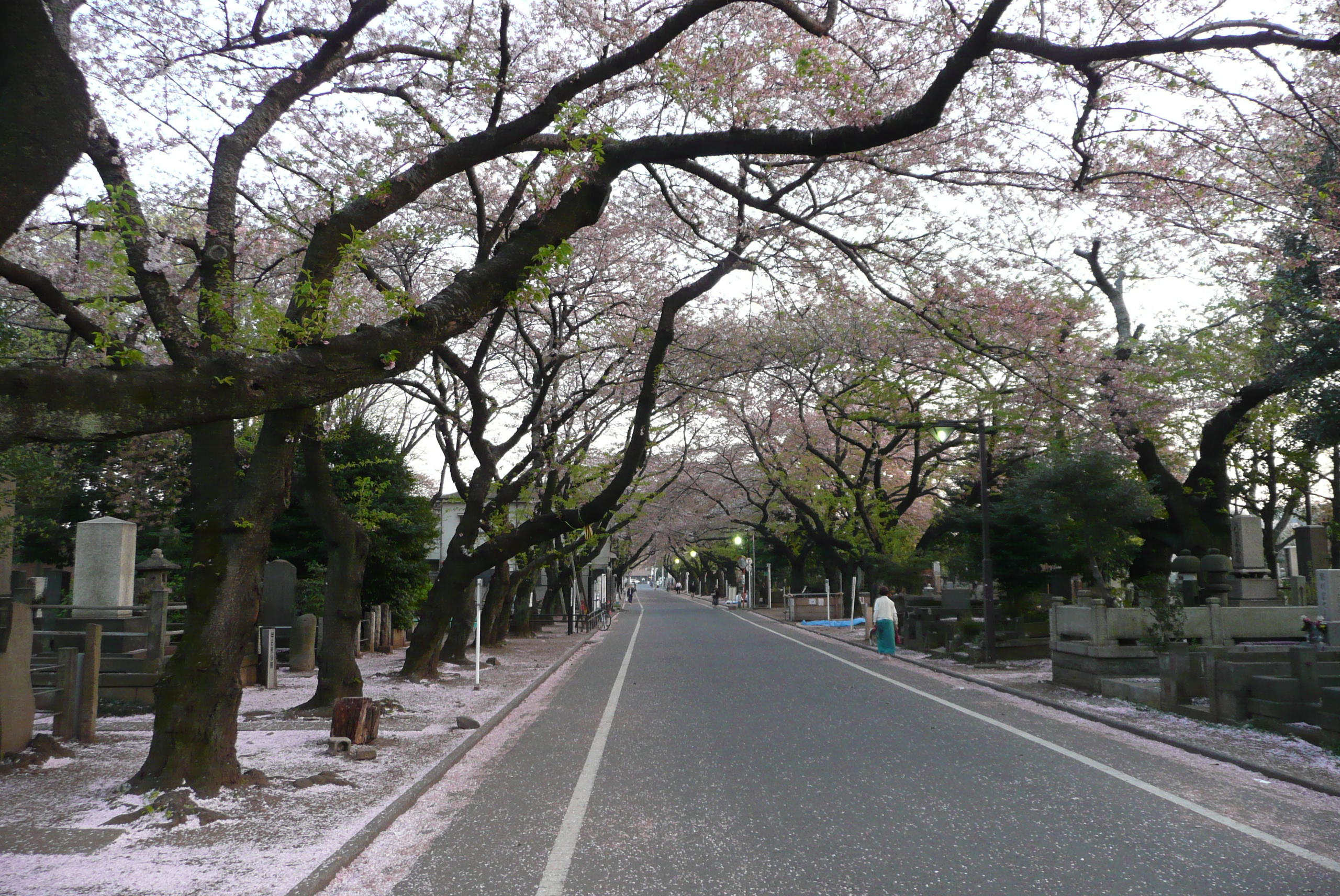
Sakura blossoms dust the graves like pink snow.

P1150327

Above, the final few blocks take us back to the bright lights of Tokyo near Ueno Station.  Can you find Tawn in the picture?