Afternoon Tea at Four Seasons Chiang Mai

While in Chiang Mai a few weeks ago with visiting guests, I made a stop at the Four Seasons resort for afternoon tea. The resort is located about a thirty-minute drive north of town, which only enhances its feeling of being in the middle of nowhere. The resort is gorgeous and the afternoon tea is a worthwhile splurge for an hour or two of pampering yourself.

P1270774

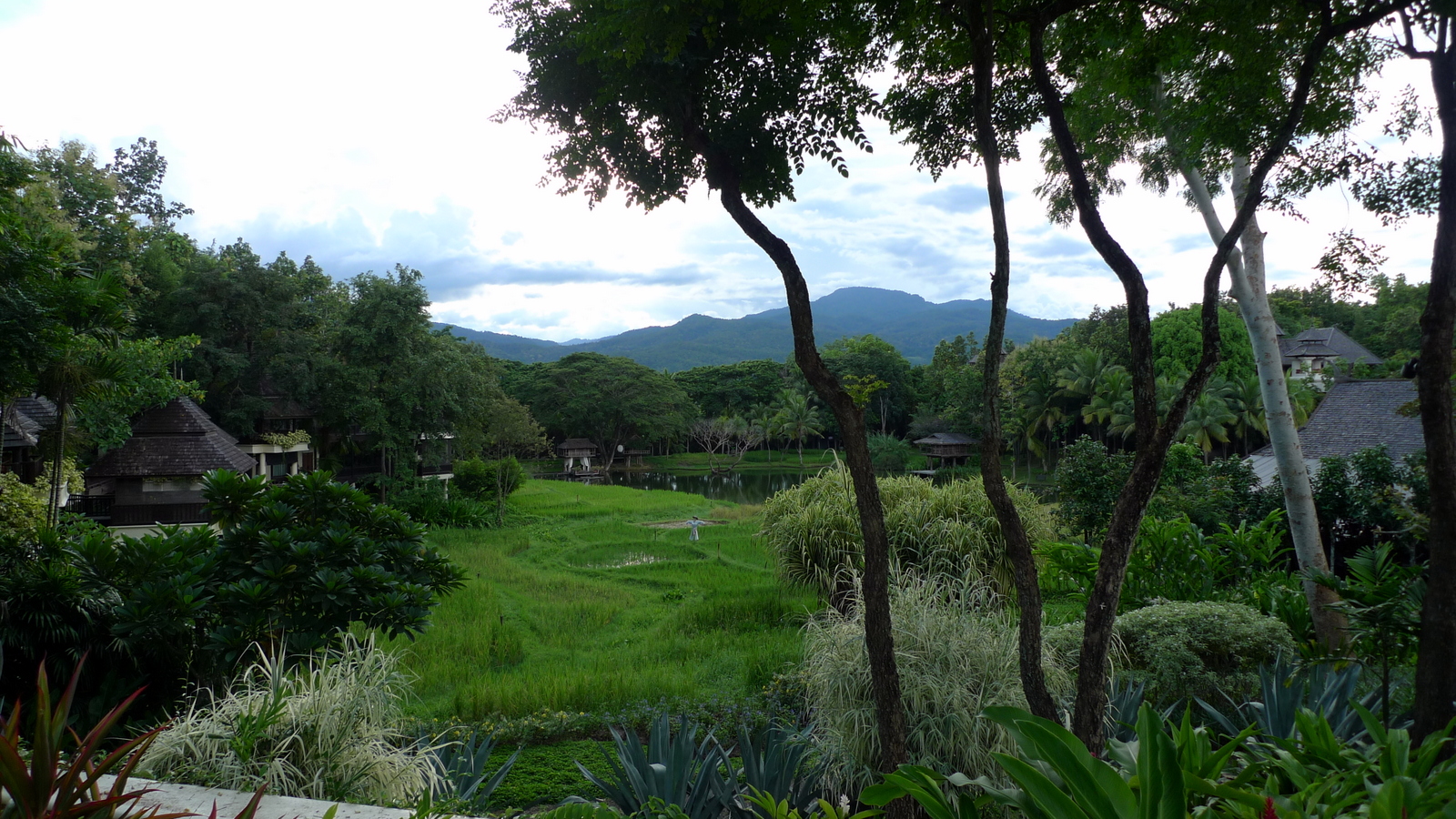
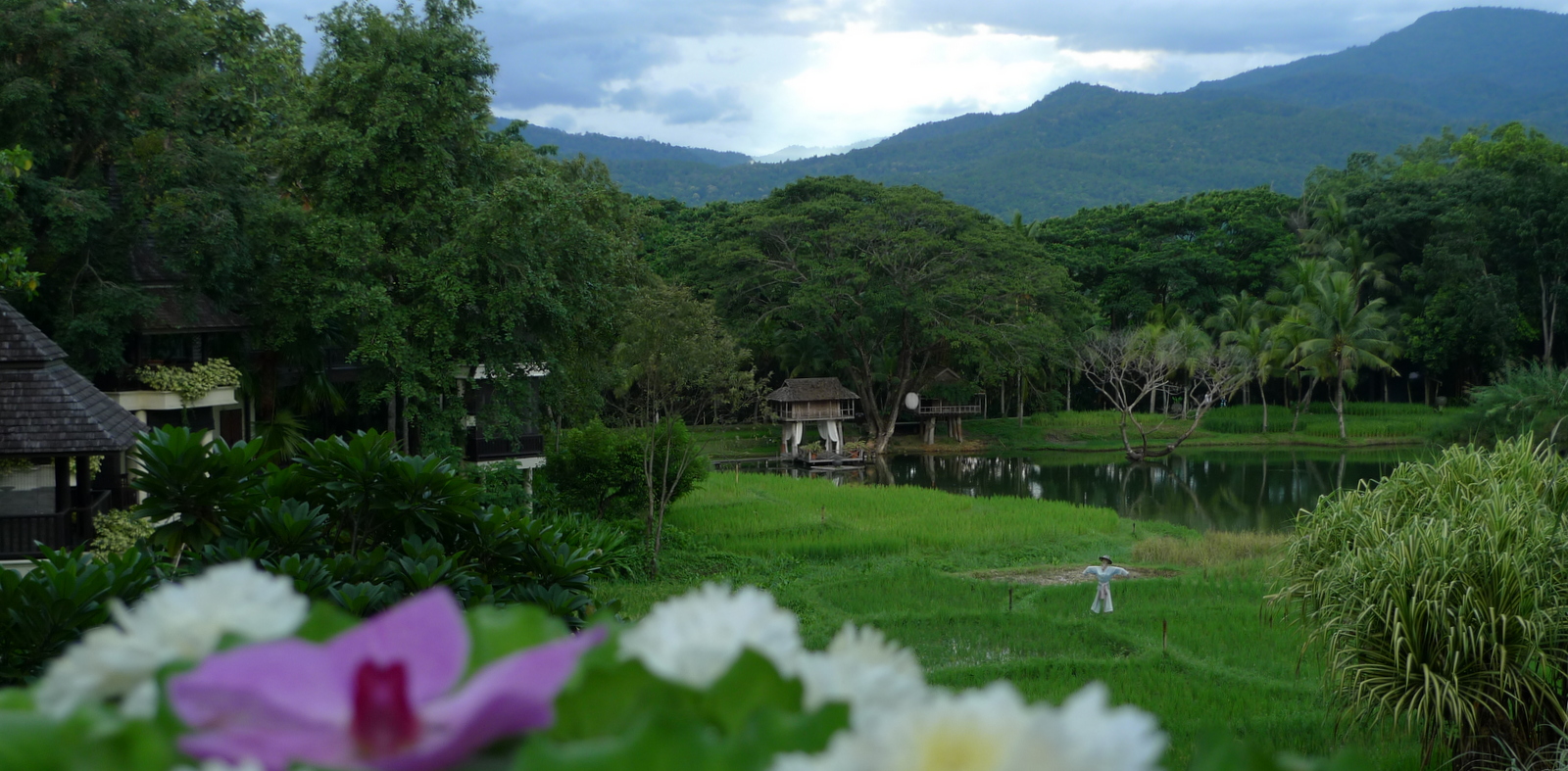
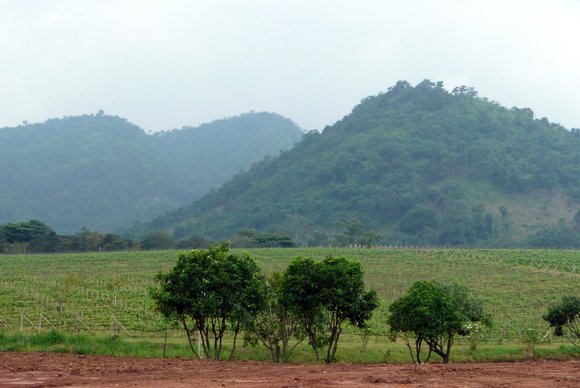
The resort is arranged around a pond designed to look like a Northern Thai village complete with rice paddies. The only buildings you see are those belonging to the resort and with the mountains in the distance, you could easily be forgiven for thinking you had been transported to some magical Thai Brigadoon. At 5:00, the “farmers” (resort employees dressed in traditional Northern Thai farmer’s clothes) paraded across the paddies to the rhythm of a gong, “returning” to the village, a touch that was a bit kitschy but also fun.

P1270768

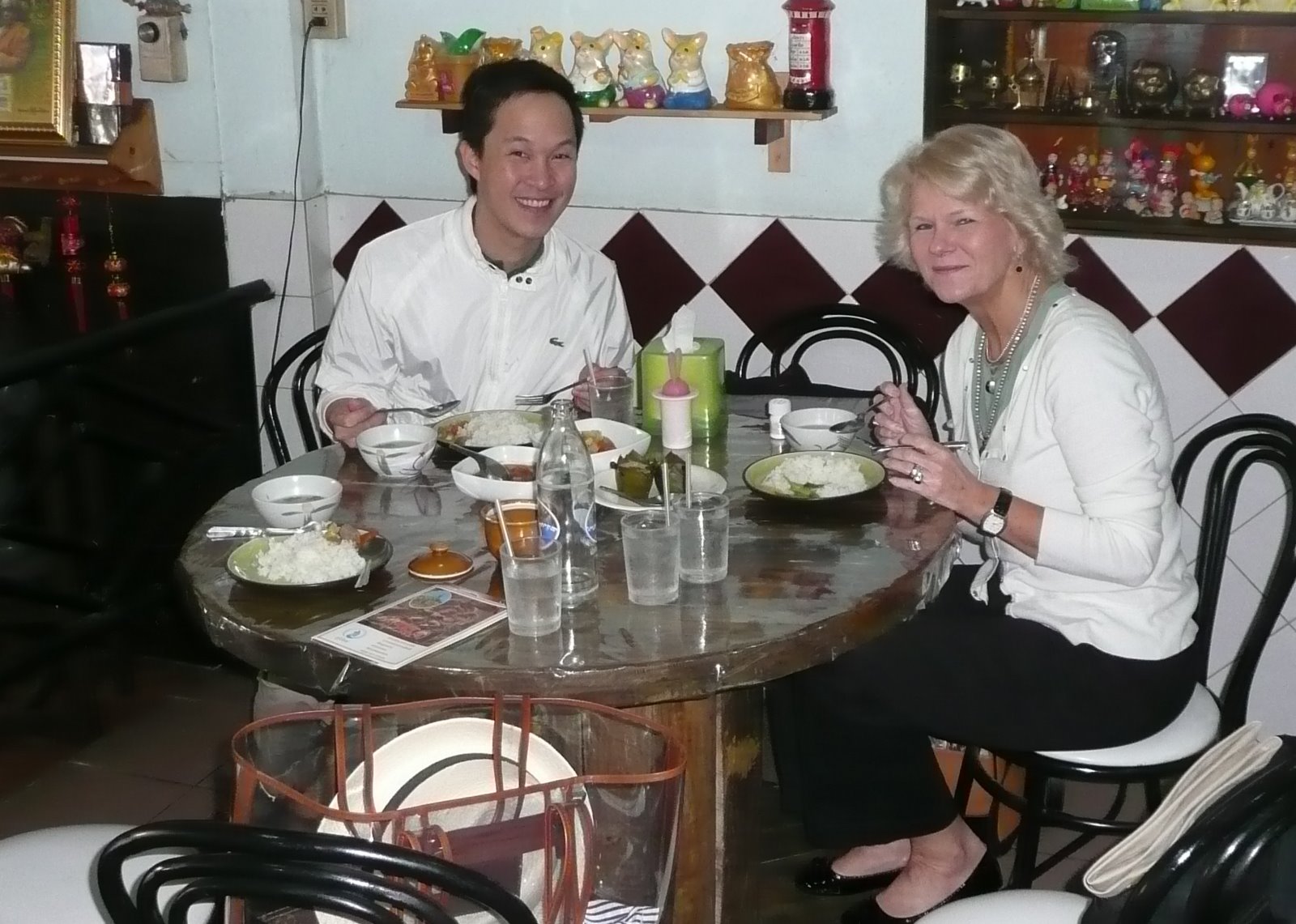
Trish, Allen, and I pose for a picture at the Sala Mae Rim restaurant. We didn’t make reservations but fortunately were able to get a prime table, perhaps because it was the midst of rainy season and the slowest time for tourists. We ordered one tea set (designed for two) plus an extra pot of tea, which was more than enough food for the three of us. The total price was approximately US$50, more than I would usually spend but certainly a worthwhile treat while on holiday.

P1270772

The top plate in the tea set featured mango sticky rice with a palm sugar floss; crisp water chestnuts in sweet coconut milk; Parisian macaroons, and chocolate truffle cake.

P1270770

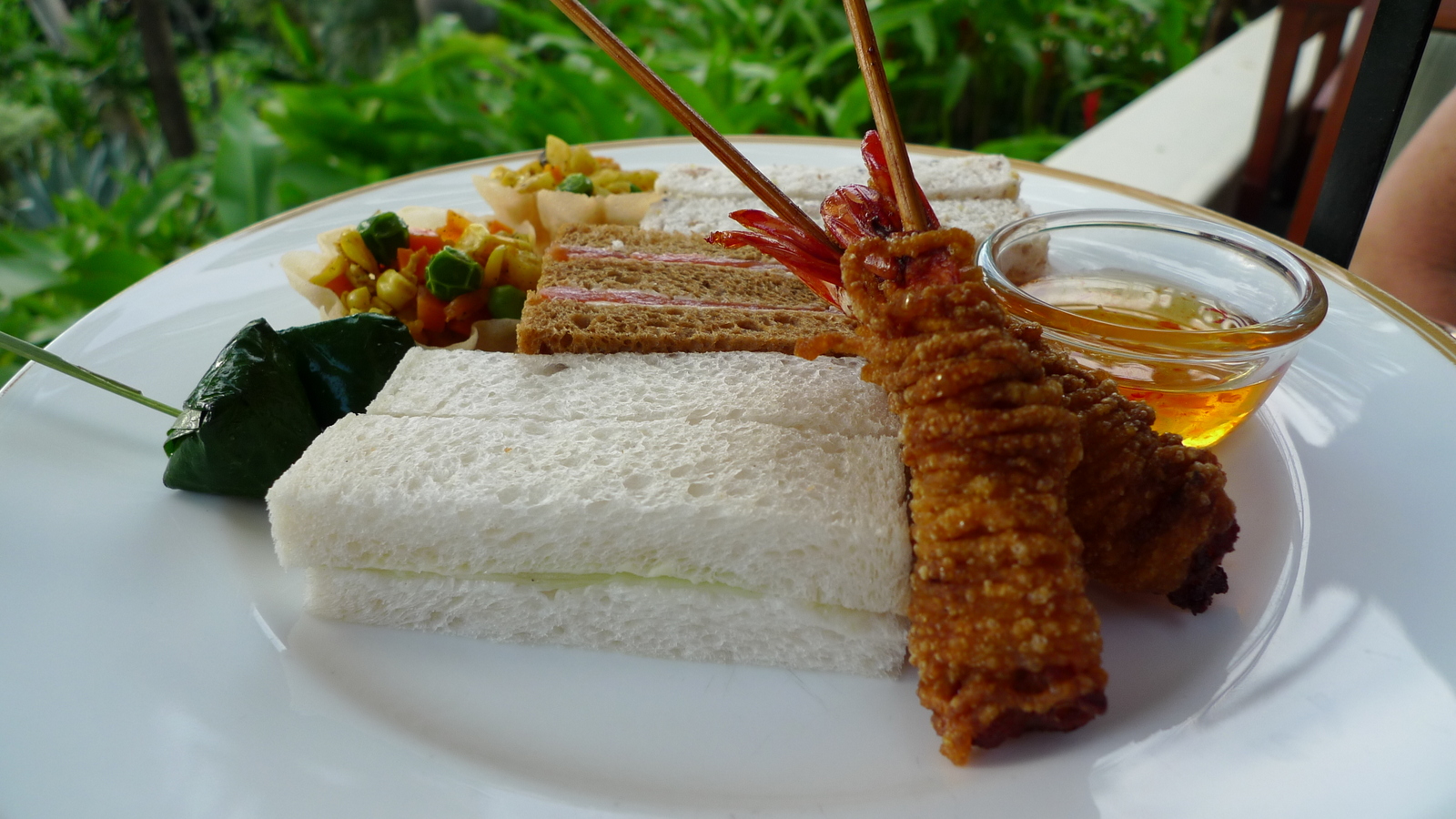
The middle plate in the set featured finger sandwiches (ham and cheese, cucumber, and smoked salmon); fried shrimps wrapped in egg noodles, miang kham (a Thai snack of betel leaves wrapped around savory fillings); and krathong tong (literally “golden baskets” – crispy shells filled with minced chicken and shrimp).

P1270773

The final plate in the set featured kaffir-lime and raisin scones, served with clotted cream and strawberry jam. All the food was fantastic and the portions were more than adequate for the three of us.

P1270784

After almost two hours of indulgence, we finally left paradise to return to the city. Without a doubt, the Four Seasons is on my list for future visits. While it may be too far away from the city to actually stay at (unless you specifically want to escape from the world), it is worth a visit for tea.


Views Around Chiang Mai

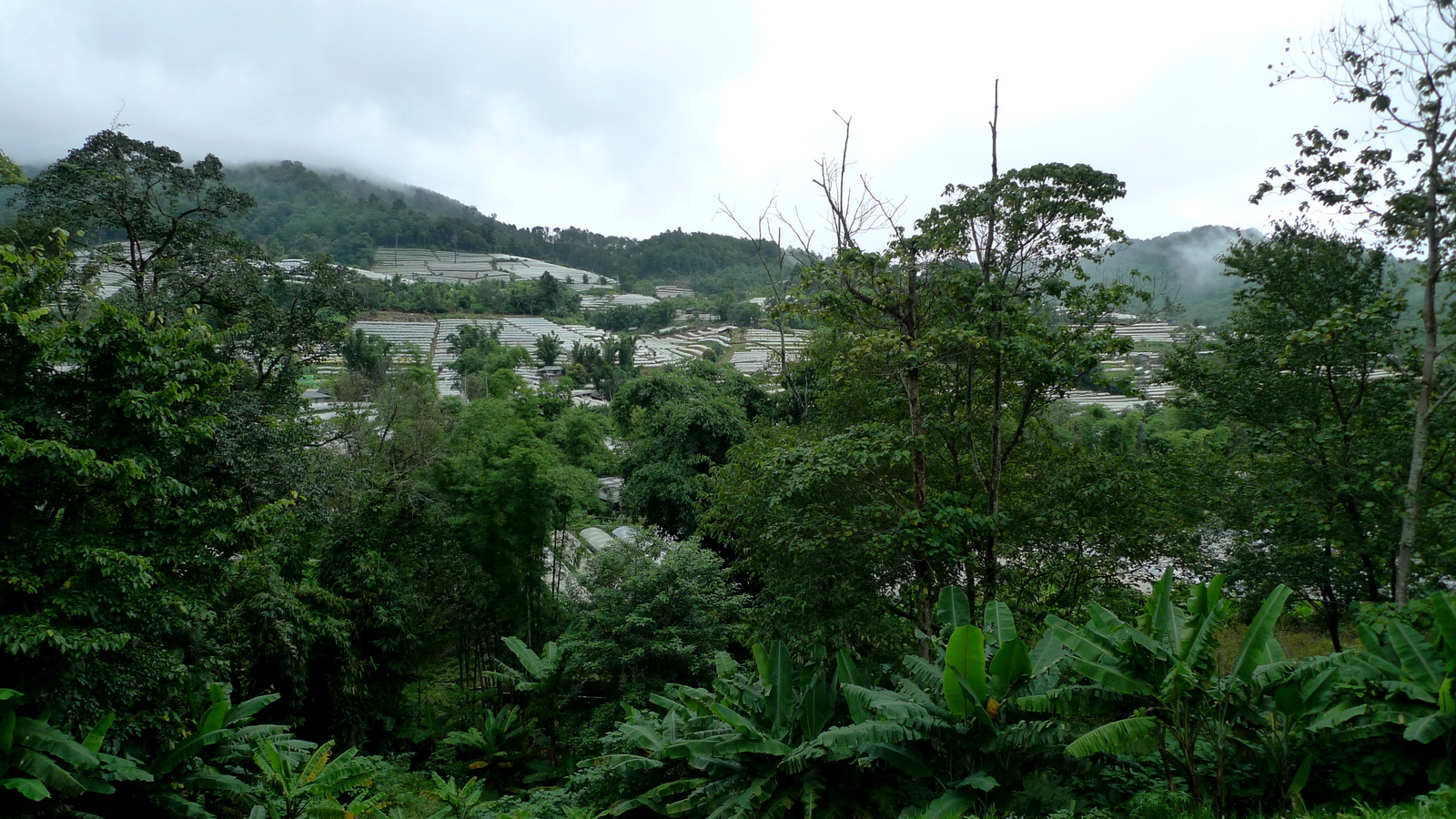
While up in Chiang Mai with visitors last week, I took several pictures that I want to share. It is the height of rainy season and the surrounding countryside was particularly verdant.

P1270721

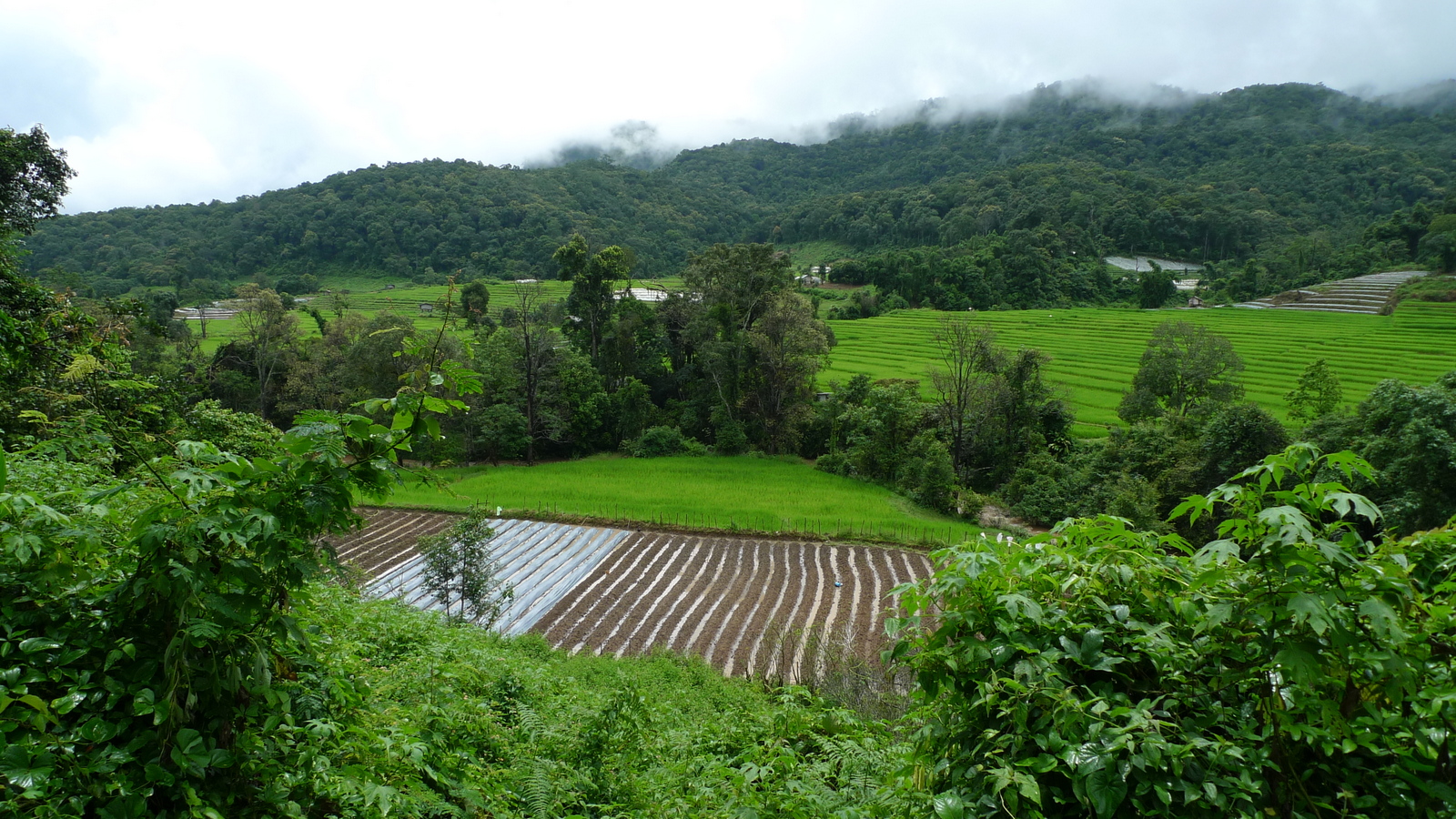
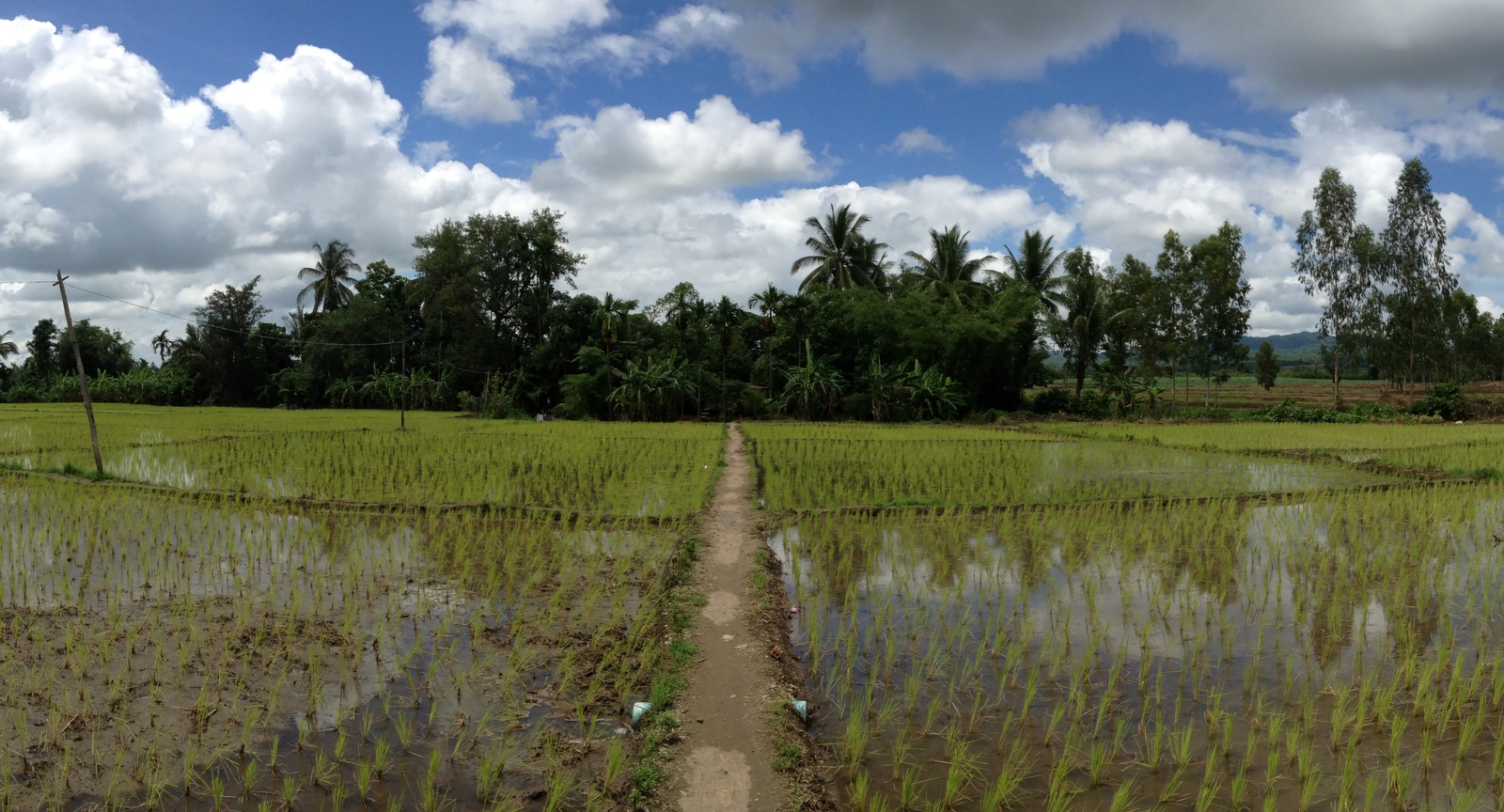
On the way up Doi Inthanon, Thailand’s highest mountain, we pulled over to snap this picture of rice paddies terraced in a small valley.

P1270733

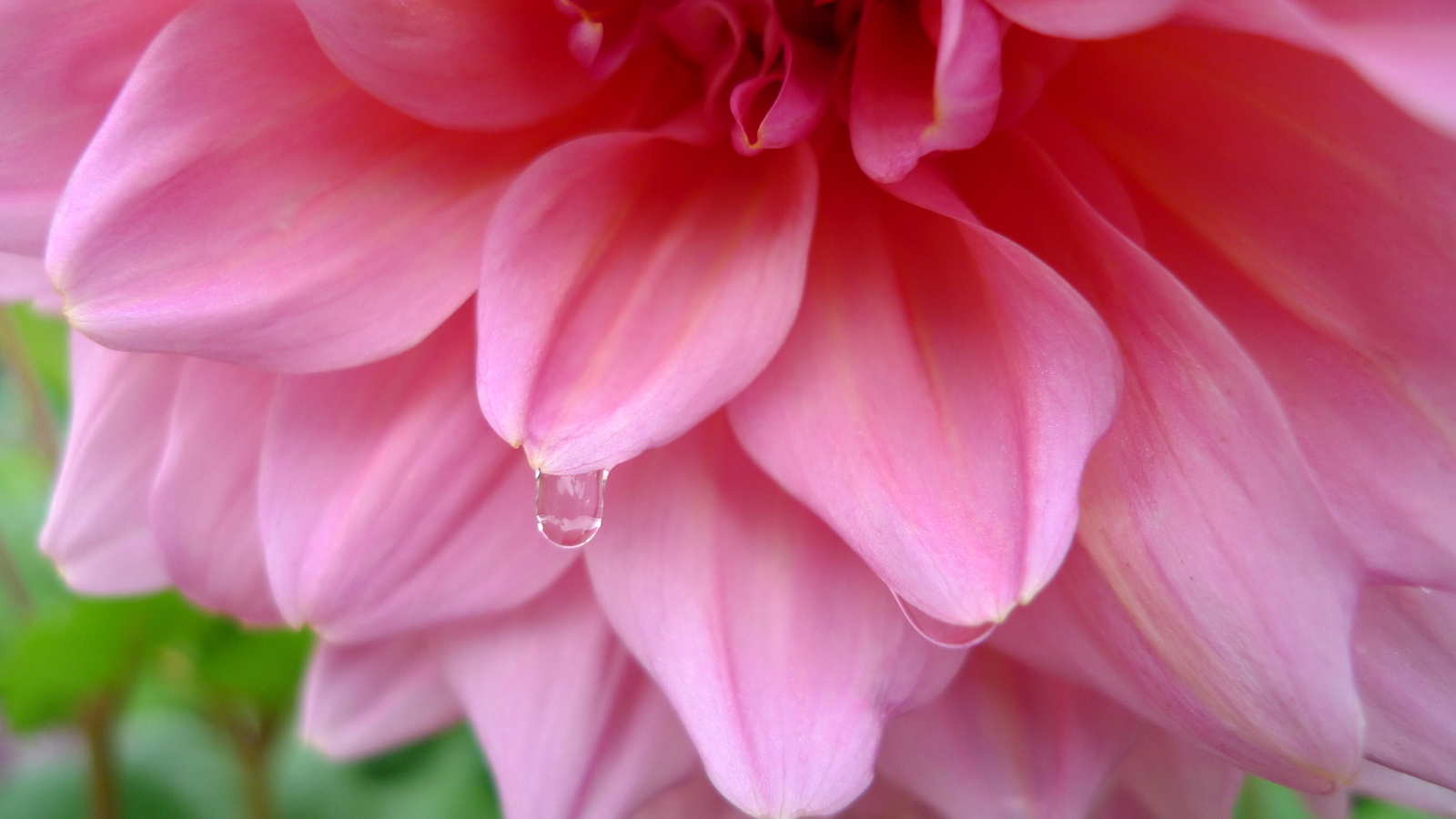
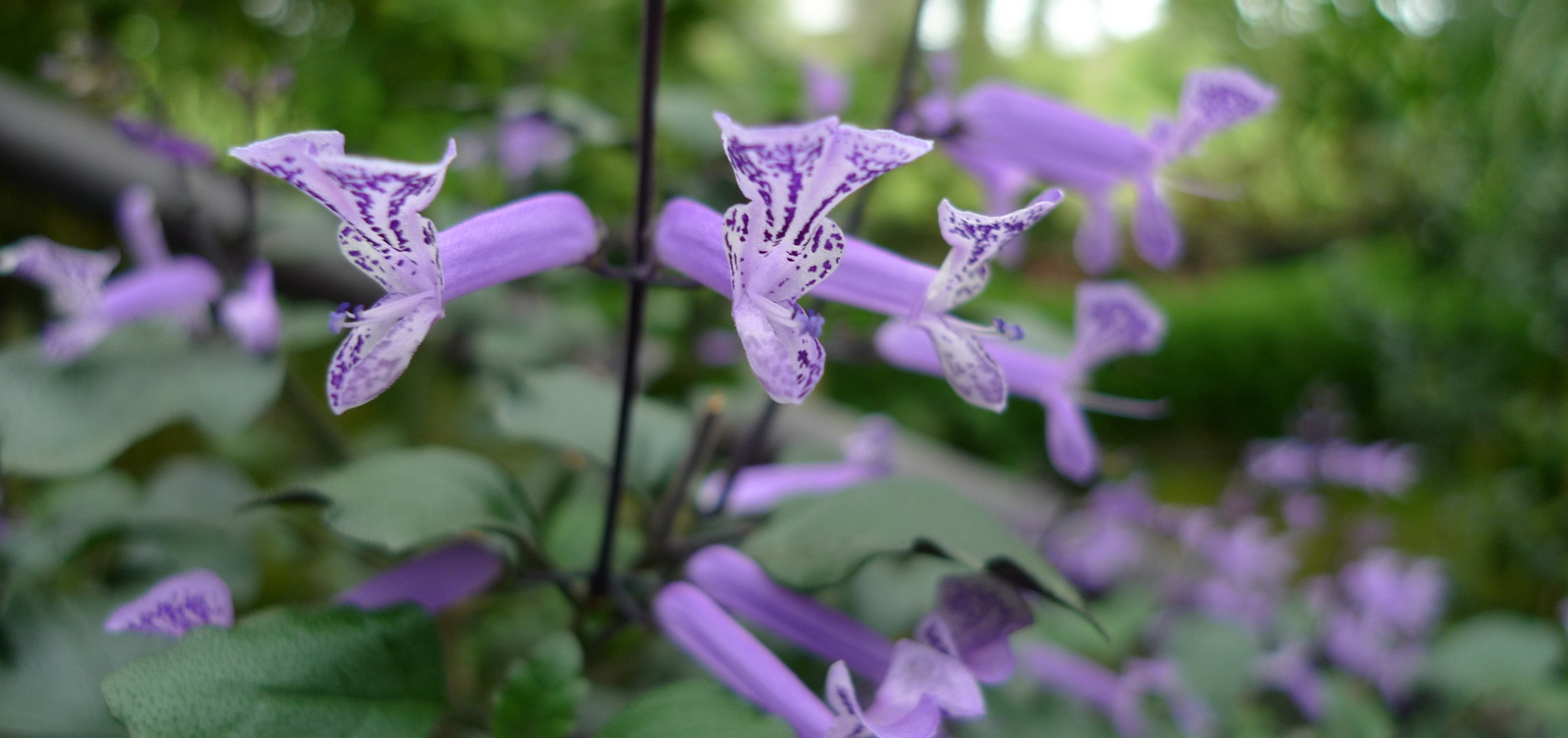
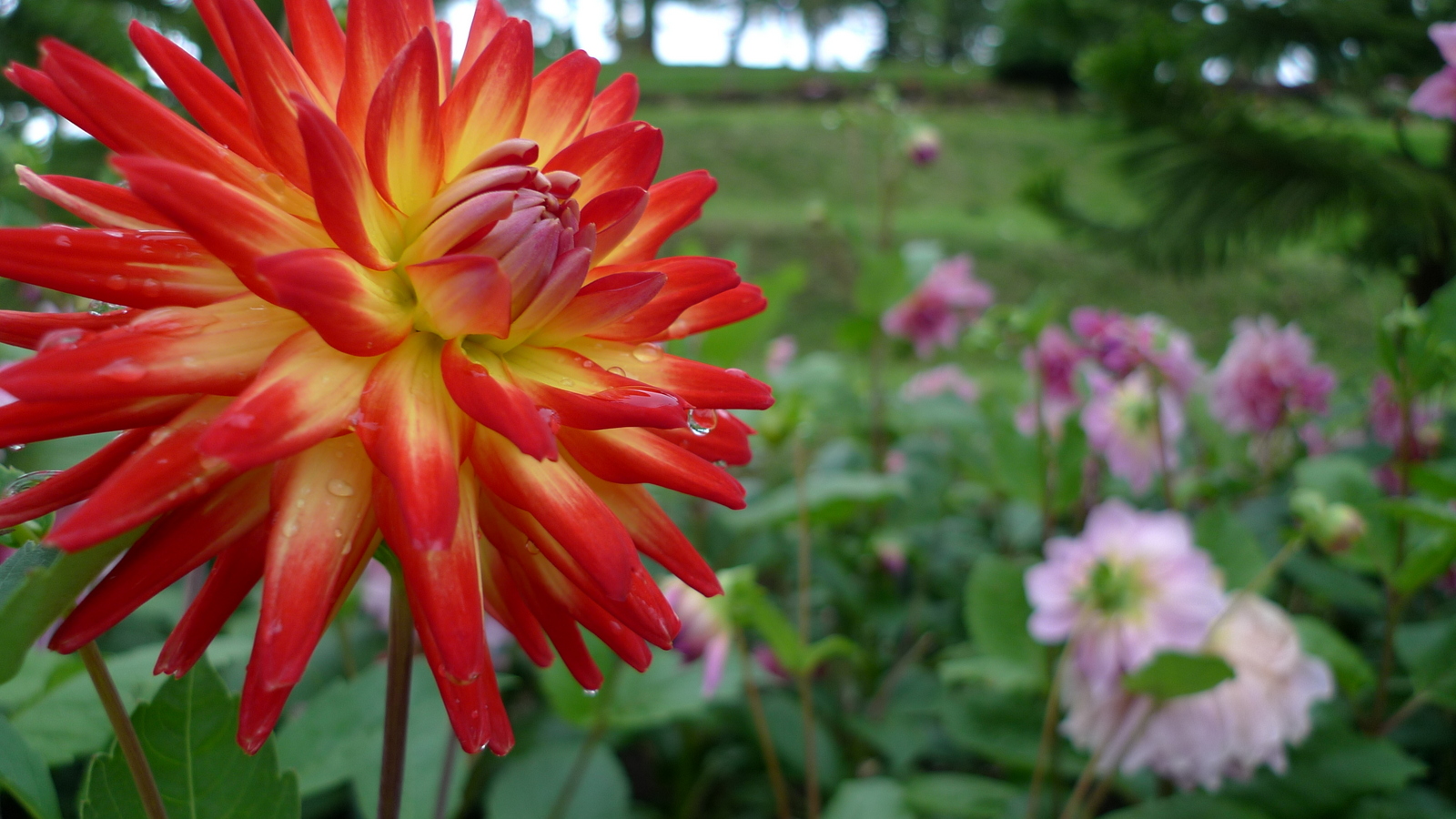
Further up the mountain, we visited the Royal Agricultural Project, which over the last few decades has helped local hill tribes transition from growing poppies (which were used to make heroin) to growing a wide variety of fruits, vegetables, and flowers. The higher elevation provides a climate suitable for select vegetables that could otherwise not be grown in Thailand. The pictures of flowers below are from the display gardens at the project.

P1270738-001

P1270754

P1270743

P1270749

By visiting during the weekdays of the rainiest month of the year, we enjoyed not only the beautiful flora but also the smallest crowds of tourists I have ever seen. In fact, “crowds” is not the correct term. “Handfuls” would be more apt.

P1270711

We also visited Doi Suthep, the mountain immediately to the west of Chiang Mai, which houses a spectacular temple with a golden chedi, or stuppa. This is the second time I’ve visited the temple on an overcast and damp day. The effect is interesting because the gilding is not as bright as on a sunny day, but it contrasts beautifully with the grey skies. In the above picture, I focused on a row of bells the line the temple buildings. Bells are purchased with donations and the donors can write wishes or prayers on the metal leaf hanging from the clapper.

P1270778

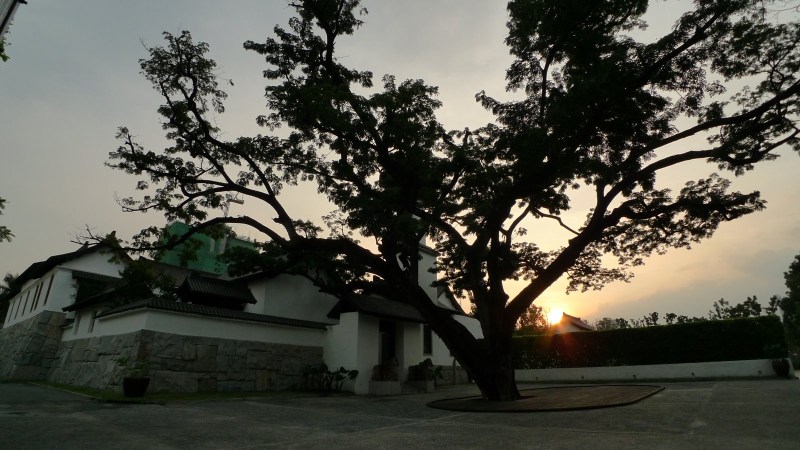
On our final afternoon, we drove  north of Chiang Mai to the Four Seasons Resort to enjoy afternoon tea overlooking their property, which is designed to look like a rice farming village. I’ll share the pictures of the gorgeous tea service in another post but wanted to share this view of their pretty property.


Dining in Bangkok: Rocket Coffeebar

For nearly eight years living in Bangkok, I have lamented how few good breakfast and brunch restaurants we have. This has started to change recently and Rocket Coffeebar on Sathorn Soi 12 is a welcome addition to the breakfast scene.

P1260955

Opened by several of the people behind Hyde & Seek on Soi Ruamradee, Rocket Coffeebar’s vibe would fit in well in Stockholm, Sydney, or San Francisco. The interior is small – seating perhaps sixteen people – and is done up in stylish marble counters and tiles. Continue reading

Cooking Khao Soi with Chow

One of my favorite Thai dishes is khao soi, the curried noodles that hail from Northern Thailand. With a variety of textures and loads of rich broth, it makes a satisfying meal. Recently, my Bangkok Glutton friend Chow arranged for her aunt to share their family’s recipe for khao soi with us.

We returned to Chow’s kitchen to try our hand at recreating the recipe. While the results were good, it is safe to say that we are going to need a lot more practice before Chow’s aunt has anything to fear from our competition!

P1270118

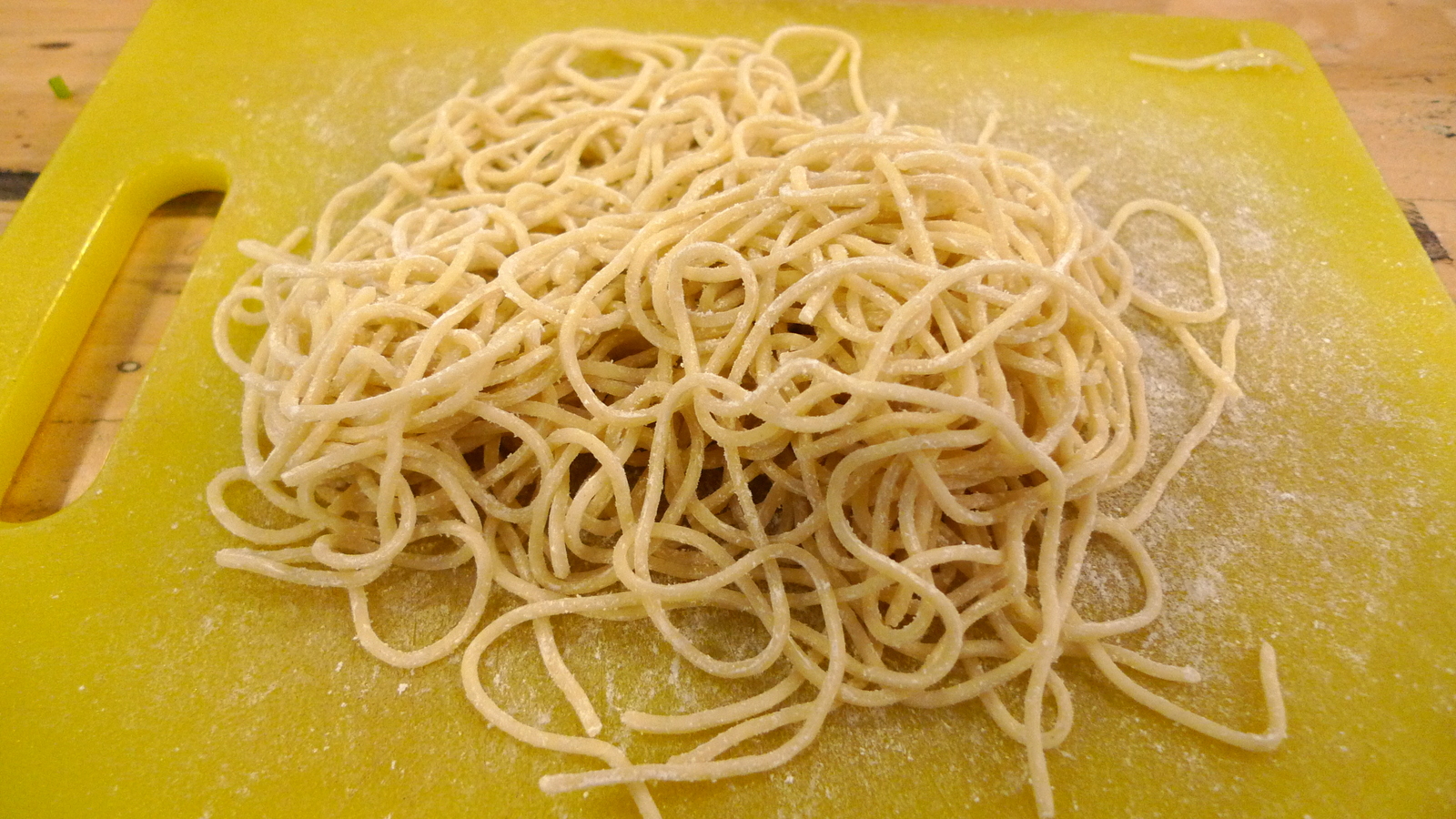
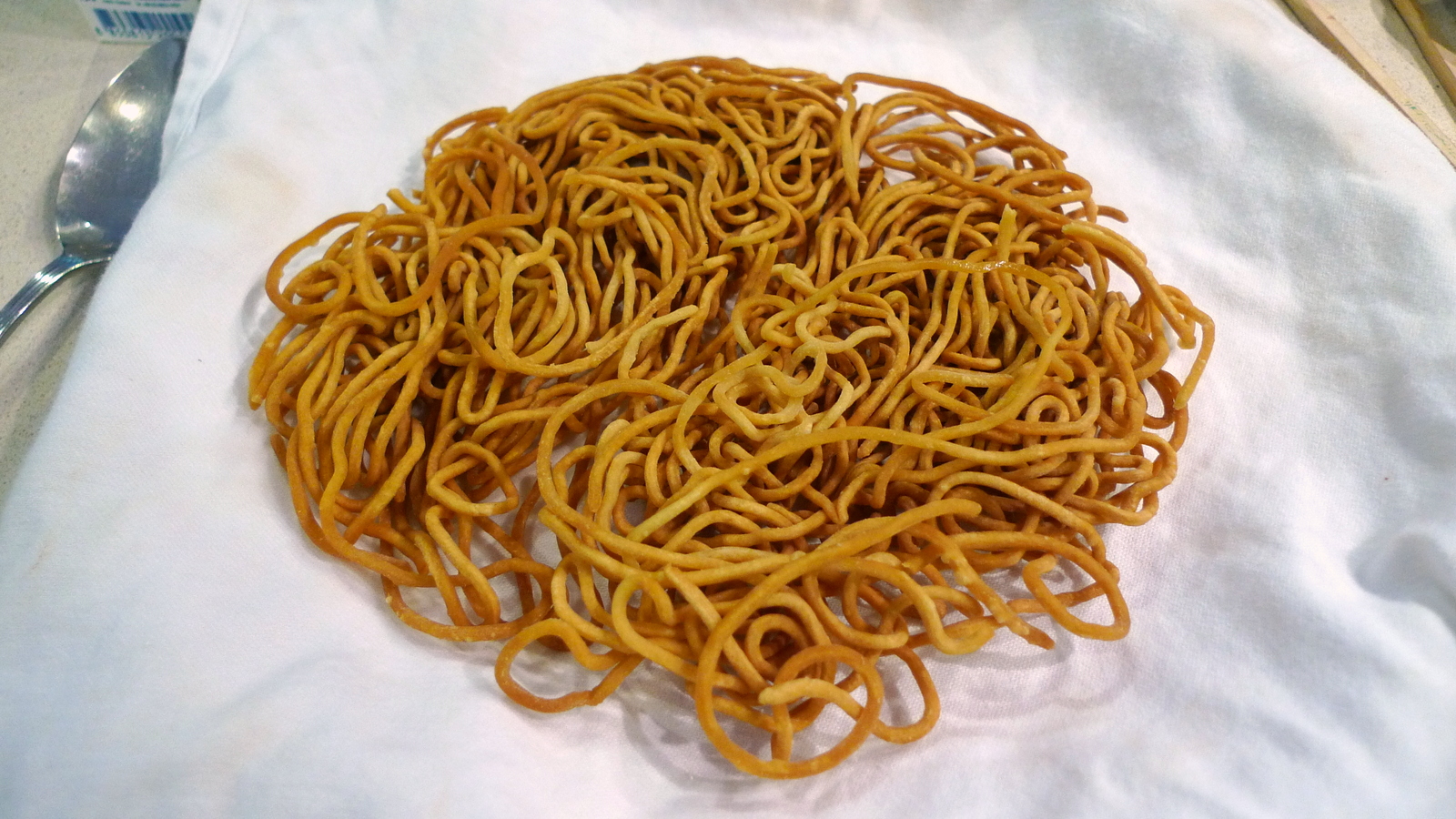
Khao soi is made with egg noodles. There are a variety of types, but if you have an Asian market in your city, any fresh egg noodles will do. The noodles are split into two batches: one that is blanched in boiling water and the other that is fried to make a crunchy garnish.

P1270115

The fried noodles are easier to make than I expected, not requiring much oil at all. The resulting crispy noodles are addictive. Hard to not eat them before finishing the rest of the cooking!

P1270112

The base of the khao soi is a yellow curry combined with a fried mixture of ginger and shallots. You can use any yellow curry paste available at your local Asian market. The better the quality paste, the better the flavor, of course.

Like many curries, coconut milk is added to create richness. You can use a “lite” coconut milk or add some broth to thin it out. For the meat, you can use any type of meat you like. Beef and chicken are more traditional but pork or firm tofu would be fine. The flavor of the curry might overwhelm shellfish, though.

P1270121

Like all noodle dishes in Thailand, proper khao soi is served with a variety of condiments. Here, you have dried chili flakes, chopped green onions and coriander, fresh shallots, chili oil, minced pickled cabbage (rinse off some sauerkraut as an easy substitute), and fresh lime.

P1270128

The end result looked fantastic and tasted good. Getting the proper balance of flavors – fish sauce and sugar need to be added to taste – is where the secret of a true khao soi master lies. Again, Chow’s aunt has nothing to worry about!

Visiting an Orphanage in Mae Sot

Last weekend, I traveled to Mae Sot, the largest town in Tak Province, Thailand. Situated on the border with Myanmar, Mae Sot is home to an estimated 100,000 Burmese refugees and immigrants – a number equal to the official local population. The purpose of the trip was to visit an orphanage and secondary school supported by some of my Singaporean friends.

20130714-2


The trip had a powerful impact on me and in the week since, I have spent a lot of time pondering how I can best contribute to improve the lives of these children. Perhaps the best way to share this experience with you is to post some pictures and write some explanatory thoughts.

20130714-14

Mae Sot is not a particularly large town. Nestled next to the border, it is common to see Burmese script on many signs and plenty of people are dressed in traditional Burmese outfits. The mountains of Myanmar are on the horizon and the gathering storm clouds seem to speak to the challenges that people on that side of the border face.

20130714-11


The orphanage is located in a residential neighborhood on one side of town. It is a typical Thai-style wooden house, built on stilts and with open windows for lots of ventilation. It cannot be much larger than 100 square meters (about 1000 square feet). The upstairs includes the kitchen, a small dining area, and two large rooms that are used as a multipurpose area and the girls’ dormitory. Downstairs, part of the area below the house has been bricked in and serves as the boys’ dormitory.

20130714-13

Approximately 60 children live in the orphanage, ranging from just under one year old to about thirteen. Technically, children could stay until age eighteen but they currently have no children that old. The orphanage is run in a very organized manner. Here, the children neatly line up their flip-flops on the concrete pad at the base of the stairs. As with all houses in Thailand, you do not enter with your shoes on.

P1270072

The orphanage is run by a Chinese-Burmese couple who spent many years living in Singapore, which is the connection with my Singaporean friends. Perhaps their sense of organization comes from having lived in Singapore! With no children of their own, the couple and four hired helpers take care of the orphans. While there are chores to be done, there is also time for fun. “Papa” plays the guitar and leads the children in songs and dancing.

IMG_7834

Extra effort is required for some of the children including the four youngest (all at just around one year old), two children who have polio, and a few children who have some developmental disabilities. While the amount of work may seem daunting, the systems in place allow the orphanage to operate efficiently and all of the children seem satisfied, cared for, and know they are loved.

20130714-17

The details of the systems and processes intrigued me. Here, a row of toothbrushes are laid out in preparation for the after-lunch tooth brushing. While they are a bit worn out, each child has his or her own brush (names are written on them) and good hygiene is stressed.

20130714-15

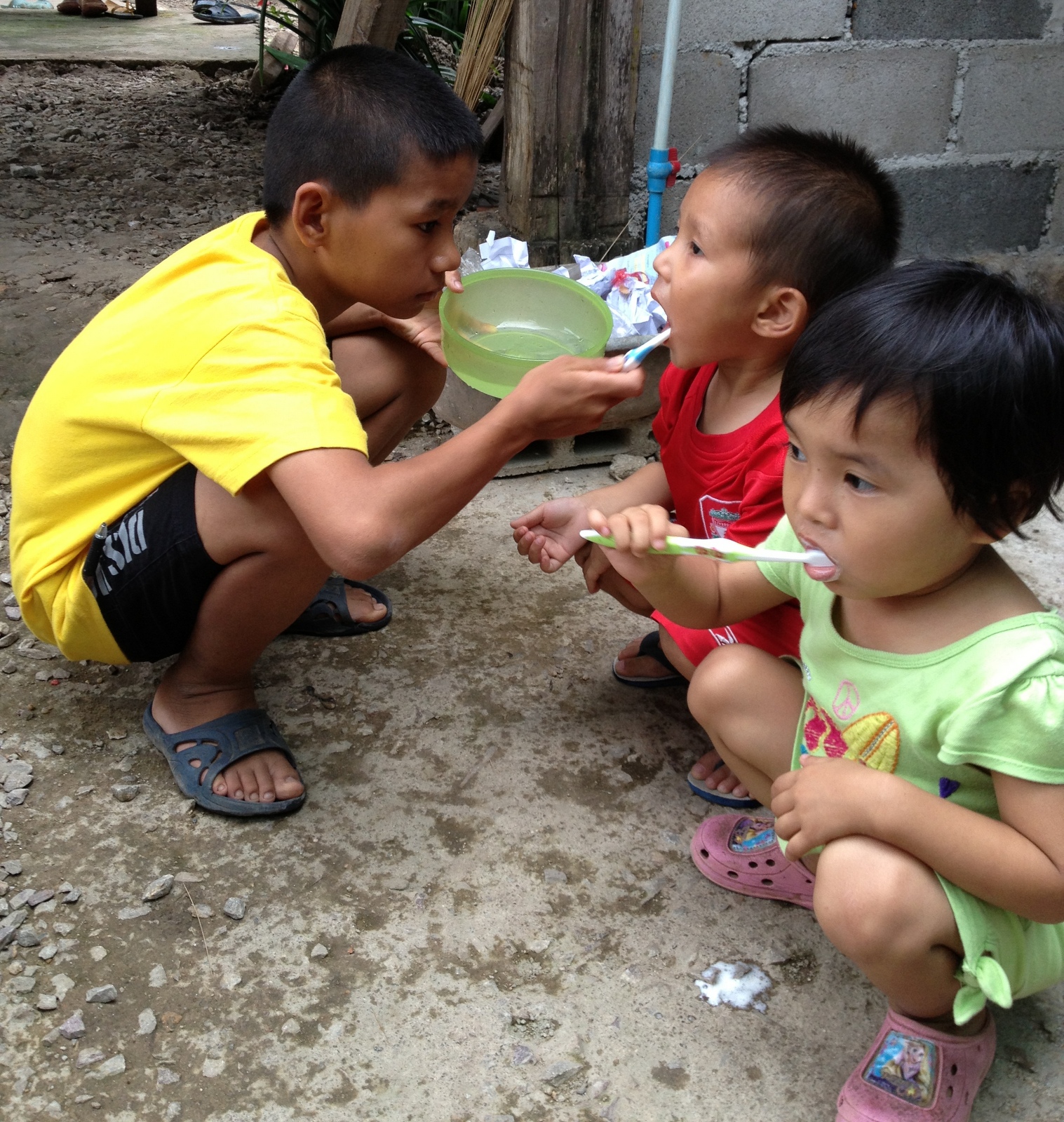
An important part of the process is that the older children help with chores and take care of the younger children. Two of the boys – brothers who are nine and ten years old – are responsible for ensuring that each child brushes his or her teeth and they help the younger children who have not yet learned how to brush. Time and time again, I saw children who were only six or seven stepping up to care for a crying younger child without anyone having to ask them. It made me realize that children in higher socio-economic situations are generally spoiled and not asked to contribute very much to the family in comparison.

20130714-10

The children do have a play area, protected from the sun and with a good breeze. Many toys have been donated so there are plenty to choose from. Interestingly, I did not see many arguments or disagreements about toys. The children seemed to share pretty well.

20130714-16

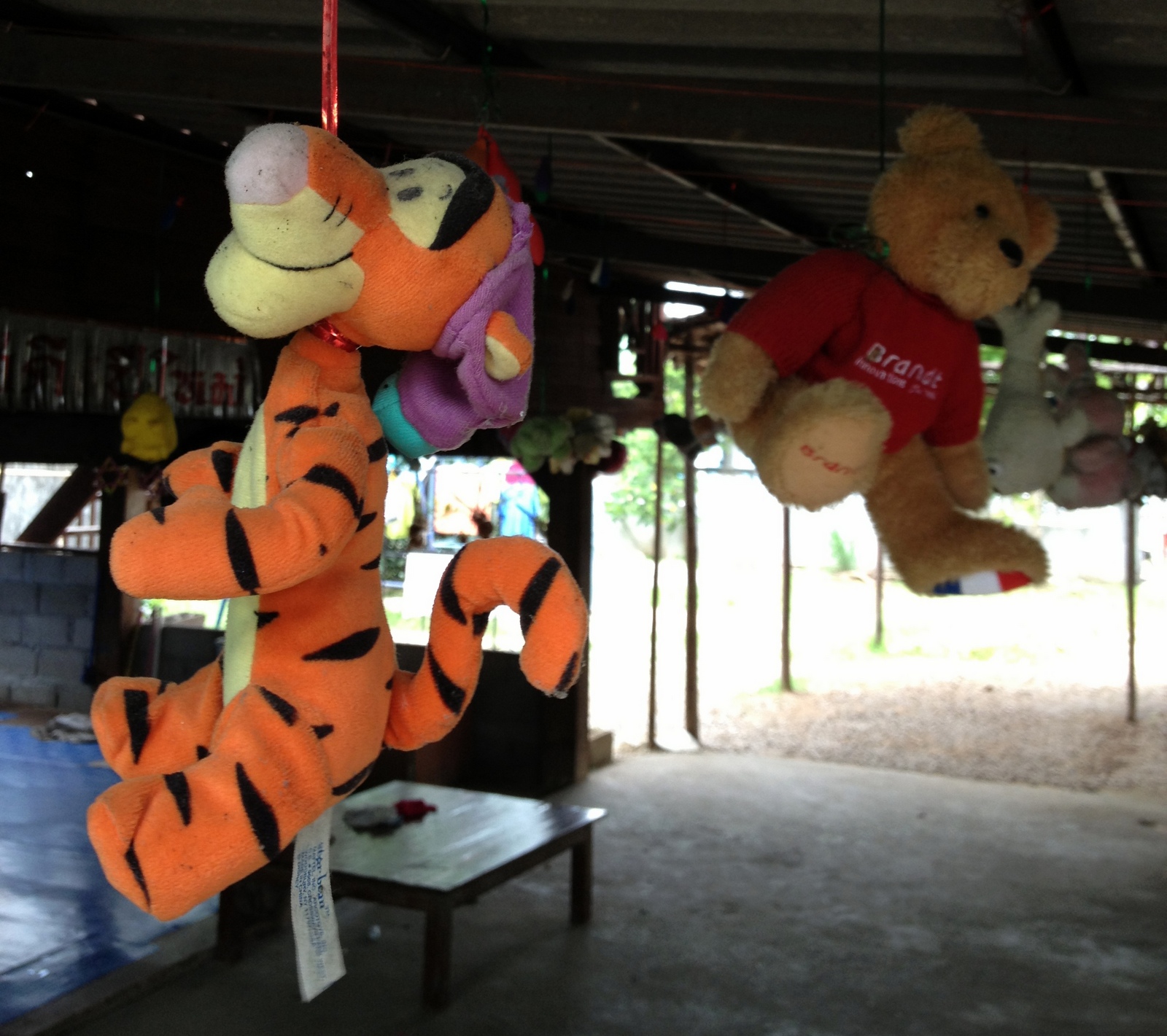
One macabre sight was the rows of stuffed animals hanging from the ceiling, like the victims of political violence by the Cartoon Network. The couple explained that while there are more stuffed animals than there are children, the stuffed animals resulted in possessiveness with children fighting over them. Instead, they are now suspended from the ceiling so everyone can see and enjoy them but nobody can claim them as their own.

20130714-7

While the older children (starting around age five) attend the local Thai public school, the younger children remain home all day. After their afternoon nap, they received a snack of crisps. They were generally quiet and reserved without the loud volume you might expect from a group of toddlers.

IMG_6612

The second afternoon there, we rode in the back of the orphanage’s covered pickup truck to collect the children at school. This is done in two batches since there isn’t enough room for everyone in a single batch. This two-batch method works okay because the younger children finish school about thirty minutes before the older children. This young boy with the two lunch boxes was especially cheerful, a constant giggler. While almost all the children were friendly, they were also a bit shy and some would sit in the corner and hesitate to play. My impression is that their life experiences may have led to some emotional damage and they may hesitate to connect with others for fear of abandonment. Perhaps I am over-psychoanalyzing, though.

20130714-004


We also attended what could best be described as a day care. The couple responsible for the orphanage also set up a small outpost (a house and covered porch) on the other side of town, designed as a place to teach Burmese migrants to be community teachers. Most of the lessons they teach are Biblically-based but also include general life skills such as budgeting, parenting, etc. What they noticed was that children from the nearby families (all of whom are migrant laborers) would hang out at the covered porch and use it as a play space. So they engaged some volunteers to work as teachers and try to educate and feed the children every day.

IMG_7857

Since one of my Singaporean friends is a comic artist, he conducted a class for about forty children, teaching them to draw cartoon rabbits. The children enjoyed drawing and despite a lack of a common language, the instruction went well.

P1030830

All of these children speak only Burmese. Since their parents are mostly undocumented and are itinerant laborers, the children have no opportunity to attend school and, as such, will likely face a life of labor themselves. Not realizing at first that they didn’t have any formal schooling, I tried speaking to them in Thai but that wasn’t any more helpful than speaking to them in English. Here, I struggle to help one student sharpen his pencil with a cheap plastic pencil sharpener.

P1030967

The third place we visited is a secondary school or, more accurately, an official “learning center”. The school serves about 100 students, all of them the children of refugees or migrants. While licensed by the Thailand Ministry of Education, it isn’t an official school because they teach outside the proscribed curricula. Classes are conducted by five teachers in English and Burmese. A series of volunteer teachers also visit for month-long stints from universities in Hong Kong and elsewhere.

20130714-5

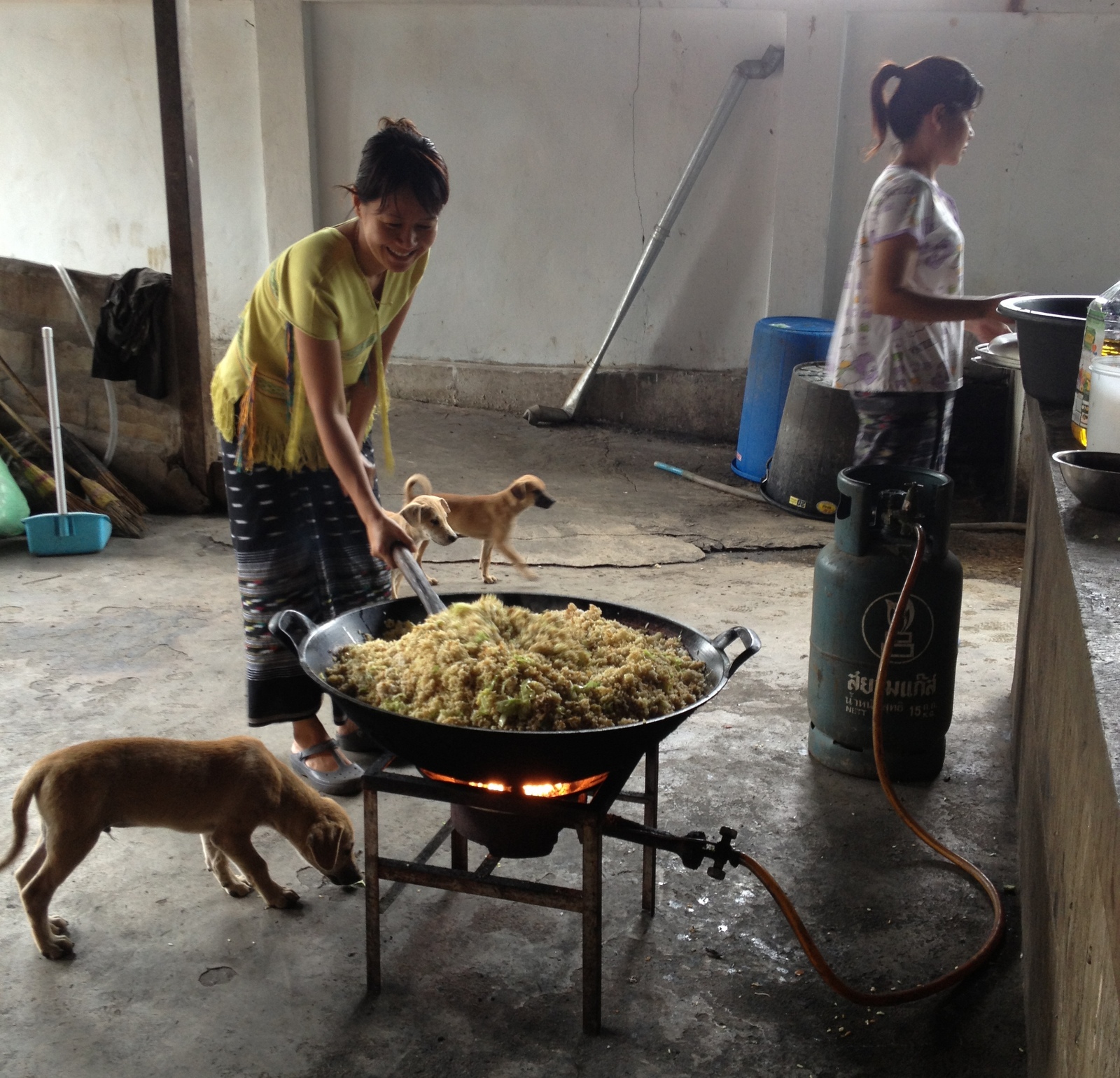
The school boards all of its students. It is located on the outskirts of the city, past an immigration and police inspection checkpoint. Most of the students are undocumented so it is not practical for them to come to school each day so, instead, they just live there. The teachers prepare food for three meals a day. Here is a large batch of fried rice, a very simple lunch. Most weeks, there is the budget to only have meat – chicken bones, for example – about once a week.

20130714-6

The school, along with the orphanage and day care, runs on a very tight budget. This picture is of an enameled metal bowl that is used in the school kitchen. It has been used so long that it has literally worn through in spots. Speaking with the schools’ volunteer director, a young European woman who has been there three years, the list of “nice to haves” include things like new bowls, plastic hangars, and sponges, but that they generally only have the money for necessities.

P1270084


On the afternoon of our departure, several of the older children from the orphanage rode with us to the airport, a chance for them to see an airplane and wave goodbye. As for me, I think it is not “goodbye” but “until next time” because I plan on returning soon.

More importantly, I am going to look for ways to help, whether that is by gathering funds and supplies or by raising awareness. Yes, the world is full of people who need help. These three places seem to be very well-run, doing good work with minimal (maybe even non-existent) overhead, and strike me as a good place to try to make a difference.


Bicycle Riding in Phra Pradaeng

Since our guests are adventurous, outdoorsy sorts, I arranged for a half-day bicycle tour of the “Bangkok Jungle” through Spiceroads.  Located just across the river from the Khlong Toei district (which includes the part of Sukhumvit Road that I live in), this jungle is just that – an isolated and undeveloped section of the larger metropolitan area.  Joining us were a pair of expats, one American and the other British, who I know.

2010-11-30 01

The reason that Phra Pradaeng, the green patch nearly encircled by the Chao Phraya River, has avoided development is that it is actually part of Samut Prakan province instead of Bangkok.  Zoning laws were enacted to limit development in this section of the province.  The area is often referred to as the “lungs of Bangkok” and includes a large public park.

2010-11-30 02

Our starting point for the tour was a restaurant near the Thong Lo BTS Skytrain station.  We rode through a little bit of city traffic, although mostly on back sois (alleys), and then through the slum area of Khlong Toei down near the port.  Finally, we boarded a long-tail boat and left the city behind.

2010-11-30 03

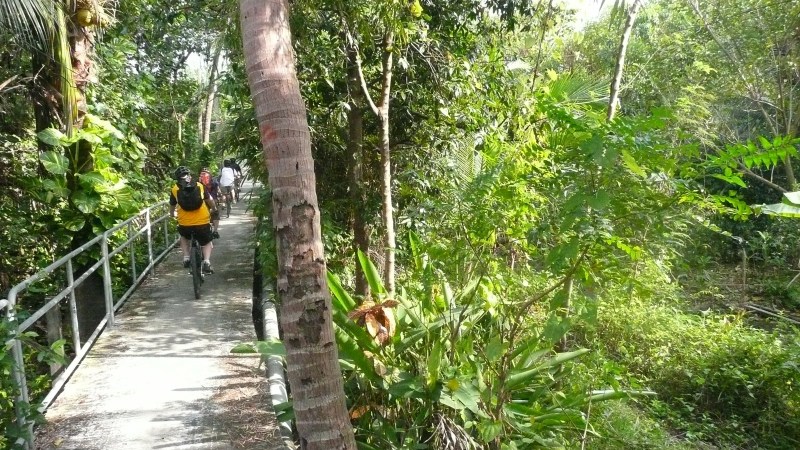
On the other side of the river, any sign of the hustle and bustle of the nation’s capital quickly melted away as we rode along small roads and elevated concrete paths through banana, coconut, and lychee plantations.  Except for the occasional view of a skyscraper peeking over the horizon, you could easily forget where you were.

2010-11-30 04

We had time for several breaks, seeing some of the local sites (which are limited), feeding the fish in the park, and trying a Thai snack of sticky rice and starchy bananas steamed in banana leaf.

2010-11-30 05

Back at the pier as we waited for our boat, some local children swam in the edge of the river, showing off for us by performing ever more daring stunts.  Here, a double flip into murky waters.

2010-11-30 06

Back near our starting point, I peeked in the front gate of a complex that is usually closed.  I don’t know what it is, but it looks almost like a shinto temple.  Very beautiful.

What’s it Like to Live in Thailand?

In the past year using Facebook, reconnecting with old friends, colleagues and classmates, several people have asked me upon learning that I live in Thailand, “What’s it like living there?” I’ve given short, snappy answers (“Well, the Thai food is amazing!”) in lieu of anything more thoughtful. This morning I took a stab at coming up with a better, more substantive answer to that question. What is it like living here?

Part of the reason for not coming up with a better answer in the first place, is that it is difficult to succinctly explain what life is like anywhere – especially when it is very different from life in the questioners’ hometowns. I get up, eat breakfast, work, watch movies, etc. It is the same and, yet, very much not the same.

On Language

The most overriding feature of living in Thailand is the different language. I’ve been here three-and-a-half years and have studied Thai all except two months of that time. It is hard to explain just how big an effect operating in a different language environment can have.

In my home (I work from home) I am immersed in a language in which I’m hyper-fluent. I look at a page of English text and meaning jumps out at me. Comprehension requires no effort.

2009-03-03 01

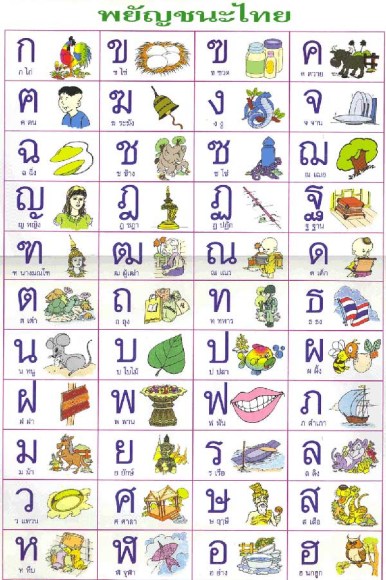
Above: the Thai consonant chart. Each consonant is related to a specific word, similar to “A-Apple, B-Boy” except the word is used consistently with that consonant.

When I step out of my home, I am immersed in a world that is as inaccessible as my English world is accessible. I see the printed Thai script but unless I specifically make the effort to find the words and their meaning, it is just a collection of now-familiar characters: 44 consonants representing 21 sounds, 18 vowels, four tone marks.

The best analogy: playing one of those hidden-word games where words are buried in a grid of letters. That’s how it is when I see Thai: When I look, I see a bunch of Thai characters. I have to look much closer to find the words. Finding the meaning requires yet another step, as I’m at the stage in building my vocabulary where I recognize that I’ve seen a word before, but am uncertain of its meaning.

It is much the same with conversation. If someone is speaking to me and I know what subject we’re talking about, then I am generally okay. I won’t know all the vocabulary, but I can follow along and even contribute a bit. If it is a random conversation into which I stumble, I’ll likely be lost, recognizing some words as they pass by but as unable to grasp onto them as I am unable to board a rapidly-moving train.

That’s the first and most significant aspect of my life in Thailand. I realize, upon rereading what I’ve written so far, that it may sound like a complaint. It isn’t. In truth, Tawn or any other Thai is likely very impressed with my progress. I’m well ahead of 95% of the expats who live here. But I’m also well behind the top 1-2% who are truly fluent in Thai.

Mai Pben Rai

The second notable answer to the question has to do with understanding the Thai mentality – heavily rooted in Buddhism – and the Thai way of looking at the world. Some illustrations:

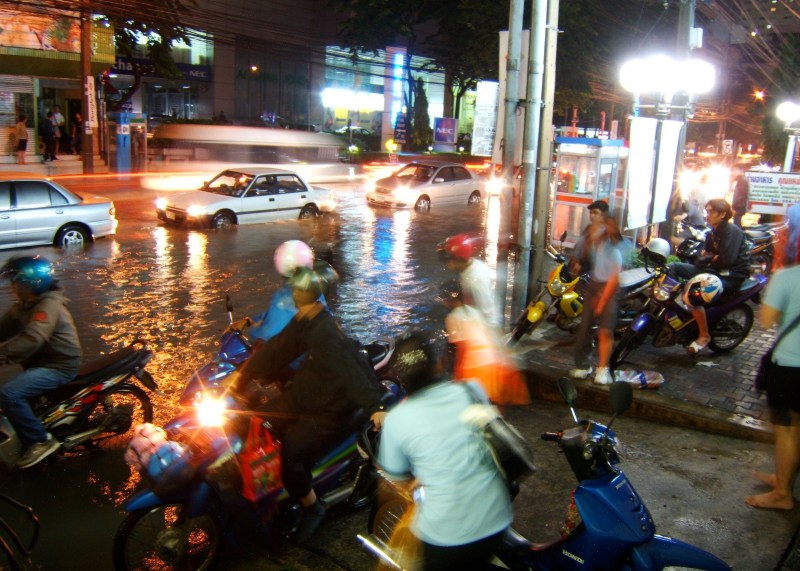
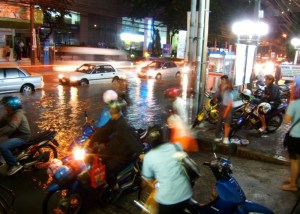
Mai pben rai – literally, “it’s nothing”. This phrase is constantly invoked by Thais to indicate a “no worries” approach to life. You’re running late for class? Mai pben rai. Stuck on a flooded street? Mai pben rai. You forgot to run an errand? Mai pben rai. Not interested in completing the job as promised? Yes, you guessed it: Mai pben rai.
2009-03-03 02

Above: Flooded street leaves you stranded for hours? Mai pben rai!

At first, this can be infuriating. In many (especially Western) cultures, we make a big deal out of things such as being on time, doing what you promise, following up on details, etc.

2009-03-03 03

But Thais subscribe to the belief that you shouldn’t sweat the small stuff. And, it seems, nearly everything is small stuff.

The upside to this is that you learn to be much more sanguine about the world, much more accepting about the truth that our sense of control over most aspects of life is largely an illusion. Stuck in a traffic jam? Mai pben rai – don’t worry, you can’t control the traffic. Unable to watch a film you badly wanted to see? Mai pben rai – maybe it will be available on DVD soon. Caught in a rainstorm without an umbrella? Mai pben rai – just duck into a restaurant for a snack.

Thai culture’s Buddhist roots, with its emphasis on the impermanence of all things, is seen everywhere. From the lack of city planning to the way that most plants are potted rather than being planted into the ground to the quality of sidewalk construction, Thais are wired for short-term thinking.
2009-03-03 05

The Land of Smiles

The Tourism Authority bills Thailand as “The Land of Smiles”. Try telling that to a load of commuters on the un-air conditioned number 38 bus line in Bangkok.

Seriously, though, two features of life here are illustrated by the concepts of suphap (“polite”) and sanuk (“fun”). Thais believe that, regardless of how they think or feel on the inside, the exterior should be polite and pleasant. Why should everyone else suffer just because you are feeling down? Keep a smile on your face and be pleasant to others.

2009-03-03 04

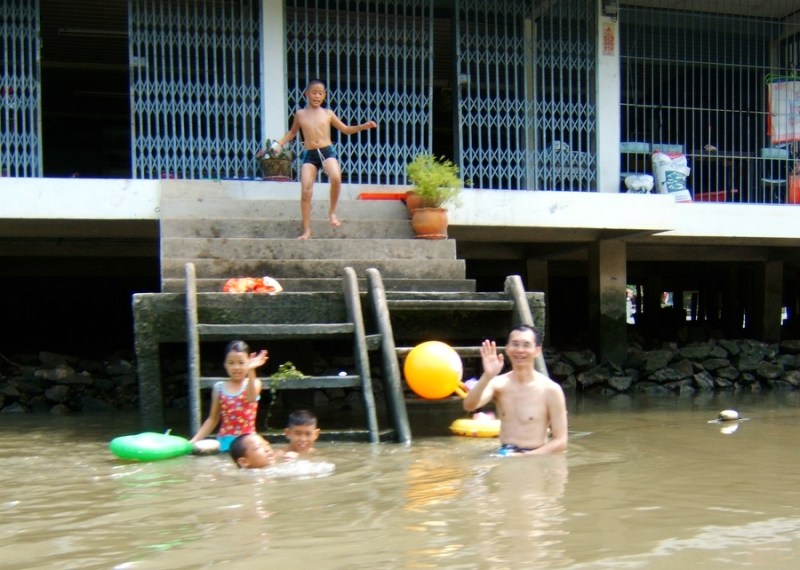
Above: Friendly and polite locals wave as we pass by in a boat.

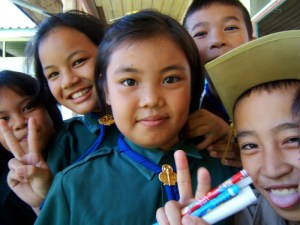
At first a foreigner might mistake those smiles for happiness, agreement, being pleased, etc. Eventually, most learn that Thai smiles have a hundred meanings, only some of which are positive. .

Upon learning this, some foreigners disdain this outward veneer of pleasantness as being artificial. It is hard to explain adequately but perhaps it helps to see the Thai perspective on things:

A Thai walks into a store in Los Angeles and the cashier smiles broadly, asks how her day is going, asks where she’s from and how she likes the weather. The Thai is used to walking into a store in the other City of Angels and being greeted with a pleasantly soft “Sawatdii kha” and the prayer-like wai in which the palms of the hands are placed together in the center of the chest. To an Angelino, the Los Angeles cashier seems very friendly. To the Thai, that same cashier is being over-familiar.

But here’s the contradiction: in the west, if you walk up to someone on the street to ask for directions, their initial reaction will likely be apprehensive and guarded. Especially in an urban environment, they may well wonder if they’re being taken advantage of.

Here in Thailand, when we stop a person on the street and ask a question – “Hey, uncle, do you know where I can find that famous noodle shop with the tom yum broth?” – we get a friendly smile and helpful directions.

I’ve observed this among Thais, so it isn’t just a Thai-foreigner thing.
2009-03-03 06

The Food

Even though my original snappy answer to the question was that Thai food is really good here, it actually is one of the true answers: Thai food really is better here.

When I lived in the US, I thought Thai food was good no matter which restaurant you went to. “Bad Thai food?” I thought, “Surely there is no such thing.” Of course, once I moved here, I realized that there are few Thai restaurants in the US worth eating at unless it is a case of severe gaeng kiaw waan withdrawal.

But beyond that, Thailand has much more healthy, fresh, inexpensive food readily at hand than in the US (and maybe many other places in the west). You’re in the US, it is 3:00 pm and you want a snack. What are your options? Donuts, burgers, fries, tacos, ice cream? None of which are good for you nor really that satisfying.

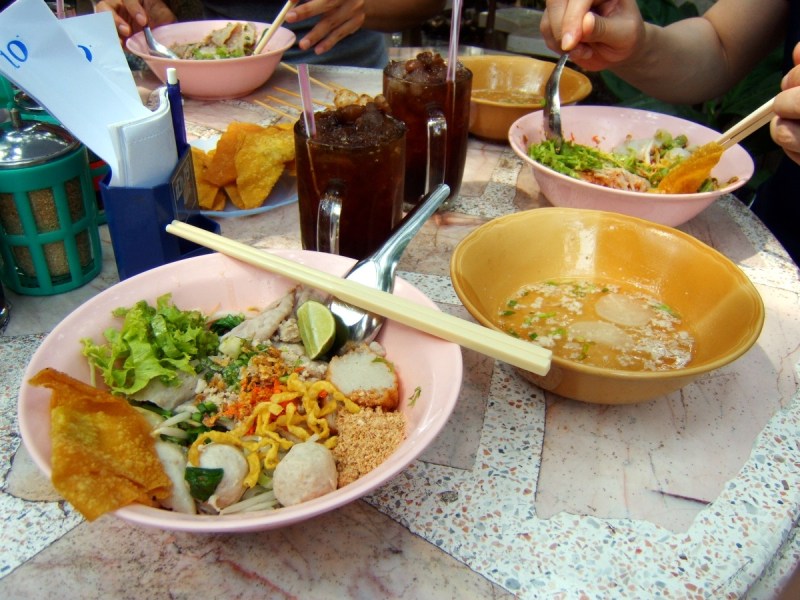
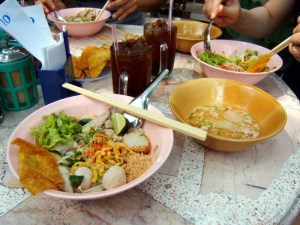
In Thailand, a bowl of noodle soup, a plate of spicy green papaya salad, a stick of grilled fish balls in sweet chili sauce, or a bag of fresh fruit are readily available on most any street corner, are relatively healthy and are very inexpensive.

Sure, Starbucks’ venti mocha frappaccino with extra whipped cream and McDonald’s hamburgers are available here (and the growing incidence of childhood obesity testifies to that fact) but there are so many readily available, healthier options, options that I miss when I’m back in the west.

2009-03-03 07

Beauty and the Good Life

The French have their joie de vivre, the Italians their la dolce vita. Thais, too, are all about ease, comfort and enjoyment of life. Even with some of the world’s worst traffic, Bangkok residents make enjoying life a priority. There is always something fun happening, things are festively decorated, and thinking too much about your cares and worries is discouraged.

People interact more with each other and their surroundings here than in the west. People are more playful, too, but not in the sarcastic or mean-spirited way you see in the west.

There is great beauty. Thai temples and Brahmanist spirit houses are elaborately and colorfully decorated. Fairy lights – what North Americans call Christmas lights – are used to dress up the landscape for no reason other than the sheer fun of having little twinkling lights strung up in the trees.

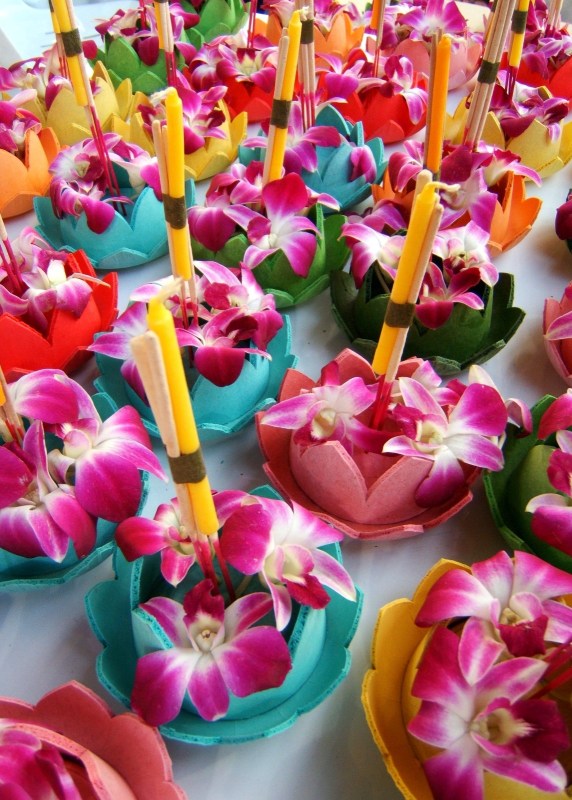
Flowers are very inexpensive, very beautiful and very bountiful here. Every market and many street vendors sell beautiful blossoms and fragrant jasmine garlands. Again, in line with the Buddhist belief in impermanence, potted plants decorate sidewalks and balconies, rearranged endlessly and replaced when they die.

2009-03-03 08

Thais take great care to keep things (including themselves) looking neat and clean even in the midst of the city’s chaos and pollution. Even from the working class houses lining the murky Saen Saeb canal, carefully-groomed residents emerge on their way to work, shirts neatly pressed and great thought given to what handbag (probably a knock-off sold at a discount mall) to carry.

The Social Ladder

Thailand has a very hierarchical society: When two Thais meet, they try to determine who is higher than whom on the social order. This ranking has great effect on all aspects of their subsequent relationship: how to address each other, who serves whom at the table, who pays the bills, who walks out the door first, etc.

This chafes western egalitarianism and takes a long time for foreigners to get used to and understand. It is hard to overestimate how important it is for Thais to understand where they are on this hierarchy.

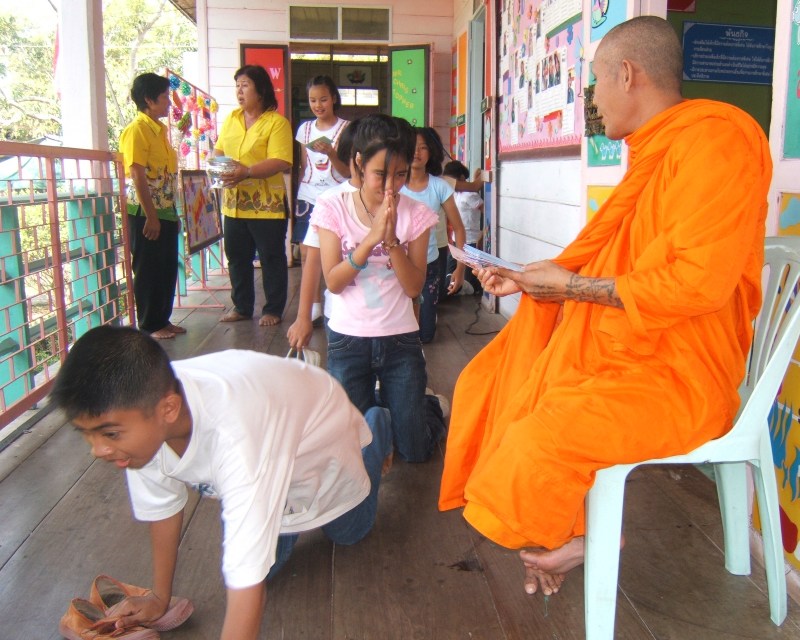
2009-03-03 09

Above: Students behave appropriately, approaching the monk on their knees then crawling past him. Females are especially careful to avoid coming into direct contact with him.

The ways in which this impacts foreigners are numerous and subtle. One expat incorrectly explained to me that foreigners, being guests, always rank highly, just below politicians, royalty and monks. He couldn’t have been much more wrong.

Foreigners are in their own category, separate and measured by another standard, namely, the extent to which you understand and play by the Thai rules.

What’s the practical effect of this? On the Skytrain, for example, I move out of the way for those above me on the social ladder – elders, for example – but not for teenagers.

When I walk past puu yai – literally “big person” or “adults” – who are having a conversation, I duck my head ever so slightly, showing my respect by not towering over them.

2009-03-03 10

Above: Even the leaders of the September 2006 coup were careful to visually emphasize that they knew their place – still below the monarchy.

Remember the scene in the musical “The King and I” (banned in the Kingdom of Thailand) in which Anna Leowens and the King of Siam debate over how high she should hold her head in comparison to the king? It is the same thing – your head you should be lower (or, at least, bowed a little in respect) as you pass by or sit with someone who is of a higher rank than you.

When speaking with monks, I should hold my hands in a wai at my chest. When hanging out with peers in my age group, I can relax and not be so concerned as we’re equals. When teaching at the school and helping a student with his work, he offers me his seat and then kneels next to me as I explain the assignment. Everyone has his or her place in the hierarchy and that place is relative to the people with whom you are interacting.

Small things? Maybe, but ones that show that you know your place in the order of things.

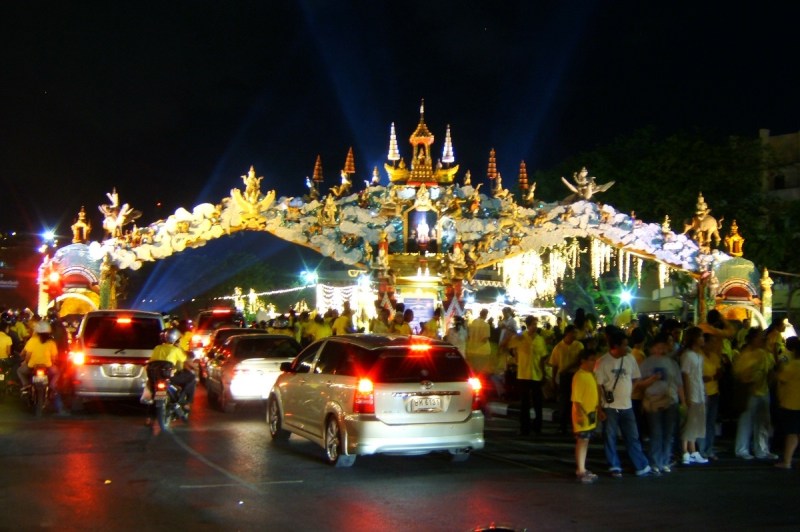
At the very top of the order are the religion and the monarchy. Pictures of His Majesty King Rama IX adorn nearly every house and place of business.

2009-03-03 11

Above: Street decorations celebrating the 60th anniversary of the King’s reign.

At the start of movies and concerts, the audience stands for the royal anthem. If a royal motorcade passes, people stand quietly and respectfully at the side of the road and, if it is the king or queen passing, bow at the waist as their car goes by.

One important facet of this respect for the monarchy is that you don’t – don’t – discuss the affairs of royalty. You don’t ask Thais what they think of the Crown Prince or Crown Princess. You don’t speculate as to who will succeed the King. You don’t debate the merits of a constitutional monarchy or the appropriateness of still having (and enforcing) lese majesty laws.

Even with a Thai with whom you think you’re close, you are best advised to leave this topic alone.

My Final Answer

The final answer to the question of what it is like to live here lies in an additional Thai concept: samruam. Roughly translated, “restrained”. It is related to the previously-mentioned concept of suphap – “polite”.

The thing that keeps this culture going is the emphasis on external appearances, most significantly, keeping up a polite and appropriate appearance and being restrained in your behavior.

For example, Thais believe that the feet – the lowest part of your body – are the dirtiest and least polite part, too. Resting your feet (especially with shoes on) on furniture or the wall, pointing your feet towards someone or an image of the King or the Buddha, or touching someone, moving something or gesturing with your foot, are all hugely mai suphap – impolite.

In fact, the slang term for “foot” is muu farang – foreigner’s hand. That’s because westerners are more inclined to push, gesture and touch with their feet – actions the Thais associate with being coarse and unrefined. In other words, being a foreigner.

You see this in the way people sit in public: feet flat on the floor or, if a woman crosses her legs (not very suphap), it is done with legs tightly together and the foot pointed down. On the Skytrain last week, I observed a foreigner sitting with his legs stretched out across the aisle, pointed towards a lady on the other side of the car. Had he not been absorbed in the pictures on his phone, he might have noticed the dirty looks other passengers were giving him.

Samruam – restraint – is related to suphap. Thai culture is about moderation in behavior, voice, feelings, etc. Thais are fun-loving people but rarely boorish, loud or obnoxious. Thais get upset but rarely do you see public bursts of anger.

The recent prime minister, Samak Sundaravej, caused quite the stir because of his famous outbursts. When questioned by a female reporter once, he avoided answering by accusing her of not having enough sex. In general, prime ministers aside, losing your temper diminishes your public standing. To berate someone publicly is an invitation to revenge.

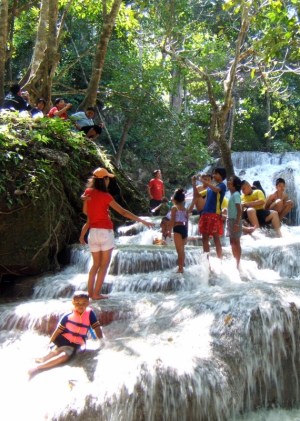
Thais dress modestly. When a foreigner is sitting at a restaurant on a sunny day and takes off his shirt to enjoy the sun, Thais are taken aback. (I’ve witnessed this. I wanted to say something but restrained myself – confrontation is seen as even worse than being not samruam.) Women in spaghetti strap tops are assumed to be bar girls or sex workers. If they are foreigners, the fact that their foreigners (again, course and unrefined) is their excuse.
2009-03-03 12

Above: Even at the Erawan Waterfall, Thais are dressed with relative modesty. Only foreigners and young children show bare shoulders.

On the surface, this may sound prudish. But to really understand it, you have to remember that in Thai culture, it is important to keep up appearances. Loud, obnoxious, revealing and unrestrained clothing/behavior/manners don’t keep proper, considerate appearances up. They make life less pleasant for everyone else.

And that’s an important part of life here. That’s why, despite the heat and humidity, I rarely wear shorts (even cargo shorts) out of the house. And when I do, it is only for Saturday morning errands in the neighborhood, never out for dinner.

Conclusion

So what is life like here? Living in the environment of a different language makes it very challenging but opens worlds of understanding. The mai pben rai attitude is more relaxed, less worried, and occasionally frustrating when you want to get something done.

Politeness, appropriateness and fun are values that influence all aspects of life and behavior, generally making social interaction smoother and more pleasant. Knowing your place in the hierarchy of society makes you more considerate of others and, in return, you receive more respect from others, too.

Finally, from food to flowers to music, life here has a lot of good things to offer, even when they aren’t expensive or are surrounded by a chaotic environment.

I hope that I’ve given you a bit of an answer to what life is like here. As you can probably see, it is hard to describe it succinctly. The only short answer I can think of is:

“Requires different operating instructions.”
Buriram Part 2 and More

Let me go back into the details about our trip to Burriram province, with our friend Trish.

Silk Factory

We went up to this province about five hours to the northeast of Khrungthep, to locate sources of silk for Trish’s new custom-made dress business.  Many of Thailand’s provinces are known for their silk, but the Nakhon Ratchasima (aka Korat) and Buriram provinces are known for their high quality and simpler styles.  Provinces in the north of the country have more decorative styles of weaving.

While there, we visited several silk shops and a factory, we had a brief visit with some of Tawn’s relatives, and we went to see some ancient Khmer ruins.  Here are the details:

Silk, Silk Everywhere

After visiting a few different retail silk shops, Tawn was able to get hold of one of his cousins, who recommended a particular silk factory located in Pak Thong Chai (see map above) with whom she’s worked before.  Tawn called the factory, which was not far away, and one of the employees met us at the silk shops to guide us there.

Located a kilometer back from the main road in a nondescript and unmarked set of warehouses, the factory was much different from what I had expected.  I shot a lot of video footage and will find the time to edit it in the next week or so, but in the meantime let me share some photos with you.

The owner walked us through the entire production process and was happy to have me take photos.

P1110909

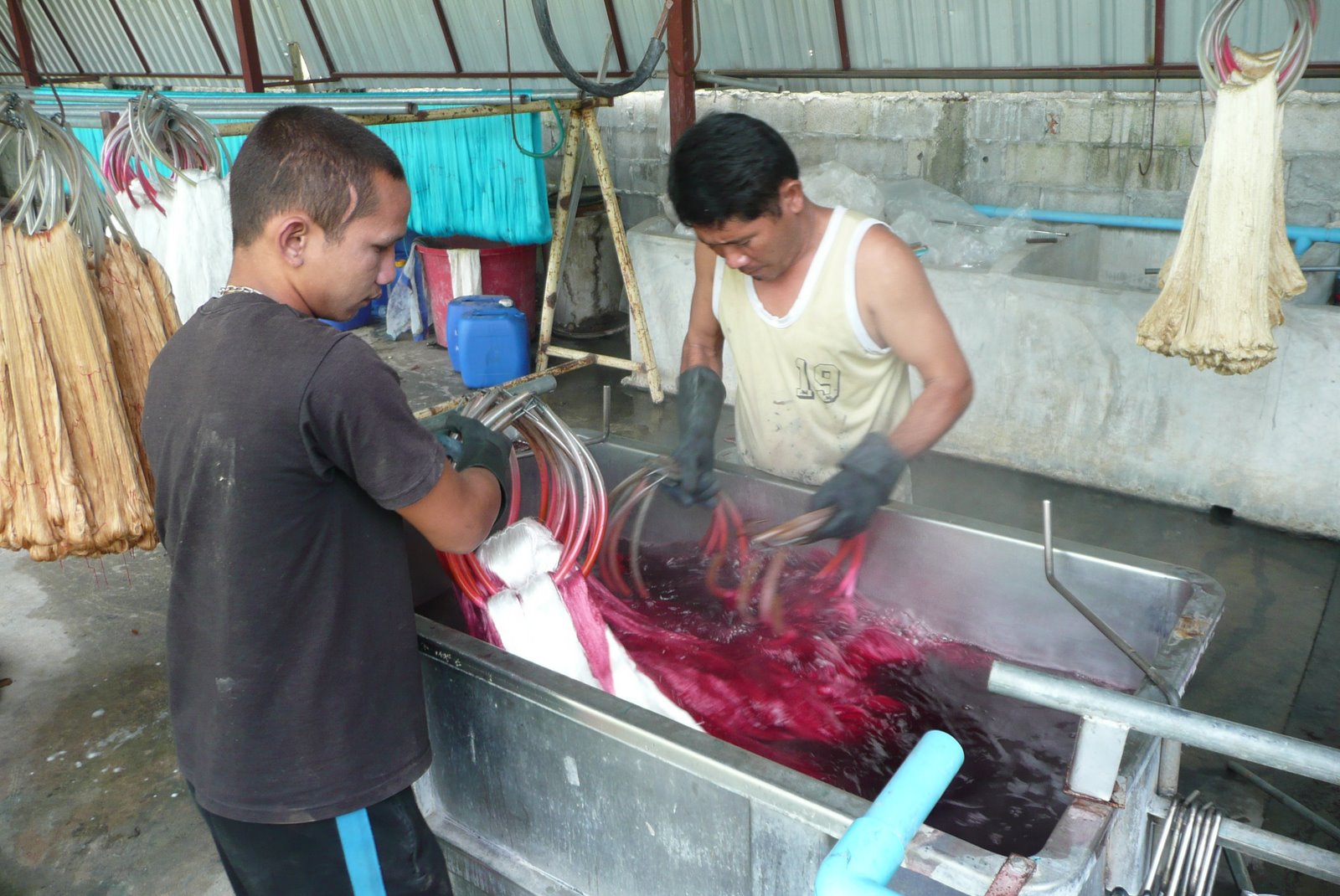
Raw silk hanging in hoops before being dyed.

P1110840

The silk is manually dyed, relying on the skill of the workers to match a particular shade.

P1110849

A row of drying silk that has been dyed a brilliant turquoise blue.

P1110863

Trish and Tawn watch the dying process.

P1110868-1

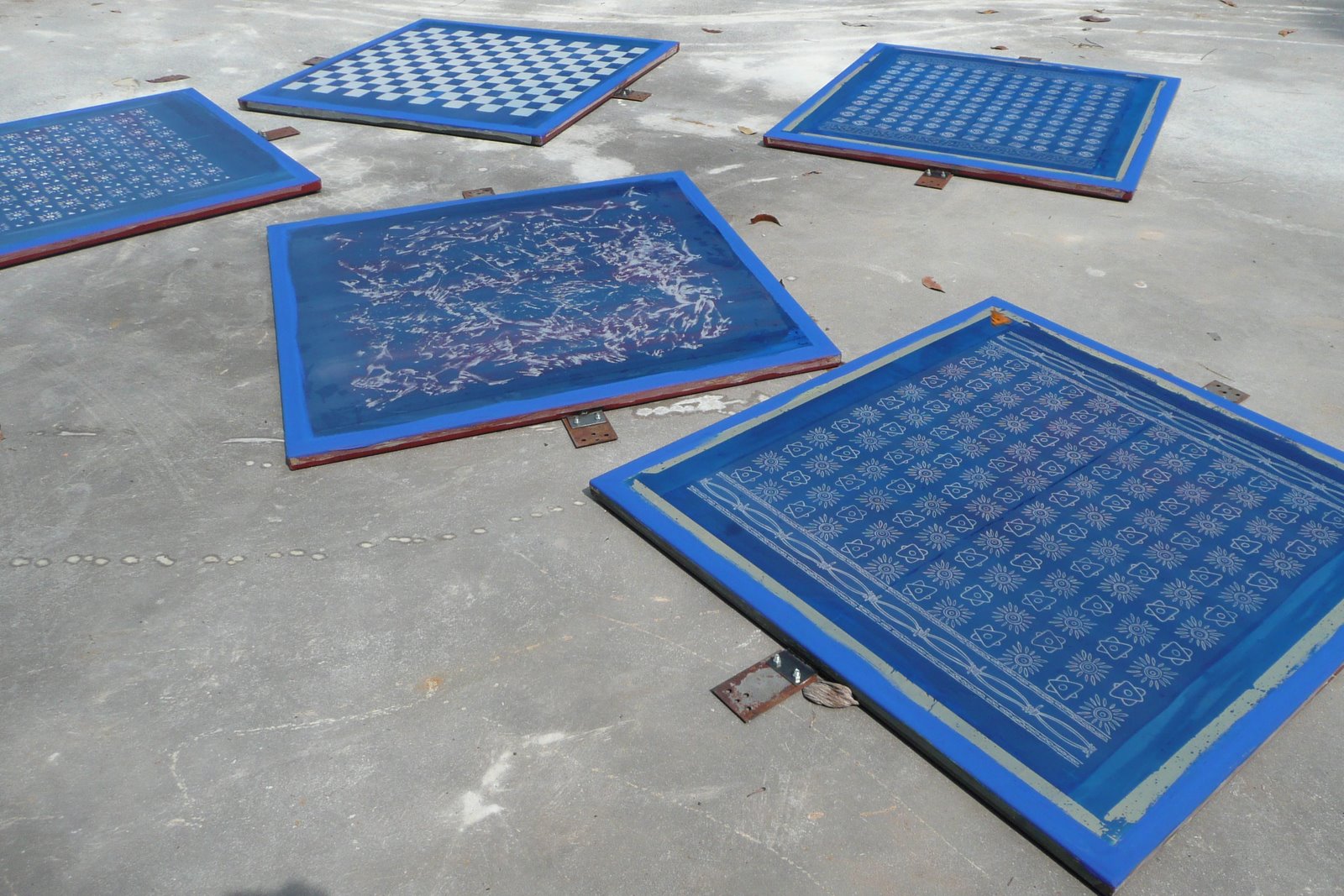
Custom made screens used to print patterns on the silk, hence the term silk-screening.

P1110875-1

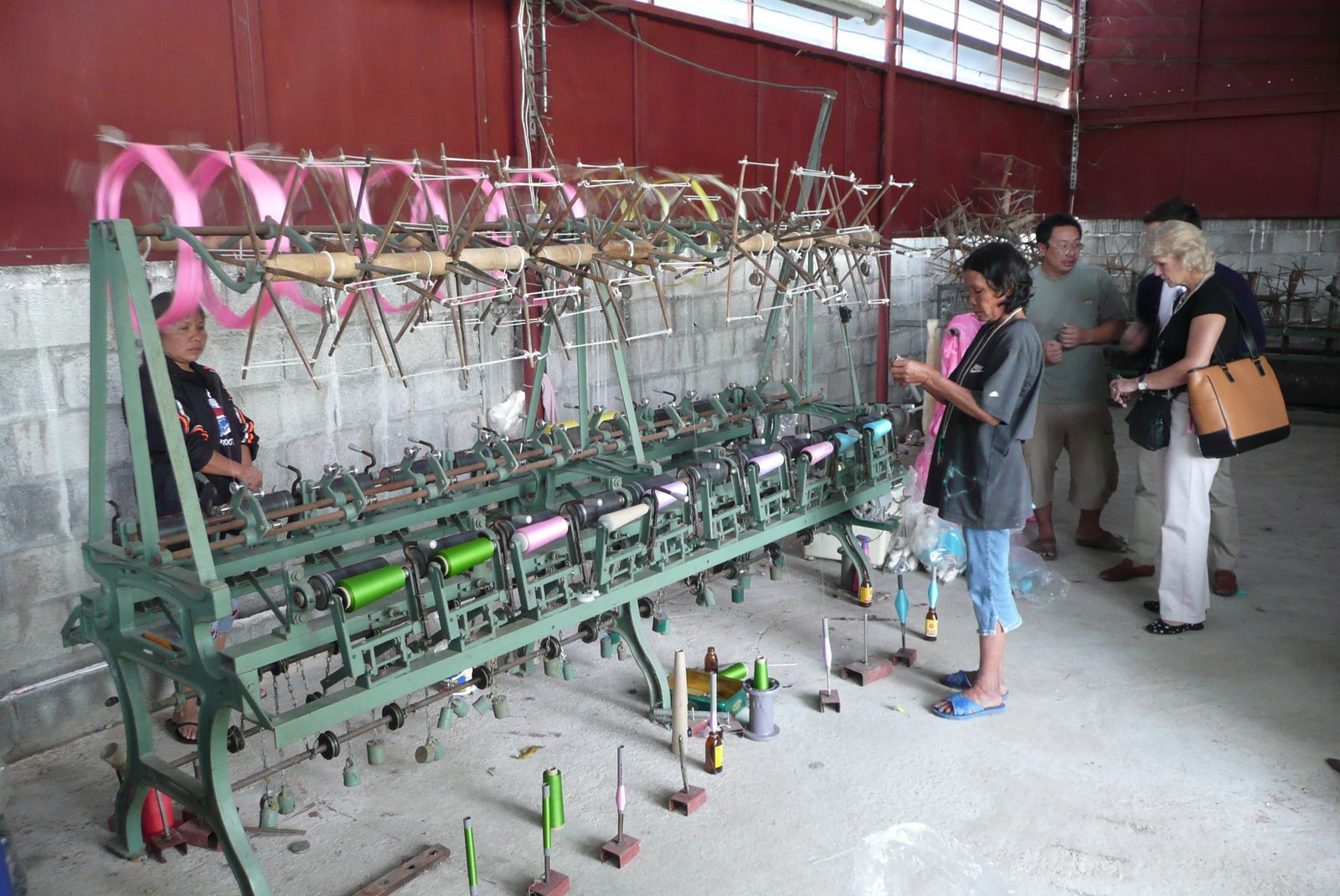
Dyed threads are wound onto spools.

P1110890-1

The looms, which are automated but require the constant attention of workers.

P1110895-1

The factory manager explains the process to Trish and Tawn.

P1110905

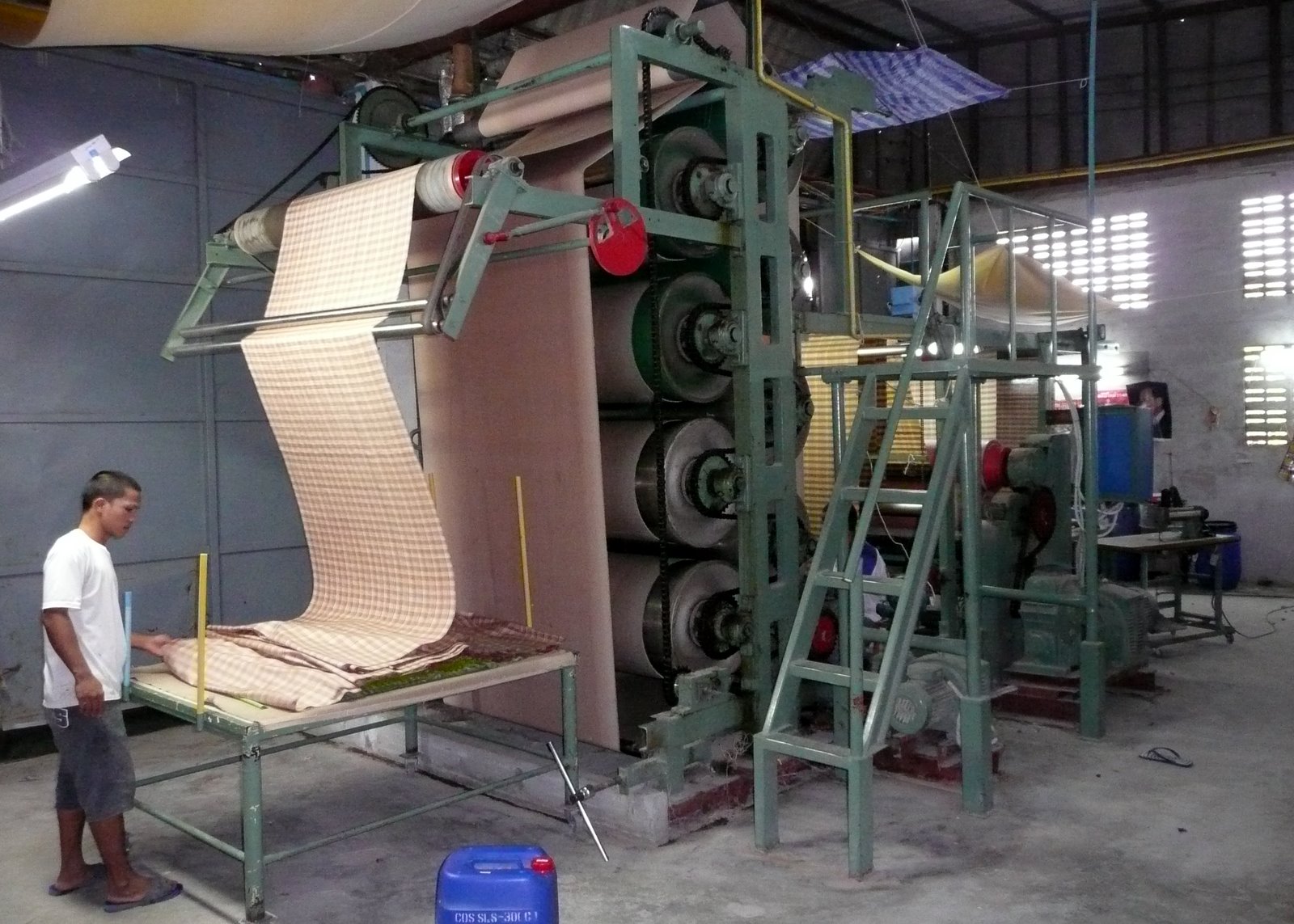
These heated rollers finish the silk, making it smoother to the touch.

P1110928

Finally, sample batches of silk for Trish to sort through.

Here’s a video that runs down the process.

We spent three hours at the factory that first day, learning about silk, looking at different colors and patterns, and finally making clear what it was we were looking for.

By the time we left for Buriram, the sun was already setting.


Buriram

Saturday morning we started with an early breakfast at a restaurant owned by one of Tawn’s cousins.  A typical Thai restaurant, there were shelves and shelves filled with kitchy collectables, below.  Trish had her first authentic Thai breakfast, various gap khao (“with rice”) dishes including some fried fish, a curried fish mousse and mixed vegetables.

P1110936

Our tour guide, a friend of Tawn’s cousin, met us at the restaurant.  She is a retired primary school English teacher, so spoke English well enough to comfortably make corny jokes.

Our destination was Phnom Rung Historical Park, located just 30 km shy of the Cambodian border south of the main city of Buriram.  This Khmer style Hindu temple dates back to the 10th century and is one of the best-preserved examples of Khmer architecture in Thailand.

P1110939

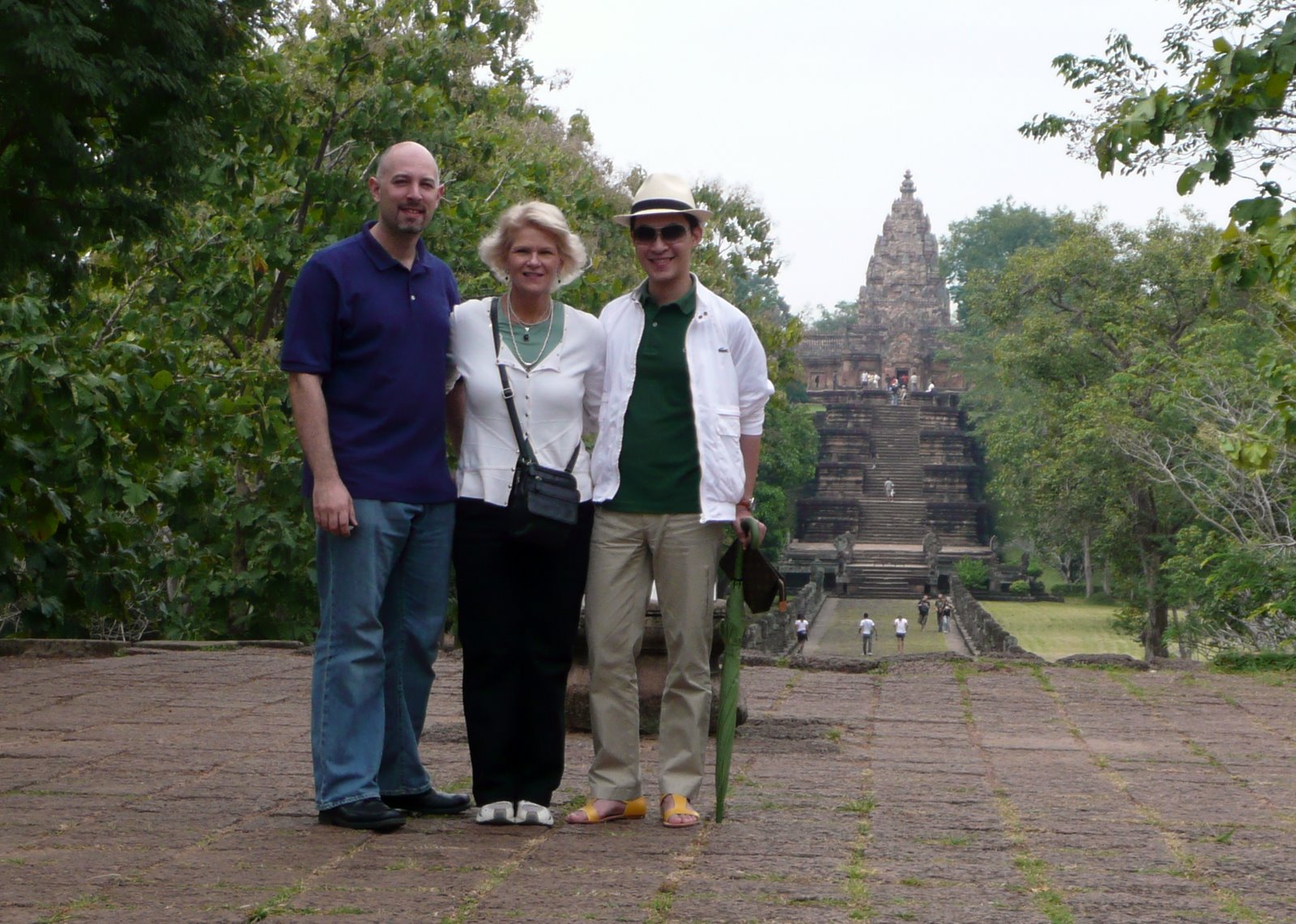
We stand at the far end of the promenade, a quarter-mile long processional walkway that connects the lower stairway with the main temple complex.

P1110961

Standing in front of the main temple complex and the second naga bridge.  You see two of the four pools of water that represent the four oceans and the raised platform represents the bridge between the human realm (between the four oceans) and the heavenly realm, where the temple is.

P1110971

The amount of symbolism in the construction of the Hindu temples was amazing. This is the main tower, or prang.  It is covered with depictions of gods, humans, hermits, snakes, dragons and all of manner of beings.  Our tour guide spent about ninety minutes giving us the run-down on this temple and afterwards explained that she had exhausted maybe only ten percent of her knowledge about the temple.

P1110979

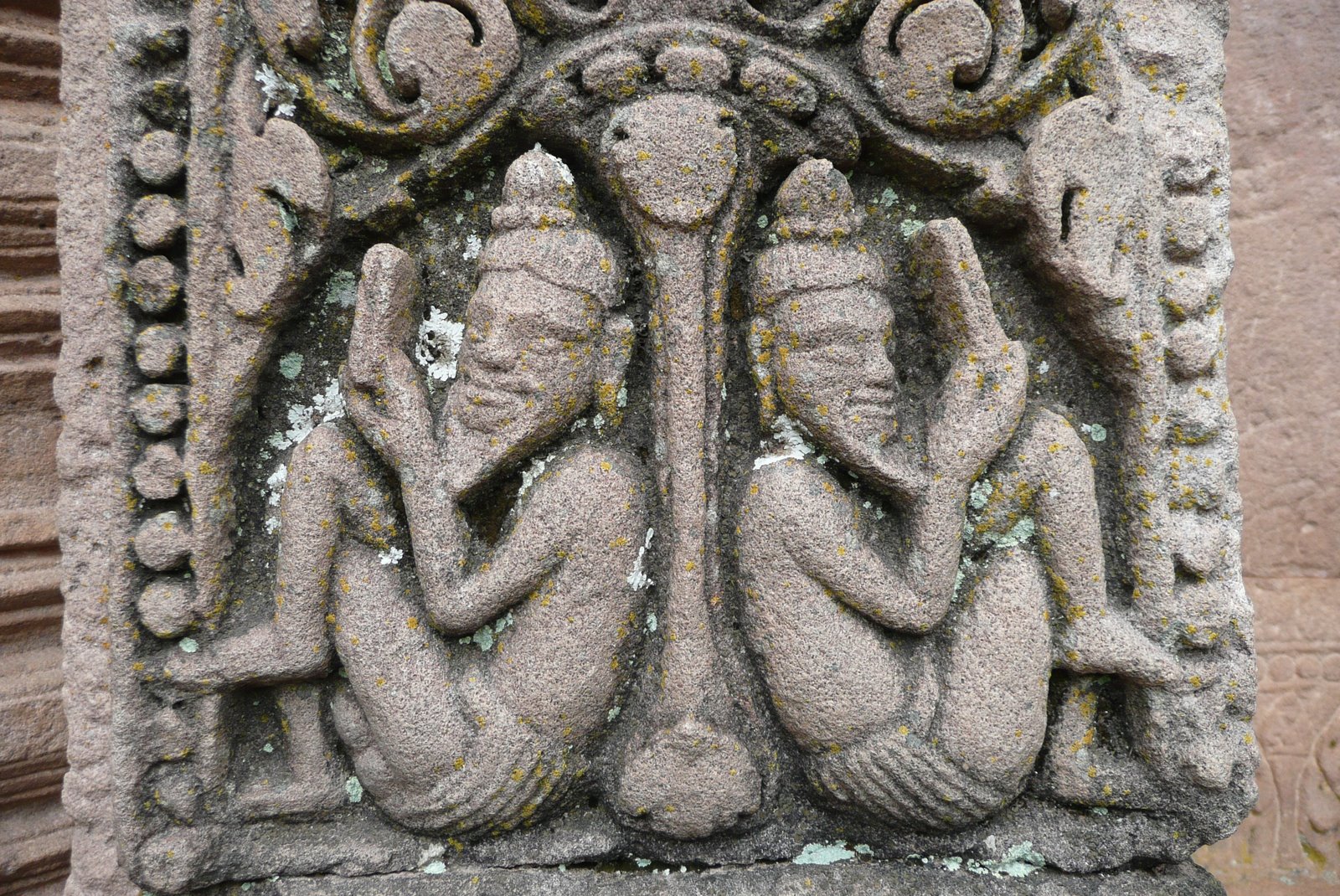
To give you an example of the sort of knowledge she had to share, she explained that this detail (it shows an area about the width of two hands) showed two hermits reading copies of Playboy magazine.  One of the hermits, she said, was obviously not wearing any underwear.

Can you see which one doesn’t have any underwear?  (Answer at the end of the post.)  This was the type of humor we enjoyed all morning.

The construction of the temple was amazing.  It is made out of sandstone and instead of carving blocks then putting them into place, they instead stacked all the blocks (which were not always regular sizes) and then carved away to reveal the detail they wanted.

P1110949

In this picture, you can where the blocks were carved to make the steps.  The block in the center top of the picture has many different faces as it was carved to be part of two separate steps as well as the adjacent wall.  This made the construction all the more difficult.

P1110966

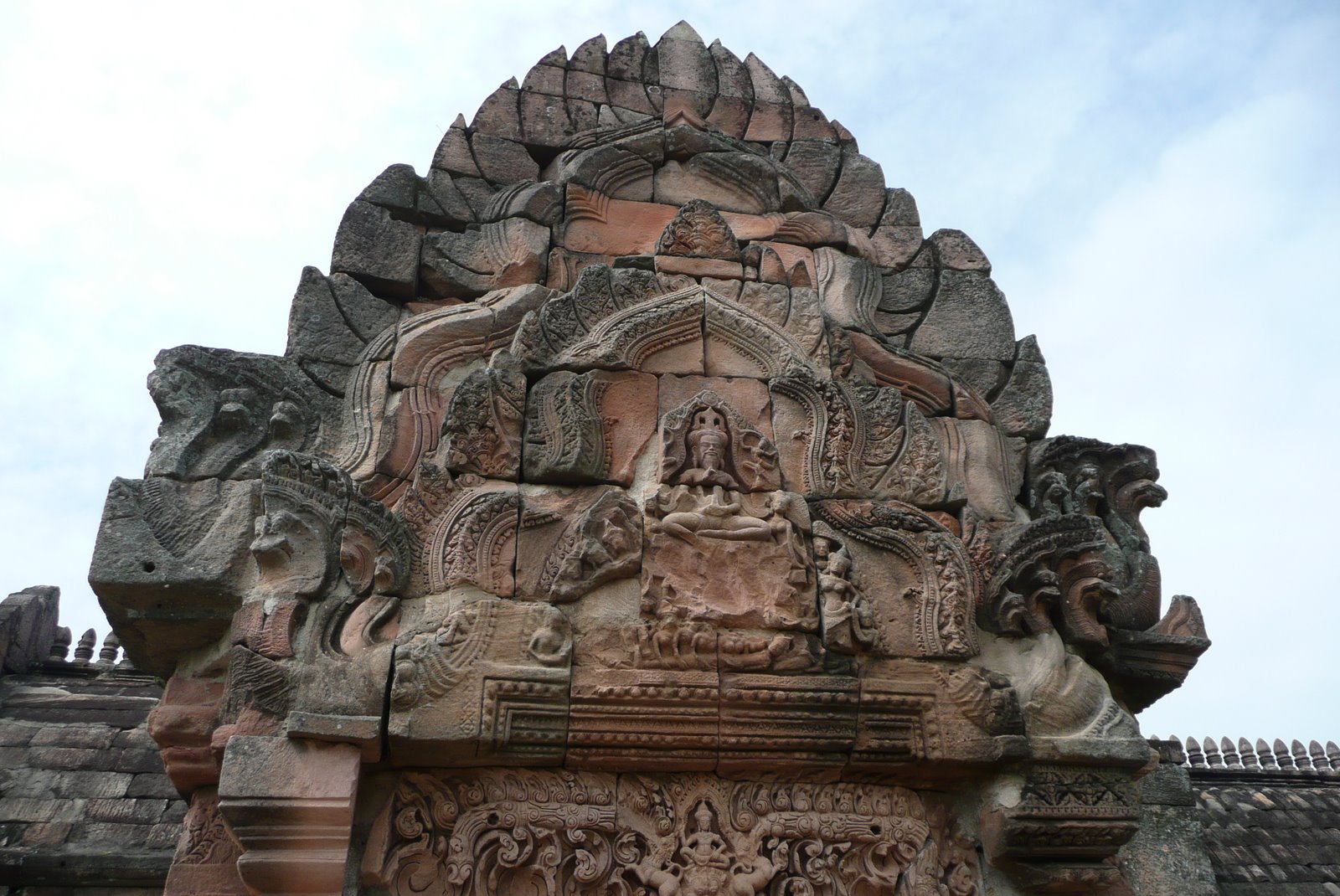
Detail of the principle prang.  This temple was primarily devoted to Shiva, one of the supreme dieties of the Hindu religion.  Shiva is depicted in the center of this panel.  Remember that with the way the temple was constructed, this was just a solid stack of limestone blocks.  The artisans had to chisel away to make all the ornamentation.  Because of that, mistakes could not be undone as there was no practical way to remove a block and replace it.  I think that makes the detail all the more amazing.

Like most historical sights, there is a lot to digest and after a few hours, a break is needed.  Since we had only a limited time in the province that weekend, we wrapped things up and dropped our guide off in the main town of Buriram just after noon.

Back in Town

After a quick bite of bami moo daeng – egg noodles with barbeque pork – we stopped by a local coffee shop for a latte.  So far we had consumed only Nescafe, which isn’t real coffee even though it seems to be the national coffee drink of Thailand.

P1110983

We found a “real” coffee shop that had espresso machines, but when we asked for lattes the young lady said they couldn’t do lattes as they didn’t carry fresh milk.  Strangely, though, they offered cappuccinos.  Tawn inquired how they made cappuccino with no milk and she pulled out a pitcher of sweetened condensed milk.

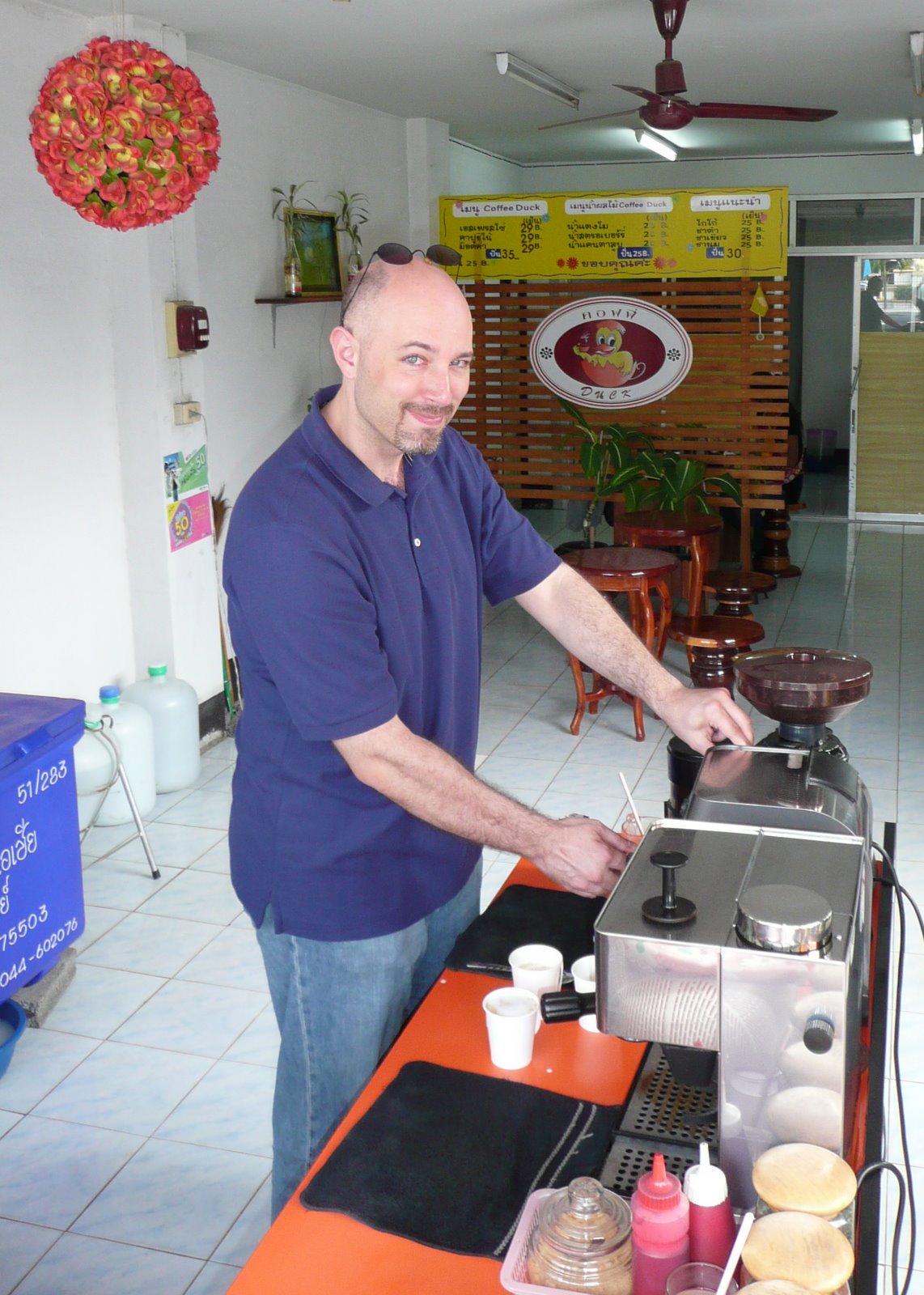
Really wanting my afternoon latte (which my Italian cousin will no doubt shake her head at, as espresso drinks with milk are strictly for the mornings, right?), I asked whether we could comandeer her espresso machine.  Like most Thai employees, she was a bit overwhelmed by the confrontation but didn’t say no.

Next door was a pharmacy that had a refrigerator of bottled drinks, including individual cartons of milk.  I bought two, poured them into a glass measuring cup, and started frothing the milk while she pulled espresso from another machine.

P1110989

Thankfully, I do have some training on this.  Back in the days when I managed movie theatres, we had cafes that featured Starbucks equipment and coffee.  As such, we had access to expert training and so I learned how to froth milk like nobody’s business.  I’m all about the velvety foam.

Ten minutes later, we had a trio of nearly perfect lattes.  Along the way, Tawn had kept imploring the young lady to pay attention so she could learn how to do this, but she didn’t seem to want anything to do with our milk steaming.

As we left, she was no doubt glad that we were out of her shop.  We tipped her well though and I walked away with the cocky satisfaction of someone who has brought civilization to the natives.  Ah, the espresso drinker’s burden.

P1120001

We stopped at one final silk shop after lunch. While Tawn and Trish ooh’d and aah’d over the beautiful textiles, I was busy watching a pair of city maintenance workers install a new street light.

It was pretty amazing.  They pulled up in a pickup truck, a pair of lights in the back.  A bamboo ladder was leaned against the concrete electrical pole and a young man climbed up.  He slid a mounting onto the pole, fastened it into place, and then his coworker climbed up the ladder and handed the light fixture to him.

It took a few minutes for him to slip it into place, strip the wires and push them into one of the passing power lines.  Try as he might, though, the light wouldn’t illuminate.

Thankfully, they had a second lamp in the truck, so he unfastened the lamp and changed it out.  We left before the second lamp was installed, so I wonder if he had any success.  One thing that caught my attention, though, was just how little in the way of safety equipment they had.  No helmet, no protective gear, and he wore only flip-flops on his feet.

Occupational safety and health administration?  Nope.

Uncle’s House

We stopped by Tawn’s grandfather’s house.  Tawn’s father is the ninth of twelve children and the old family compound is now owned by his oldest uncle, the fourth child.

After years of hearing Tawn tell stories about his childhood visits to stay with his grandparents, it was fascinating to finally see the place.  Tawn’s uncle and several cousins graciously welcomed us and we sat around a table, eating mooncakes and drinking water and visiting.

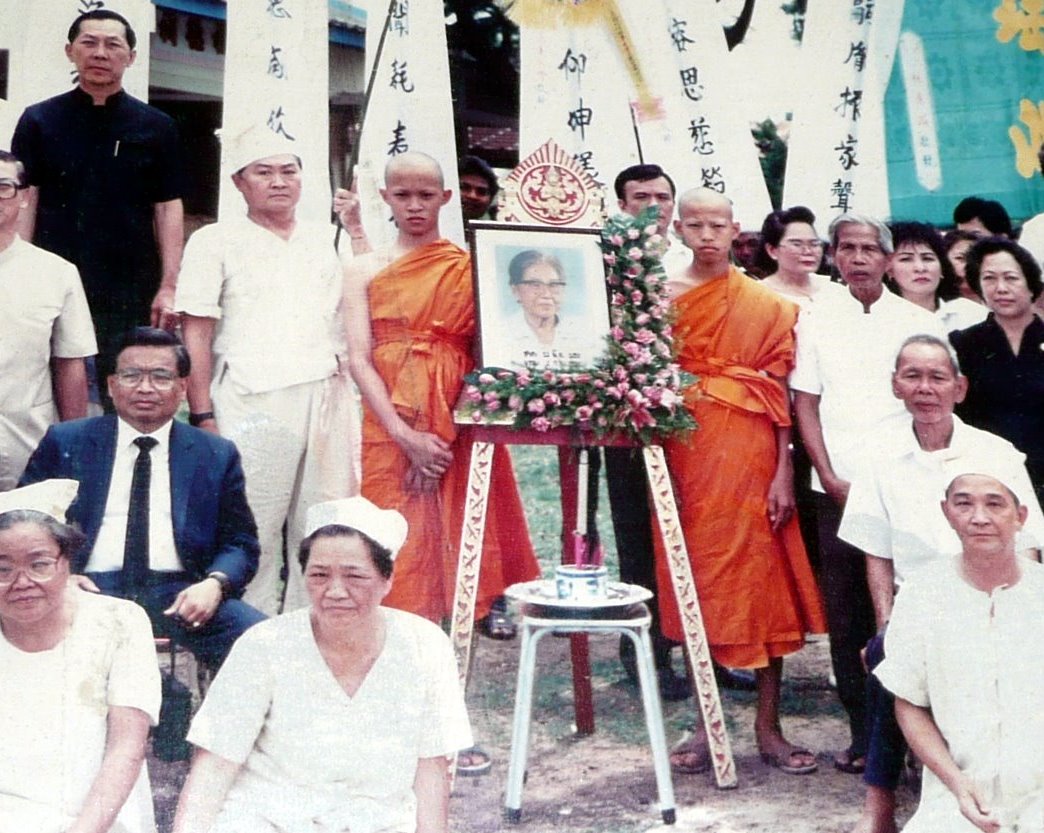
The most fascinating thing on the wall: a picture taken at the funeral of Tawn’s grandmother.  It was a panoramic portrait of the more than three hundred family members who gathered at her cremation.  Tawn and one of his cousins went into the monkhood for a day to earn merit for their grandmother.  Tawn’s the one on the left.

P1120003-1

Tawn, who was maybe 13 at the time, doesn’t look too happy about his new haircut.  This was the only time Tawn has been a novice in the Buddhist monkhood.

Speaking of teenagers, Tawn has a second cousin, Toy, a fifteen-year old who will be going to the US as an exchange student next August.  We visited with him, giving him a chance to practice his English.  Tawn suggested that we could coordinate a trip to the US while he is there so that he has the opportunity to visit other parts of the country besides the one where his host family is located.  He has not been assigned a specific location yet.

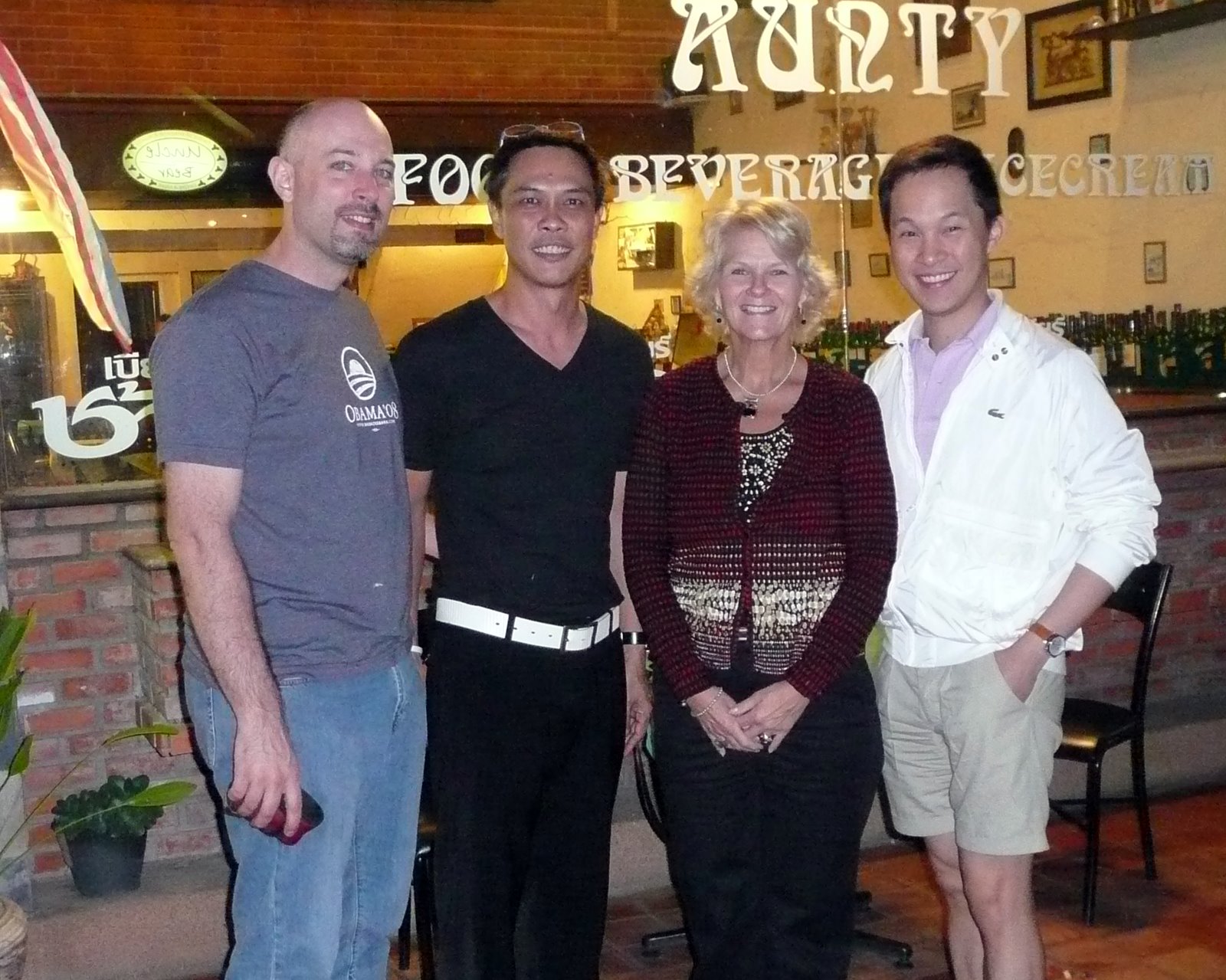
In the evening, after a few hours of relaxing at the hotel, we met another of Tawn’s cousins, Mee, for dinner at his restaurant.  Mee has visited us in Bangkok before and it was very nice to see him again.  His restaurant serves Thai food with slightly modern twists and everything was delicious.

P1120010

The “Aunty” in the restaurant’s sign refers to Mee’s mother, not to Mee!

Birthday Burger

Sunday was my birthday.  We started the morning with a quick hotel breakfast and then stopped at another coffee shop (this one had milk) for lattes before hitting the road.

P1120015

Next door to the coffee shop/bakery is a bookstore.  Just inside the door of the coffee shop is a sign. If reads, “Full stomach already, but is your brain full?  Books and journals, please go this direction.”  Quite clever.
We stopped back by the silk factory for another two and a half hours.  The owner had arranged for us to peruse a broad range of colors and we finally made some purchases.  Unfortunately, after returning to Khrunthep, Trish discovered that some of the silks were not two-ply as we had been told, but only one-play.  Tawn is working with the factory owner to fix that.

P1120022

Our final stop on the way in was Chokchai Farms, Thailand’s largest cattle operation.  There was a huge crowd as people went on farm tours, ate at the steak house, and bought ice cream.  We decided to stop for a steak burger to celebrate my birthday.

P1120020

The burgers were pretty tasty, although they had way too much mayonaise on them, which seems to be a Thai thing.  Trish claims this was the first burger she has had in fifteen years.  Glad we were able to knock her off the wagon.

Video of the experience.

P1120025

Afterwards, we had some ice cream, bought some snacks, and I tried to milk a huge cow. Look at its expression!

We returned to Khrungthep a bit after sunset, pretty exhausted after our weekend up in the northeast.


Answer: The hermit on the left is blowing in the breeze.

Bruce’s Visit – Part 2

To recap the bulk of the rest of Bruce’s visit, we had a very busy several days as I played tour guide and tried to show him several different slices of our life in the kingdom:

Floating Market

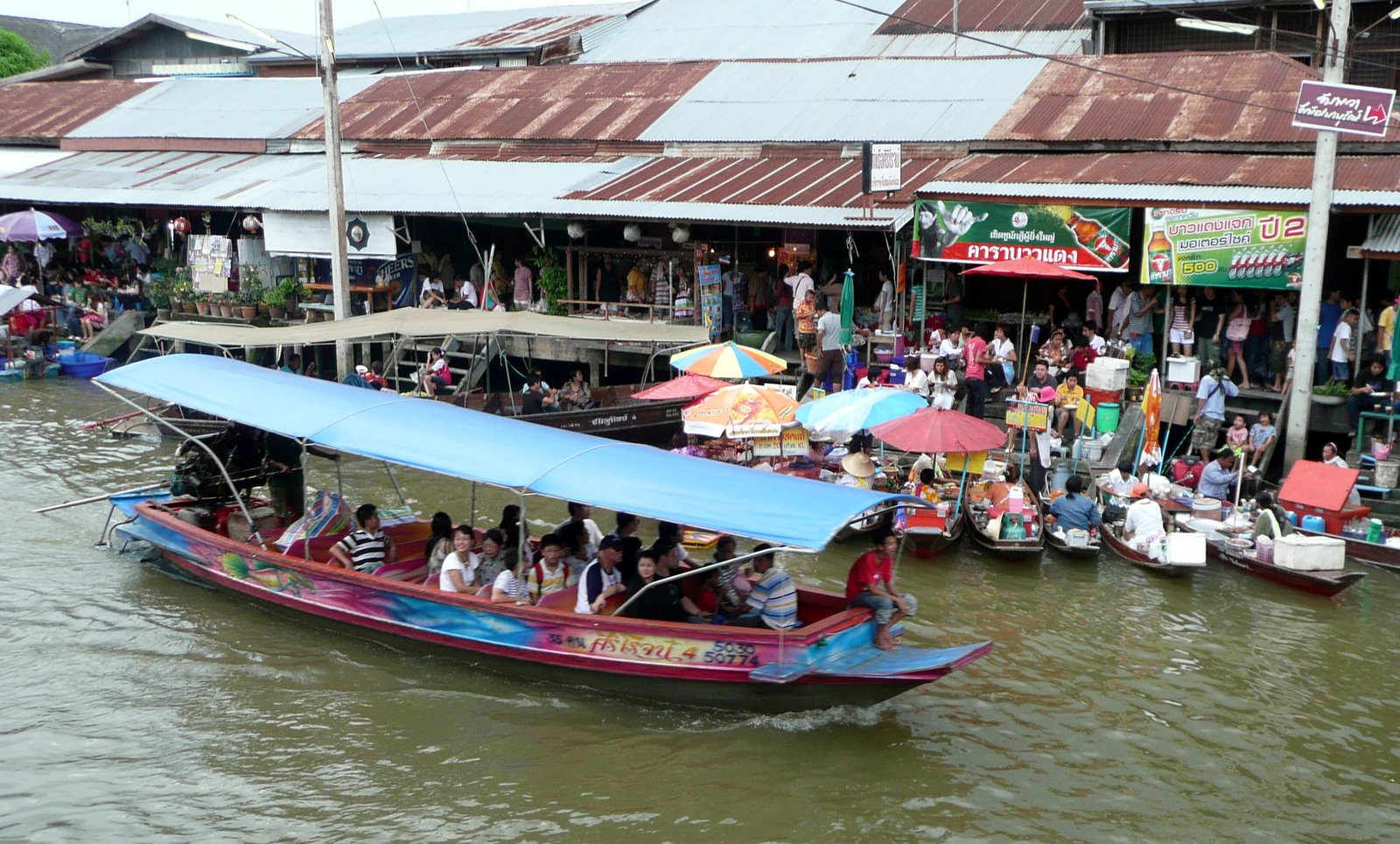
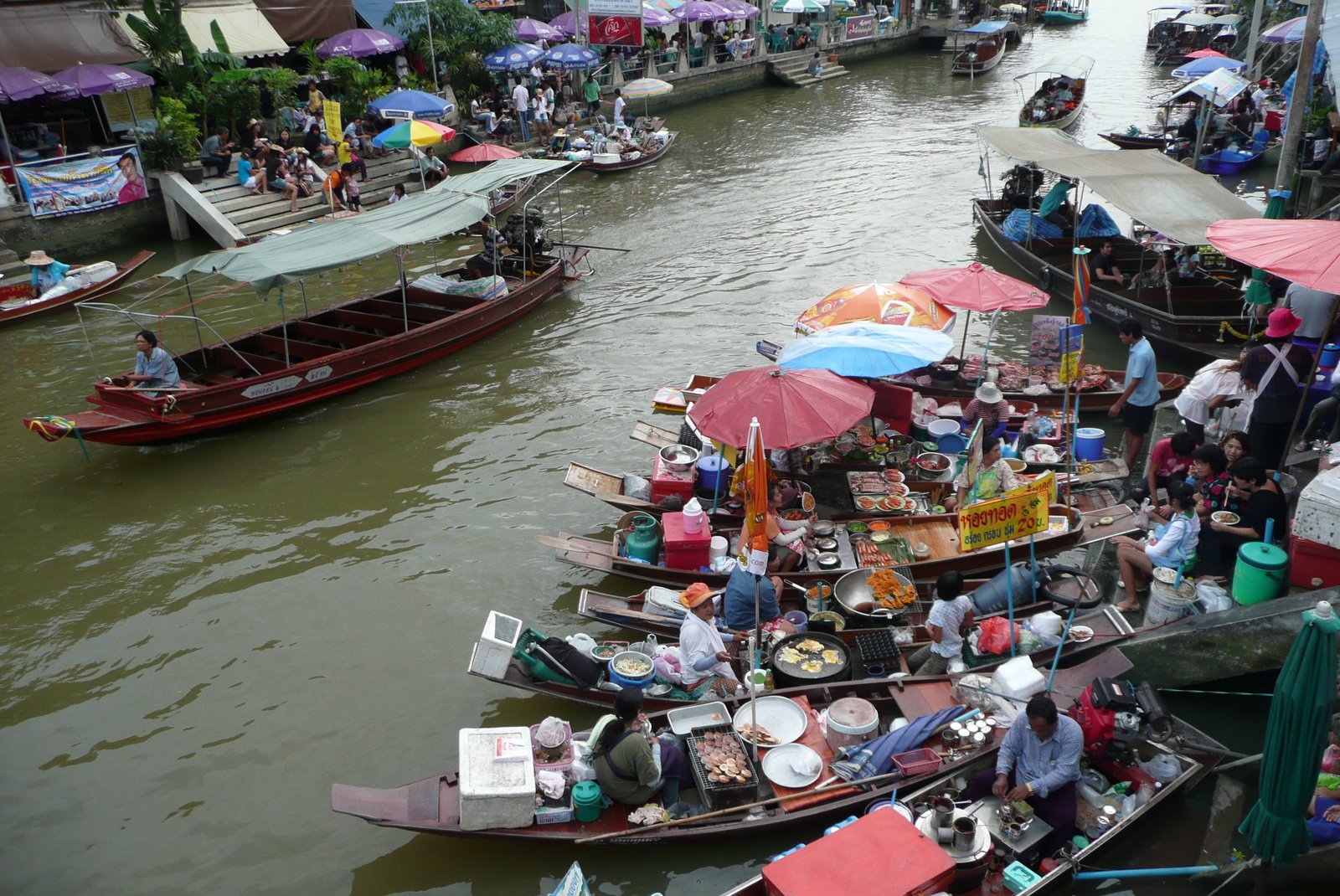
After the year and a half of volunteering as an English teacher at Bangkhonthiinai village, I became very familiar with Samut Songkhram province – Thailand’s smallest – and especially the weekend nighttime floating market in the town of Amphawa.  My debt of gratitude to Ajarn Yai, the former director of the school, is deep as she has been a gracious host anytime I have guests to bring to the floating market.

P1100419

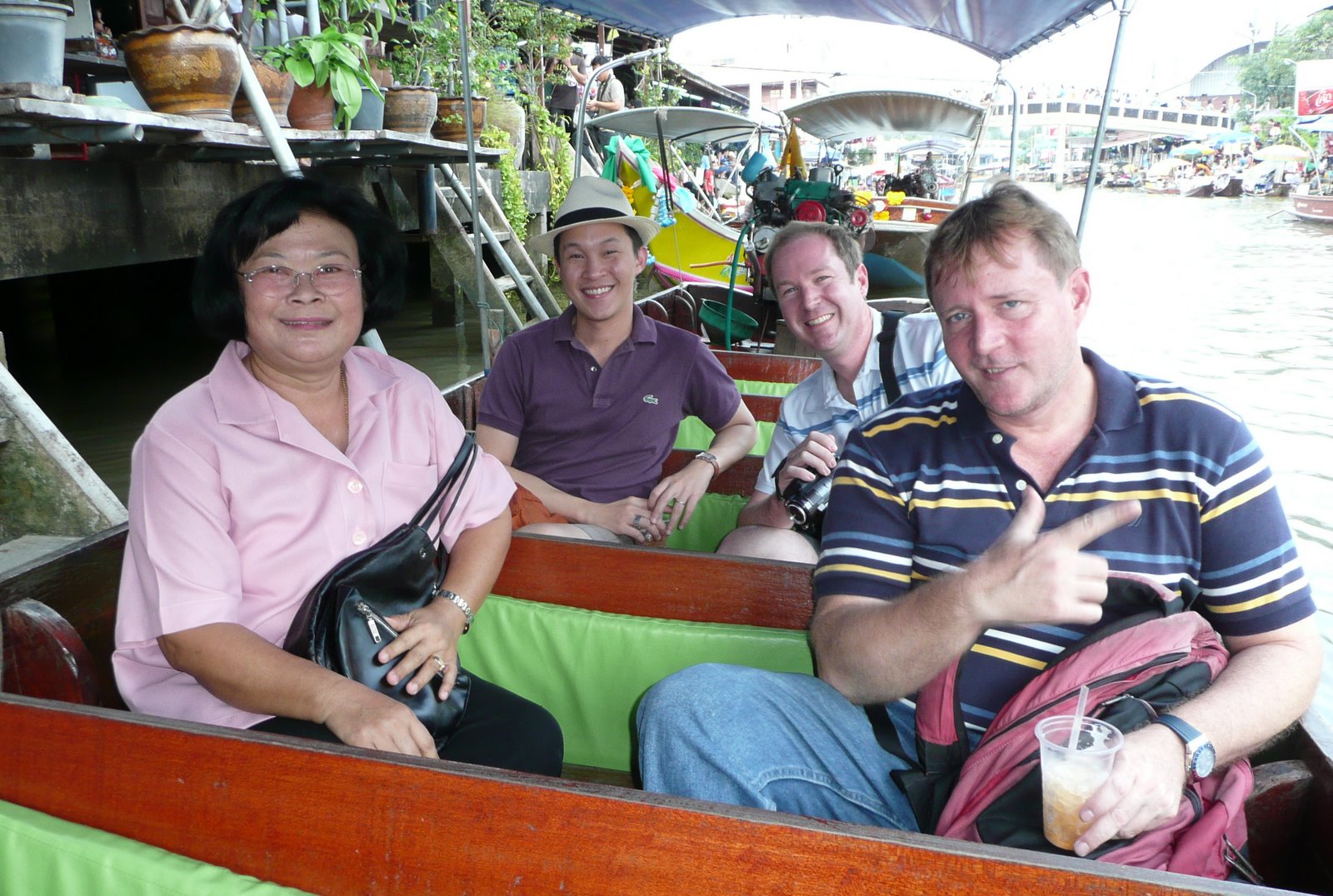
P1100431Ajarn Yai arranged and paid for a canal and river tour in the late afternoon, following a route that took us several kilometers down the Mae Khlong River and then cutting back through the smaller canals until we returned to the market area in Amphawa.

P1100433

It was a fascinating opportunity to show Bruce “life by the water” – a fixture of central Thailand and an important cultural touchstone as so many references in language (and even driving habits!) can be traced back to Thais’ relationship with bodies of water.

Since Ajarn Yai insisted on paying for the boat ride, Tawn and I insisted on paying for dinner afterwards at a riverside restaurant.  Not without a big fight, though: “I’m your big sister!” she protested, pointing to Thai custom that the puu yai – senior person – pay for dinner.

As I’ve explained to her several times, I can’t let her pay every time we have a guest in town; that’s not fair to her.  Of course, “fair” is a very different concept in my mind than in hers.  For Ajarn Yai, “fair” will be when we finally take her to the United States for a visit.

Road Trip – Ayuthaya

Long before Bruce arrived, we had discussed a road trip to Thailand’s wine country –  Nakhon Ratchasimaa province, also known as Korat.  Yes, we do have a small wine industry and as we found out, they produce some decent wine.

P1100449

We started out in Ayuthaya, the second capital of the Kingdom of Siam.  Located about ninety minutes north of Khrungthep, the city is full of ruins including a UNESCO World Heritage Site.

P1100444

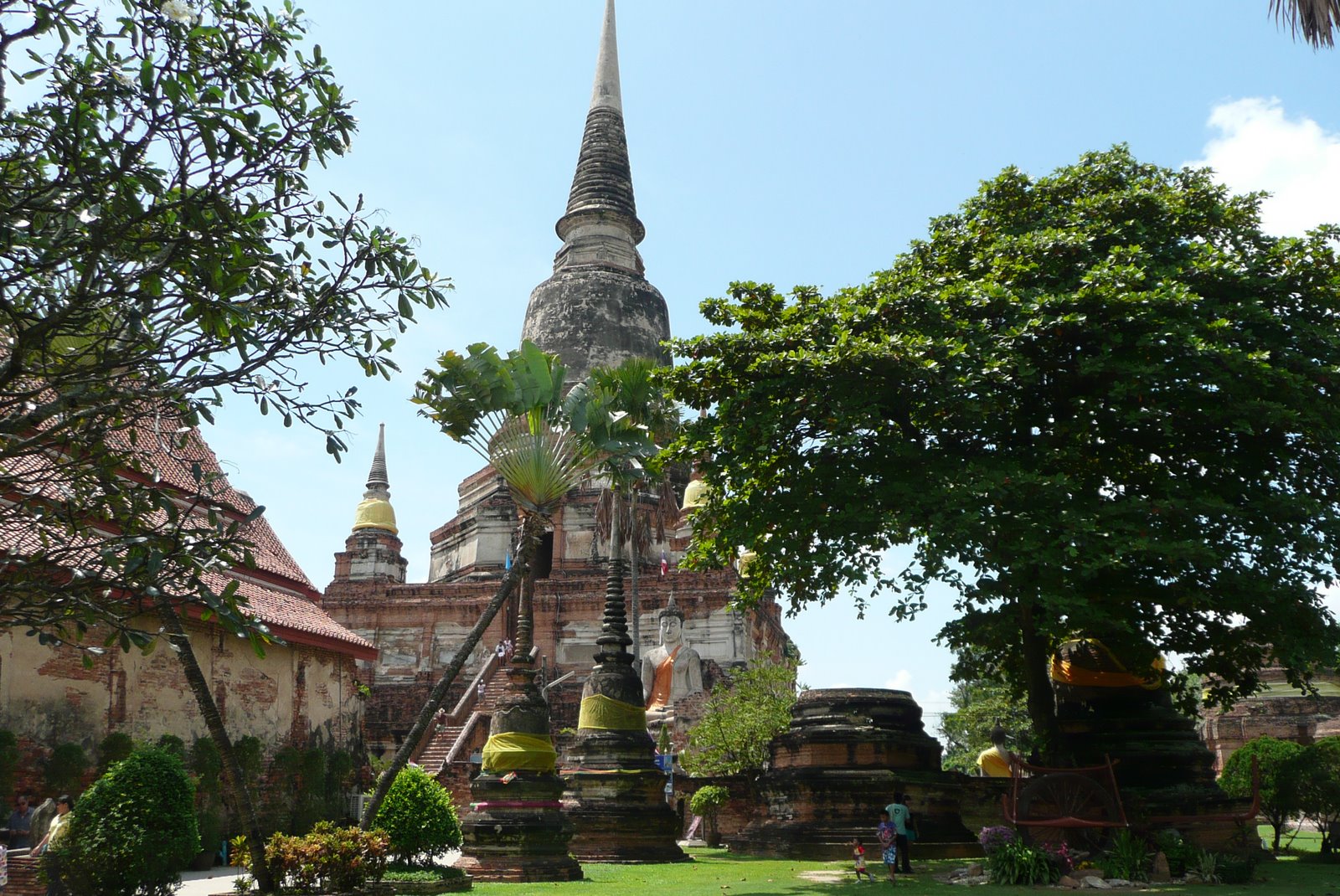
Our first stop was Wat Yai Chai Mongkhon, above and right, on the south side of the city.  Quieter than many of the other temples, it was famous as a place for meditation and still houses a large community of monks and nuns.  The large chedi or stupa is still intact and you can climb it for quite a view.

P1100458

After lunch and a stop at the Ayuthaya Historical Study Center, a decent museum that helps put the ancient city into context, complete with scale models of how the city looked before it was ransacked by the Burmese in 1767, we headed to see some of the ruins.

In the 17th Century, the city had a million inhabitants and strong trade relations with the Dutch, Portuguese, English, French, Chinese and Japanese.  Many Western visitors remarked how illustrious the city was, with the temples and many palace buildings decorated in the same fashion in which Khrungthep’s Grand Palace is.

Back out into the warm pre-thunderstorm afternoon, we visited Wat Phra Si Sanphet, once the largest temple in Ayuthaya.  This is the famous one with a trio of large chedis still standing in a row down the center of the park.  The surrounding walls have tumbled down, whether a result of the Burmese cannon fire or just a matter of time and weather.

There were surprisingly few visitors and Bruce was able to film a lot of video footage on his new camera while Ken and I tried to remain in the shade of the magnolia trees.  Afterwards, we stopped at a nearby market to watch the making of roti sai mai – a dessert popular among the Thai Muslim population with thin pandan leaf flavored crepes are stuffed with spun palm sugar – and, of course, to eat some.

P1100464

Our last stop in Ayuthaya was the elephant kraal.  North of the city, this is where the wild elephants were herded so ones could be selected for use in battle.

Today, it is where the elephants that visitors ride at the historical park are housed, bathed and fed.  Run by a pair of farang women, there is a program where guests can stay several days in cottages and learn more about the elephants while helping out with the chores.

We arrived at feeding time, with a pair of elephants unloading pickup trucks full of grass and bringing it to the other elephants.  For the most part, it looks like the grass is ground up before being served to the elephants, using a cement mixer as a gigantic food processor.  The elephants that were doing the heavy lifting occasionally snagged a few blades as a snack, having to be urged back to work by their mahouts, or guides.

P1100476

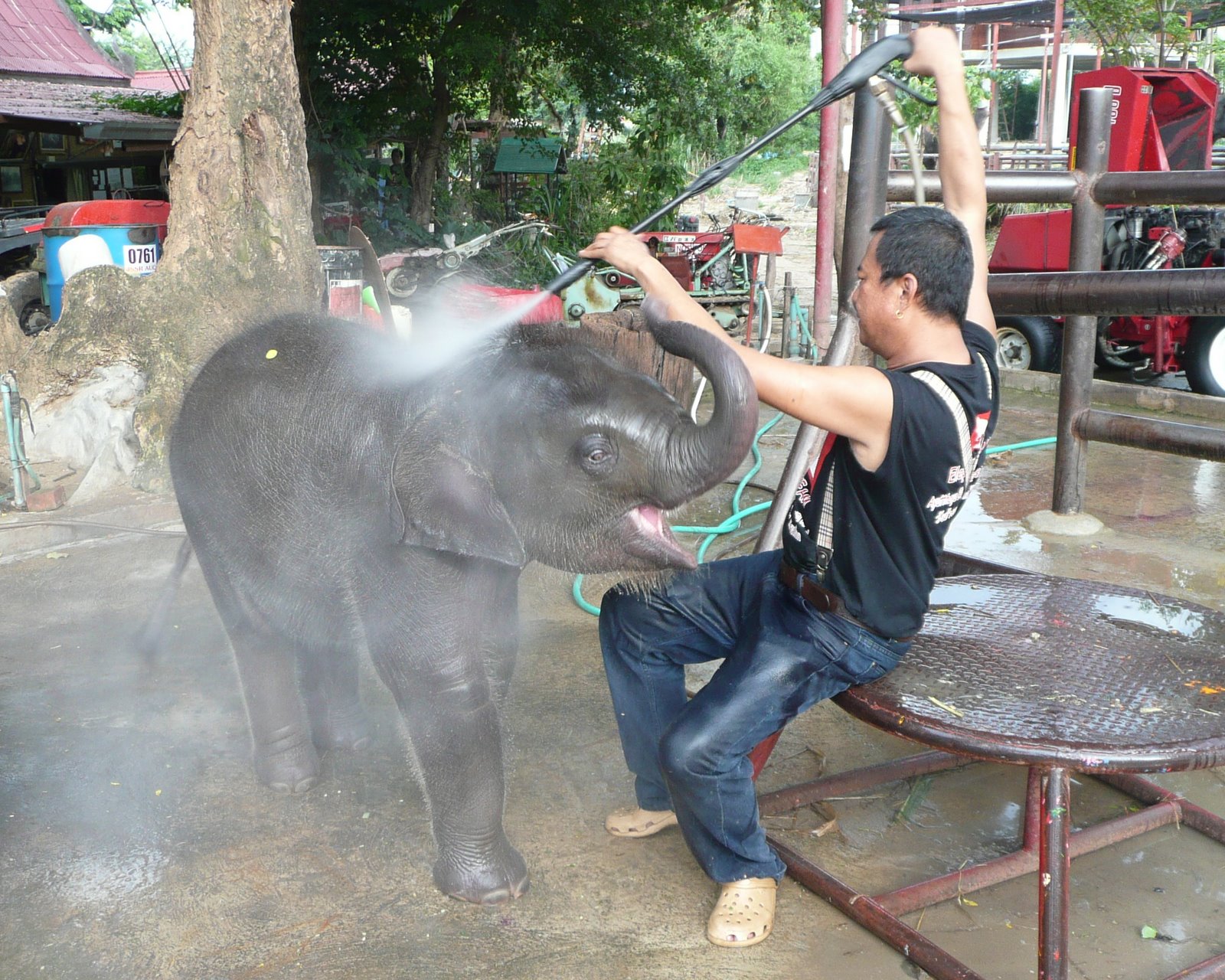
A baby elephant gets a shower while playing around and trying to drink the water.

Road Trip – Pak Chong

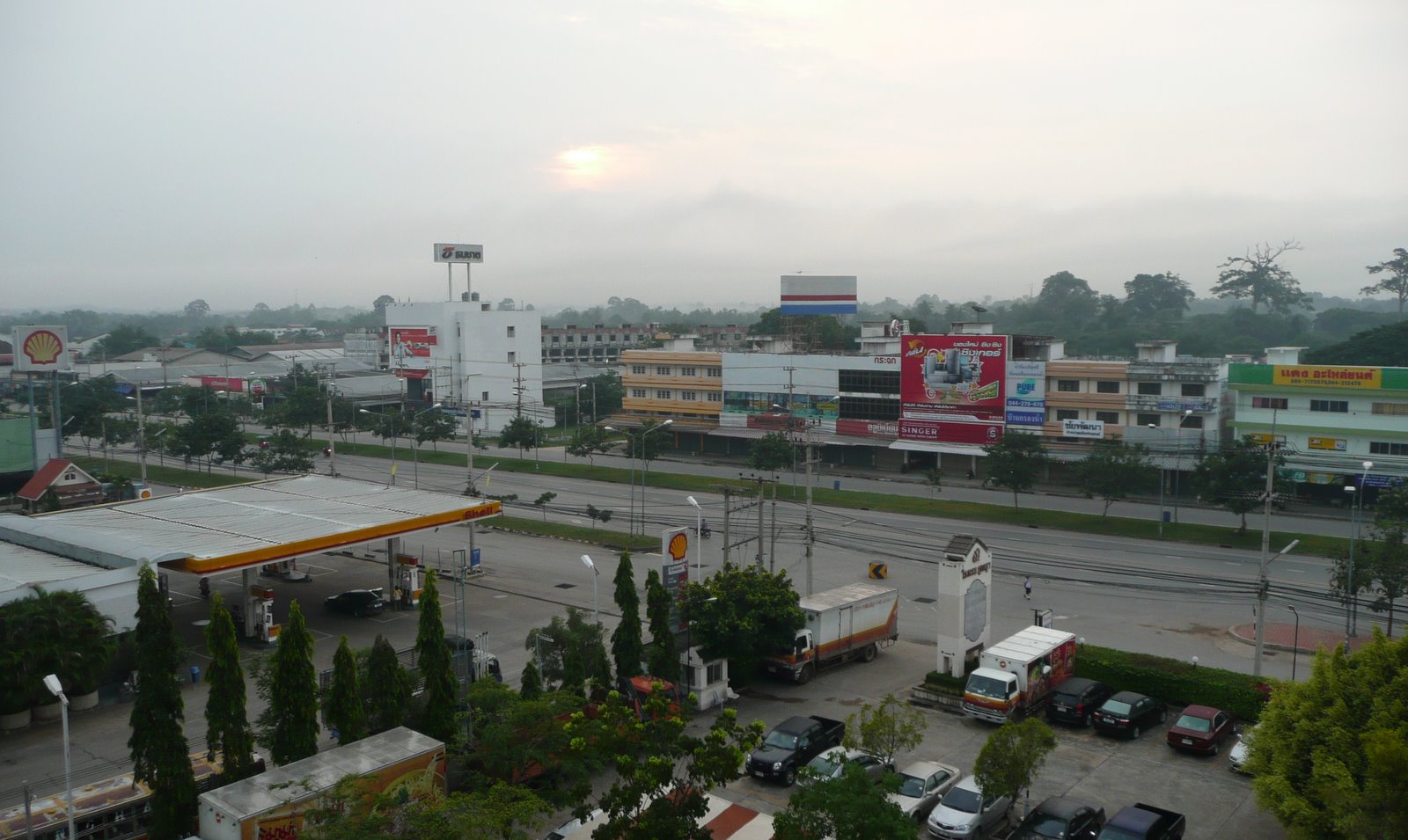
We continued to the northeast of Ayuthaya about two hours, arriving in the small town of Pak Chong shortly after dark.  Pak Chong is the first city you reach in Nakhon Ratchasimaa province and serves as the gateway to Khao Yai National Park, Thailand’s oldest and second largest.  Pak Chong at sunrise:

P1100489

We found a relatively new tourist class hotel.  It was clean and the beds were comfortable, so for 700 baht a night (about US$20) it seemed like a pretty good deal.  This far outside of the big cities, I think our options are limited.  The receptionist suggested a really nice restaurants that is located on the banks of a small river.  Decorated along the lines of a Cracker Barrel restaurant, the restaurant served pretty good northeastern Thai food, although the grilled chicken was a bit tough.

Khao Yai National Park

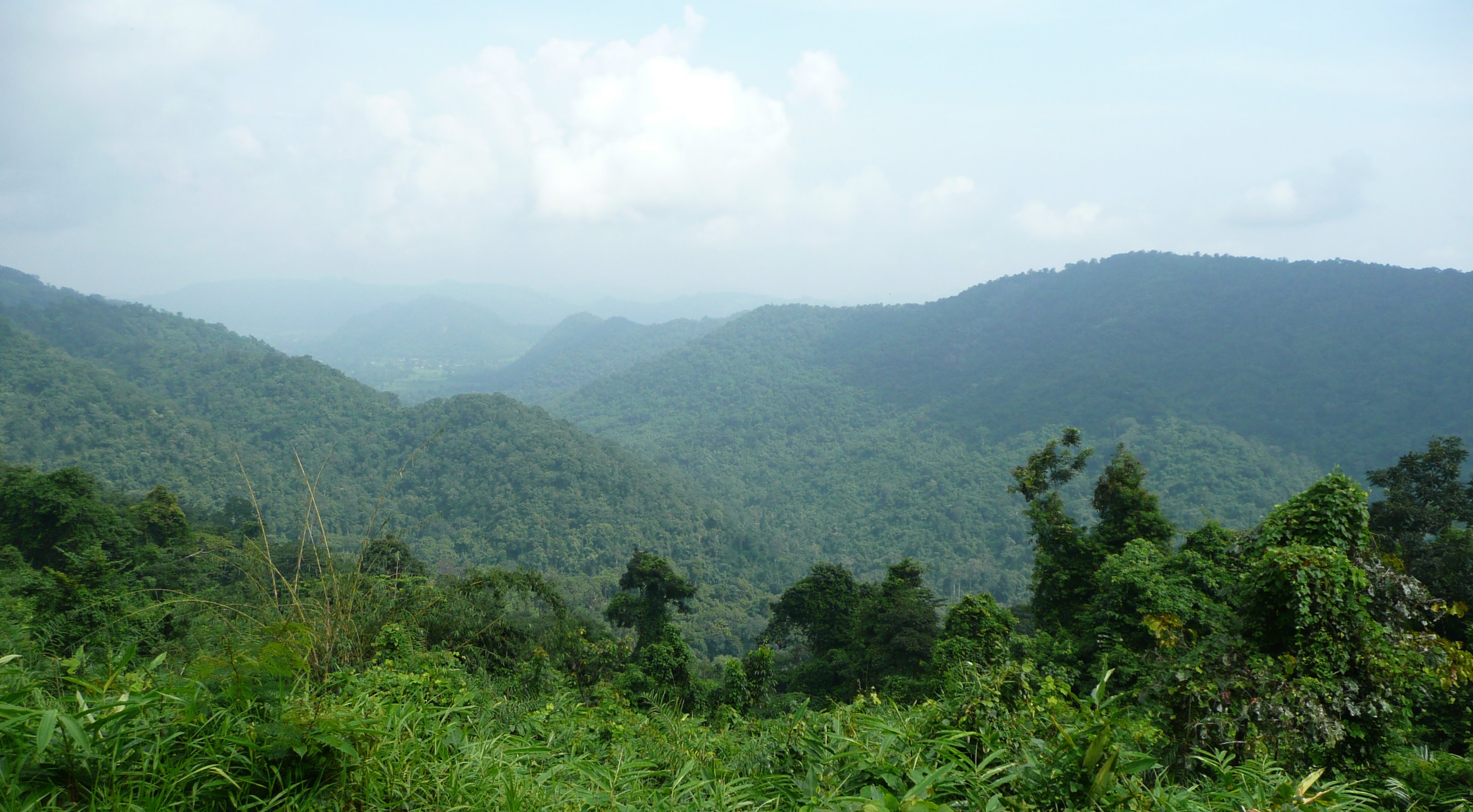
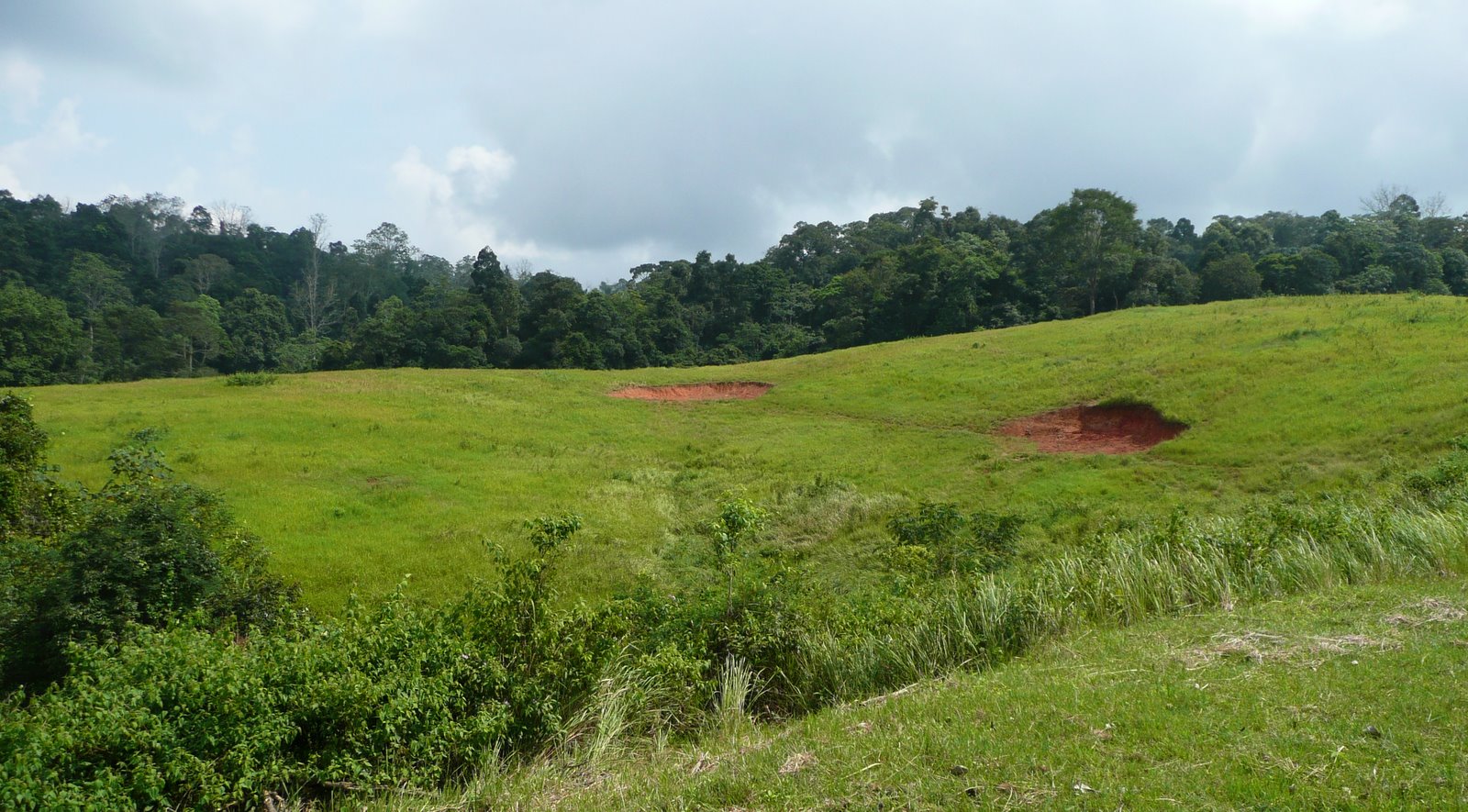
Tuesday morning we started out early and drove the hour up to Khao Yai National Park.  We were afforded gorgeous views and lots of lush foliage.

P1100494

From a view point looking north back towards Pak Chong.

There is a lot of wildlife in the park, including a herd of 200-300 wild elephants.  While we didn’t see any elephants, we did encounter several other animals including a few monkeys and deer.

P1100500

At one stop, there is a salt lick that “Friends of the Park” – a volunteer organization – created so that animals would have a place to eat their minerals in good view of the road.  The salt lick is shown above and below is the accompanying warning sight at the viewing point.

P1100496

It reads, “Do not walk to the Salt Lick – you smell bad to wildlife.”  Ain’t that the truth?
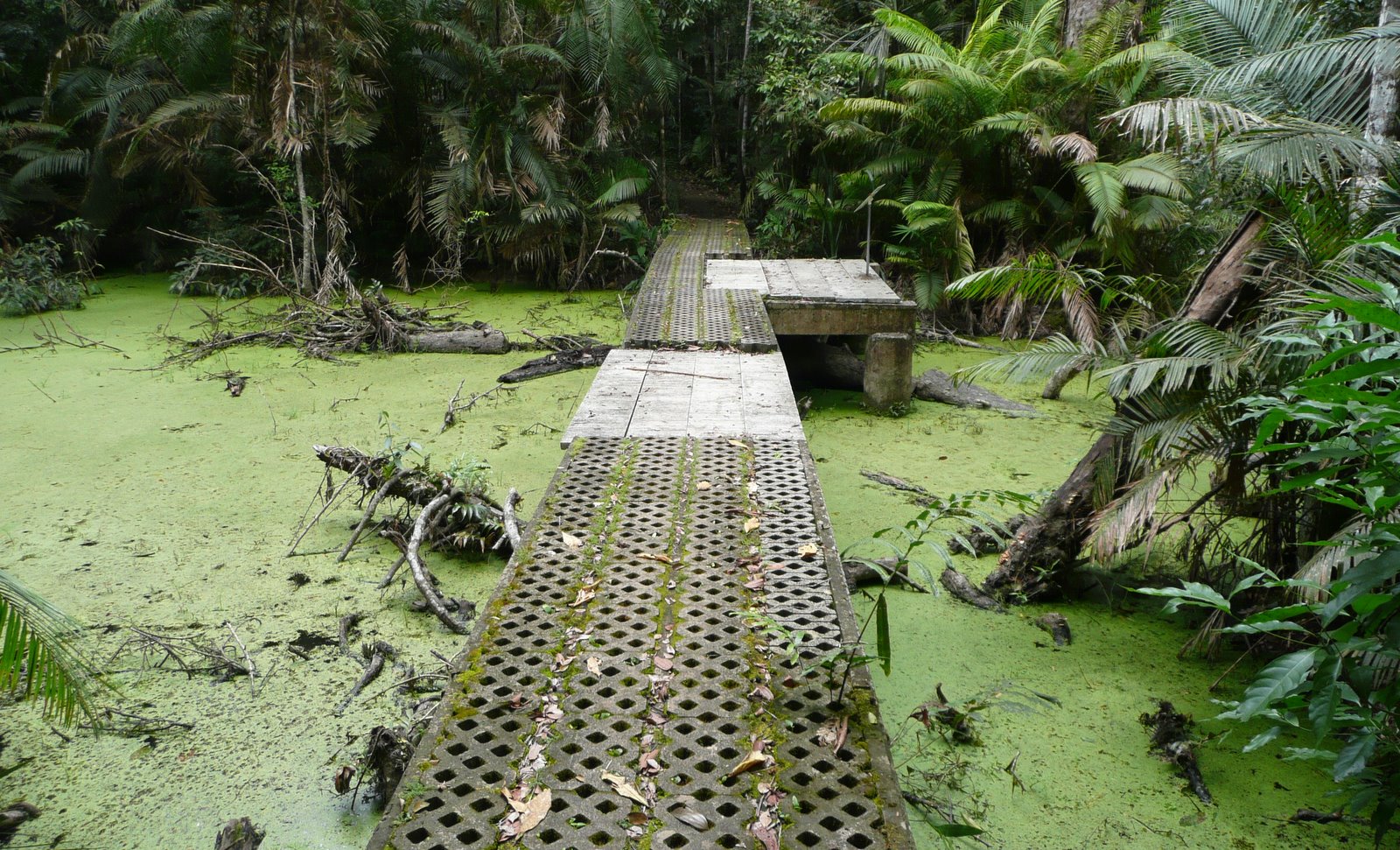
After stopping at the interpretive center we decided to take a short walk behind the center to see a waterfall.  Our information was bad and we ended up taking the long way around.

P1100515

Imagine, if you will, that the interpretive center was at noon on a clock face.  We started walking along the trail, only to eventually discover that the waterfall was at the eleven o’clock position, which we could have easily accessed if we had walked the opposite direction!

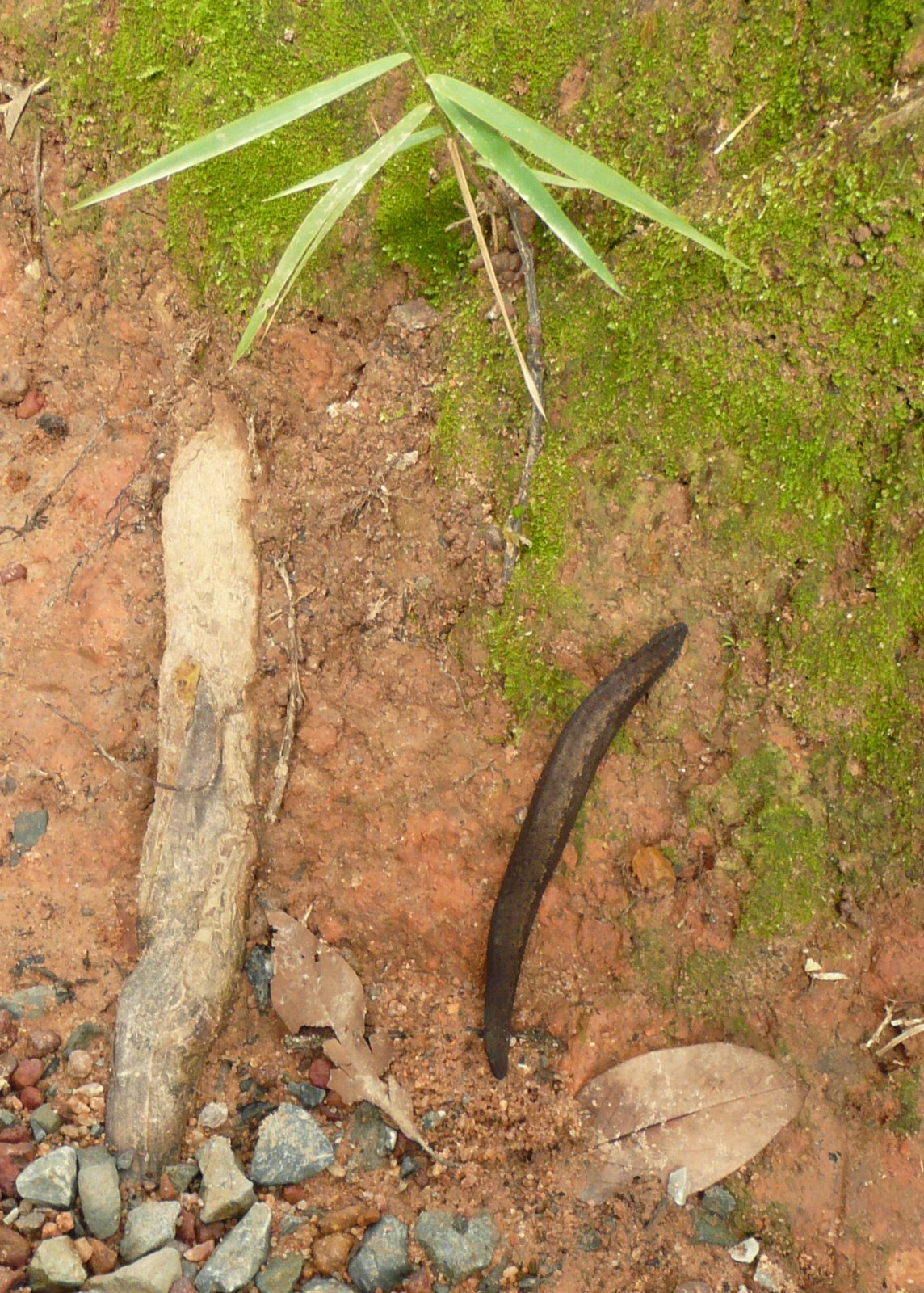
The trail was overgrown and in places, completely veered off into uncharted territory.  Along the way, we discovered a bit more of the local fauna than we wanted to: leeches.  Here’s a view of the leeches we acquired and the larger ones we managed to avoid.

P1100514P1100526

Mostly small but those things really have a strong grip.  One burrowed through my sock and was pretty firmly attached to my leg.  Five days later, I still have a purple welt from where its mouth was.

P1100510

The further we went, the more precarious the trail became.  To be certain, the forest there is beautiful and cool, but if we hadn’t heard the sound of a waterfall in the distance, I think we would have turned back.

We arrived at the waterfall and were terribly underwhelmed.  There are probably several in the park that were much more spectacular, because this one was more of a large rapids than anything else.  As waterfalls go, I think the Erawan Falls in Kanchanaburi province are much nicer, especially as I didn’t encounter any leeches there.

P1100527

Sadly, Bruce was the most affected by nature, suffering at least a dozen leech bites and having to pull them from between his toes.  Let this be a lesson to all of us: no shorts and sandals when you are in a national park.  On our way in to the park, we saw several truckloads of tourists who had these leg warmer type of padding around their legs, even though they had long pants on.  I thought perhaps they were protection for snake bites but realize now that they were designed to keep leeches off you.

Tough way to learn the lesson but glad we know that for next time.


After Bruce had had enough of nature we headed down the mountain to search out a pair of wineries.  They were pretty easily found and, sure enough, as you get up into that region and drive down some of the two-lane roads, you could easily imagine that you are in Sonoma County, the Barossa Valley, or another wine producing region.

P1100532

Above, vineyards at PB Winery.  The higher-end shiraz was pretty decent, albeit pricey.  The lower-end shiraz had the bouquet of molasses and was so young as to be nearly illegal.  The drive is pretty, though, and it was interesting to see what this nascent wine region is producing.

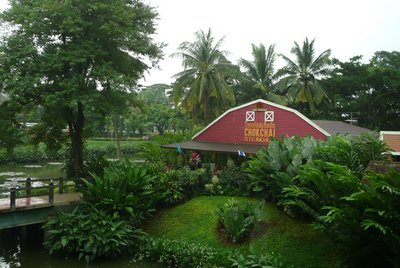
P1100535 By this point in the afternoon, we were hitting some rain and decided to make one last stop before heading back to the Big Mango.  Our destination was Chokchai Farms, a large cattle and dairy operation near Pak Chong.

Left, traditional “old west” farm architecture amongst the tropical foliage.

Chokchai is the most modern and productive cattle operation in Thailand and ostensibly their cows get a lot of opportunity to pasture, although I wasn’t able to take the farm tour thanks to the monsoon rains that arrived.  Instead, we hunkered up in the Chokchai Steakhouse and enjoyed a good steak lunch with inexplicably overcooked vegetables.  Really, they were aiming for Midwestern US cuisine with frozen carrots and green beans that had been boiled to death.  Only the steamed cabbage and daikon radish were fresh.

We returned to Khrungthep around rush hour, leaving unexplored many other parts of Nakhon Ratchasimaa province that I’ll have to return to in the future.  In particular, the capital city of Korat, about which I’ve heard good things, deserves some exploration.


Your “K” Bank

Thai banking institutions have undergone quite a cosmetic transformation in the past few years.  Hardly surprising in one of the globe’s cosmetic surgery capitals where an afternoon bite can easily be preceded by a nip and tuck.  Within the last five years, the Thai banks have gone from boring to beautiful, with new logos, vibrant color schemes and careful marketing and promotion.

Thai Bank LogosSiam Commercial Bank, the 100-year-old original Thai bank, has its royal purple.  TMB, the Thai Military Bank, has a patriotic red and blue color scheme with an umlaut that is intended to represent two people working together (or two soldiers holding hands in a don’t ask, don’t tell sort of way).  Ayudhya Bank has a very “We Love the King” yellow for its color.  Kasikorn Bank, previously known as Thai Farmers Bank (“kasikorn” being an older word for farmer) has adopted a fertile green color and brands itself as K-Bank.

The competition between the banks is fierce and each works hard to convince consumers that they have something to offer you besides the miserable 0.25% interest rates.  (Which climbs to 3% if you lock at least 5 million baht into a 3-year certificate of deposit.)

Recently, K-Bank has launched a new campaign emphasizing how customer-friendly they are.  (In full disclosure, K-Bank is one of the two banks where Tawn and I have accounts, the other being the Singapore-owned UOB.  Yes, I am a Thai farmer.)

When you enter a K-Bank branch, there are complimentary bottles of K-Bank water to quench your thirst.

P1090765

And as the weather is so warm here, you might need to freshen up after entering the branch.  If so, please feel free to help yourself to the K-Bank moist towelettes.

P1090770But the K-Bank hospitality doesn’t end there.  There are also K-Bank condoms, free for the taking.  Yes, you probably saw that one coming, didn’t you?

P1090775

The thing about the “K-Condom” is that there is a terrible double-entendre lurking in plain sight.  The Thais have borrowed the word “cock” from English as a slang for, well, you know…

Since “cock” is a very harsh sounding word, they us the word เค (pronounced “kay”) as an abbreviation, much in the same way as in English we euphemistically refer to the “F-word”.  So that makes the K-Condom very much like saying the cock condom, which to a gaggle of juvenile boys would be hilariously funny.

(Have I mentioned that Thai comedies are quite sophomoric in terms of what is considered funny?  Bodily humor is considered the pinnacle of wit.)

Anyhow, after a week of politics both Thai and American style, I thought we deserved a laugh.  Have a good weekend.