Office of Snacks

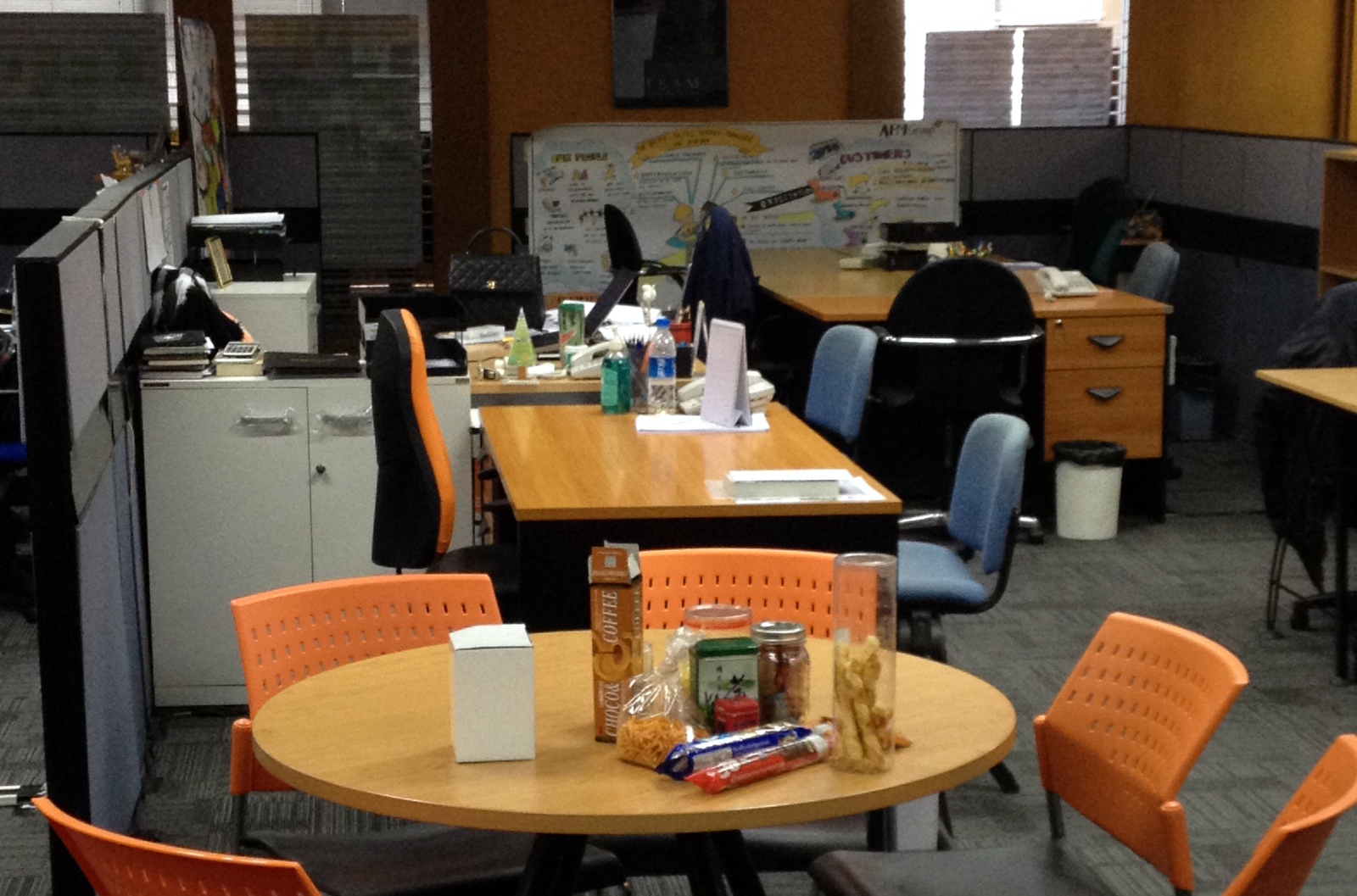
One of the things that has been a bit of a challenge working in a Thai office for my first time, is to get used to the sheer volume of snack foods that are around. Yes, I know that all offices have their share of snack foods, but it seems to reach new extremes here in Thailand.

IMG_5602

Conference tables are for snacks, not people.

Each business unit, department, or cluster of desks has a stash of snack foods, not including the fresh fruit and perishable snack items bought daily by my colleagues. And what makes it even worse is that most of these people are skinny to the point of looking malnourished.

After the first few weeks, I started to buck the trend and avoid the snacks. My trick is to eat a bit extra at lunch so that the munchies don’t come calling in the middle of the afternoon. But then my colleagues look at my lunch tray with two dishes on it and express dismay that I’m eating so much food!


The Disco Next Door

In the more than five years that we have lived in our medium-sized condo, we have seen the 1950s house next door transition from being an Indian restaurant to K-Pop nightclub. Now it is set to make its next metamorphosis and become a community mall.

red-indian-restaurant

The house, as you can see in this borrowed picture above, was a beautiful “tropical modern” style, very common in this neighborhood which was, in the 1950s, a fashionable place for well-off families to build their weekend “country” home. Of course, back then this area of Bangkok was truly on the outskirts of town. When we arrived a half-decade ago, it was a contemporary Indian restaurant that didn’t ever seem busy but did do a good job preserving the architecture of the building.

P1270003


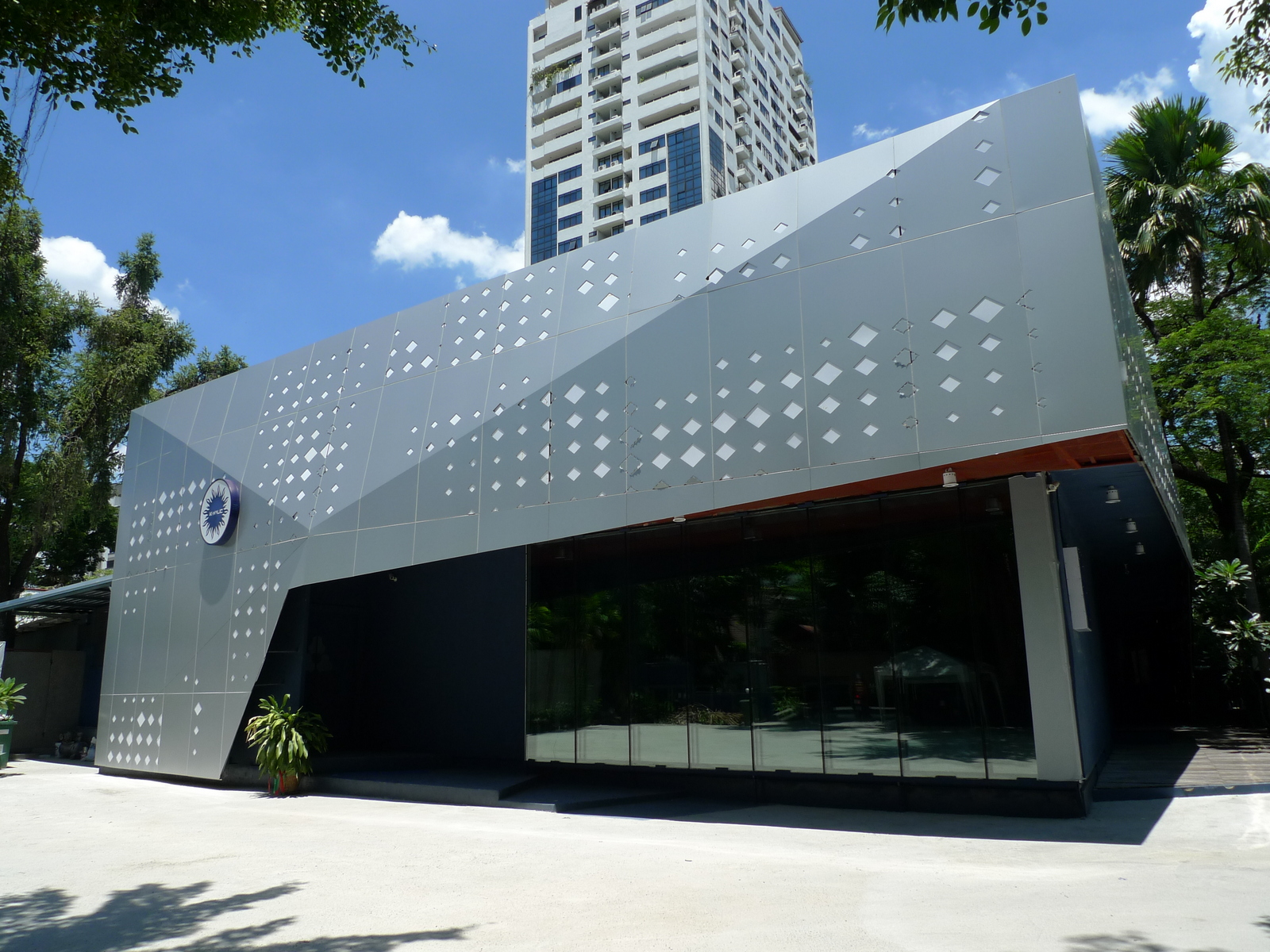
Then about a year ago, we were informed it was going to become a “the world’s first K-Pop pub”. Much to the consternation of our residents, a new tenant built an exterior shell around the house and turned it into this gaudy sight. Our condo’s management, along with other nearby residents, used all available legal channels to block their operation and ultimately, they opened only a handful of nights before shutting down. Part of me wonders whether it was ever actually meant to be a legitimate business, as the idea of putting a pub in the midst of a residential area was ill-conceived from the start.

P1280027


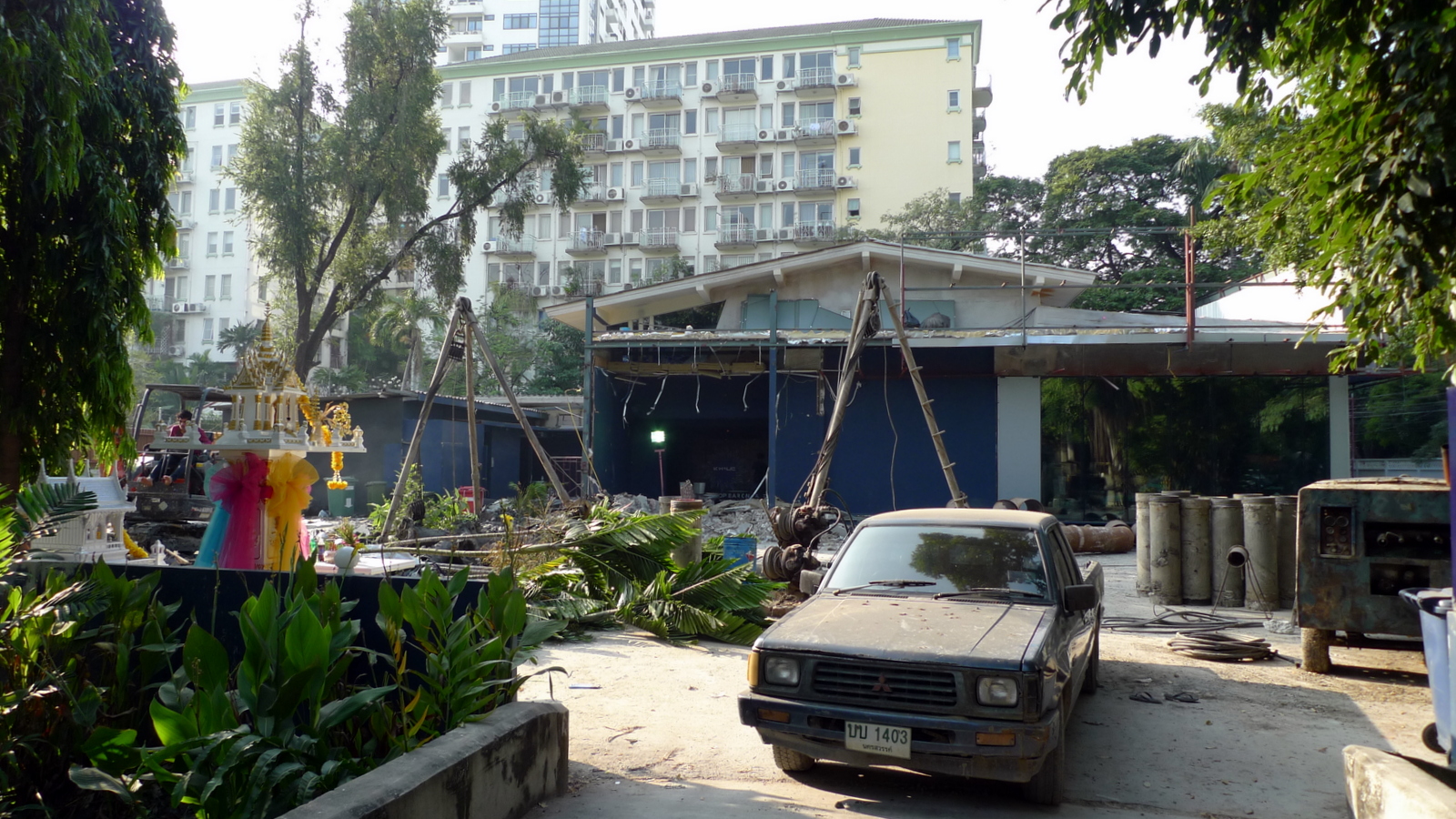
Recently, construction has started again. The exterior of the pub has been pulled down and you can see that the old house remains. After a week or two of initial curiosity, we were finally informed what will be built there.

MINI MALL


The new space will be a “community mall” – the term used locally to describe these smaller-scale open air shopping centers that may have at most one or two dozen shops, a limited amount of parking, and restaurants and light retail.

MINI MALL (2)


Quite a number exist within a five- to ten-minute walk from our condo, so I’m not sure what the need is, but I suppose it is a better use of the space than a K-Pop nightclub. According to the plans, the original house will still be incorporated in some way, although from these two elevations, I don’t see where.

Anyhow, that’s what’s happening next door. How are things where you are?


Starting Week Four

Tomorrow morning marks the start of my fourth week of full-time employment. After nearly a year of freelancing, I’m extremely happy with how the new job is developing. Since I had done some work for the company in the tailing months of the old year, I already knew some of the people and projects I am working with.

At the same time, they haven’t been shy about adding more responsibilities to my plate, including three major clients! As my mentor explained when we discussed the company’s view on work-life balance: over the long term, it is definitely a marathon and you need to pace yourself. But for the first six to twelve months, you had better sprint.

That’s the case with all new jobs, right? Work hard to prove yourself and compensate for your learning curve.

This past week the CEO sat down with me to lay out her vision of where I will be in the next two years as well as what she expects from me over my first ninety days. She’s one of the most respected leaders of her field, HR development and executive coaching, so it was exciting to hear that she has some very specific ideas about how I will fit into the company’s strategy.

Of course, when you are hearing this directly from the CEO, it creates a pretty high bar over which to jump!

All things considered, though, I’m having a blast. The experience reinforces for me that I stayed in my old job a few years too long and was stagnating rather than growing. I’m thankful, really, that they decided to give me the ultimatum of either moving back to the US or being let go. It was a decision that was long overdue.

The only downside? Now that I’m working so much, my time for blogging is diminished. I’m committed to doing it as often as possible, though, so stay tuned.


Christmas in Mae Sot

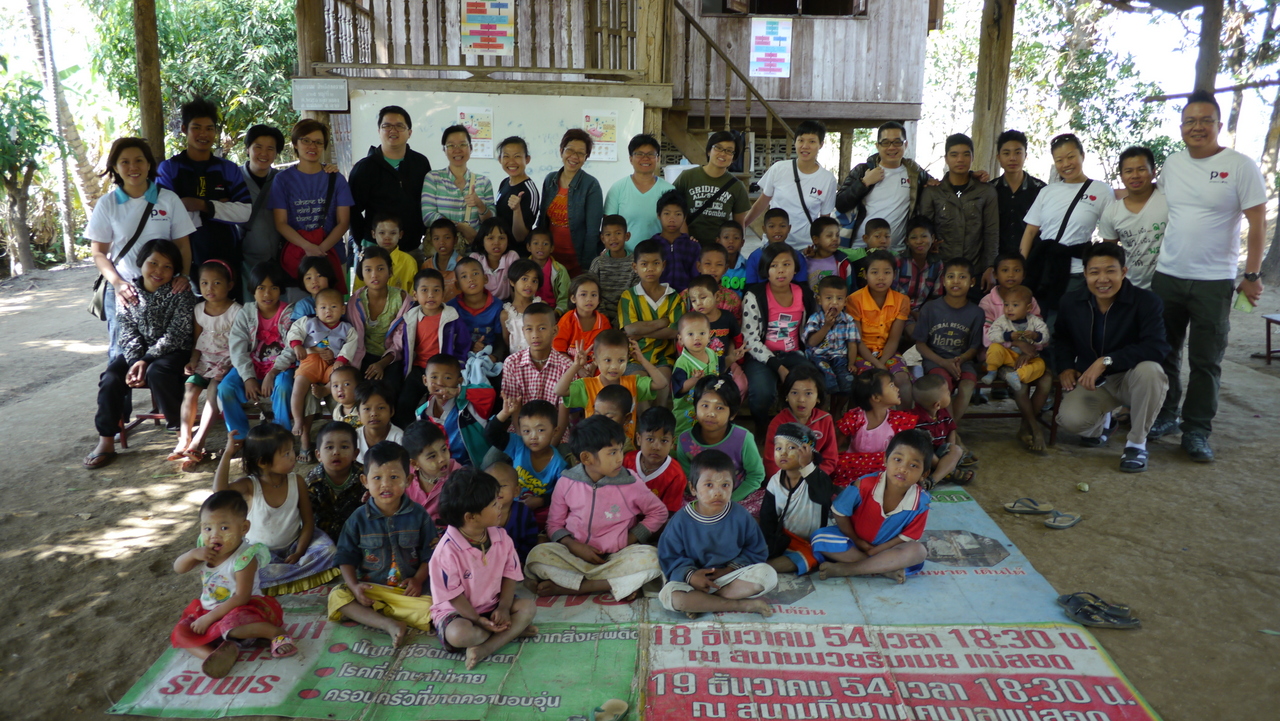
With just a few days left before I begin my new job, I took the opportunity to join a group of friends from Project LOVE Asia for four nights of volunteering in Mae Sot, a town along the Thai-Myanmar border. Our job was to help bring Christmas to the children at the Heavenly Home orphanage and the young adults at the Love & Care learning center.

Let me share some pictures and some brief notes about the experience.

Day 1

P1040677

The first day, we went to a “day care” that is run by the orphanage. Located a few miles away in the midst of rice paddies, the structure is just a shack and a broad roof over a packed-dirt floor. Volunteers provide free lunch and basic education for the children of itinerant farmers and laborers four days a week.

P1040611

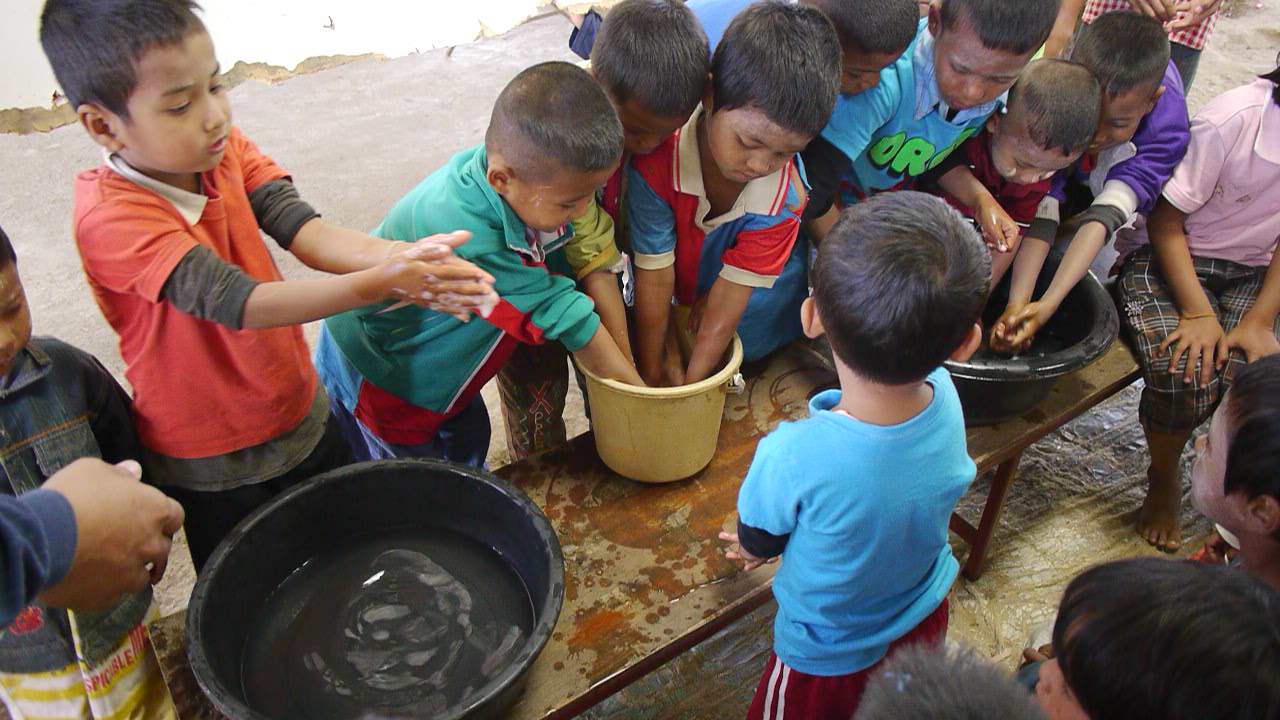
Our group of volunteers (who are not the normal day-to-day volunteers at the day care) played games with the children and then before lunch, gave them a lesson in proper hand-washing technique including teaching them the “hand washing song”.

P1040620

Given that these children mostly speak Burmese or a local dialect based on their ethnic group (mostly Shan or Karen), I’m not sure they learned the song. But hopefully the basic lesson of the importance of good hand-washing was learned.

P1040639

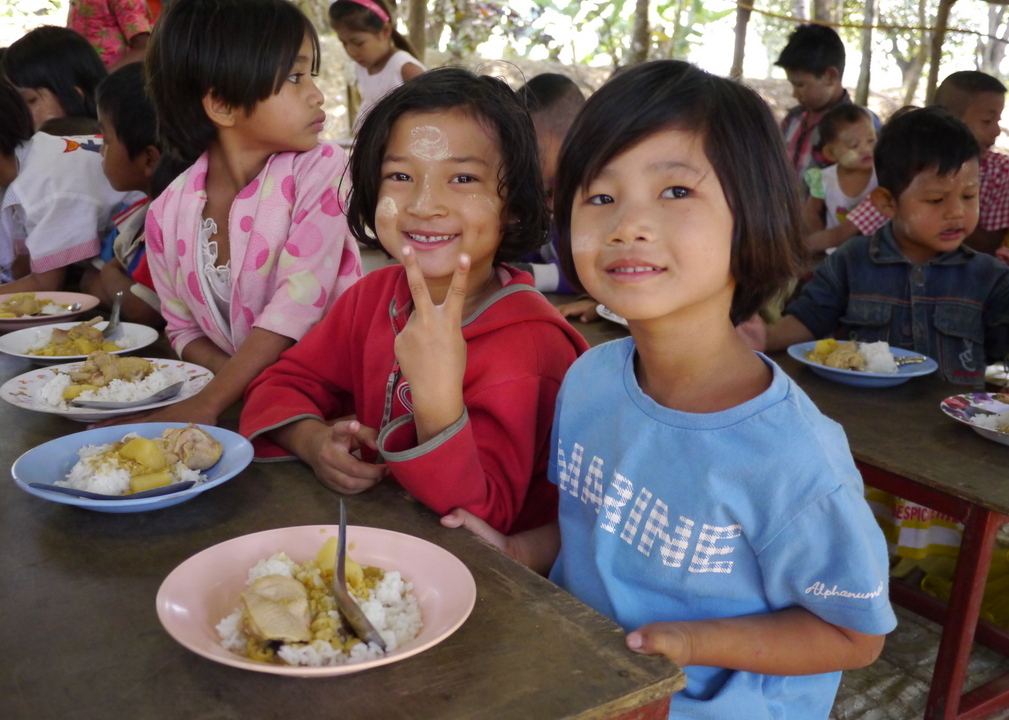
This day for lunch, the children had rice with chicken and curry. Most of the time, the orphanage cannot afford to feed them meat so today’s lunch was a special treat. The children’s parents, who are dirt-poor, do not have to pay for this day care. It is provided by donations to the orphanage.

P1280197

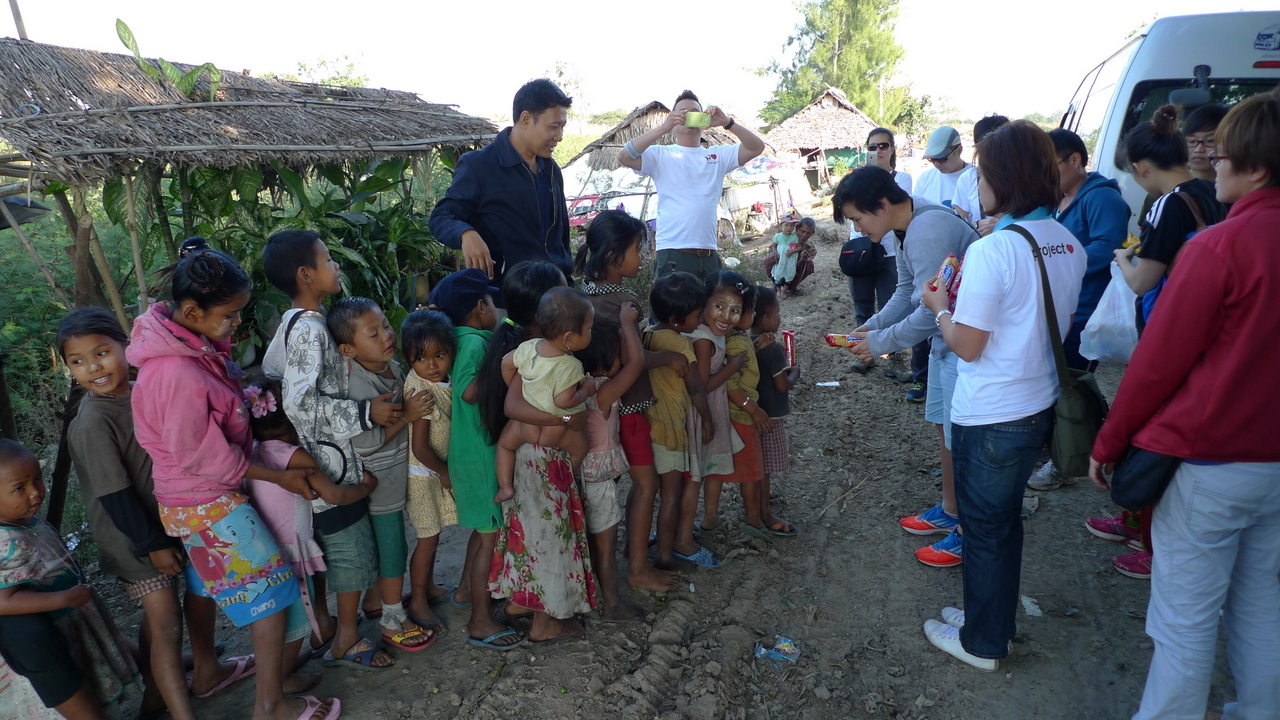
In the afternoon, after finishing at the day care, our vans drove for nearly an hour over bumpy roads until we arrived at the middle of the provincial dump. There, we met families of illegal immigrants who earn a living sorting through the refuse and selling materials for recycling.

2013-12-22 01

Their rickety shacks line the roads and their children, who are now able to receive some education thanks to a nearby school recently built by an NGO, were happy to see us and receive some Christmas treats.

P1040735

That evening in the guest house while we were debriefing the day, the sound of Christmas carolers filled the air. A group of students from the Love & Care secondary school (which we would visit on Day 3) had come to sing us songs. I felt so bad for them as they had piled in the back of a pickup truck and driven 20 minutes in the chilly weather. It was a lovely surprise, though, and quite festive.

Day 2

P1040745

The next day we spent at the Heavenly Home orphanage, playing with the children, organizing games, bathing and feeding them, and singing songs.

P1040843

This was a particularly rewarding experience because the children are used to visitors and are very eager to play with them. It wasn’t unusual to have four youngsters balanced on my knees with another two or three trying to climb up.

P1040805The founders of the orphanage, Thantzin and his wife Lily, are a Burmese couple who lived many years in Singapore. Unable to have their own children, they felt called by their faith to help the children of Burmese refugees and migrants in Thailand.

P1040920

What started initially as a day care has expanded and they now care for more than 50 children whose parents have given them up as well as another dozen whose parents pick them up each evening.

P1040900

While children can stay up to the age of 18, right now they only have children from the age of 3 months up to about 12 years old.

P1040863

Our primary mission was to spread the spirit of Christmas so early on the evening of the 23rd, after the children had eaten their dinner and been bathed, dried, and dressed, they lined up for cake. We then went upstairs to sing songs and give gifts.

P1040999

The happy family of Heavenly Home orphanage, crowded into the upstairs living area, which is also the girls’ bedroom. It was a chilly evening so everyone was bundled tight, happy at having such a fun evening.

Day 3

Our final full day was spent at Love & Care, a secondary learning center about 15 minutes outside of Mae Sot. Burmese migrants and refugees face a challenge: undocumented in Thailand, they cannot attend local public schools, but they education they may have received in Myanmar isn’t sufficient for meaningful work in Thailand. Love & Care is one of many learning centers (not “schools” as they don’t follow the curriculum of the Thai Ministry of Education) serving this group.

P1050038

About 70 students live at the school, which boards all its students. They range in age from about 16-21 and many have already matriculated from secondary school in Myanmar. Love & Care offers grades 10-12 taught in Burmese, English, and Thai.

P1050021

While there, I did interviews of several of the students and faculty. Their parents are almost uniformly farmers or laborers and one common thread is that none of them seem to be the oldest child. While I didn’t clarify why this is, I would guess that the oldest child is needed to help on the farm and it is only once you have several children that you can consider sending them for education.

P1050067

We played many games with the students, mostly focused on team-building and other types of skills. After the games, we talked a bit about the lessons learned. A common theme among these students is that they came from different tribes – Karen, Shan, etc. – and it was at Love & Care that they first met people different from themselves and learned that people are all basically the same. Perhaps the most important lesson they have learned, considering they come from a place where deep-seeded animosity exists between different ethnic groups.

P1050138

In the afternoon, we did an exercise where each student created a dream board, using paper, pens, old magazines, etc. The objective was to illustrate the dream they hold for their future. They then took turns sharing their dreams with each other. Most wanted to be doctors, nurses, teachers, or other professions that would enable them to return to their communities and help others. It is easy to imagine what a powerful impact these young people will have on the future of Myanmar.

P1050192

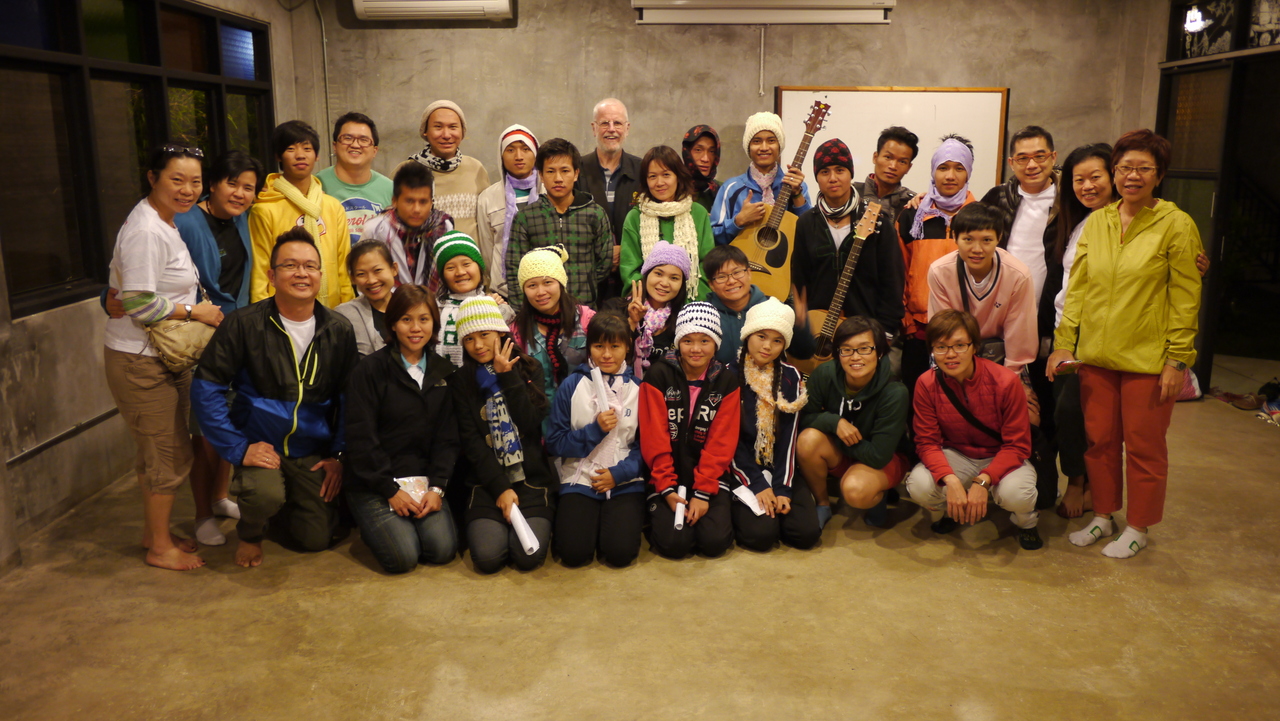
In the evening, about half the children from Heavenly Home joined us and we had a large Christmas show. Different groups of students and children performed, gifts were given, and songs were sung. By the end of the day, many of the students had asked to connect with me on Facebook and I left with many new friends.

P1050157

In the days after this trip, I’ve had several people say nice things about how generous I am, how nice it is that I did this trip, etc. In truth, it is the children and students who have been so generous and I have to admit that I’ve taken a great deal from the experience.

Each visit to Mae Sot serves as a reminder that it takes precious little to be happy in life, and that so many people barely have that. Our common humanity binds us and there is great power in showing compassion and sharing love.

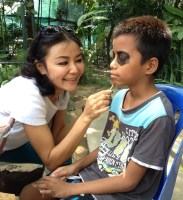
Painting Smiling Faces

Catching up on the events of the past month or two, in late October I attended an annual Halloween party at the Mercy Center in the Bangkok neighborhood Khlong Toei. Mercy Center, founded by a Catholic priest who has been a longtime fixture in the surrounding slums, provides extracurricular activities and ongoing education for local children. The Halloween party is pulled together by several business owners associated with the American Chamber of Commerce.

20131026_132007-001 photo 1-001

This was the second time I volunteered and this year I scored the assignment of working the face-painting table. While we had lots of face paint, our tools were limited and the children had high expectations: Zombie! Dracula! Ghost!

As you can imagine, over time the ghosts started to look more like vampires and the zombies started to look more like children with green faces. I was thrown for a loop when one girl asked to be a butterfly. It wasn’t until I looked at one of the face painting kits that I realized that there was a picture of a girl with a very elaborate butterfly on her.

photo 2-001 photo 3-001 photo 4-001 photo 5-001

Regretfully, I hadn’t the tools to make her as beautiful a butterfly as on the package, but she seemed pleased with the results. I tried my best and next year will be sure to bring some proper makeup sponges (instead of just using the random foam sponges we had access to) and brushes.

Still, it was a fun time and the 300 or so children seemed to really enjoy themselves. It is neat that there are so many people who come together to create these sort of opportunities for children.


Ever Thought About Moving Back?

In response to my recent entry about my fourth anniversary of moving to Thailand, Jason asked a pointed question: “Ever thought about moving back?”

From such a question is born a good blog entry, so here is my answer.

Why am I here?

Before I can think about moving back, I should explain why I’m here in Krungthep in the first place.  Tawn received his Master’s degree at University of San Francisco in 2003.  As part of the educational visas the US government provides, students are usually allowed to work for one year following the completion of their degree in order to get some practical experience.  After that year, though, the student needs to apply for a non-resident visa, usually an H-1B.

Without going into a lot of detail, H-1B visas are difficult to come by, especially in the aftermath of September 11, 2001 when the quantity of these visas was reduced to 65,000 a year, down from around 150,000 previously.  Because of their scarcity, only people with highly specialized skills are generally able to get employee sponsorship for the visa.  In this case, Tawn’s skills didn’t meet that threshold.

Because of that, Tawn faced the choice of either overstaying his visa or returning to Thailand.  He chose to follow the legal path and, not wanting to end the relationship, I chose to follow him here.

The Big Mango: Love It or Leave It?

They say that expats in Krungthep usually either love or hate living here.  I find myself somewhere in between, but closer to the loving it side.  There are many benefits to living here beyond the fact that Tawn is here.  From a cost of living standpoint, for example, we live significantly better off than we would if were living in the US, especially if we were still back in the San Francisco Bay Area.

There are things about life in the US, though, that I miss.  Most of all, I miss being near my family.  My grandparents both turn 90 next year and my nieces turn four and seven.  Everyone is getting older and seeing them once every nine months or so isn’t often enough.  Time is short and the opportunities to spend time with loved ones are fleeting.

At the same time, we have ties here, too.  Tawn is an only child and his parents are more demanding of his time and attention than mine are.  While it is hard for me to be far away from my family, I think it would be harder for Tawn to be away from his.

Would I?  Could I?

Even if we wanted to move back to the US, could we?  Tawn and I were married this summer in Iowa, one of only five states that currently allow same-sex marriage.  Here’s the bad news – news that most Americans (even gay ones!) don’t realize:

We can’t move back as a couple.

Thanks to the poorly named Defense of Marriage Act (DOMA), the US federal government does not recognize same-sex marriages.  Immigration is a federal matter, so as long as DOMA is the law of the land Tawn and I cannot move back as a married couple.  Tawn could only move to the US as either a student or by applying for one of those hard-to-get H-1B visas.  Even if he did get in, we would be facing a ticking clock with little prospect of him being able to remain in the US over the long term.

[Update: In June 2013, the United States Supreme Court struck down the section of DOMA that is referenced above. Read about the impact of that decision on us here.]

Where Do You See Yourself in the Future?

I am asked this question each year during my annual performance appraisal, not so much because my boss expects the answer to change but because it is part of the Human Resources-designed appraisal process.  If I had to pull out my crystal ball, where do I see myself in the future?

In the near future – say the next three to five years – I see myself still here in Krungthep.  Even if Congress repealed DOMA, Tawn remains an only child and so I don’t see us moving back to the US anytime soon.

Looking beyond the five-year horizon, I think a lot of the future will depend upon events that happen, particularly regarding the health of both sets of our parents.  Changing circumstances may dictate where one or the other of us spends more of our time, be it here or back in the US.

As we get to about ten years, I think we will likely look for options outside of Krungthep.  Maybe that means having a country house where we can spend most of our time.  Maybe that means living outside of Thailand (not necessarily in the US) for a portion of the year.  If we could split our time between Paris and Krungthep, that would be great!  Of course, this all depends upon developing jobs where we can move about readily.  I already have that job.  Tawn doesn’t, yet.

Yes, but would you move back to the US?

In a way, I’m dancing around that question.  As much as I miss people (and a few restaurants) in the US, I don’t particularly miss life in the US for several reasons:

There is a lot of arrogance bred of insularity and ignorance.  Too many Americans not only have never traveled abroad, they don’t care to inform themselves of the perspectives and values of other countries and cultures.  Witness the horror with which Americans react to the suggestion that Canadians, French or Japanese might have something to teach us about how to run a health care system.

Discourse is increasingly shrill and intolerant.  Thanks to the splintering of the media, people increasingly seek out and find channels that serve only to reinforce their already-held beliefs and perspectives.  I don’t see how that serves democracy well and it certainly hasn’t improved the level of discourse within the US, either on political or social issues.  I want to be able to communicate with others, not be shouted at by them.

Finally, the influence of corporations on public life and politics in the US continues to expand to dangerous levels.  Many other countries have done a better job putting limits on the legal rights of corporations, deferring instead to the rights of individuals.  Many other countries have also done a better job of limiting corporations’ involvement in politics.

To answer your question, Jason, I have thought about it.  But even if the legal barriers to moving back were to fall away and even if there were no family ties holding us here in Thailand, I don’t think we would move back to the US, at least not full-time.

Four Years and Counting

The rest of you celebrate October 31st as Halloween.  For me, it is the anniversary of my move to Krungthep.  Hard as it is to believe, it has been four years since I moved here.  Every time I think that four years is a long time, I meet someone who has been here ten, fifteen, twenty years or more.  That puts it into perspective.

Another interesting date passed about two months ago: we reached the point where my time in Thailand exceeds Tawn’s time spent in the United States.  I like to joke that I’ve repaid the debt and am now earning credits.

Browsing back in my blog to the entries leading up to my move, I was startled at how rushed and panicky things were in the final weeks.  A lot of that has faded from my memory, but I was busily tying up loose ends, sorting through possessions, wrapping up work and closing fourteen months of living in Kansas City, my interim stop between San Francisco and Krungthep.

Just for fun, I thought I’d share the entry I wrote on my final night in the US, spent appropriately enough in New York City.  Back in those days, few people read my blog and so that original entry has had just fifteen views.  Here is is for posterity’s sake.  Sorry there were no pictures.

Sunday October 30, 2005

Daylight Saving Time has ended – yeah, an extra hour this morning before departing to the airport. Holly and I are sitting around her living room watching New York 1 for local news, drinking coffee, and I’m thinking about walking down to the corner bagel shop for one last taste of New York. Thai Airways’ website is showing an on-time departure (hours and hours before departure) for my flight.

Saturday night it was a pleasure hanging out with Keith and Aaron for about ninety minutes. Keith had his “Boyfriend-aholic” t-shirt on, which seems appropriate. Had a good conversation with Aaron about a little puppy that has been following him around!

I walked down Seventh Avenue to Blue Hill and thankfully allowed myself enough extra time because I overshot the restaurant by six blocks. It is in that section known as Greenwhich Village – the point where the grid of streets ends – that I got confused. Holly was just starting on a glass of Pinot Noir at the bar when I arrived, spot-on at 9:00. We had a fantastic dinner, that only could have been improved with the presence of Tawn and you, of course!

Holly and I chose the tasting menu, paired with a wine tasting menu. It was fantastic:

Amuse bouche

  • Celeriac soup
  • Butternut squash sorbet

First plates

  • Grilled wild striped bass with salsify puree and tomato-pepper vinaigrette
  • Wine: Lieb Family Cellars Rose, North Fork Long Island (New York) 2004
  • Chatham Cod with razor clams, lobster, crab and sucrine lettuces
  • Wine: Channing Daughter’s Vino Bianco, South Fork Long Island (New York) 2004

Main plate

  • Loin of Vermont baby lamp with wild mushrooms, chestnuts, banana squash, Stone Barns brussel sprout leaves
  • Wine: Joseph Phelps Le Mistral, Monterey County (California) 2002

Desserts

  • Buttermilk Panna Cotta with plum marmalade and plum sorbet
  • Cheesecake with bitter chocolate sauce
  • Wine: “MR” Mountain Wine, Malaga (Spain) 2004

Last taste

  • Miniature chocolate muffin top

The celeriac soup, served in a tall, thin shot glass, was very tasty and quite hot. It had a infused foam on top that was really a nice textural contrast to the rich soup. The butternut squash sorbet, served on a demitasse spoon, was richly flavored and subtly sweet. Very interesting and buttery but the flavors are better as a soup.

The bass and the rose wine were the best pairing. The bass had a seared crust with a tomato-pepper vinaigrette that absolutely melted in your mouth. The rose, which was enjoyable on its own, just jumped to life following the bass and the flavors continued to evolve for the next several moments.

The cod was very lightly cooked, tender and flaky. The broth was a high point full of great crustacean flavors that I sopped up with one of the fresh soft breadsticks.

The lamb, an unusual choice to serve a generous portion of loin, was lightly breaded on one side, tremendously tender and flavorful, and also a bit too salty. The banana squash slice was delectable and wild mushrooms and chestnuts captured the season beautifully.

Of the desserts, we suggested to the server afterwards that the order should have been reversed. The cheesecake was served in individual small preserve jars and had a small dollop of bitter chocolate on top. The cake increased in richness the deeper you dug and the chocolate had an interesting counter-note of saltiness. It was very enjoyable, but had been completely overshadowed by the amazing buttermilk panna cotta. Like a fresh yogurt, the tangy creamy base had a layer of plum marmalade that was bursting with ripe fruitiness. A wedge of plum sorbet added a coolness to the whole thing.

It was an absolutely fantastic meal and I can’t wait to return to Blue Hill again.


What’s it Like to Live in Thailand?

In the past year using Facebook, reconnecting with old friends, colleagues and classmates, several people have asked me upon learning that I live in Thailand, “What’s it like living there?” I’ve given short, snappy answers (“Well, the Thai food is amazing!”) in lieu of anything more thoughtful. This morning I took a stab at coming up with a better, more substantive answer to that question. What is it like living here?

Part of the reason for not coming up with a better answer in the first place, is that it is difficult to succinctly explain what life is like anywhere – especially when it is very different from life in the questioners’ hometowns. I get up, eat breakfast, work, watch movies, etc. It is the same and, yet, very much not the same.

On Language

The most overriding feature of living in Thailand is the different language. I’ve been here three-and-a-half years and have studied Thai all except two months of that time. It is hard to explain just how big an effect operating in a different language environment can have.

In my home (I work from home) I am immersed in a language in which I’m hyper-fluent. I look at a page of English text and meaning jumps out at me. Comprehension requires no effort.

2009-03-03 01

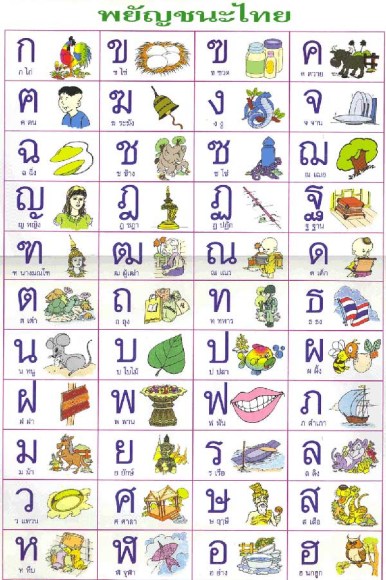
Above: the Thai consonant chart. Each consonant is related to a specific word, similar to “A-Apple, B-Boy” except the word is used consistently with that consonant.

When I step out of my home, I am immersed in a world that is as inaccessible as my English world is accessible. I see the printed Thai script but unless I specifically make the effort to find the words and their meaning, it is just a collection of now-familiar characters: 44 consonants representing 21 sounds, 18 vowels, four tone marks.

The best analogy: playing one of those hidden-word games where words are buried in a grid of letters. That’s how it is when I see Thai: When I look, I see a bunch of Thai characters. I have to look much closer to find the words. Finding the meaning requires yet another step, as I’m at the stage in building my vocabulary where I recognize that I’ve seen a word before, but am uncertain of its meaning.

It is much the same with conversation. If someone is speaking to me and I know what subject we’re talking about, then I am generally okay. I won’t know all the vocabulary, but I can follow along and even contribute a bit. If it is a random conversation into which I stumble, I’ll likely be lost, recognizing some words as they pass by but as unable to grasp onto them as I am unable to board a rapidly-moving train.

That’s the first and most significant aspect of my life in Thailand. I realize, upon rereading what I’ve written so far, that it may sound like a complaint. It isn’t. In truth, Tawn or any other Thai is likely very impressed with my progress. I’m well ahead of 95% of the expats who live here. But I’m also well behind the top 1-2% who are truly fluent in Thai.

Mai Pben Rai

The second notable answer to the question has to do with understanding the Thai mentality – heavily rooted in Buddhism – and the Thai way of looking at the world. Some illustrations:

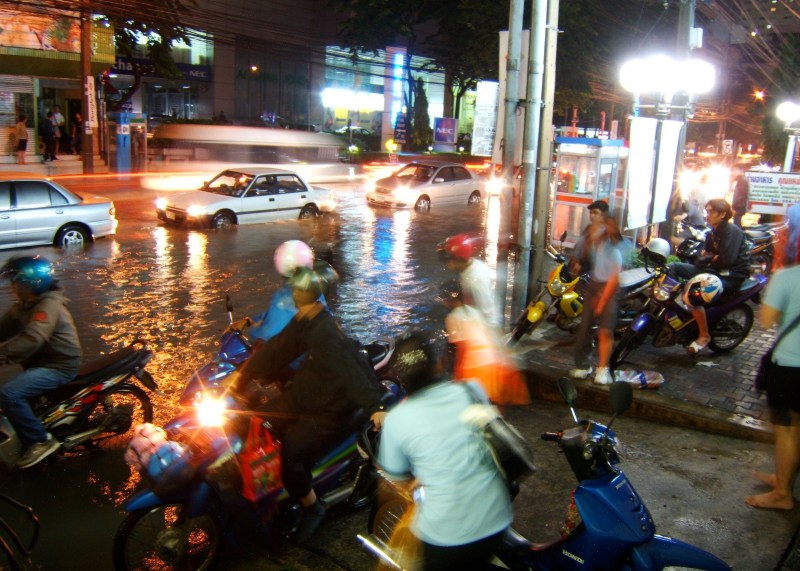
Mai pben rai – literally, “it’s nothing”. This phrase is constantly invoked by Thais to indicate a “no worries” approach to life. You’re running late for class? Mai pben rai. Stuck on a flooded street? Mai pben rai. You forgot to run an errand? Mai pben rai. Not interested in completing the job as promised? Yes, you guessed it: Mai pben rai.
2009-03-03 02

Above: Flooded street leaves you stranded for hours? Mai pben rai!

At first, this can be infuriating. In many (especially Western) cultures, we make a big deal out of things such as being on time, doing what you promise, following up on details, etc.

2009-03-03 03

But Thais subscribe to the belief that you shouldn’t sweat the small stuff. And, it seems, nearly everything is small stuff.

The upside to this is that you learn to be much more sanguine about the world, much more accepting about the truth that our sense of control over most aspects of life is largely an illusion. Stuck in a traffic jam? Mai pben rai – don’t worry, you can’t control the traffic. Unable to watch a film you badly wanted to see? Mai pben rai – maybe it will be available on DVD soon. Caught in a rainstorm without an umbrella? Mai pben rai – just duck into a restaurant for a snack.

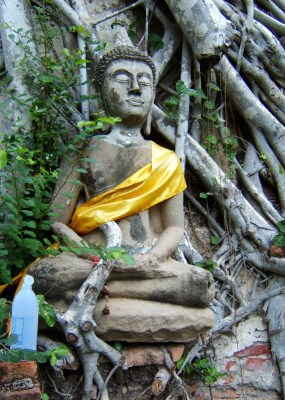
Thai culture’s Buddhist roots, with its emphasis on the impermanence of all things, is seen everywhere. From the lack of city planning to the way that most plants are potted rather than being planted into the ground to the quality of sidewalk construction, Thais are wired for short-term thinking.

2009-03-03 05

The Land of Smiles

The Tourism Authority bills Thailand as “The Land of Smiles”. Try telling that to a load of commuters on the un-air conditioned number 38 bus line in Bangkok.

Seriously, though, two features of life here are illustrated by the concepts of suphap (“polite”) and sanuk (“fun”). Thais believe that, regardless of how they think or feel on the inside, the exterior should be polite and pleasant. Why should everyone else suffer just because you are feeling down? Keep a smile on your face and be pleasant to others.

2009-03-03 04

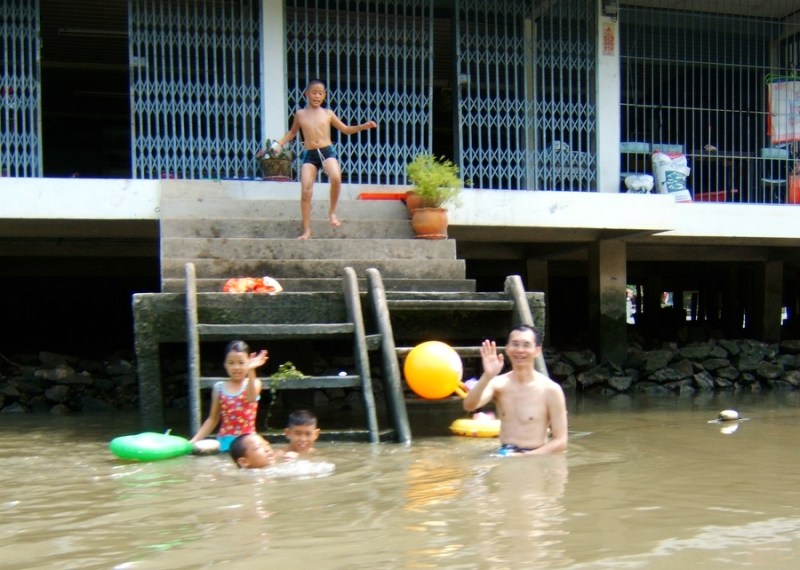
Above: Friendly and polite locals wave as we pass by in a boat.

At first a foreigner might mistake those smiles for happiness, agreement, being pleased, etc. Eventually, most learn that Thai smiles have a hundred meanings, only some of which are positive. .

Upon learning this, some foreigners disdain this outward veneer of pleasantness as being artificial. It is hard to explain adequately but perhaps it helps to see the Thai perspective on things:

A Thai walks into a store in Los Angeles and the cashier smiles broadly, asks how her day is going, asks where she’s from and how she likes the weather. The Thai is used to walking into a store in the other City of Angels and being greeted with a pleasantly soft “Sawatdii kha” and the prayer-like wai in which the palms of the hands are placed together in the center of the chest. To an Angelino, the Los Angeles cashier seems very friendly. To the Thai, that same cashier is being over-familiar.

But here’s the contradiction: in the west, if you walk up to someone on the street to ask for directions, their initial reaction will likely be apprehensive and guarded. Especially in an urban environment, they may well wonder if they’re being taken advantage of.

Here in Thailand, when we stop a person on the street and ask a question – “Hey, uncle, do you know where I can find that famous noodle shop with the tom yum broth?” – we get a friendly smile and helpful directions.

I’ve observed this among Thais, so it isn’t just a Thai-foreigner thing.
2009-03-03 06

The Food

Even though my original snappy answer to the question was that Thai food is really good here, it actually is one of the true answers: Thai food really is better here.

When I lived in the US, I thought Thai food was good no matter which restaurant you went to. “Bad Thai food?” I thought, “Surely there is no such thing.” Of course, once I moved here, I realized that there are few Thai restaurants in the US worth eating at unless it is a case of severe gaeng kiaw waan withdrawal.

But beyond that, Thailand has much more healthy, fresh, inexpensive food readily at hand than in the US (and maybe many other places in the west). You’re in the US, it is 3:00 pm and you want a snack. What are your options? Donuts, burgers, fries, tacos, ice cream? None of which are good for you nor really that satisfying.

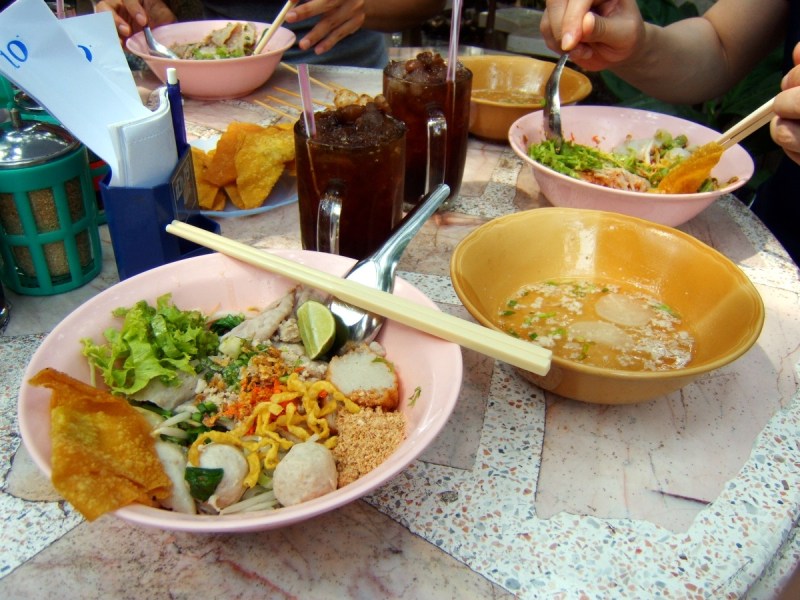
In Thailand, a bowl of noodle soup, a plate of spicy green papaya salad, a stick of grilled fish balls in sweet chili sauce, or a bag of fresh fruit are readily available on most any street corner, are relatively healthy and are very inexpensive.

Sure, Starbucks’ venti mocha frappaccino with extra whipped cream and McDonald’s hamburgers are available here (and the growing incidence of childhood obesity testifies to that fact) but there are so many readily available, healthier options, options that I miss when I’m back in the west.

2009-03-03 07

Beauty and the Good Life

The French have their joie de vivre, the Italians their la dolce vita. Thais, too, are all about ease, comfort and enjoyment of life. Even with some of the world’s worst traffic, Bangkok residents make enjoying life a priority. There is always something fun happening, things are festively decorated, and thinking too much about your cares and worries is discouraged.

People interact more with each other and their surroundings here than in the west. People are more playful, too, but not in the sarcastic or mean-spirited way you see in the west.

There is great beauty. Thai temples and Brahmanist spirit houses are elaborately and colorfully decorated. Fairy lights – what North Americans call Christmas lights – are used to dress up the landscape for no reason other than the sheer fun of having little twinkling lights strung up in the trees.

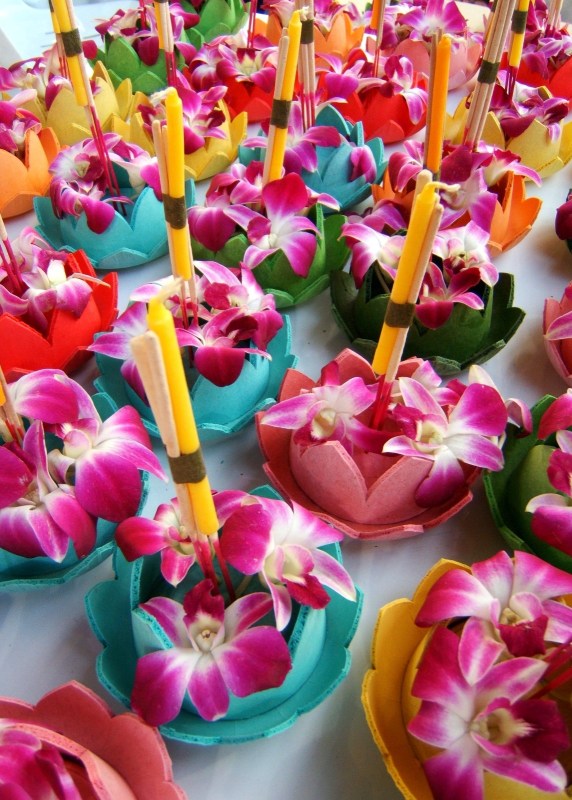
Flowers are very inexpensive, very beautiful and very bountiful here. Every market and many street vendors sell beautiful blossoms and fragrant jasmine garlands. Again, in line with the Buddhist belief in impermanence, potted plants decorate sidewalks and balconies, rearranged endlessly and replaced when they die.

2009-03-03 08

Thais take great care to keep things (including themselves) looking neat and clean even in the midst of the city’s chaos and pollution. Even from the working class houses lining the murky Saen Saeb canal, carefully-groomed residents emerge on their way to work, shirts neatly pressed and great thought given to what handbag (probably a knock-off sold at a discount mall) to carry.

The Social Ladder

Thailand has a very hierarchical society: When two Thais meet, they try to determine who is higher than whom on the social order. This ranking has great effect on all aspects of their subsequent relationship: how to address each other, who serves whom at the table, who pays the bills, who walks out the door first, etc.

This chafes western egalitarianism and takes a long time for foreigners to get used to and understand. It is hard to overestimate how important it is for Thais to understand where they are on this hierarchy.

2009-03-03 09

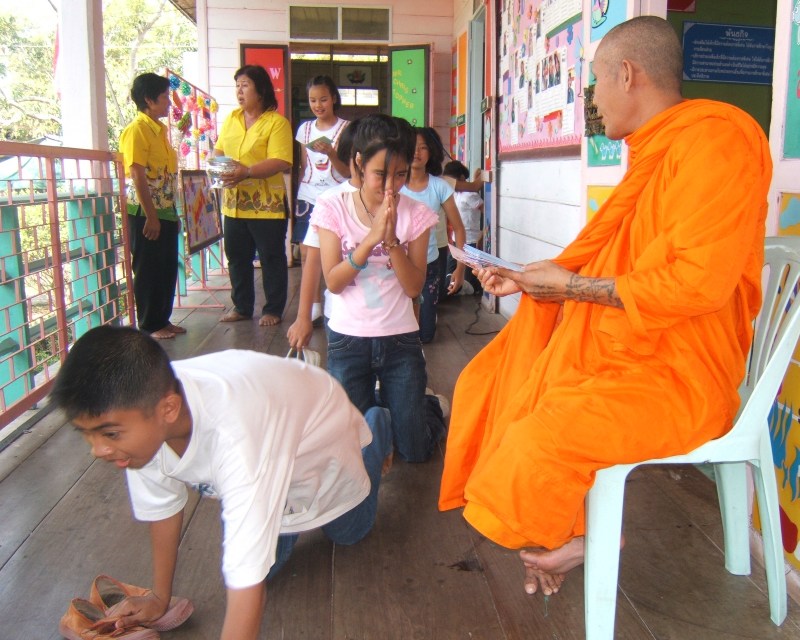
Above: Students behave appropriately, approaching the monk on their knees then crawling past him. Females are especially careful to avoid coming into direct contact with him.

The ways in which this impacts foreigners are numerous and subtle. One expat incorrectly explained to me that foreigners, being guests, always rank highly, just below politicians, royalty and monks. He couldn’t have been much more wrong.

Foreigners are in their own category, separate and measured by another standard, namely, the extent to which you understand and play by the Thai rules.

What’s the practical effect of this? On the Skytrain, for example, I move out of the way for those above me on the social ladder – elders, for example – but not for teenagers.

When I walk past puu yai – literally “big person” or “adults” – who are having a conversation, I duck my head ever so slightly, showing my respect by not towering over them.

2009-03-03 10

Above: Even the leaders of the September 2006 coup were careful to visually emphasize that they knew their place – still below the monarchy.

Remember the scene in the musical “The King and I” (banned in the Kingdom of Thailand) in which Anna Leowens and the King of Siam debate over how high she should hold her head in comparison to the king? It is the same thing – your head you should be lower (or, at least, bowed a little in respect) as you pass by or sit with someone who is of a higher rank than you.

When speaking with monks, I should hold my hands in a wai at my chest. When hanging out with peers in my age group, I can relax and not be so concerned as we’re equals. When teaching at the school and helping a student with his work, he offers me his seat and then kneels next to me as I explain the assignment. Everyone has his or her place in the hierarchy and that place is relative to the people with whom you are interacting.

Small things? Maybe, but ones that show that you know your place in the order of things.

At the very top of the order are the religion and the monarchy. Pictures of His Majesty King Rama IX adorn nearly every house and place of business.

2009-03-03 11

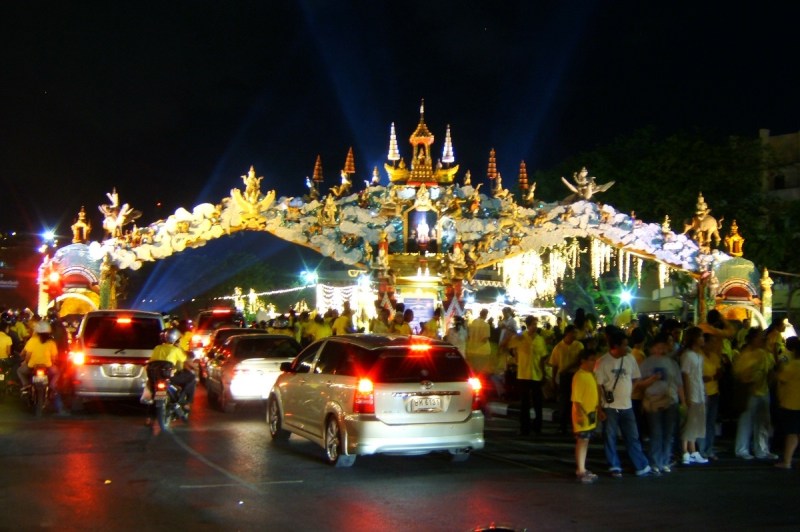
Above: Street decorations celebrating the 60th anniversary of the King’s reign.

At the start of movies and concerts, the audience stands for the royal anthem. If a royal motorcade passes, people stand quietly and respectfully at the side of the road and, if it is the king or queen passing, bow at the waist as their car goes by.

One important facet of this respect for the monarchy is that you don’t – don’t – discuss the affairs of royalty. You don’t ask Thais what they think of the Crown Prince or Crown Princess. You don’t speculate as to who will succeed the King. You don’t debate the merits of a constitutional monarchy or the appropriateness of still having (and enforcing) lese majesty laws.

Even with a Thai with whom you think you’re close, you are best advised to leave this topic alone.

My Final Answer

The final answer to the question of what it is like to live here lies in an additional Thai concept: samruam. Roughly translated, “restrained”. It is related to the previously-mentioned concept of suphap – “polite”.

The thing that keeps this culture going is the emphasis on external appearances, most significantly, keeping up a polite and appropriate appearance and being restrained in your behavior.

For example, Thais believe that the feet – the lowest part of your body – are the dirtiest and least polite part, too. Resting your feet (especially with shoes on) on furniture or the wall, pointing your feet towards someone or an image of the King or the Buddha, or touching someone, moving something or gesturing with your foot, are all hugely mai suphap – impolite.

In fact, the slang term for “foot” is muu farang – foreigner’s hand. That’s because westerners are more inclined to push, gesture and touch with their feet – actions the Thais associate with being coarse and unrefined. In other words, being a foreigner.

You see this in the way people sit in public: feet flat on the floor or, if a woman crosses her legs (not very suphap), it is done with legs tightly together and the foot pointed down. On the Skytrain last week, I observed a foreigner sitting with his legs stretched out across the aisle, pointed towards a lady on the other side of the car. Had he not been absorbed in the pictures on his phone, he might have noticed the dirty looks other passengers were giving him.

Samruam – restraint – is related to suphap. Thai culture is about moderation in behavior, voice, feelings, etc. Thais are fun-loving people but rarely boorish, loud or obnoxious. Thais get upset but rarely do you see public bursts of anger.

The recent prime minister, Samak Sundaravej, caused quite the stir because of his famous outbursts. When questioned by a female reporter once, he avoided answering by accusing her of not having enough sex. In general, prime ministers aside, losing your temper diminishes your public standing. To berate someone publicly is an invitation to revenge.

Thais dress modestly. When a foreigner is sitting at a restaurant on a sunny day and takes off his shirt to enjoy the sun, Thais are taken aback. (I’ve witnessed this. I wanted to say something but restrained myself – confrontation is seen as even worse than being not samruam.) Women in spaghetti strap tops are assumed to be bar girls or sex workers. If they are foreigners, the fact that their foreigners (again, course and unrefined) is their excuse.
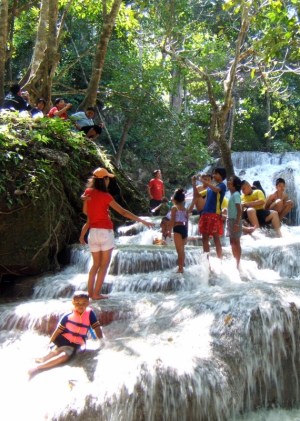
2009-03-03 12

Above: Even at the Erawan Waterfall, Thais are dressed with relative modesty. Only foreigners and young children show bare shoulders.

On the surface, this may sound prudish. But to really understand it, you have to remember that in Thai culture, it is important to keep up appearances. Loud, obnoxious, revealing and unrestrained clothing/behavior/manners don’t keep proper, considerate appearances up. They make life less pleasant for everyone else.

And that’s an important part of life here. That’s why, despite the heat and humidity, I rarely wear shorts (even cargo shorts) out of the house. And when I do, it is only for Saturday morning errands in the neighborhood, never out for dinner.

Conclusion

So what is life like here? Living in the environment of a different language makes it very challenging but opens worlds of understanding. The mai pben rai attitude is more relaxed, less worried, and occasionally frustrating when you want to get something done.

Politeness, appropriateness and fun are values that influence all aspects of life and behavior, generally making social interaction smoother and more pleasant. Knowing your place in the hierarchy of society makes you more considerate of others and, in return, you receive more respect from others, too.

Finally, from food to flowers to music, life here has a lot of good things to offer, even when they aren’t expensive or are surrounded by a chaotic environment.

I hope that I’ve given you a bit of an answer to what life is like here. As you can probably see, it is hard to describe it succinctly. The only short answer I can think of is:

“Requires different operating instructions.”

Thailand Thanksgiving 2008

Thanksgiving has come and gone and it was, by most measures, the most successful party we’ve hosted here in Thailand.  The last minutes weren’t a frenzied rush to the table, clean-up wasn’t such a hassle, and the food was very good.

I started Friday about 6 pm and prepped until just after midnight, focusing mostly on the stuffing and getting dry ingredients measured out for Saturday’s baking.  All about that in the previous entry.

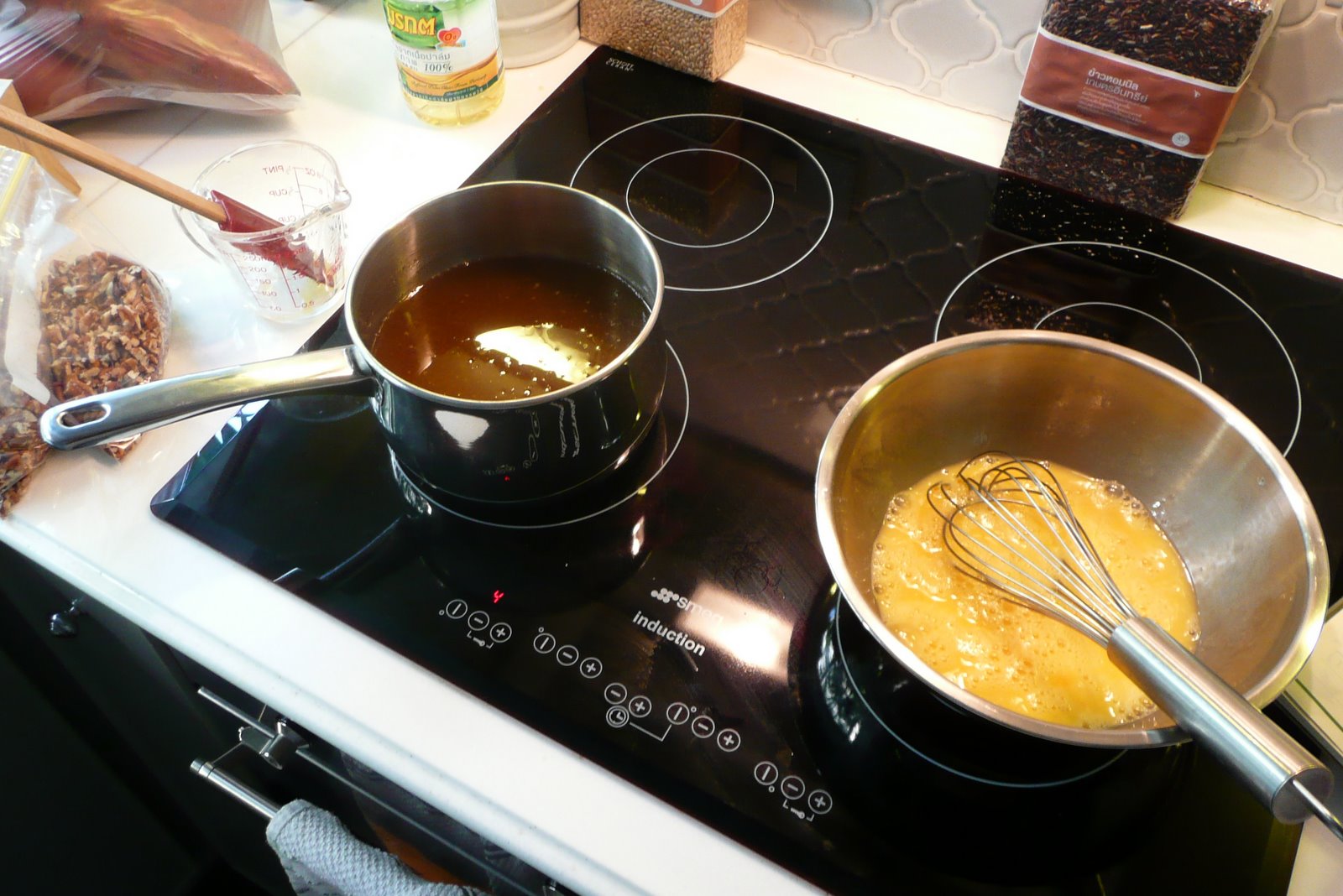
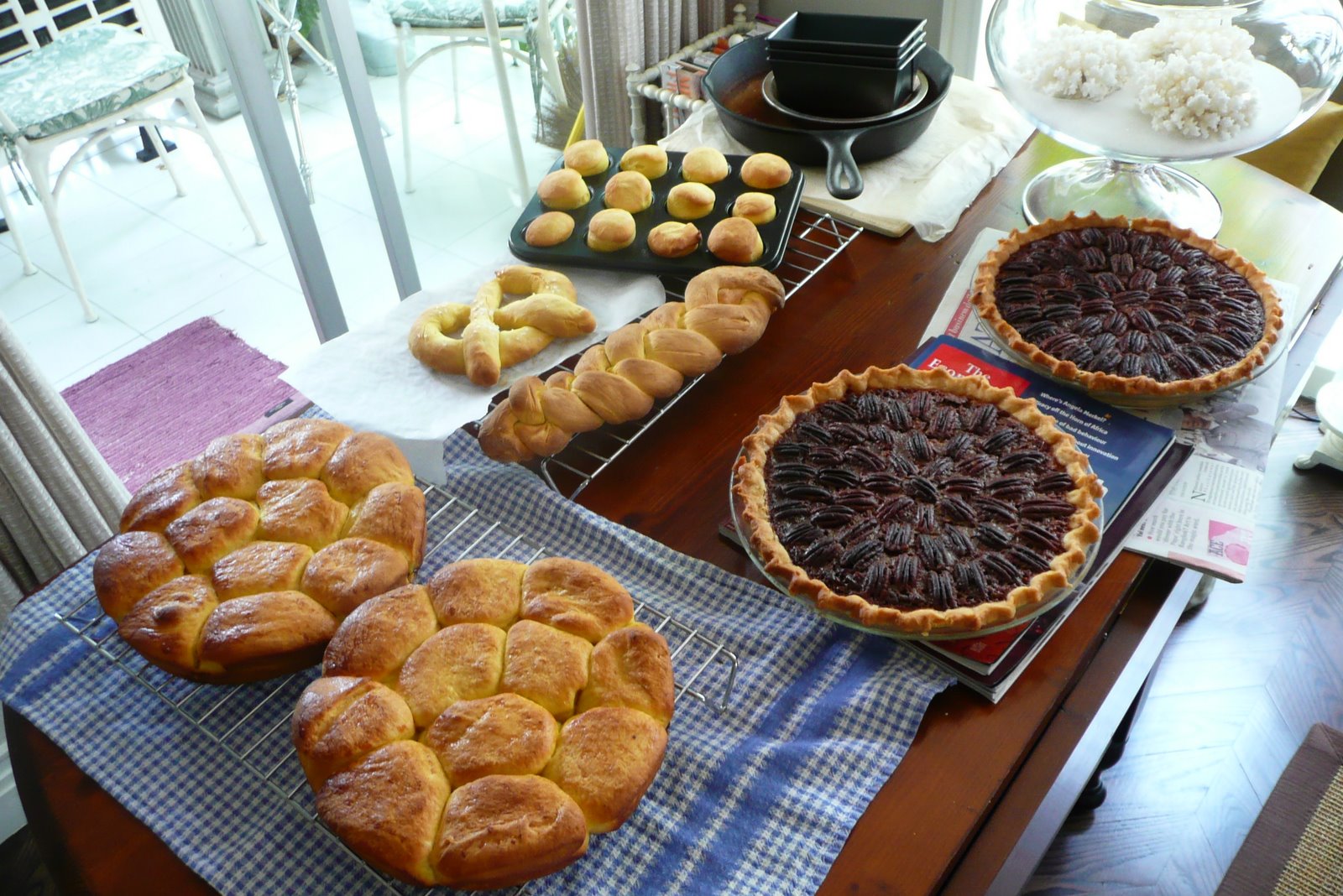
Saturday I started about 8 am and worked through my list one item at a time.  The morning was spent baking pecan pies and squash rolls.  After making four dozen rolls I still had dough left over, so I played with it, making a braid, some mini rolls in a muffin tine, and a pretzel.

P1120326

P1120327

P1120334P1120335 P1120346

This time around, I tried brushing the rolls with a milk and egg wash.  Ultimately, I think they are butter wish just some butter on top.  Also, I think I overbaked them a little.  They were not as light as the test batch I did earlier in the week.  The pecan pies were gorgeous and not too sweet.  I love the recipe.

Our guest list continued to fluctuate.  Ultimately, of the original guest list, we lost four because of the airport closure, gained two because of some new friends that entered the group, and then lost three at the last minute because of various complications.

Trying to plan for an ever-changing number of guests is a pain.  I ended up making a lot of extra food, which I realize is the case for Thanksgiving, but I’m not sure how much stuffing I really need.

Fearing that the 16-lbs turkey would not be sufficient (remember, it looked like we were going to be up to 20 guests at one point), I bought an additional turkey breast, dry brined it and roasted it Saturday morning.

Despite dry brining it only about 30 hours, it turned out very salty throughout.  Not sure whether I used the wrong type of salt or more than I should have but, while not inedible, it left me drinking a lot of water.

P1120349

P1120353

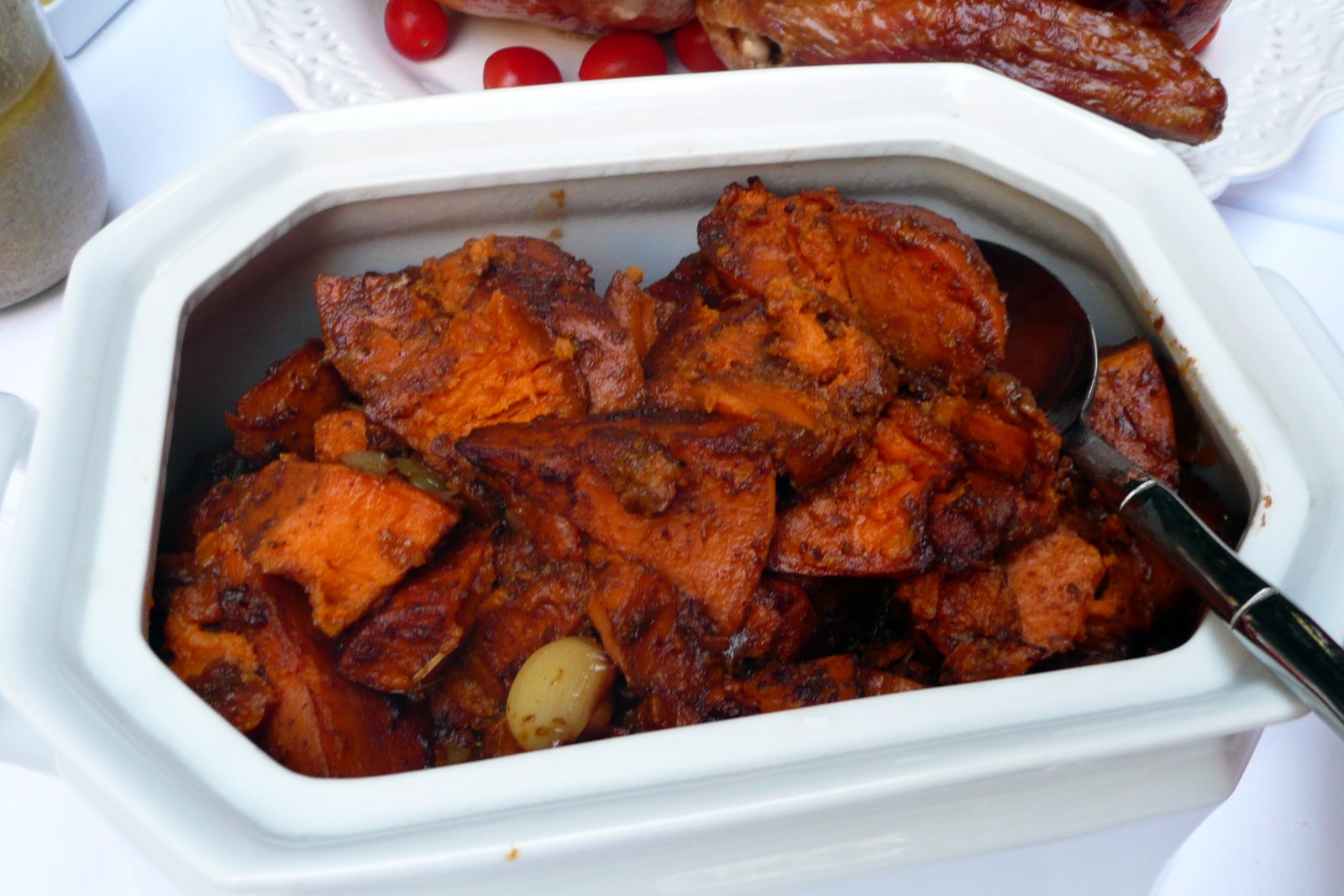
For the sweet potatoes, I went with the toasted spice rub.  They turned out well, again I had way too many prepared, but I think they were a little over-cooked and mushy.

Things that were very positive:

P1120356Setting up tables and chairs downstairs by the pool.  The weather was perfect – about 80 degrees and a light breeze – and having a company provide all the dishes, etc. (and taking them away afterwards to be cleaned) made all the difference in the world.  Having people outside the house kept the gathering from feeling crowded.  Our house is really at its best with six guests, no more.

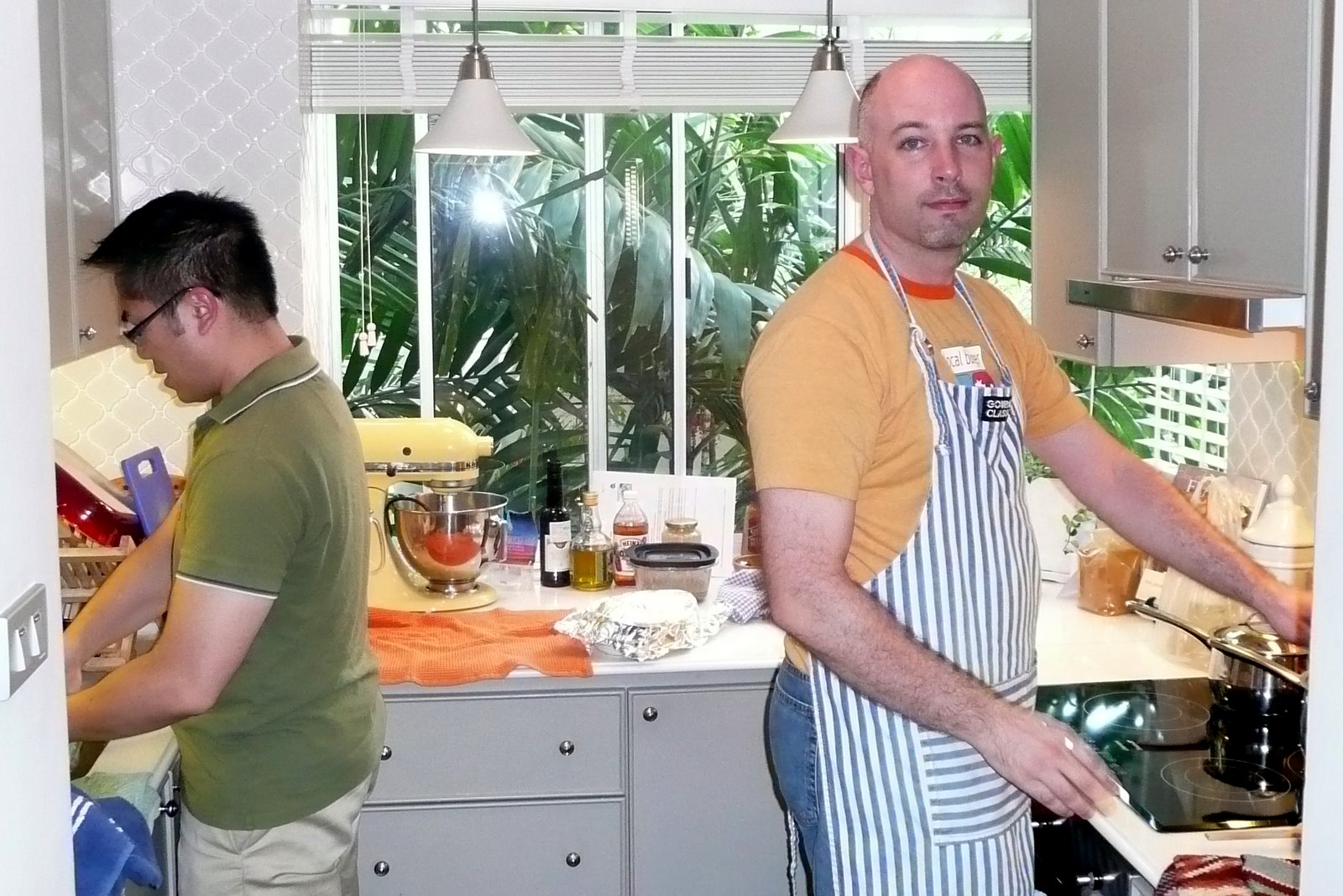
P1120359Having some friends come over early to help.  Boon (in green, right) and Kobfa lent extra hands in the kitchen and as other guests arrived, Tawn wasn’t shy about getting their help with last minute arrangements.

Tawn’s aunt also came over to keep an eye on things and lend a hand.  Since we were downstairs by the pool, we wanted to be able to keep the house open for people to get things and use the toilet.  Having someone there ensured that possessions were safe and secure.  Also, she helped washing dishes so we didn’t have as much of a mess to clean up at the end of the night.

P1120367

Above, our poolside location.  Below, table arrangement by Tawn.

P1120362

Here’s the menu.  Links go to the recipes.

Pear and Blue Cheese Salad

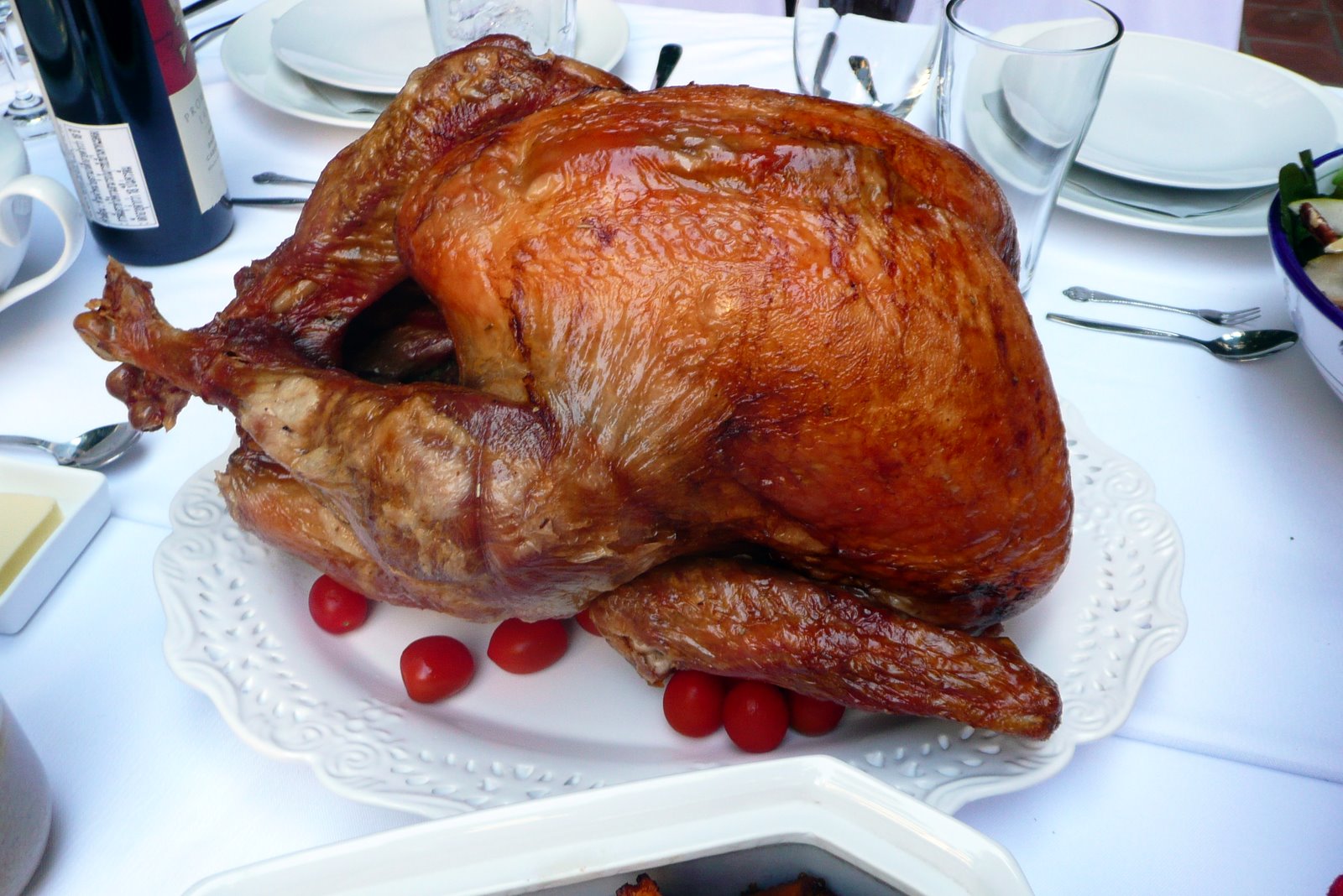
Traditional Roast Turkey with Gravy

Dry Brined Roasted Turkey Breast

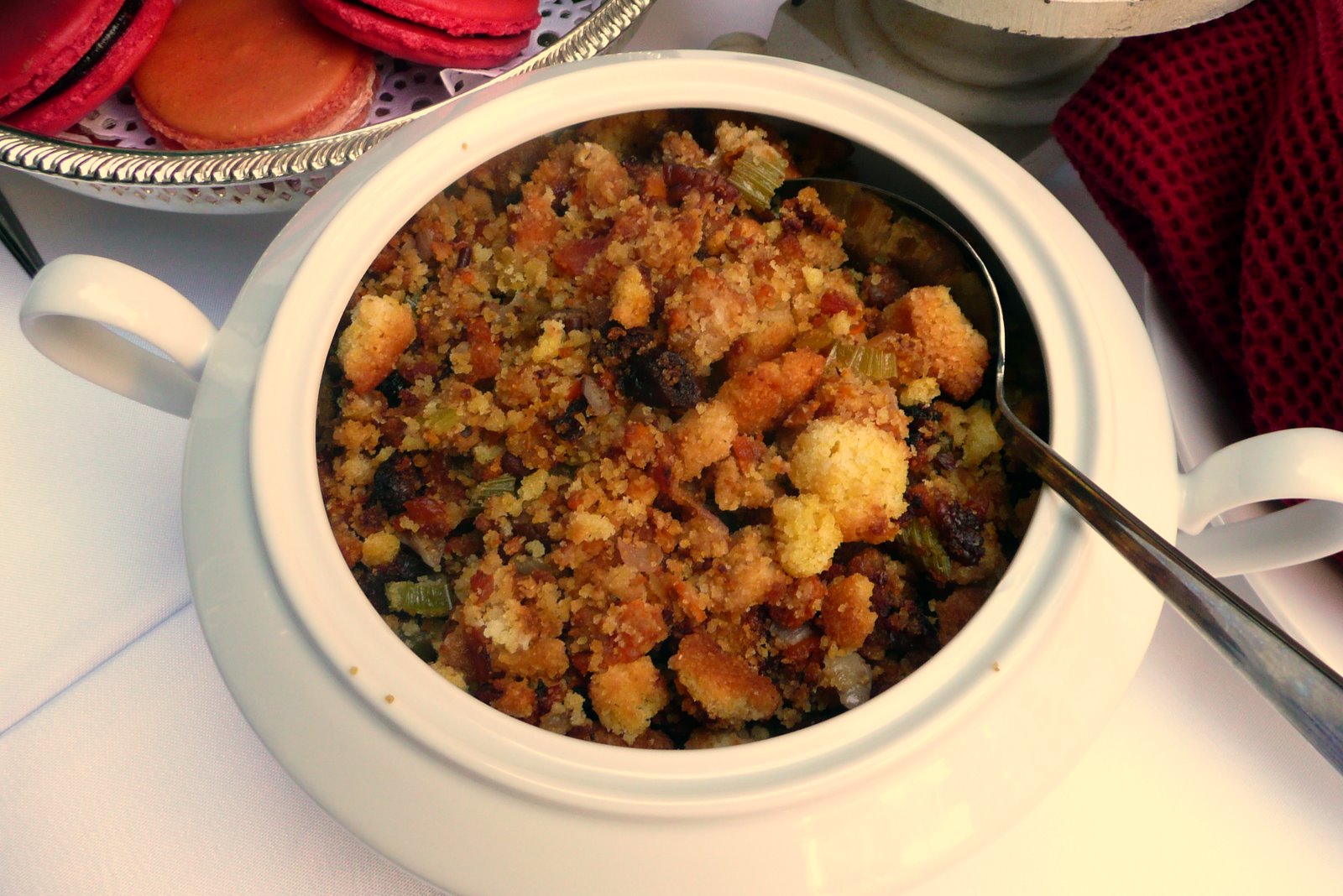
Cornbread Chorizo Stuffing

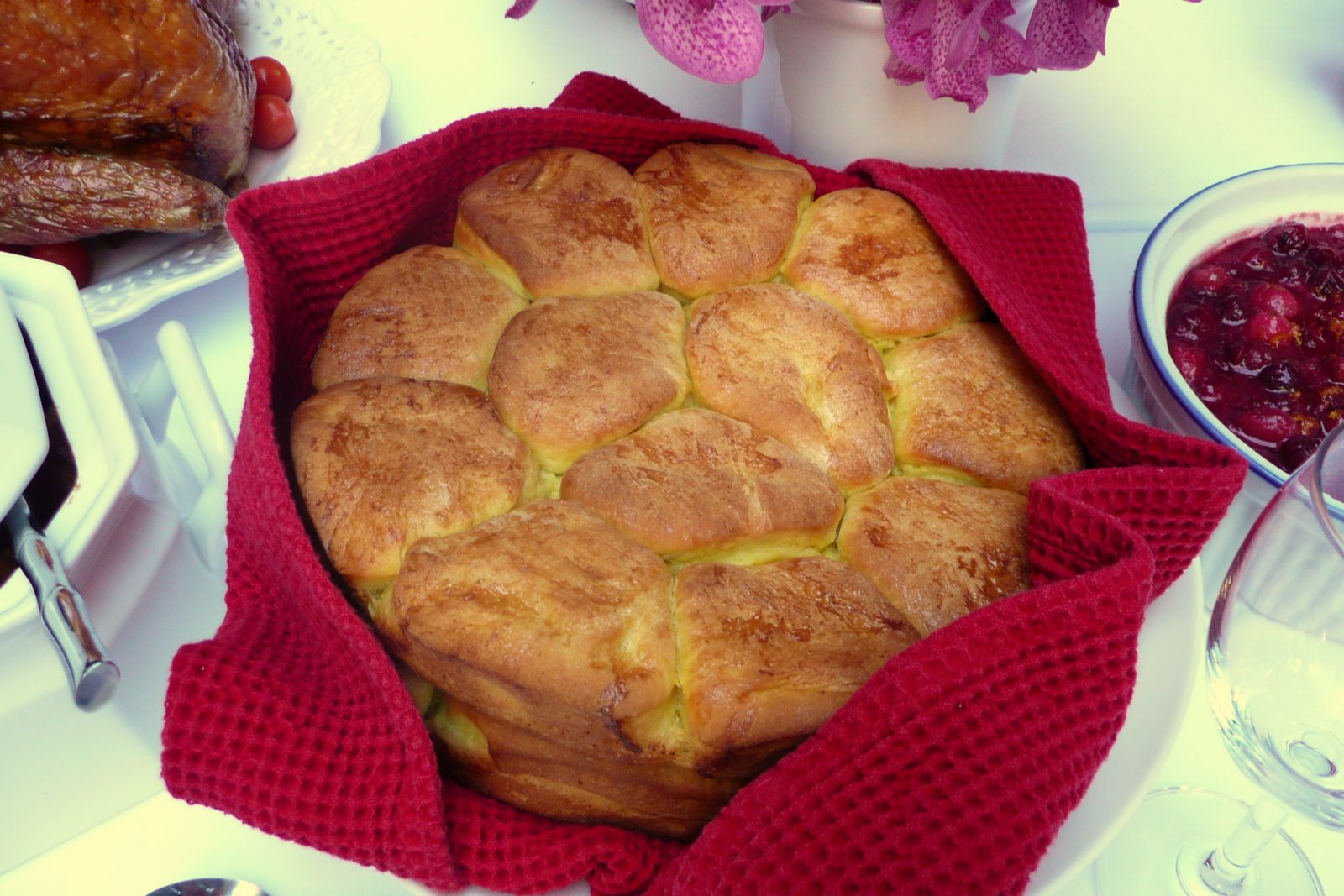
Braintree Squash Rolls

Yams with Toasted Spice Rub

Italian-Style Cranberry Citrus Dressing

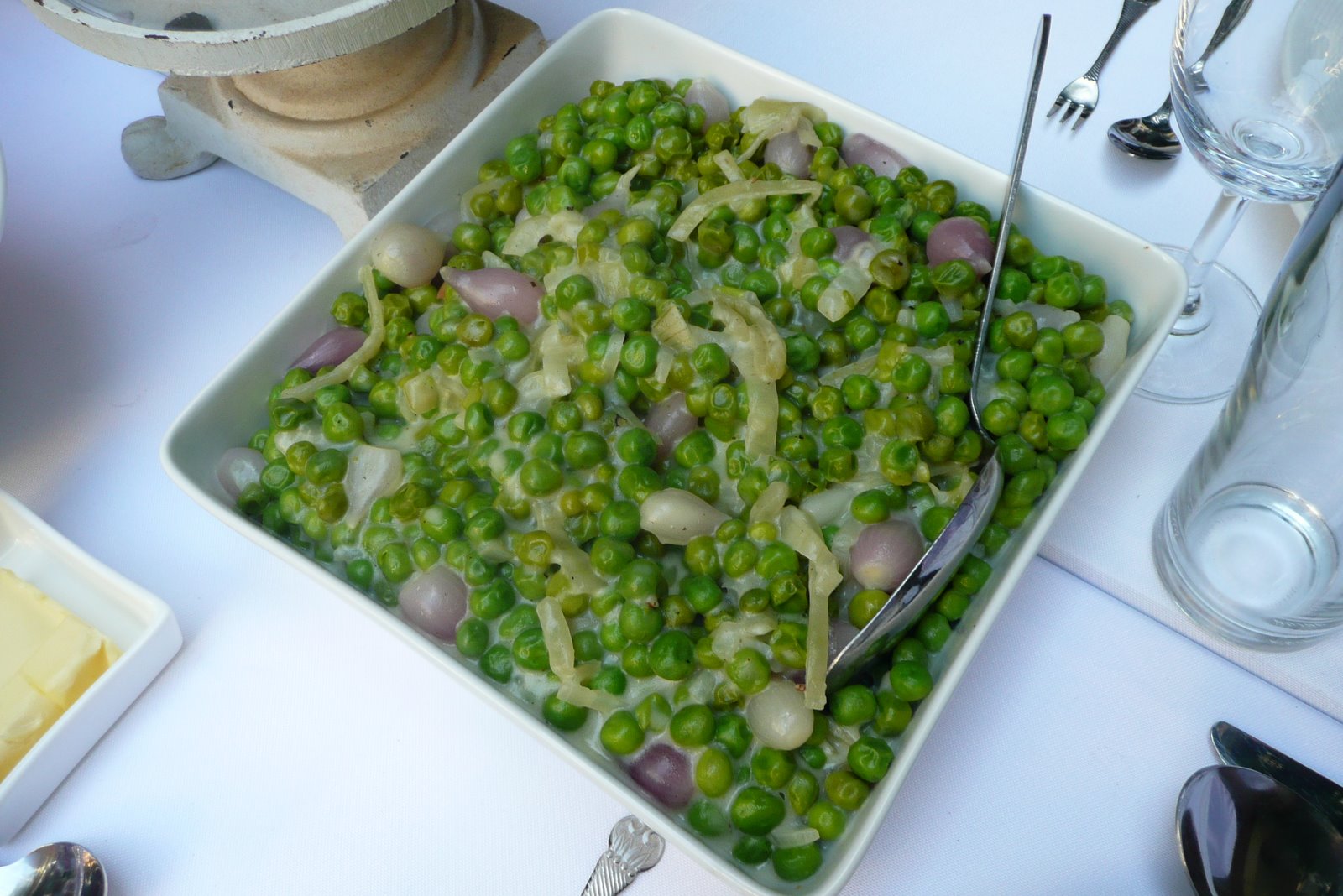
Southern-Style Creamed Peas

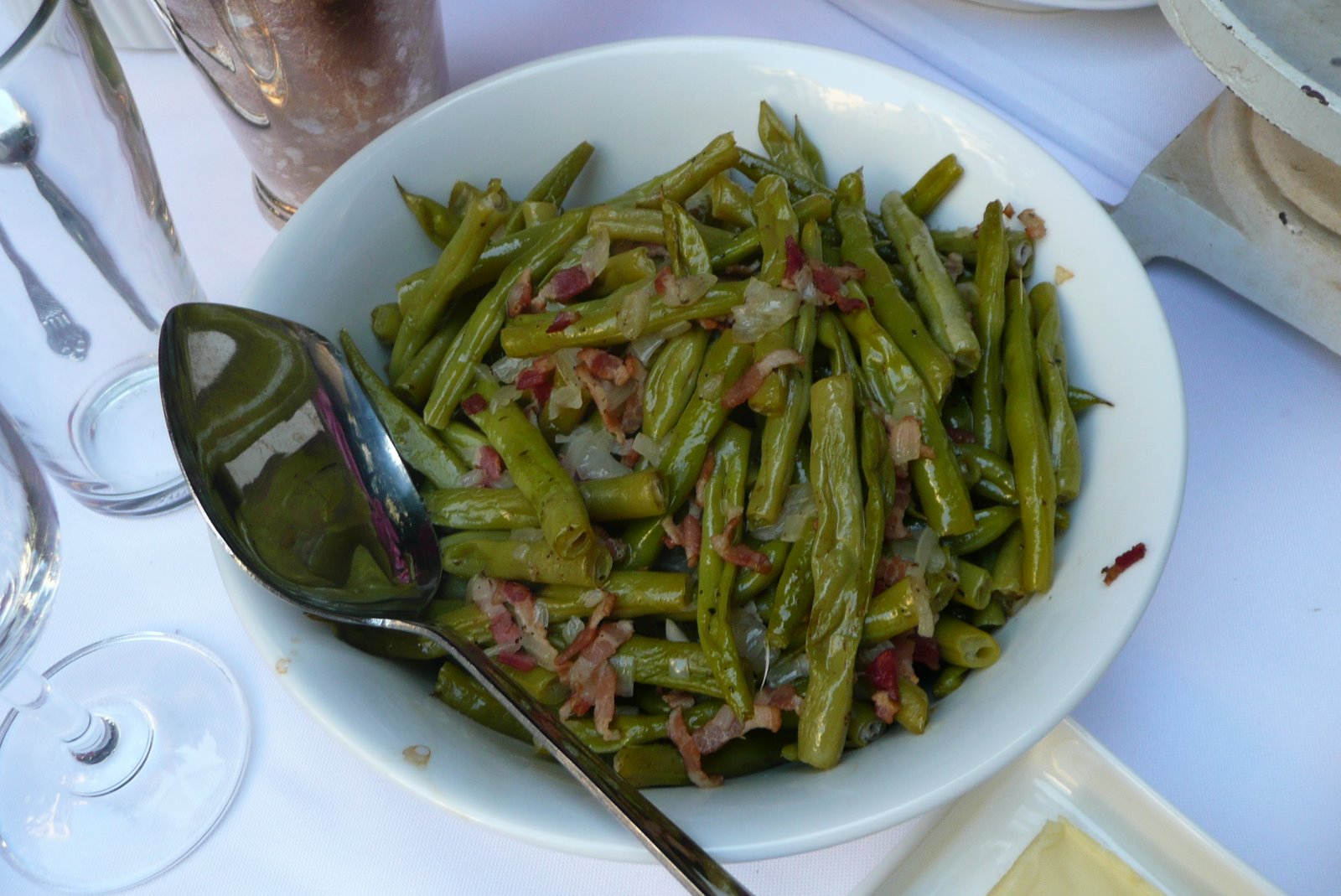
Fresh Green Beans with Bacon

Pecan Pie

Pumpkin Pie

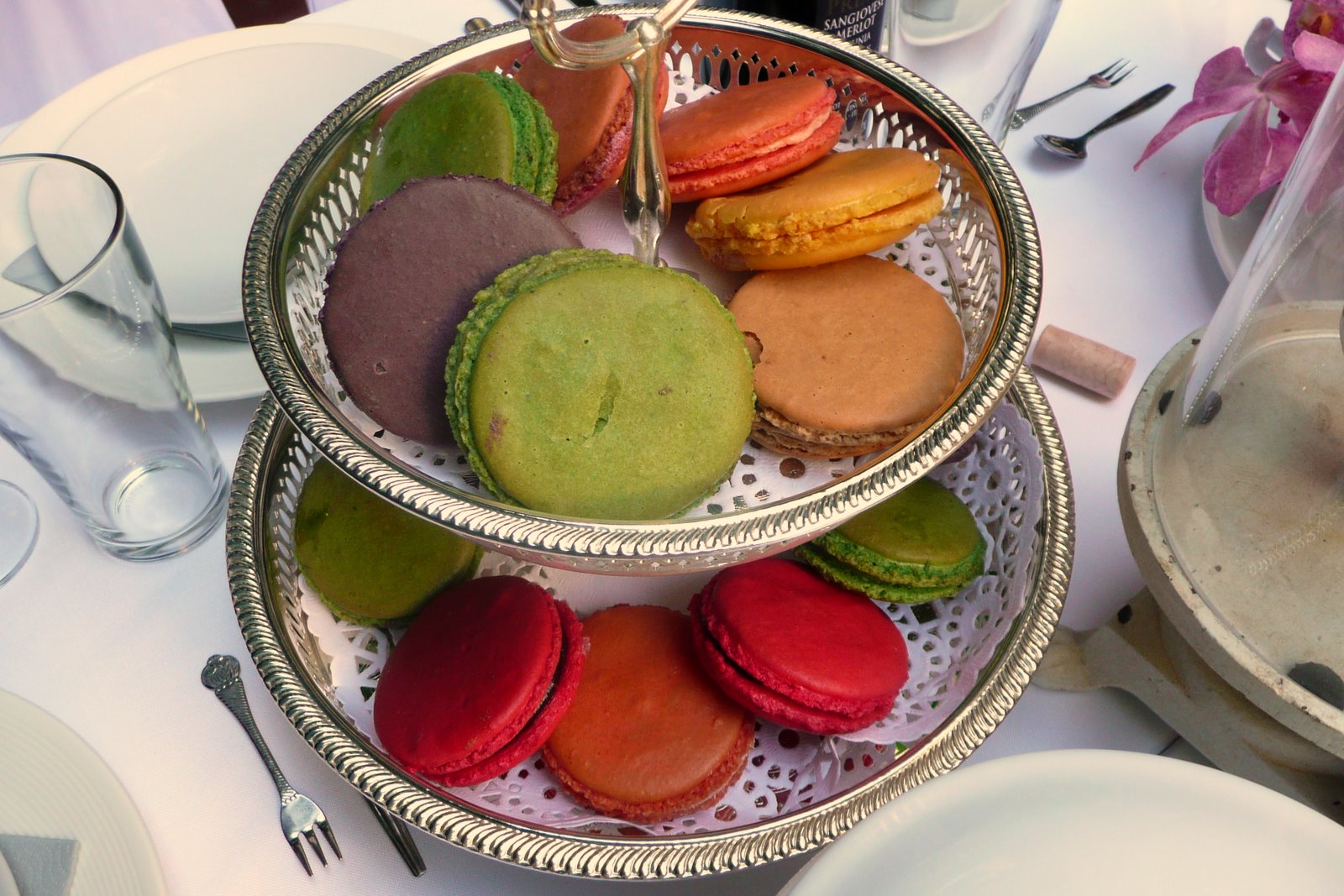
Assorted Macarons

The pumpkin pie was made by Matt’s partner Si.  Unfortunately, I didn’t get a picture of either his pies or the pecan pies I made.  They were tasty, though, so if you want his recipe I can track it down.

P1120384

P1120379P1120385P1120376

P1120323P1120370

P1120377

P1120372P1120387

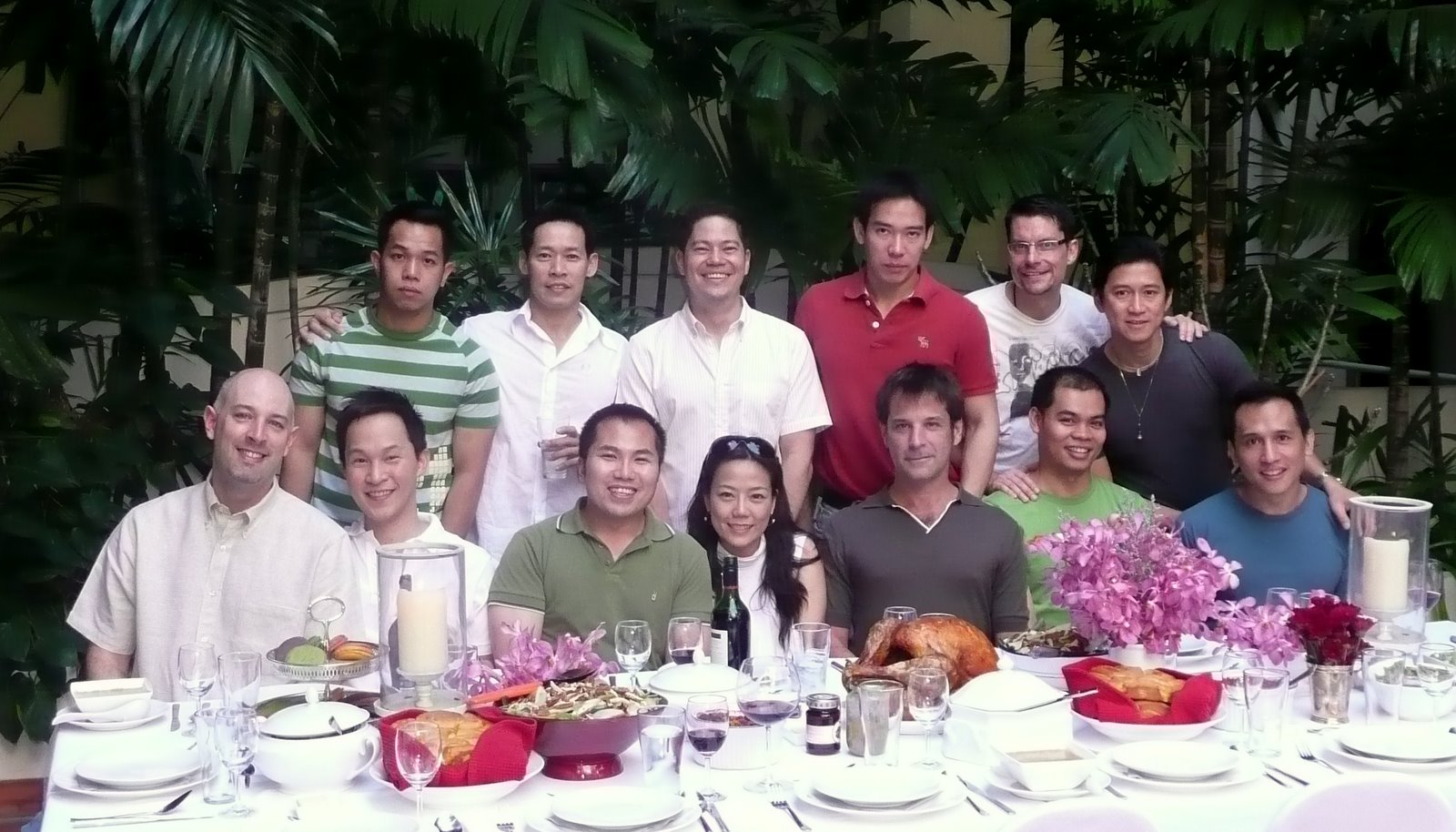
We had time for a group photo before we tucked in.  Standing from left to right: Chairat, Francois, Doug, Matt, Markus, Suchai.  Seated from left to right: Chris, Tawn, Boon, Kitty, Si, Tam, Kobfa.  David arrived a bit later.

P1120393

While guests started serving themselves, Markus assisted me with the turkey carving, a task made all the more difficult by a wobbly table and the wrong type of knife.  I guess I should cave in and purchase a carving knife.

P1120399

Below, Kitty and Doug confer, Matt spreads butter on his roll, and Si, Kobfa and Boon converse.

P1120404

Below, the happy hosts with Kitty and Doug.

P1120410

We started dinner about 4:30, which meant that even after a very leisurely meal and visit, we were wrapped up by 9:00.  Even after cleaning up and driving Tawn’s aunt home, we were in bed by 11:00.  Now that’s quite a feat on a party night!

Wrapping it all up

The first few weeks of November are the last few weeks of rainy season here in Khrungthep, the weather cools and the monsoon rains come one storm after another.  It is pleasant to see the end of this season as it is followed by three or four months of relatively cool weather.

P1110521

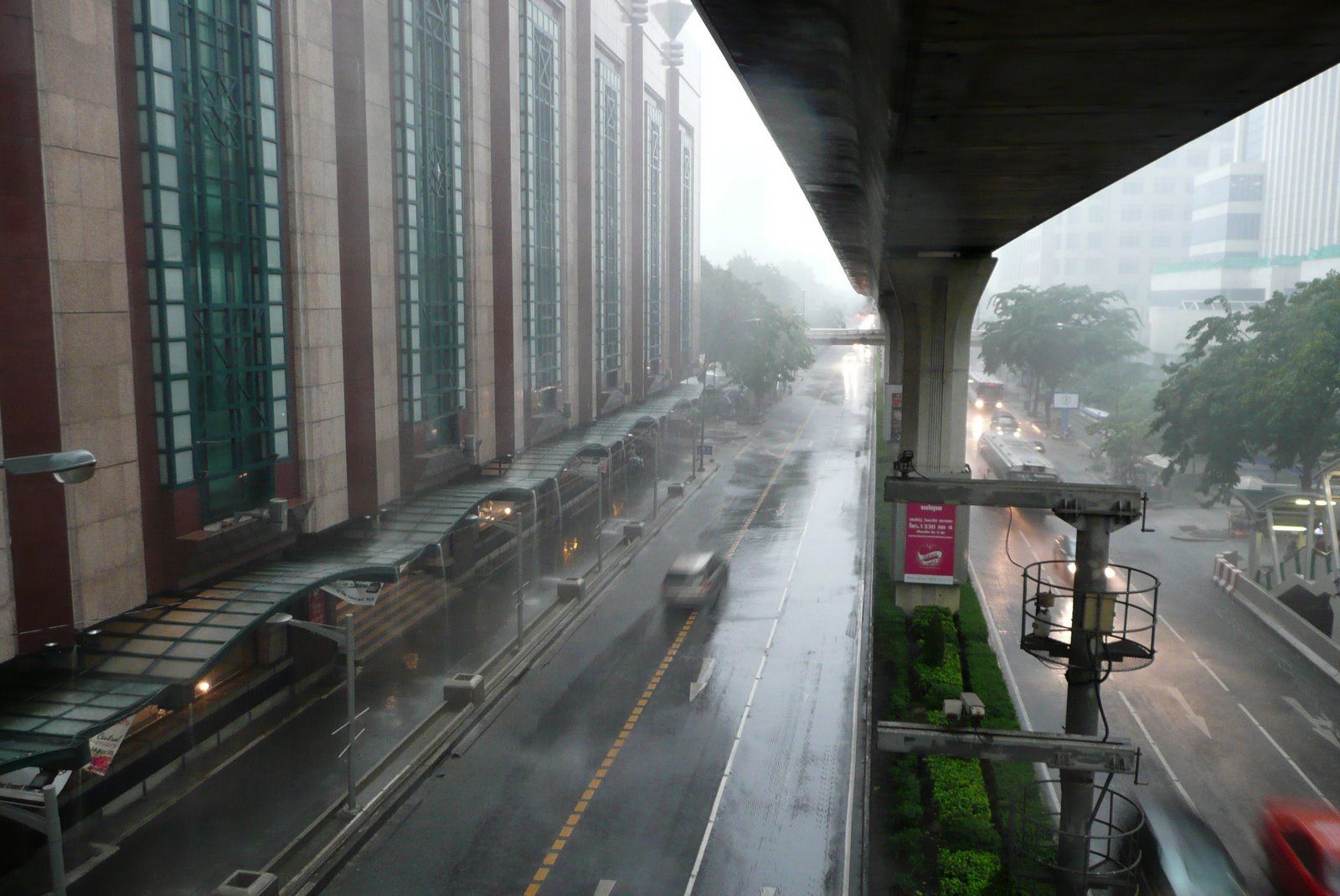
Meeting Markus for lunch the other day at Central Chidlom department store, another storm arrived, stranding everyone indoors.  The mid-day traffic, usually very heavy around here, was notably absent.

A montage of monsoon scenes with some nice music.

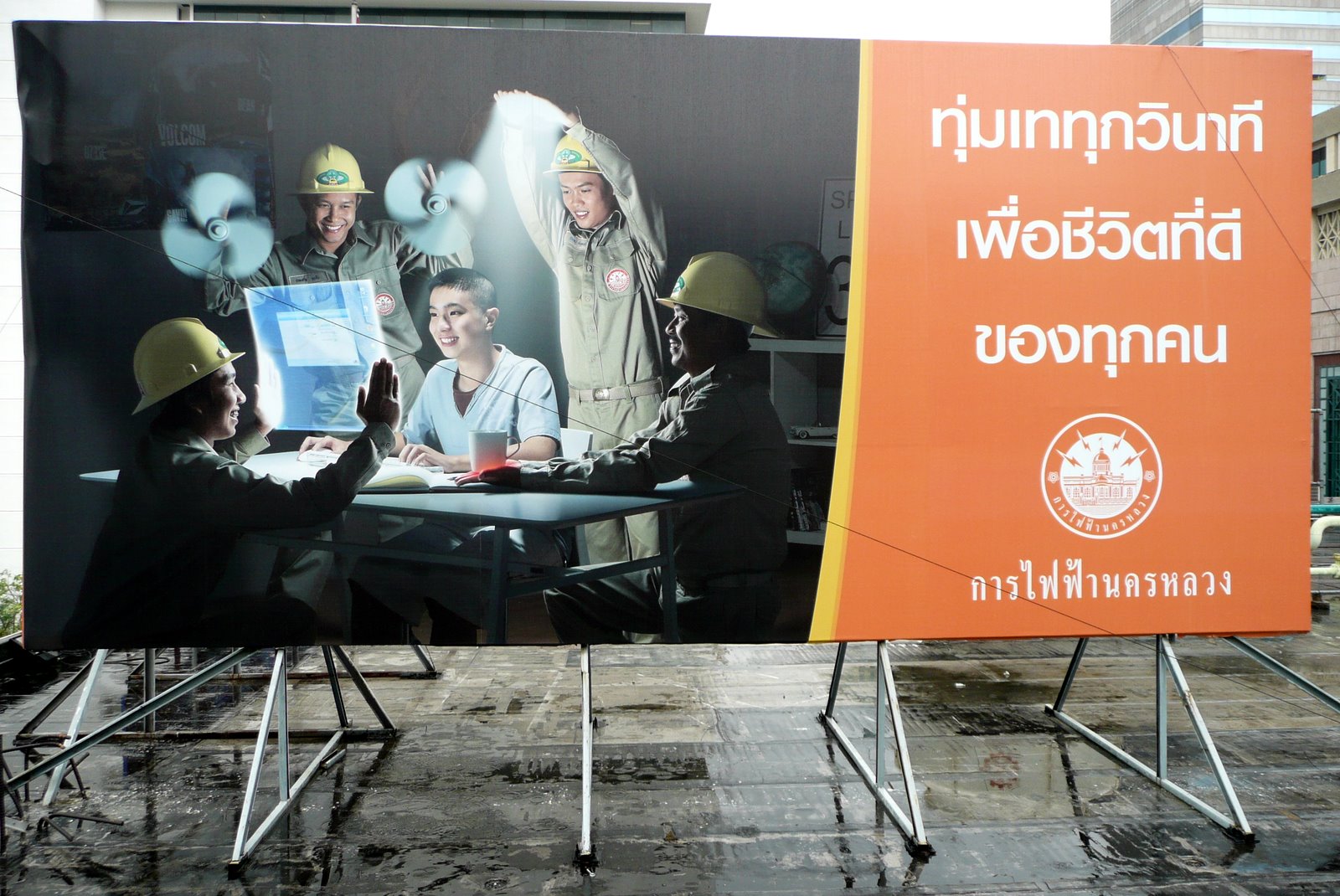
After the rains ended, I noticed this billboard atop the Metropolitan Electric Authority building, next to the Chidlom BTS Skytrain station.

P1110539

The message: “Dedicated every minute for the good life of every person.”  I’ve never seen MEA employees look so happy.