My life isn’t an episode of Iron Chef by any stretch of the imagination, but lately there has definitely been a featured “challenge ingredient”: beet root. Thanks to some buy-one-pack-get-one-free specials on locally-grown organic beets, I’ve been stocking up and trying different beet root recipes.
First it was beet pizza. Then a beet and goat cheese salad. Now comes borscht, the classic Russian peasant soup that is served either hot or cold and is garnished with sour cream.
I don’t recall ever having had borscht. My friend Ken, whose parents are from Russia, hates it, but maybe if he tried this recipe he might change his mind.
I started out by sauteeing some aromatics – carrots and onions in this case, although a bit of celery would have been nice, too – with some thyme. I had already roasted the beets with just a little olive oil and a splash of orange juice until tender and let them cool.
Once softened and slightly caramelized, I pureed the beets and aromatics in a blender with some chicken stock. Stock, while relatively simple to make, is time consuming. I just buy my stock from the khao man gai (chicken over rice) vendor up on Sukhumvit Road. He probably loads it up with MSG so I dilute it in a 1:1 ratio with water. Even if it doesn’t have MSG in it, it is pretty richly flavored and I don’t want my borscht’s beet base overwhelmed.
After blending, which results in a beautiful color, I return the mixture to the pot, adjust with more stock and water to get the right consistency. Best to aim for just a little watery as it will thicken on the stove. A touch of honey and a bit of red wine vinegar adds a nice sweet and tangy flavor, which keeps the borscht from tasting heavy.
The garnish was interesting: in addition to the normal sour cream dollop, the recipe suggested grated Granny Smith apple. So I mixed the two. This was really nice as the apple adds a bit of texture to the soup.
We also enjoyed a nice pork loin and cheese panini on homemade bread, which is becoming a regular midweek dinner feature. This was a really satisfying dinner, easy to make and healthy, too.
I try my darndest to support local and sustainable farming practices. This is something of a new industry here in Thailand, although I guess you could say it is really an old industry coming back around, since until a few decades ago all farming here was both local and sustainable. The seed and fertilizer companies gained significant influence, like they have elsewhere, creating a dependence on the part of farmers that is just now starting to be broken.
When I’m at my local market, I make it a point to look for specials and seasonal items. We don’t really have as distinct growing seasons here as you do in more temperate climes, though. This week, though, there was a special on beet roots. Buy one pack, get one free. Local, organic, free! What more do I need to be told?
I walked home with six packages of beets (yeah, all pre-wrapped in plastic trays and plastic wrap… what can you do?) – about fifteen beets, each about the size of a small orange.
Not knowing what to do with the beets, I decided a good first step would be to roast them. This took a bit more than an hour but afterwards, I was rewarded with some beautiful and tasty roots.
Looking at some recipes online, I decided I would make a beet root pizza for dinner last night and then use the rest of the beets for a borscht (beet root soup) later in the week. The pizza was more of an idea rather than a specific recipe, a little bit of a walk on the culinary tightrope.
First step – some pizza dough (always have some homemade half-whole wheat dough in the freezer) covered with homemade hummus (I keep portions of cooked chickpeas in the freezer, too) as a base. In retrospect, the hummus, while tasty, wasn’t the right choice. Something acidic was needed to brighten the flavors and a tomato sauce or a tangy squash sauce would have been a better fit.
Some onions, which I had baked at the same time as the beets with a little bit of balsamic vinegar. These would have been more lovely had I spent a few hours making truly caramelized onions.
Sliced beets on top. I also boiled some eggs and was going to add these, but then forgot to take the container out of the refrigerator so they are still sitting in there this morning!
A little bit of chèvre – goat cheese – sliced on top. One recipe I read also used a little bit of mozzarella cheese, which would have been nice. This pizza was a tad… fat-less. Does that make sense? Sometimes you need a little fat to make the flavors rounder and fuller.
Just out of the oven – it looks quite nice but it isn’t a balanced meal yet.
Topped with some organic, locally-grown rocket (arugula) – now it is finished. You can tell it is organic because of all the little bug bites on the leaves. At least they left some for me.
At the same time, I’m playing around with a new master bread recipe, an olive oil dough that has about 1/3 whole wheat flour.
As you can see, it rises nice and with a dusting of flour and a truly sharp knife, it looks pretty. (I just realized, as I searched for an entry about going to a local market to get my knives sharpened, that I haven’t written that entry yet!)
Even more so once it comes out of the oven. This was tasty bread, but it is a quicker dough than the “no knead” recipes I’ve been using, and as such the interior has a very uniform crumb, almost like sandwich bread. I kind of prefer to have some larger bubbles and spongier texture.
For a few years, there was a vegetarian restaurant on Sukhumvit Soi 20 called Tamarind Cafe. It was owned by French-born Sylvie Bruzeau and Taiwanese-born Luka Wong, two women who met in Japan and decided to open a restaurant. Tamarind Cafe was a chic little place with a small gallery on the second floor. It had a wide variety of vegetarian food, done in a variety of culinary styles.
Sadly, the lease on the space ran out and the owners did not renew. However, they opened several ancillary food places at some department store food halls, including a Vietnamese place called Little Hanoi, located on the fifth floor of the Emporium shopping center.
Vietnamese food is one of my favorites, so when I discovered that Bruzeau and Wong had opened Little Hanoi, Tawn and I made it a point to visit.
The restaurant is small, as you can see. And it wasn’t nearly as busy as the picture from their website shows! Sadly, the Emporium remodeled their food court, leaving several of the businesses in sort of a blind spot at the back of the floor. Not good for foot traffic, I’m afraid.
We began with a vegetarian variation on what is traditionally beef skewers wrapped in betel leaves. Instead of beef, Beuzeau, who is the chef, creates a mixture of herbs and potatoes. It was tasty, although a little under-seasoned. Gorgeous presentation.
While Bruzeau emphasizes vegetarian options, there are plenty of meat items on the menu. We enjoyed this spring rolls with shrimp, which were very fresh and plump. Lots of beautiful herbs accompanied the meal.
For a main course, we were feeling like fish, so we ordered this white fish, fried with spices and greens. This was served with a plate of banh trang, the rice paper crepes used to wrap spring rolls, and rice noodles. We wrapped our own little dumplings with a little fish, some greens, noodles and fresh herbs. The fish was tasty, although the portion (which was meant for two people) seemed a little small for the price.
For dessert, we tried their beignets, little puffs of dough friend up donut-style. These were light and not at all oily, but they had the faint aftertaste of fish, making me think that the oil in the deep-fryer was perhaps a bit old.
A return visit a few days later for lunch and I tried their pho, the hearty beef noodle soup, and a vegetarian banh mi, the French roll sandwich. The soup was excellent, very flavorful, but something that I could probably find for half the price at the small shop run by the Vietnamese lady near Thong Lor Soi 12. The banh mi was inventive, with roasted pumpkin. The menu announced that it also had cheese, and I was expecting a nice goat cheese or something. Instead it was a single slice of oily cheddar. In addition to a slathering of much too much aioli, there was plenty of cilantro and carrots.
All in all, Little Hanoi gets high marks for creativity and beautiful presentation. The food was good but not great, kind of b-grade food from the standpoint that it makes a good effort but just falls a bit short of excellence. For the money, there is better value elsewhere, but if I’m in the mall and going to eat at a sit-down place as opposed to the inexpensive food court, Little Hanoi is still a decent option.
Everybody has a different “cooking personality”: some are rigid, by-the-recipe people, others are rebellious free-form experimenters who have never cracked open a cookbook in their life. I’m definitely more of a “Hmmm… interesting idea. Now let’s improvise!” type of cook, which led to an adventurous experience in a recent attempt to make raviolli.
The whole thing is documented in this video, but for those of you who don’t watch video, let me share the story.
Somewhere not too long ago, I read about using no-boil lasagna sheets to make manicotti, the Italian stuffed pasta tubes baked in tomato sauce somewhat like a rolled lasagna. According to the article, instead of making your own pasta, you just soak the lasagna sheets in warm water for a few minutes and they become pliable enough to roll into manicotti tubes.
Hmmm… interesting idea. Now let’s improvise! If the sheets get flexible enough to be rolled, surely they could be folded in half to form raviolli, right?
What sounded like a good idea didn’t work so well in practice. The pasta sheets are simply too thick and even after ten minutes in very hot water, attemps at making raviolli with the sheets were failing badly.
Never one to be fearful of switching the proverbial horses mid-stream, I retreated to making manicott, albeit without a recipe. I will say this, though: the improvised white bean and spinach stuffing was to die for.
Above, White bean and spinach manicotti with fresh green salad.
Just to make sure the meal turned out okay, I threw together an apple crisp. This is always a safe end to a meal, though even here I stepped out on a limb for a bit more improvisation and tried some maple syrup instead of sugar to sweeten the apples. Along with a few handfulls of chopped pecans, the crisp was a perfect end to the raviolli – er, manicotti – meal.
Above, a scoop of maple-pecan-apple crisp to finish the meal.
Another week comes to an end, this one ending with what Buddhists consider their most holy day. Of course it is a holiday in this predominately Buddhist nation, so Tawn is at home while I still have to work. Nonetheless, I’ll take a few minutes to keep this blog up to date.
There was a really interesting series of comments left on my last post about the book “Free Range Kids“. I enjoy when an entry generates a healthy discussion. It makes me feel like Xanga is some kind of a town barber shop, where we can sit around sipping lemonade, playing checkers and chatting about the concerns of the day. And, I suppose, it is some kind of “third place”, albeit a virtual and global one.
Speaking of Free Range Kids, I’ve been scanning old photos when visiting my maternal grandparents, trying to organize these and eventually create some photo albums in which to capture family memories. Along the way, I’ve come across a whole bunch of photos of an original free range kid.
Me at age 4 with my maternal grandmother.
My question is, what happened to all that hair?
Recently, I’ve been trying to cook at home a bit more often. Earlier in the week it was a dish of chili-mac (chili combined with macaroni, which results in something like a southwestern flavored goulash). Later in the week I tried a white bean and spinach ravioli but which, in some pics and video I’ll share later, turned out to be a cannelloni. Long story.
The chili-mac recipe started with a recipe but then took an improvisational turn when I started adding carrots and corn.
After adding some whole wheat penne and topping it with some mozzarella cheese, it turned out to be a fine meal, quite healthy and very satisfying to eat.
Since it is hot season (which equals mango season) we had to partake of some khao niaw mamuang – sticky rice with mango!
Busy weekend coming up with several things that should make for fun blog entries. Hope you have a great weekend!
I like food blogs. I like writing one and I certainly love reading other people’s food blogs. One of my favorite is “Bitten“, written by Mark Bittman of the New York Times. He’s kind of a no-nonsense cook, doesn’t worry about incredibly fancy preparation but instead focuses on health and flavor.
Here are three recipes I found in his blog recently and prepared at home. Click on pictures for a larger version.
The first was for a Curried Cauliflower Flatbread. Quite easy to make, this unleavened bread cooks in a skillet (perfect chance to test out that recently restored and reseasoned cast iron skillet!) and makes a very tasty appetizer. It does look a little plain when finished – some roasted peppers, hummus, a sauce or something would perk up the color – but it is tasty!
The second dish was an unusual pairing of lentils and rhubarb in an Indian Spiced Lentil and Rhubarb Stew. Yes, rhubarb in a savory dish. Sadly, I may have overcooked this as the lentils were a mushy mess. My bad as I was on a conference call while finishing it. And I think using chicken stock instead of water would have made the flavor more robust. Interesting concept, but I’m not sold on it yet.
Finally, for dessert I made a Chocolate Semolina Pudding from a recipe in Bittman’s new book, “Food Matters”. Ostensibly somewhere between a pudding and a cake, my version turned out kind of dry, maybe because the whole milk yogurt here in Thailand has a different consistency from that in the US. The texture was good, though: semolina flour gives it a little “toothier” consistency. Will have to play around with this and see what I can make of it.
Friday evening I tagged along with Tawn as he met some of his university classmates for dinner. This group all studied abroad and are very “worldly” in terms of being willing to try new things and broaden their tastes in music, food, art, and the like.
That said, we returned to our Thai roots for dinner, choosing a restaurant at Central World Plaza called Kum Poon, which features upscale Issan cuisine.
Issan is the northeastern region of Thailand, adjacent to Laos and Cambodia. Poorer than the rest of the country, Issan is viewed by other Thais much in the same way that the southern United States is viewed by other Americans.
While people from Issan are sometimes stereotyped as being lazy or backwards, the truth is that many aspects of Thai culture, including food and music, trace their roots to this region. Not all, of course, but many.
The restaurant is very pleasant with subdued lighting, two large artificial trees, and bamboo poles lining the walls. The effect of the spot lights filtering through the leaves is one of eating outdoors in the moonlight. Service is reasonably attentive and very friendly.
Issan cooking is often classified into a few main categories:
The first category has two types of salad, tam and yum. Tam means “to pound” and the salad is made by putting the ingredients in a large mortar and pounding them with a wooden pestle. Most common is the som tam, a salad of shredded green papaya that is pounded with other ingredients Yum means “to mix”, so the ingredients are just mixed in a large bowl. Certain seasonings regularly appear in these salads: lime juice, fish sauce, tiny dried shrimps, palm sugar, chilies, and sometimes tamarind paste.
The second category is laab (sometimes written “larb”), a dish made of cooked ground meat (often pork) that has shallots, ground toasted rice, lime juice and fish sauce.
The third category is yang – grilled meats. These are often served with sticky rice, khao nieaw, a highly glutinous form of rice that can seem a little undercooked to someone who has never tried it before.
Okay, now that you’ve had your introduction to Issan food, let’s take a look at the many dishes we enjoyed. My new “gorilla” tripod came in handy.
For starters, Issan food comes with plenty of fresh greens as condiments. You eat these both for the textural contrast with the dishes, as well as for the cooling aspect against the sometimes fierce chilies. Cabbage, green beans and basil are standards along with some other greens you may not have ever tried.
Laab Gai Yang – Mixed two categories of Issan cuisine, this laab dish is made with gai yang – grilled chicken – resulting in two great tastes in a single dish. Notice the little specs: this is the ground, toasted rice. Adding a nutty flavor and a little crunch, uncooked rice is toasted in a pan and then ground before being added to the dish.
Gai Yang Khao Nieaw Tod – Grilled chicken served with deep-fried sticky rice balls. I’m not certain that deep-fried sticky rice is traditional or not – I think it may be a bit of an improvisation on the chef’s part – but these are so tasty. The chicken is moist and smoky.
Som Tam Kai Kem – A typical tam (pounded salad) made with shredded green papaya (tastes tart like a Granny Smith apple but not so sweet), tomatoes, and salty boiled eggs. The eggs are interesting because they are soaked in a brine for about a month before being boiled. Some dried shrimp are added for texture.
Laab Plaa Duke – This laab style dish, usually made with ground pork, is instead made from grilled, shredded catfish. It has lots of shallots and mint in it and, as you can see from the chilies, has a bit of heat, too.
Laab Hed – For you almost vegetarians, this laab is made with a variety of mushroom types and lots of shallots. The only thing keeping it from being vegetarian is the fish sauce, which adds the saltiness to almost every dish.
Tam Mamuang – Instead of being made with green papaya, this version of tam is made with green mango, which has a slightly more astringent flavor and a crisper crunch. Fresh shrimp are added along with the dried shrimp for more of a “sea” flavor.
Yum Woon Sen with Sai Grawk Issan – Yum style salad with cellophane noodles, mushrooms and sai grawk issan – Issan style pork sausage.
Kor Moo Yang – Grilled pork neck, thinly sliced and served with a spicy dipping sauce. This can be a tough cut but when cooked properly, the connective tissue melts away, making the meat even more flavorful.
Tam Sua – This tam is mixed with a type of mildly fermented rice noodles called kanom jiin. When eaten cold by themselves, you can taste a slight tanginess to the noodles.
As you can see, we ate quite a bit of food for just five of us. Even at a “upscale” restaurant like this one, the prices were still very reasonable. We walked out having only spent about US$10 per person.
Left to right: Ko, Fluck, Pat and Tawn in front of the restaurant.
For dessert, we stopped by iBerry for some ice cream and brownies. Hardly authentically Thai but tasty nonetheless!
I told you we were done with Tokyo and, yet, we’re not. After checking in at the airport, Tawn and I took the train back one stop to the town of Narita. Longer-term readers may recall that we did this during an 8-hour layover in Tokyo in March 2007. For those of you who haven’t been reading that long, here’s a brief account:
Narita is the town where Tokyo’s main international airport is located. It is an hour by train northeast of the city, has a very old and beautiful temple, and is known for its unagi – grilled eel.
Taking the local train from the airport back to Narita, I remembered to take a picture of the daily news headlines posted in the train car. You don’t need to be able to read Japanese to tell that sex sells!
Narita isn’t a very large town, maybe 100,000 people, and its agricultural roots are still visible, although much of the town now supports the nearby airport industries, including the many hotels where overseas aircrew spend their one- or two-night layovers.
The walk from either of the train stations to the temple is only about ten minutes, following a cute street lined with little shops selling all sorts of trinkets and souvenirs. Just in the last two years, we’ve noticed a lot of change on this street, though, with several older buildings and mom-and-pop shops demolished in favor of newer, more generic stores, restaurants and bars.
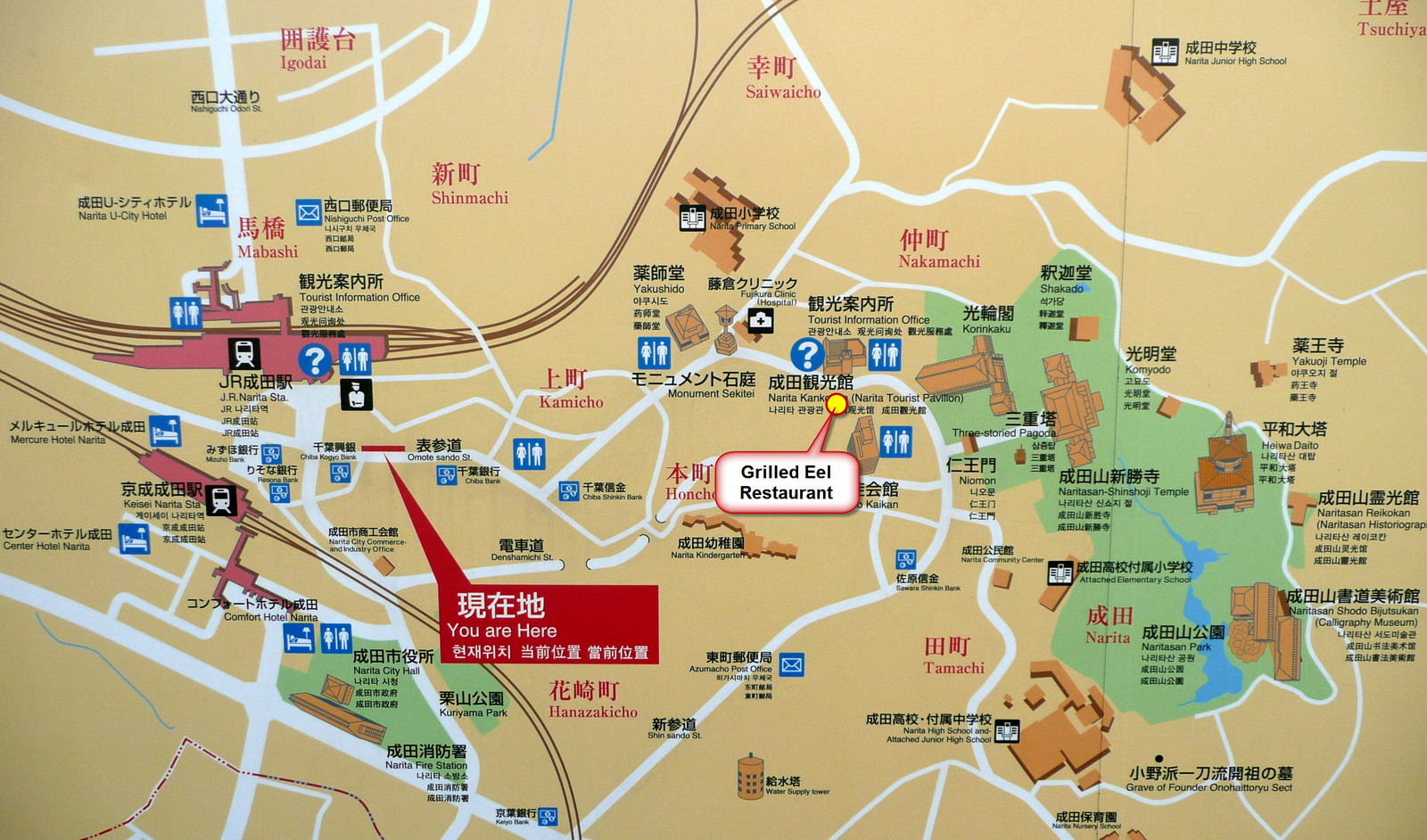
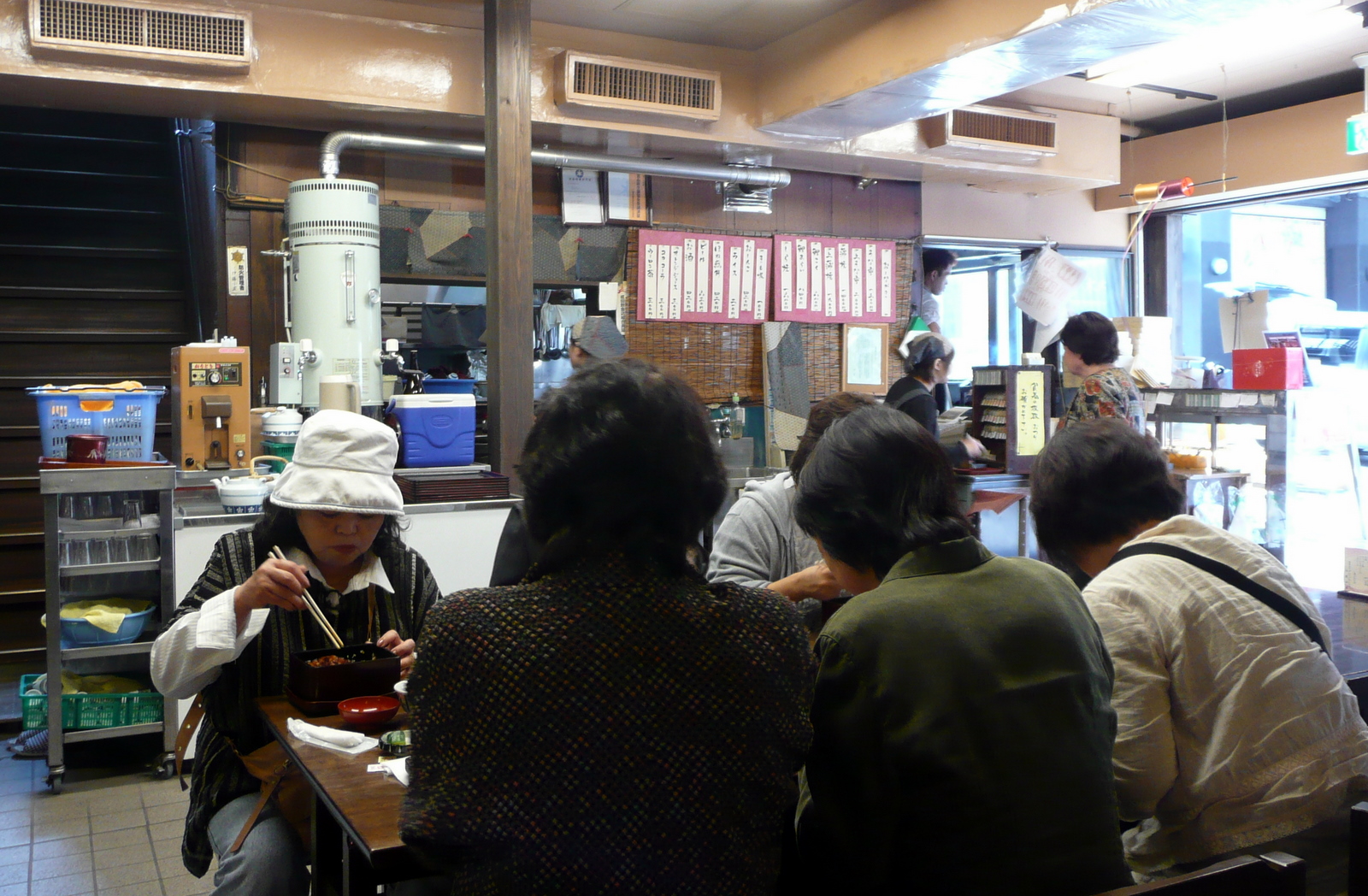
Right across from the tourist information office is a small grilled eel restaurant. The kitchen faces the street and you can look in and watch the chefs grill the skewers of fresh eel.
You order and pay at the front counter, receiving little paper tickets. Then take a seat at a table (or in the traditional seating area on tatami mats, at the back of the restaurant). A few minutes later, tender, sweet and crispy unagi comes your way!
I’ve said it before and will say it again: if you have about six hours between flights at Tokyo Narita Airport, it is worth your effort to go through immigration and take the train into Narita Town.
After our return to the airport, Tawn did a little browsing in the shops and I went up to the observation deck. Japanese airports still have observation decks that are open to the public, which I think is a great thing. (Being an aviation enthusiast and all…)
A Japan Airlines 747 touches down on the main runway, the same one that the FedEx MD-11 crashed on a few weeks ago. I wasn’t able to spot any signs of that accident. In the foreground is a Korean Airlines 777.
With Delta Airlines’ recent acquisition of Northwest Airlines, they have been quick to repaint the Northwest fleet, at least the planes flying internationally. Now you are able to see something that didn’t exist just a few months ago: a Delta 747 and A330.
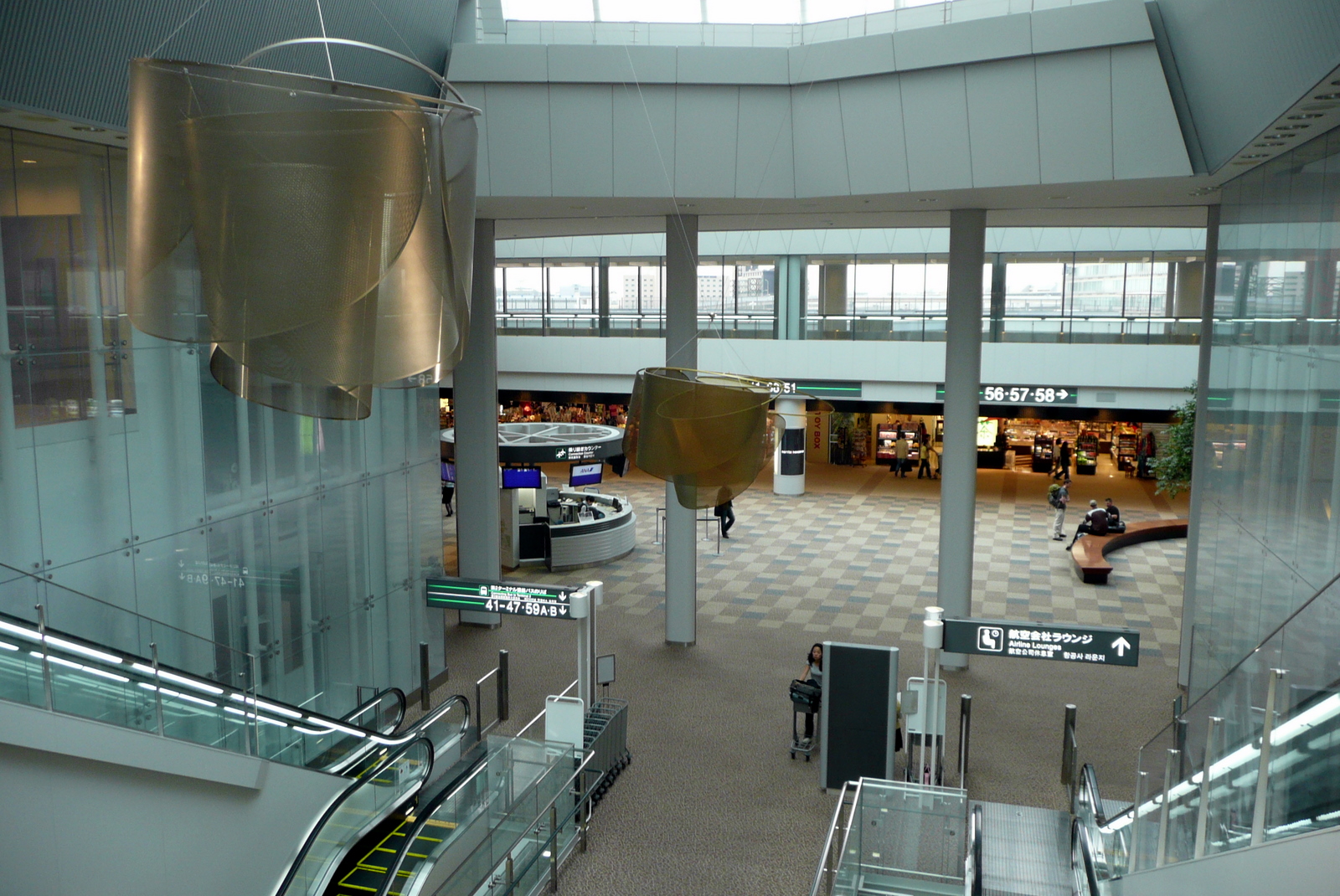
Beautiful new area in Terminal 1. While Narita doesn’t have all the amenities of Singapore Changi Airport, it is a more beautiful airport.
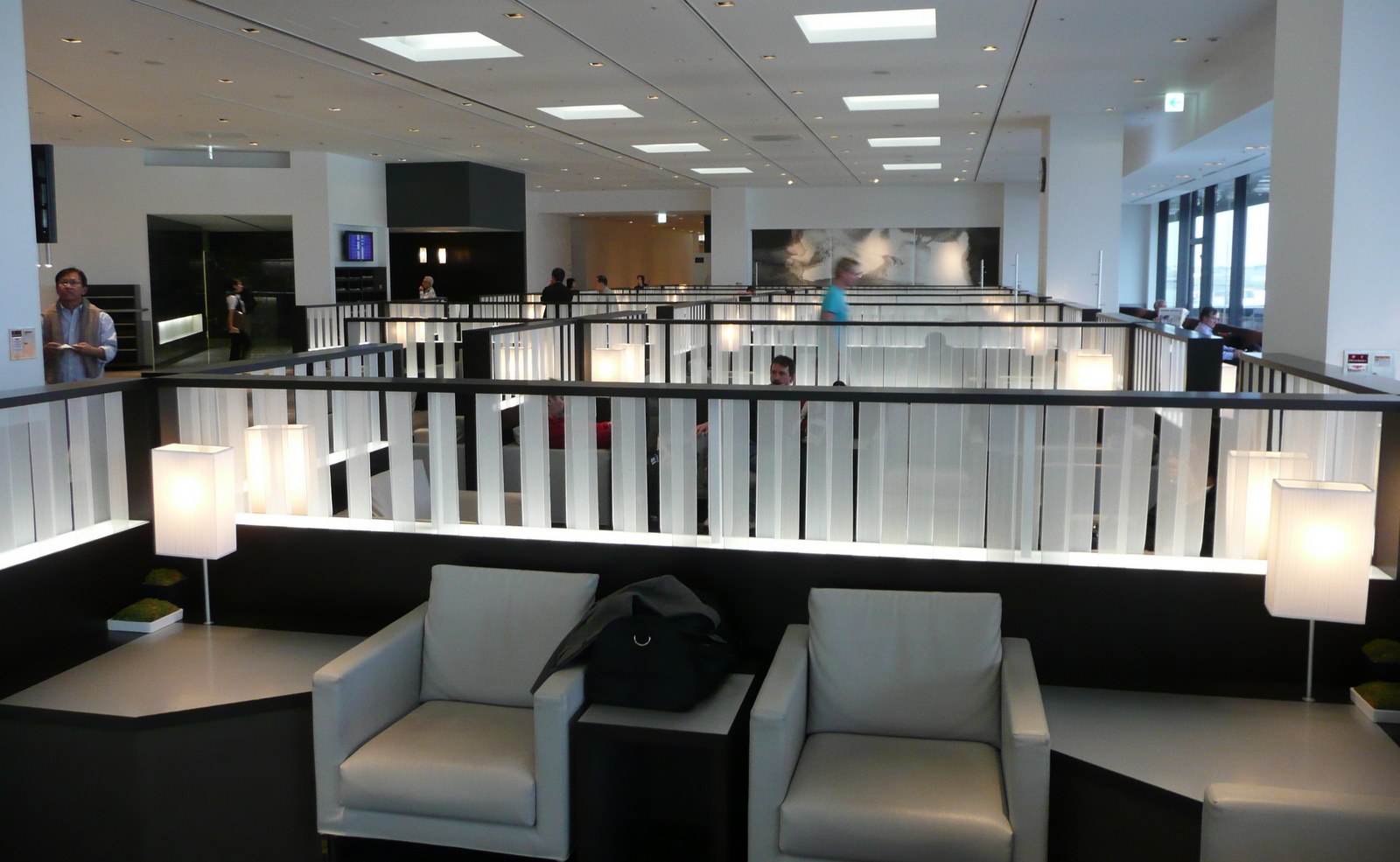
Since we had cashed in a few remaining miles to fly business class, we stopped by the All Nippon Airways lounge. If you are flying Star Alliance through Tokyo, don’t bother with the United Airlines lounge – go straight to ANA’s as it is much nicer.
With shower facilities and a good selection of food and beverage – not to mention an excellent view of the airfield – the ANA lounge was a nice place to relax before boarding the flight home.
Our friend Masakazu, whom we had joined for shabu-shabu and sukiyaki a few nights earlier, had emailed several of his friends who were working the flight back to Bangkok. The upside of this was that we received very friendly and attentive service on the way back home, including a complimentary bottle of wine to slip into our bag just before arrival!
After a full week in Tokyo, we work up at 3:00 am Thursday to check one last thing off our list: a visit to the Tsukiji Market, also known as the Tokyo Central Wholesale Market. Pronounced “tskii-jii”, this is the largest fish market in the world, doing some US$28 million of business each day.
The guidebooks all say that that the Tokyo Metropolitan Government has placed restrictions on what tourists can access at the market, after crowds caused concerns about sanitation and got in the way of the market workers. That, combined with my perception that a wholesale fish market isn’t a place I want to be wandering around on my own, aimlessly, prompted me to search out guided tour options.
Several reviews on the web sang the praises of Naoto Nakamura, a former market middleman who now gives tours three mornings a week. While pricey at 7500 yen per person (about US$75), he limits his groups to no more than six and adjusts his tours each time based on the conditions of each day.
This, I was certain, would be a good way to learn about the market from someone with first-hand experience.
My certainty was well-founded as the tour turned out to be every bit as insightful and informative as I could have hoped for. Nakamura-san’s English was excellent and his sense of humor very dry. We met our other two tour members, a pair of women (one who was half-Thai) visiting from the US.
The underlying subtext for the morning was a cat-and-mouse game. Outsiders (non-employees) are not allowed in many areas of the market, especially on the auction floors around the seafood. White-booted Tokyo Municipal Government inspectors were about and the captain of the market, Nakamura-san’s nemesis, kept appearing around corners and down hallways, so we would climb stairs, duck out side doors and do everything we could to avoid a confrontation.
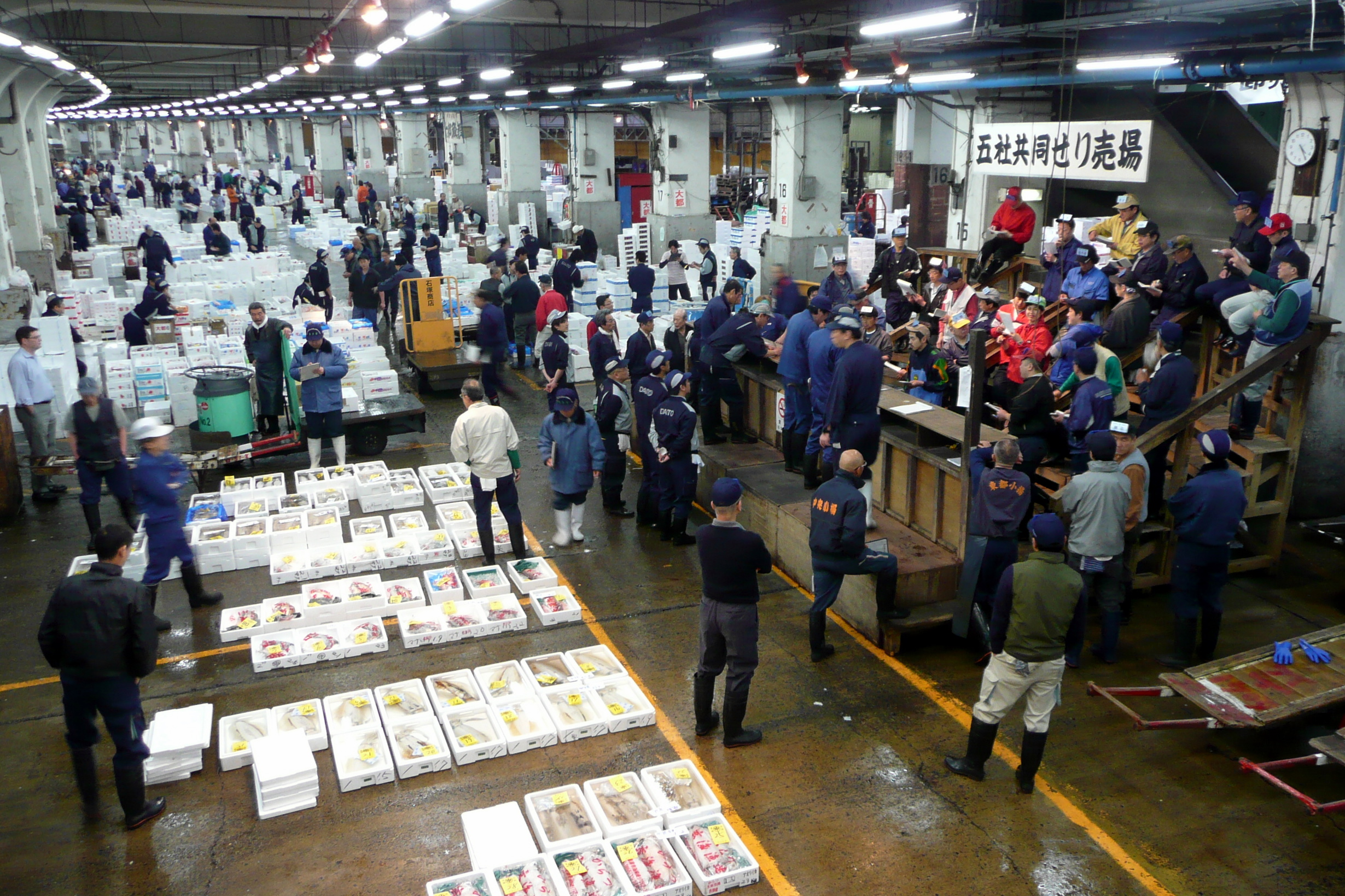
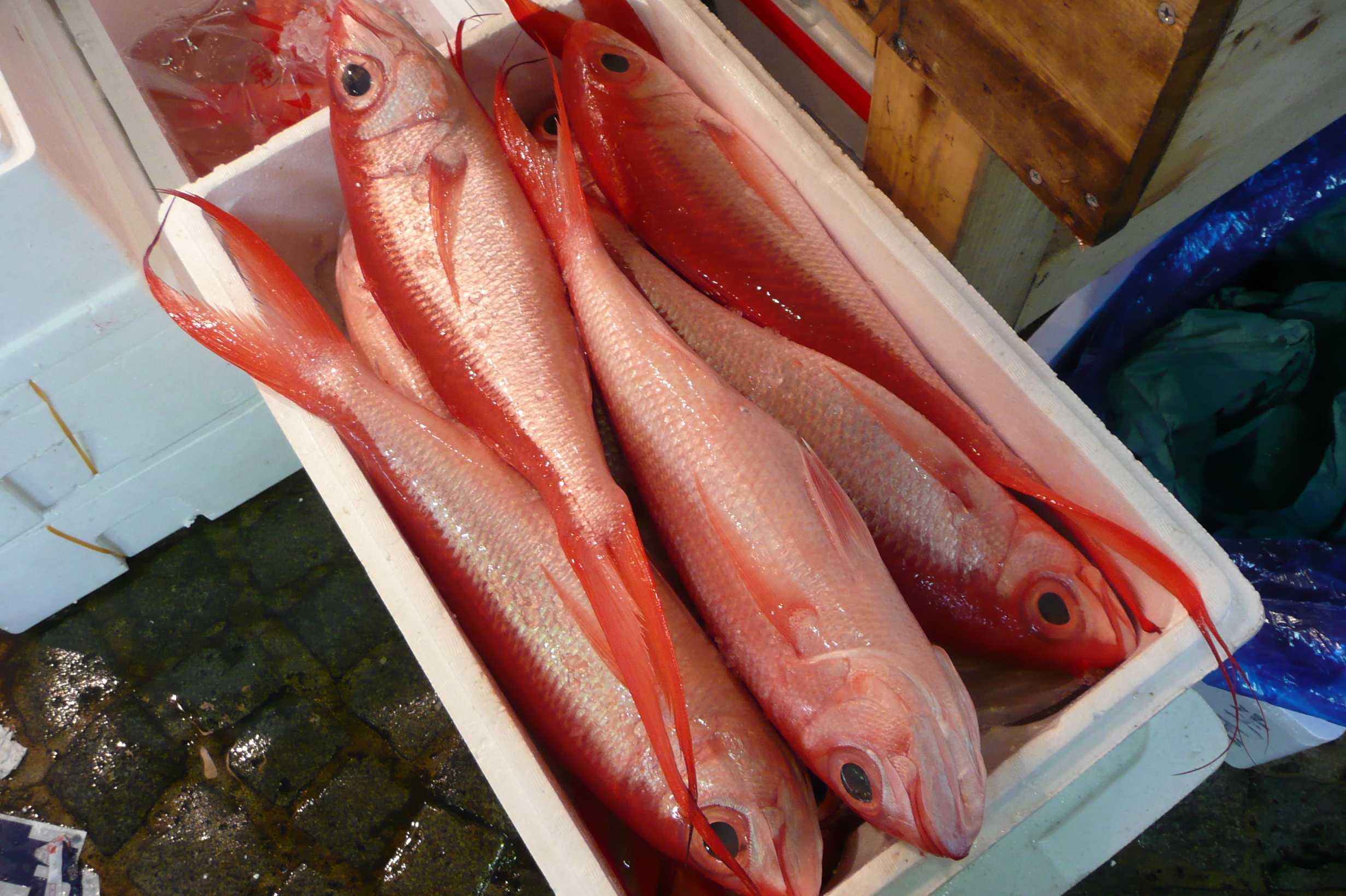
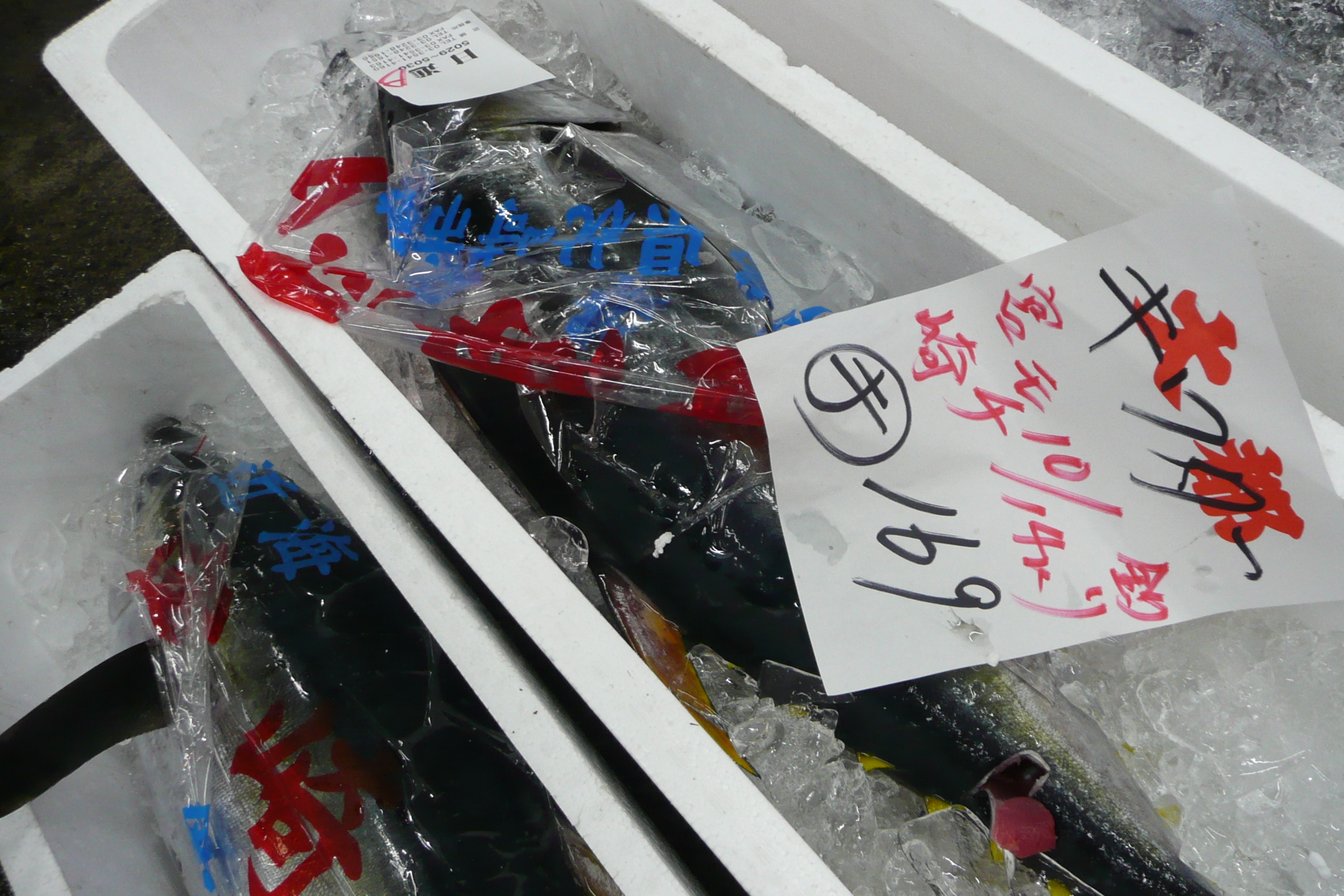
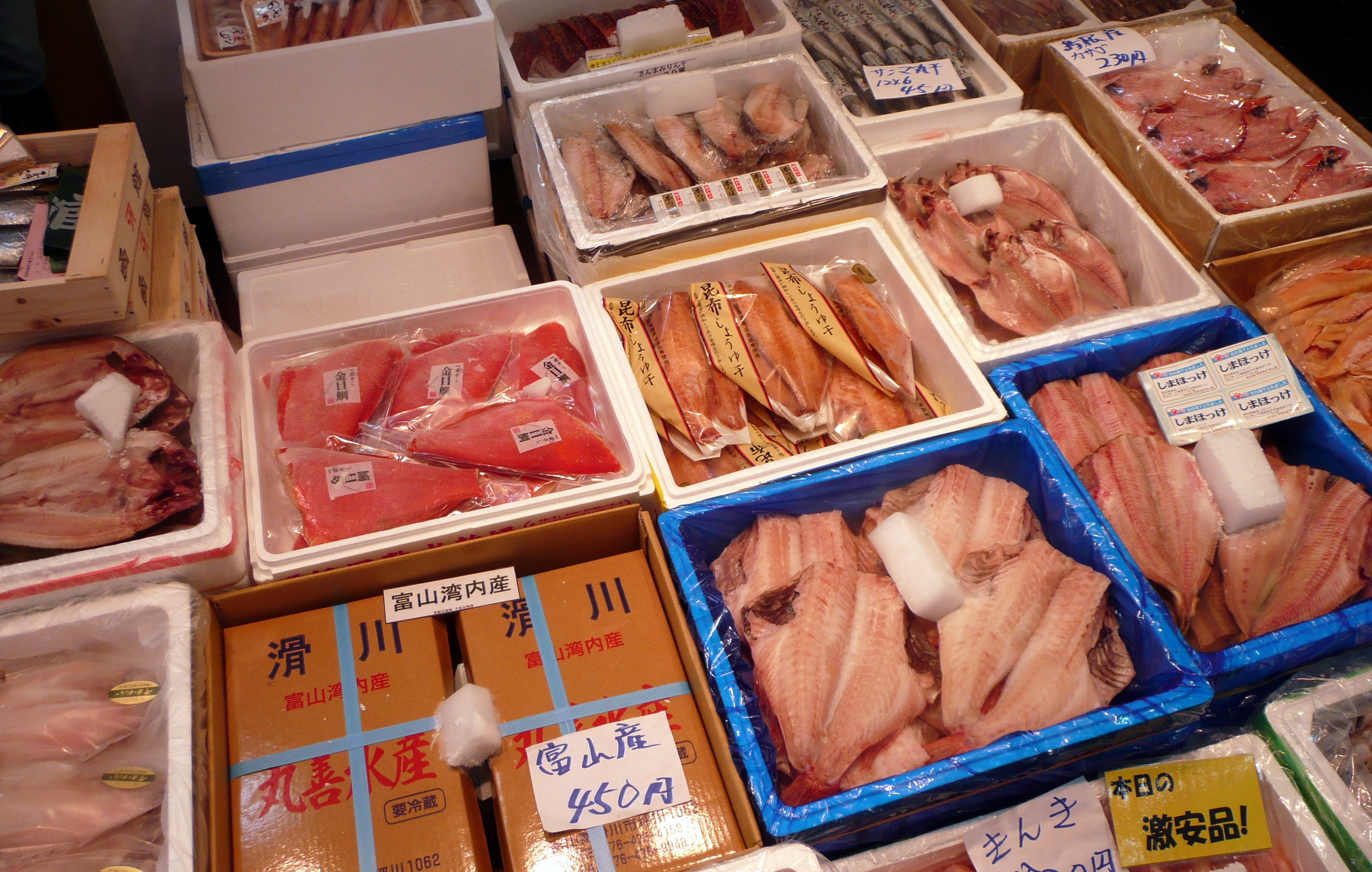
We started our tour in the fresh fish area, observing an auction and taking a look at the huge variety (more than 400 types!) of seafood for sale at Tsukiji. The fish arrives between about 6pm and midnight and is arranged by the vendors for inspection. By 3 am the middlemen start poking around, looking at the seafood and evaluating it. These days a lot of the sales are pre-negotiated, so auctions play a smaller role.
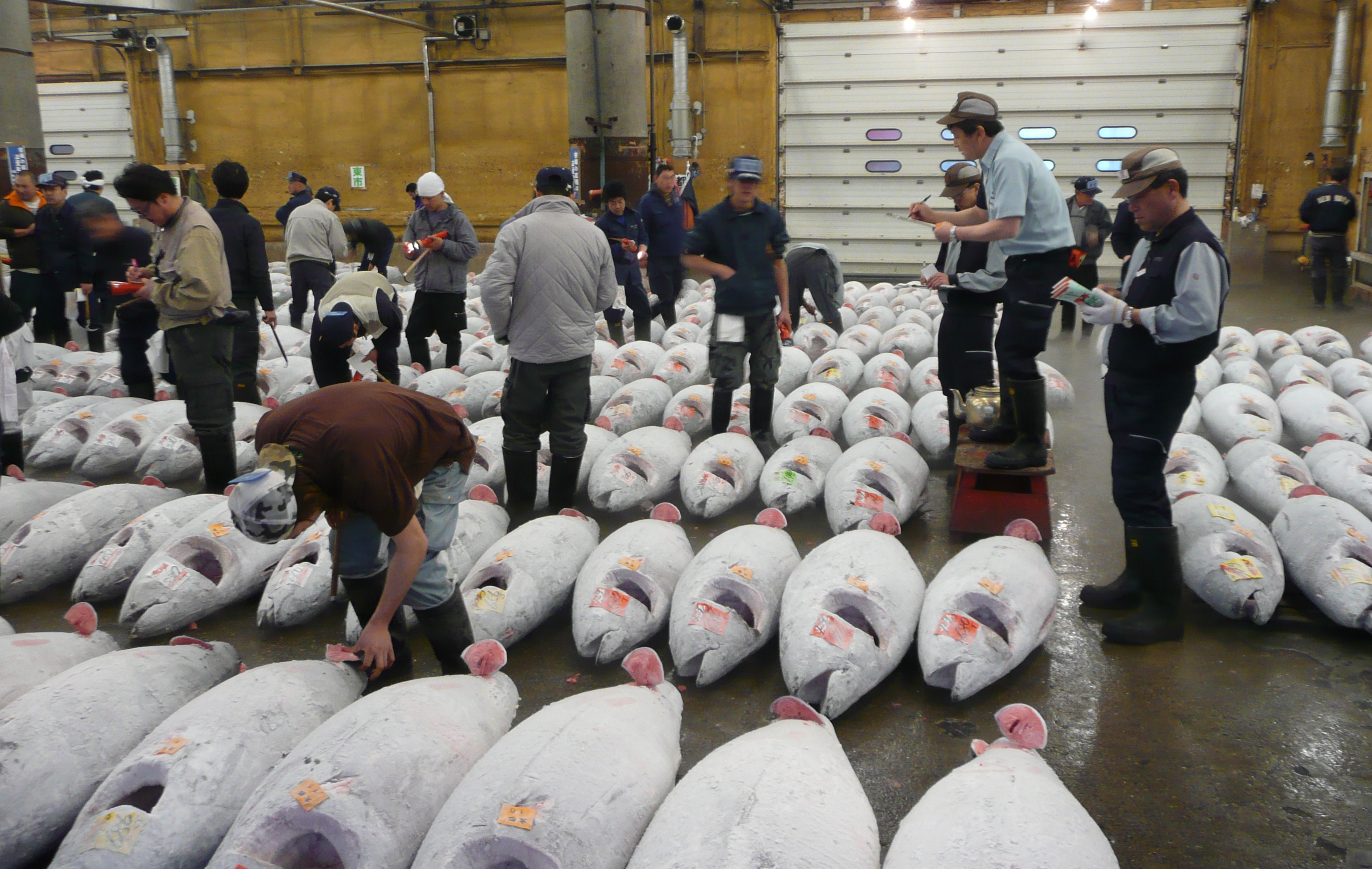
We then went to the fresh tuna warehouse, where these 70 kg (150 lbs) fish lay in neat rows, being inspected by middlemen, notches in the side allowing a clear view of the quality – and fattiness – of their flesh.
This is the key area that visitors are no longer allowed. So this picture was actually taken crouching down looking under a rolling door that was open about two feet high. The things I’ll do to get my shot.
We attended the auctions for fresh fish, live fish and sea urchins, marching away through the busy market, dodging electric carts that would silently creep up on you.
It was obvious that the market workers don’t really enjoy having tourists in their way, so it took a lot of concentration to keep out of trouble. I was amazed when, later in the morning, I saw tourists on their own, dragging children as young as about five around. Dangerous and inconsiderate of the people working here.
The frozen tuna auction is by far the most interesting, at least visually. These frosted fish look surreal, lined up with frozen mist rising around them like smoke. We had just a few minutes at the rolling door before it was closed on us, so we headed to the live fish auction.
Nakamura-san was able to get us up close for the live fish auction, above. This moves very fast as there are two auctions going on at the same time. Nearby, we saw workers pulling live fish from tanks based on the auction results, bashing them on the head with a knife, slitting their tail so the blood would drain out, then ramming a steel rod through their mouth and down their spinal nerve, killing them. Not quite so gruesome as it sounds, but definitely gives you an appreciation for the food you eat.
At the live tuna auction, the market’s captain caught up with us and gave Nakamura-san a lecture. Afterwards, he said, “At least he’s calling me ‘Nakamura-san’ now instead of the nasty names he used to use.”
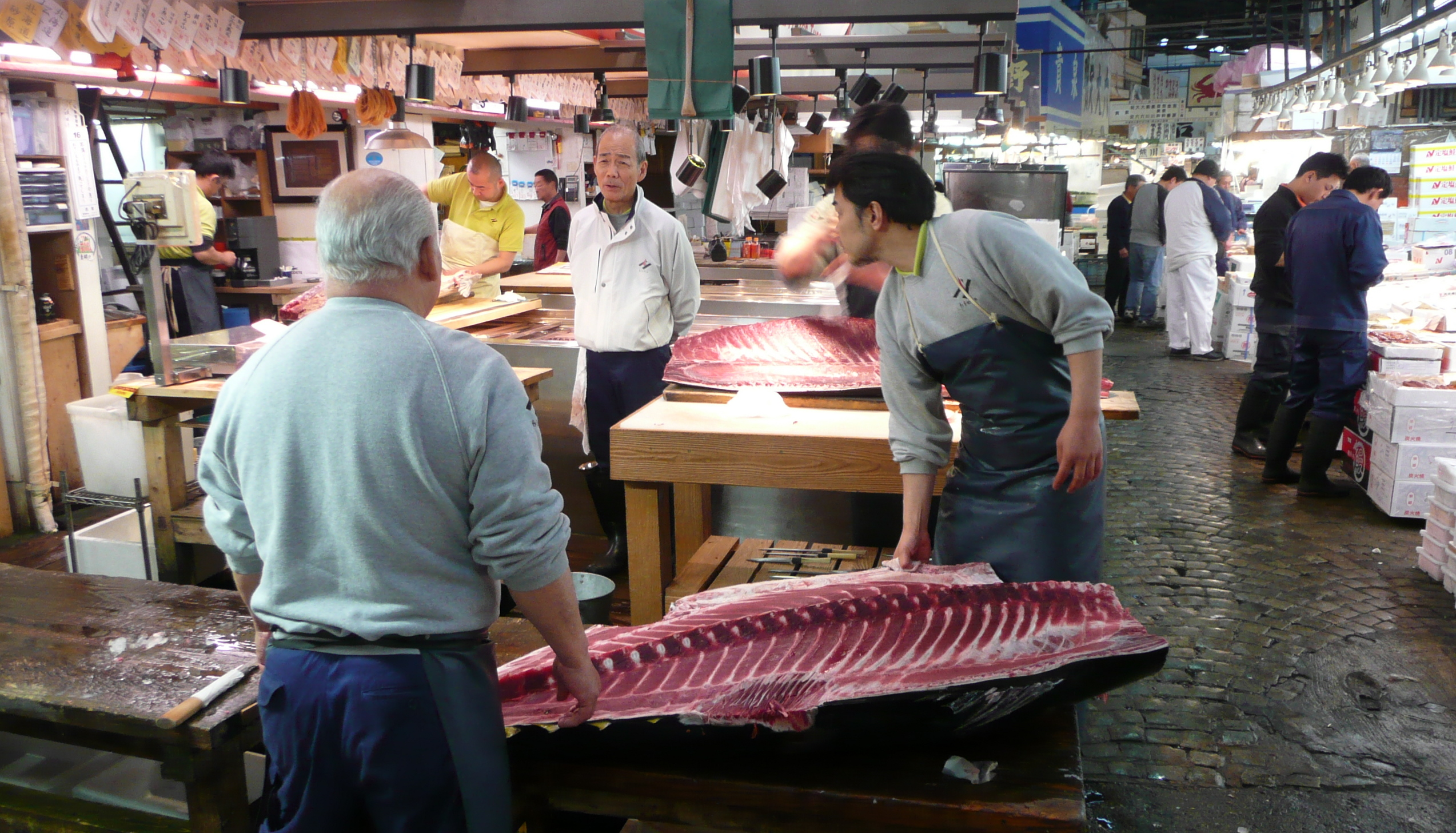
The auctions run from about 4:30-5:30, one after another. Even before the last fish is sold, middlemen start carrying their purchases off to their stalls, where they prepare the fish for sale. This is the last step in the transformation from whole fish to retail-ready cuts.
Recognize this fish? It is whale meat. The two rows on the right are from smaller whales but the back row is from whatever large-size whales Greenpeace tries to intervene in the hunt of.
Nakamura-san provided some perspective on why the Japanese are resistant to international pressure to end whaling. After World War II, the whaling industry we re-established in Japan to help with severe food shortages. For many baby boomers, whale meat was one of their main sources of protein during their childhood years. To this day, it has strong resonance with the population even if its consumption has sharply declined.
According to statistics, almost 50% of the total animal protein consumption in 1947 in Japan was whale meat. (Source: http://luna.pos.to/whale/jwa_trad.html)
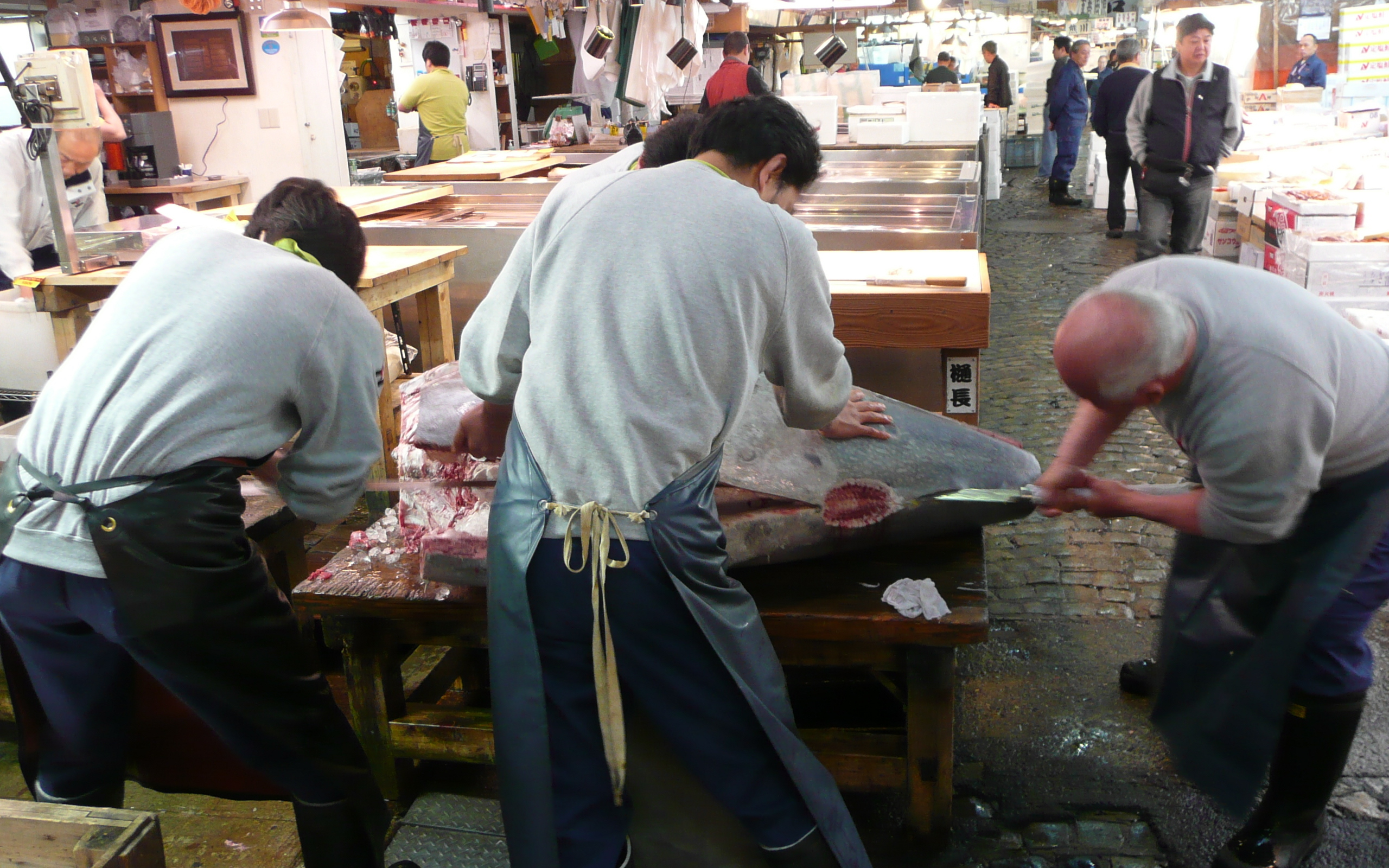
Watching the middlemen do their work was fascinating. Knife skills are a beautiful art and this balding man in the picture below really was an artist. Using a knife longer than a samurai’s sword, it took four men to carefully quarter a large fresh tuna.
The middlemen who bought frozen tuna had an easier time of it, using band saws to cut through the flesh.
By 5:45 or so, many tourists had shown up, most guiding themselves and trying to edge in on our tour for free. While they did get a peek at the tuna auction, I can’t imagine that they walked away with much of an understanding of the whole market. For that reason, I’m glad we did the tour.
By shortly after 6:00, Nakamura-san had shown us all we needed to see. He pointed out a few good sushi restaurants, took our money and thanked us. Since we were already there and we knew the sushi would be fresh, Tawn and I queued up to eat the best sushi we’ve ever had.
There are two restaurants in alley 6 of the “auxiliary market” (where the vendors that serve the needs of the market workers are located), both of which get quite a queue out their front doors. These are are the two most highly recommended sushi bars.
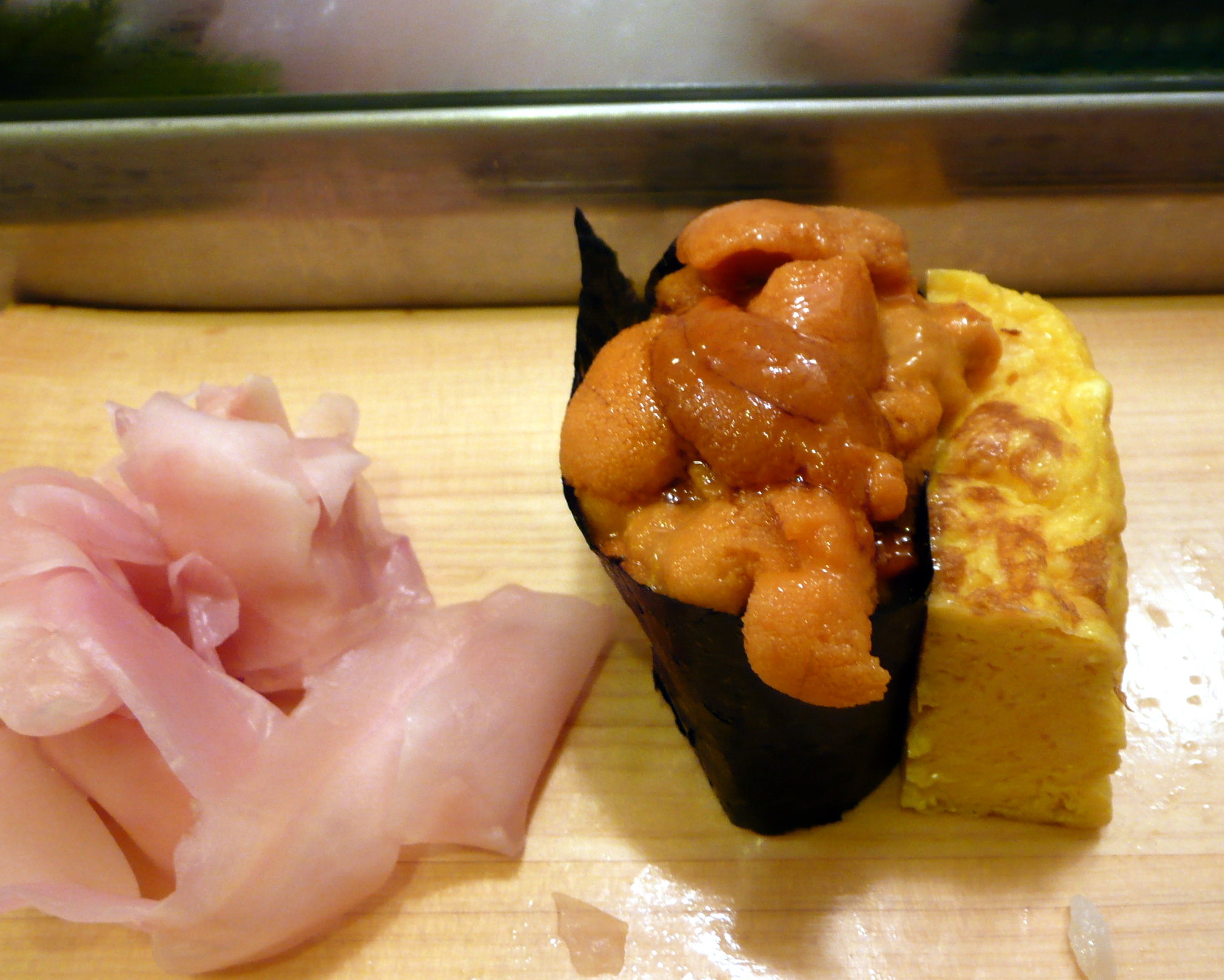
Here’s what we ate. Sorry that I can’t identify what everything was.
Something very fatty (toro?) and squid
Ebi (Shrimp) and Maguro (Blue Fin tuna)
Uni – sea urchin with scrambled egg
Tuna and Ikura (Salmon Roe) Nigiri (seaweed-wrapped sushi); and I think Grilled Saba (Mackerel) and Hamachi (Yellow Tail tuna). But I’m not certain.
Total cost for the set including rice, soup and tea: 3500 yen, about US$35. Pricey, but really good. This is one of the few times I was willing to really splurge.
Again, I can’t say enough good things about the tour. If you’re going to Tokyo and are interested in the tour of the market, you can find Nakamura-san’s website here.
Here’s a video of our trip to the market:
After “breakfast” we returned to the hotel for a few more hours of sleep, then packed our bags and headed to Narita Airport for the flight home. And with that, eight days in Japan came to an end.
You probably are wondering if these entries about Tokyo will ever end, right? Well, just a few more, then we’ll be back to Thailand. Actually, we’ve been back in Thailand since Thursday evening, but it takes a while to sort through pictures and tell all the stories.
During our trip, we were fortunate to have many friends to visit, most of whom are Japanese or Japanese-Americans who have lived in Tokyo for some time. This gave us an edge in knowing where to go and what to see and eat, because they made the decisions for us.
Taro took us to Teyandai, an izakaya (basically a tapas bar) that specialized in Okinawan cuisine. Hidden down a small street just a few blocks from the hustle and bustle of Shibuya, Teyandai is a real gem.
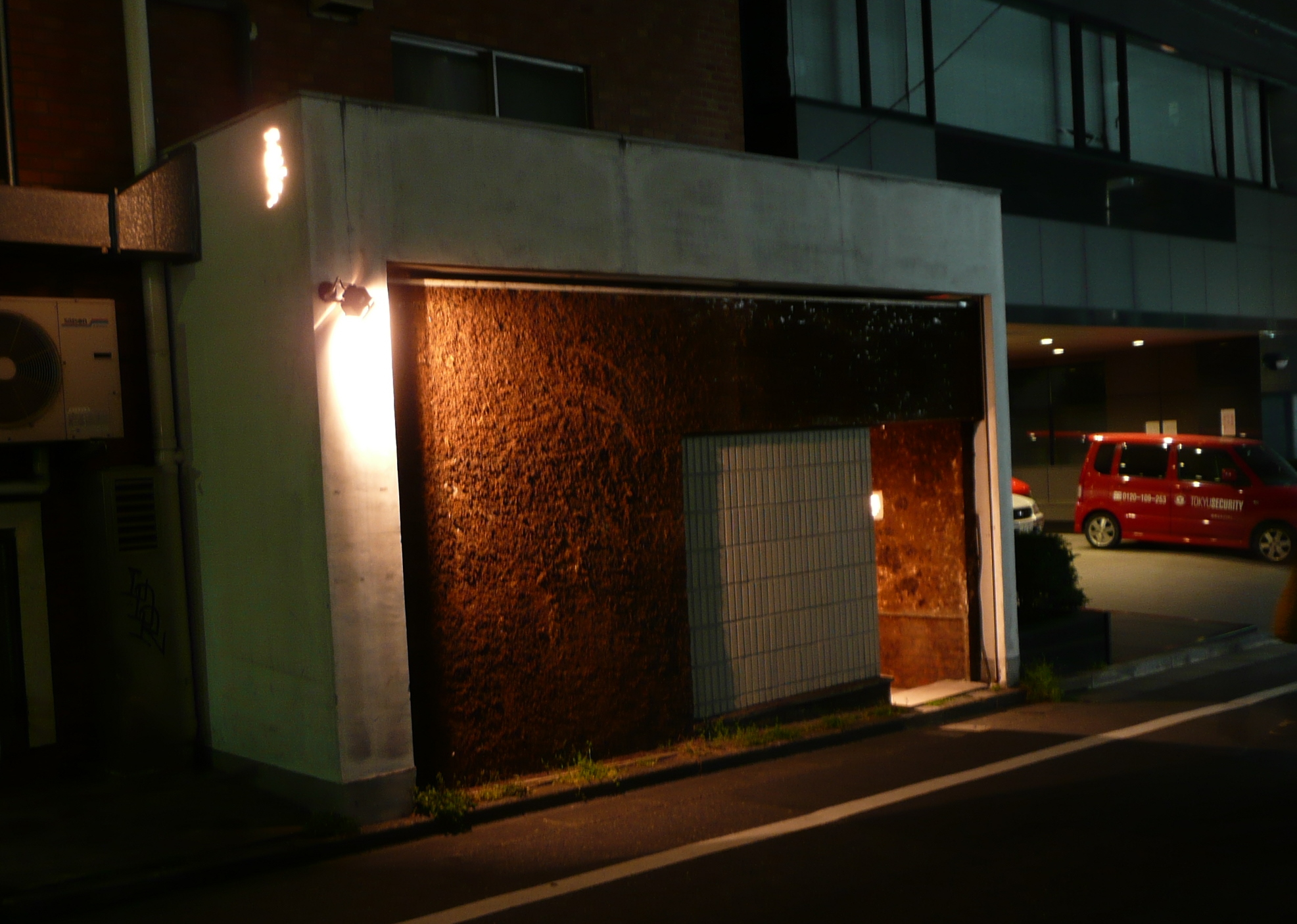
You would never notice it. The sign (in Japanese only) is the small patch of light on the upper left side of the lava stone facade. Other than that, there’s no indication what the building is.
But you head inside and find this wonderful space.
There are several small sections to the restaurant, all crowded and cozy. Notice the small seating area halfway up the steps!
There was quite a large group of us: HP, Mark and Kathy from San Francisco, a couple HP and Mark knows from Spain and their son, and then Tawn and I and Taro. We settled into a tight corner at the back of the room and started drinking and eating.
Compliments to Taro’s Panasonic Lumix LX3, which I borrowed to shoot these shots. Its low-light performance is incredible, as its macro function. HP helped by using a white screen function on his iPhone to provide some close-up ambient light. (Thanks to Taro for letting me snag these pictures from his Facebook site.)
Here’s a look at some of the dishes we enjoyed:
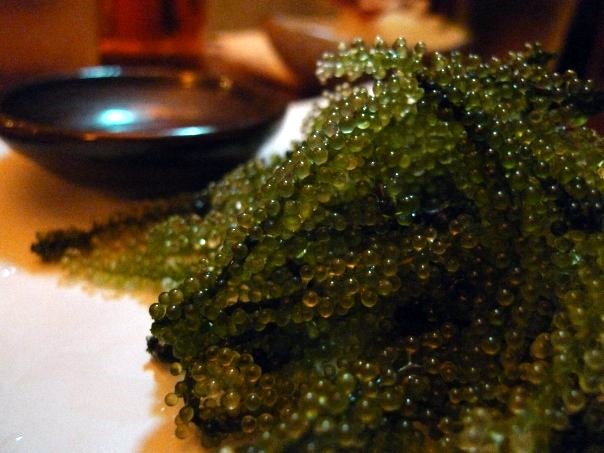
Recognize it? Everyone’s favorite: umi-budo (sea grapes), a type of seaweed that is also known as green caviar. Served with a plum-yuzu dipping sauce.
Yamaimo no tatsuta-age (fried mountain yam) with tartar sauce. Lovely.
Atsuyaki tamago (fried egg) stuffed with unagi (grilled eel).
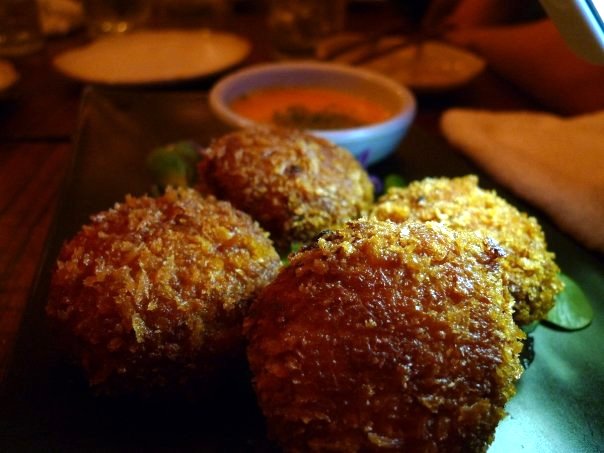
Buta-suki corokke (pork sukiyaki croquette) which you dip in raw beaten egg before eating.
Ebi-mayo (deep-fried prawns with mayonnaise sauce), similar to the walnut prawns dishes you find in many Chinese restaurants, but without the walnuts.
Don’t have the Japanese name but it is a fried rice dish with pickled takana vegetables.
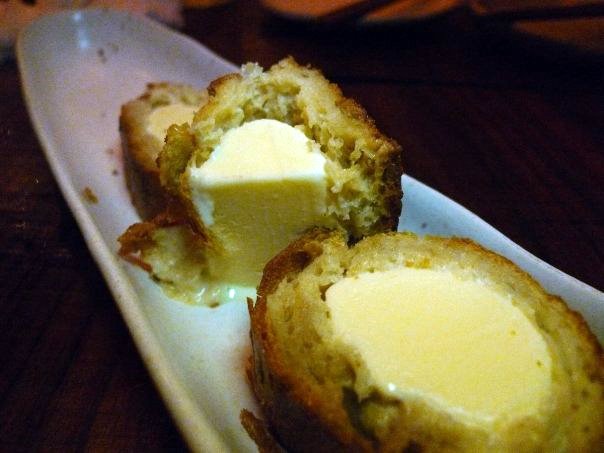
Pan-aisu (bread ice cream) – it is actually a very French baguette stuffed with vanilla ice cream. Can I tell you how wonderful this combination is?
Fondant chocolat – not a traditional Okinawan dessert, I might add!
Kokutou purin (brown sugar pudding). Taro’s favorite, the eggless custard on top hides a rich pool of pudding made from an unrefined, molasses-like sugar.
Me and Tawn in the entryway of the restaurant. It contains little counters so if you’re waiting you can go ahead and start eating and drinking… which I guess means you wouldn’t really be waiting.
This was the highlight meal of the trip. I really enjoy restaurants where I can try many different things and of course a “small plates” restaurant really meets that need. There is no Japanese menu but if you make it to Tokyo I would encourage you to seek this restaurant out – the map is above. I’d be happy to get you the name of things in Japanese so you can order. Or just randomly point at things in the menu.
After dinner we went to Advocates Bar, one of the most inclusive bars in the gay district in East Shinjuku. Situated on a corner, the bar only has room for about three people, so it inevitably spills out onto the street.
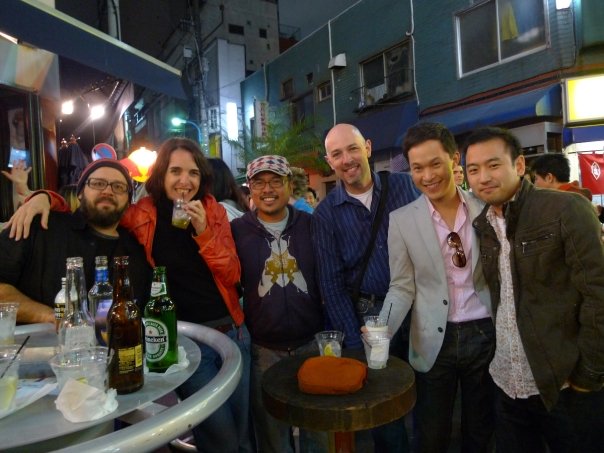
Left to right: Mark, Christina, HP, Chris, Tawn and Taro. Kathy took the picture.
Unlike many of the small bars in Tokyo that are geared very much to only Japanese or only men, Advocates welcomes anyone and everyone. We had a tall Japanese drag queen wandering around, plenty of westerners and women, as well as locals. All in all, a very “community” watering hole.
Last thing to write about: our trip to Tsukiji fish market.



















 christao408